
Application of sarcoptes protein tyrosine kinase and kit for diagnosing sarcoptic acariasis
A technology of tyrosine kinase and protein tyrosine, which is applied in the kit for diagnosing scabies, and the application field of scabies protein tyrosine kinase, can solve the problems of no medical diagnosis technology and achieve strong reactogenicity, The effect of high sensitivity and specificity
Patent Information
- Authority / Receiving Office
- CN · China
- Patent Type
- Applications(China)
- Current Assignee / Owner
- Publication Date
- 2017-12-15
Smart Images
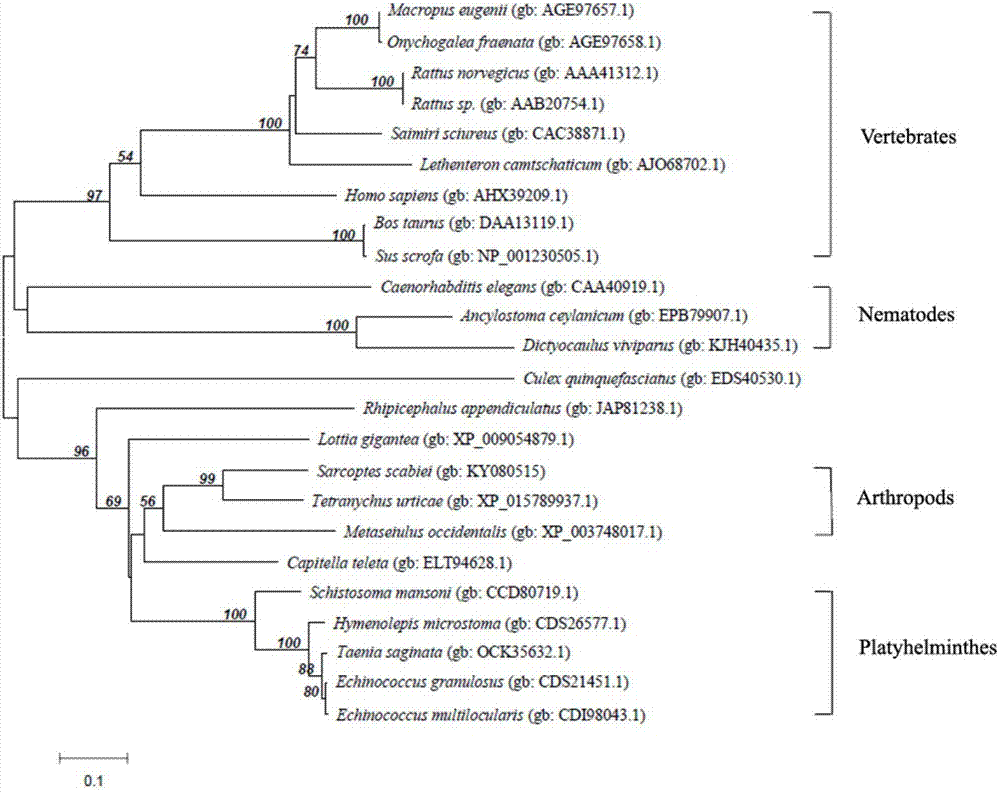
Figure 1 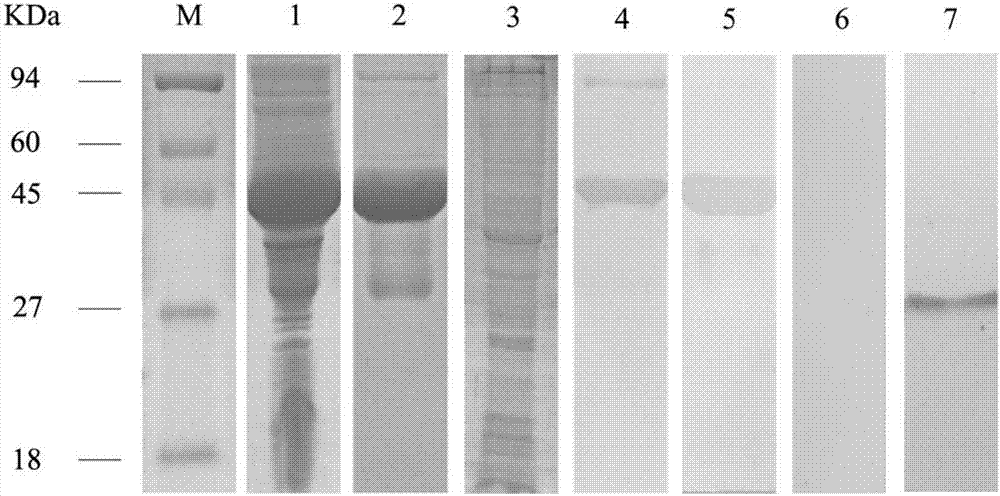
Figure 2 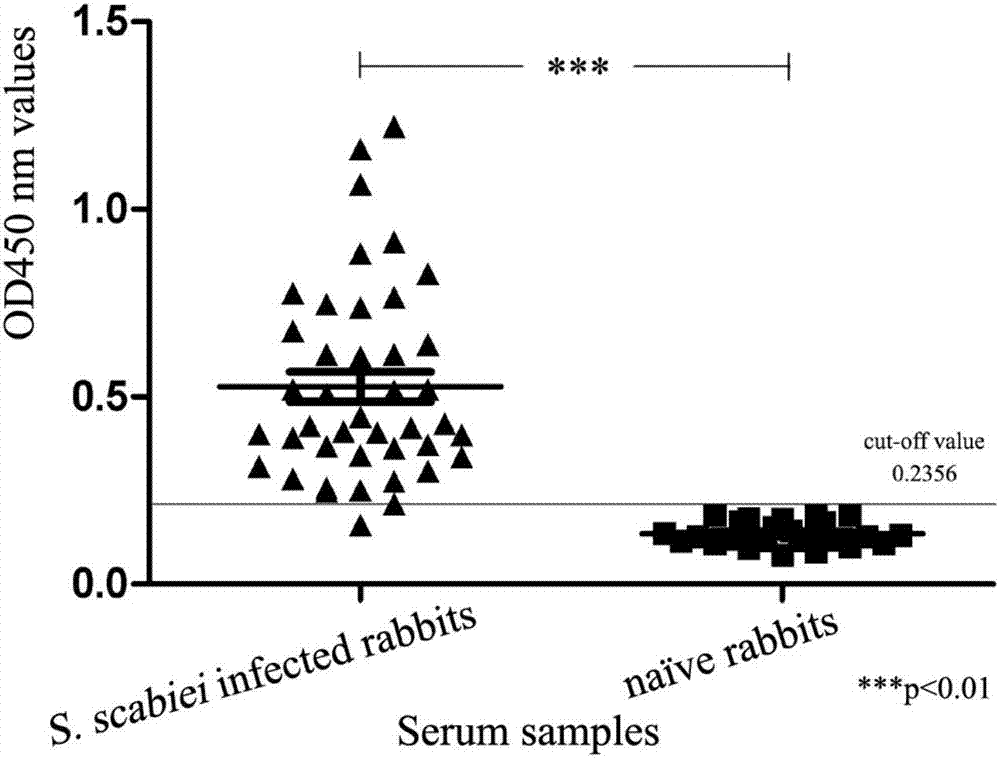
Figure 3
Abstract
Description
technical field
[0001] The invention relates to the field of biotechnology, in particular to the application of scabies protein tyrosine kinase and a kit for diagnosing scabies. Background technique
[0002] Scabies is a highly contagious parasitic disease that seriously threatens human and animal health. Scabies mite (Sarcoptes scabiei) damages the skin of the host, causing symptoms such as skin inflammation, skin itching and skin lesions, thereby causing a series of health problems, especially in socially vulnerable groups such as indigenous populations and people in poor areas of some developing countries. Around the world, 300 million people suffer from scabies every year, and more than 100 species of animals are infected with scabies, causing serious health problems and economic losses. After being infected with scabies, if it cannot be treated in time, it is easy to be infected with bacteria secondary to it, resulting in pyoderma. Eradicating scabies in developing co...
Examples
Embodiment 1
[0035] Embodiment 1: Cloning, expression and purification of recombinant SsPTK protein
[0036] The ORF encoding SsPTK was amplified based on the full-length PTK cDNA from Scabies mite transcriptome data (gene accession number: KY080515). Use the Primer 5.0 software to design the corresponding primers, synthesized by the company (Invitrogen, Beijing), the primers are as follows: forward, 5'-CG G GAT CC ATGC TCAAAAGTT ACG CTG TTC-3', BamHI as restriction site (underlined); Reverse, 5'-C GA GCT C TT ATG TTA TCG TAG ATG TTG TTG CT-3', SacI as a restriction site (underlined). SsPTK was amplified by PCR system, pre-denatured at 94°C for 5 minutes, then denatured at 94°C for 45 seconds, annealed at 62°C for 45 seconds, amplified at 72°C for 45 seconds, 35 cycles, 72°C for 10 minutes. The resulting fragment was cloned into the pET32a(+) expression vector (Invitrogen, Beijing), and the constructed expression vector was transformed into Escherichia coli BL21(DE3) (TIANGEN, Beijing)...
Embodiment 2
[0037] Embodiment 2: Bioinformatics analysis of PTK gene
[0038] Using the complete SsPTK sequence, it was translated into an amino acid sequence with DNAStar software (version 7.0), and the similarity between homologous genes was compared with DNAMAN (version 7.0). The results are shown in figure 1 . Using SignalP 4.1 (http: / / www.cbs.dtu.dk / services / SignalP / ), Transmembrane Prediction (http: / / www.sbc.su.se / ~miklos / DAS / ), TargetP (http: / / www.cbs.dtu.dk / services / TargetP / ) and ExPasy (http: / / web.expasy.org / protparam / ) respectively predict their potential signal peptide, transmembrane region and subcellular location, and calculate the prediction Molecular weight and pI value. According to the homologous proteins of other species in the NCBI database, the online software ClustalW2 (http: / / www.ebi.ac.uk / tools / msa / clustalw2 / ) was used for comparative analysis. Finally, we used the MEGA5.05 software to construct the phylogenetic tree of 24 species of PTK with the method of neigh...
Embodiment 3
[0040] Example 3: Expression and recognition of recombinant SsPTK
[0041] Western blotting: Boil samples (40 μL protein and 10 μL loading buffer) for 10 minutes, separate by 12% SDS-PAGE, and transfer the protein of interest to a nitrocellulose membrane using a semi-dry transfer tank (Bio-Rad) Above, the transfer time is 35min. After transferring the membrane, the membrane was washed 3 times with TBST (20mM TRIS-HCl, 150mM NaCl, 0.05% v / v tween-20, pH 7.4), 5min each time, and then blocked in 5% skimmed milk for 2h, and after 2h, a Incubate overnight at 4°C (dilute 1:100 with 0.01MPBS). Next, the membrane was washed four times with TBST for 5 min each, and then incubated with horseradish peroxidase (HRP)-labeled goat anti-rabbit antibody (Earthox, USA) (1:100 dilution) for 2 h. Finally, the membrane was washed several times with TBST, and the color was developed using diaminobenzidine reagent (TIANGEN, Beijing), and the results were observed.
[0042] Gel electrophoresis s...