
Method for inducing mesenchymal stem cells to be directionally differentiated into osteoblasts
A bone marrow mesenchymal and osteoblast technology, applied in the field of biomedical engineering, to achieve good osteogenic performance, reduce impact, and simple operation
Patent Information
- Authority / Receiving Office
- CN · China
- Patent Type
- Applications(China)
- Current Assignee / Owner
- Publication Date
- 2018-08-07
- Estimated Expiration
- Not applicable · inactive patent
Smart Images
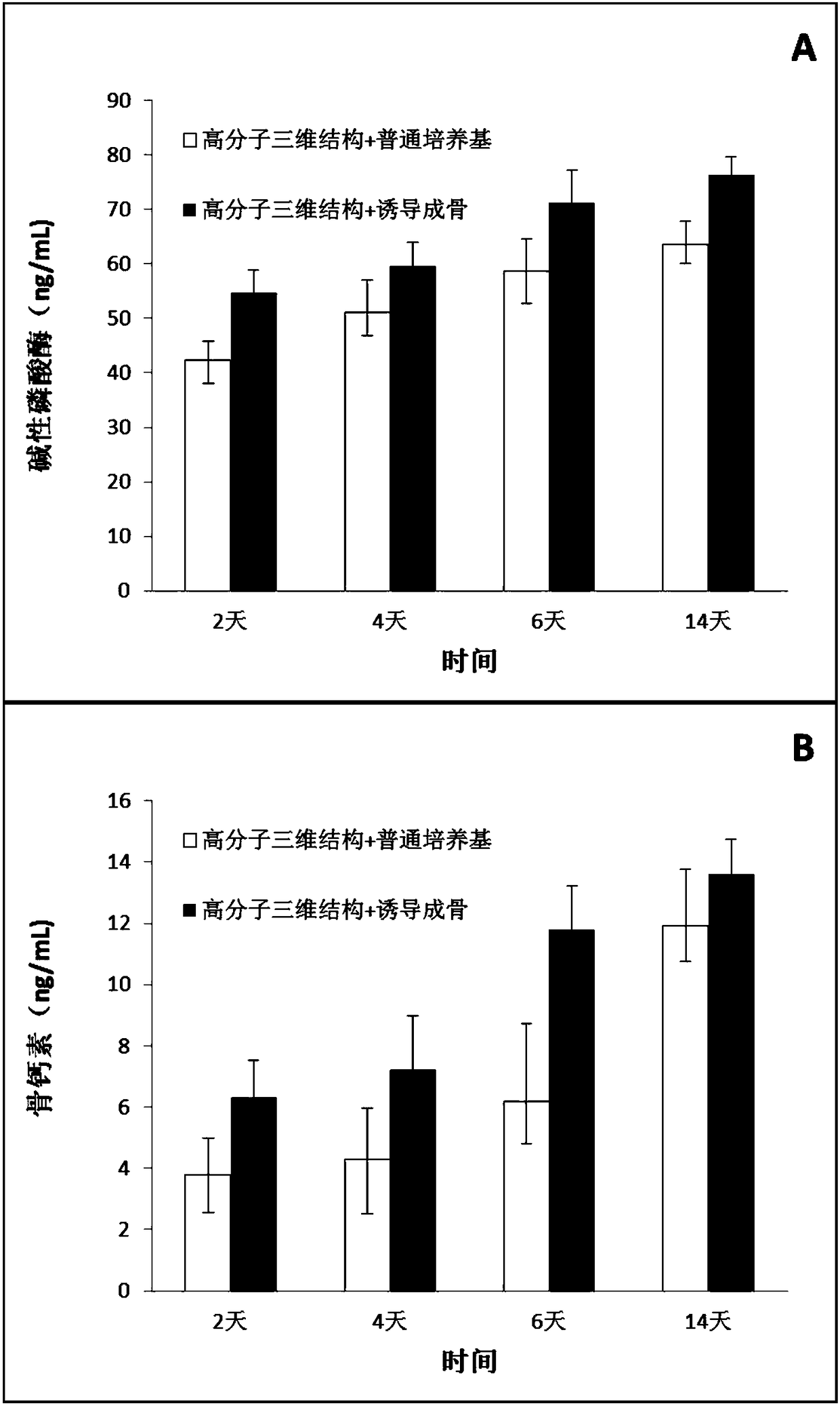
Figure 1 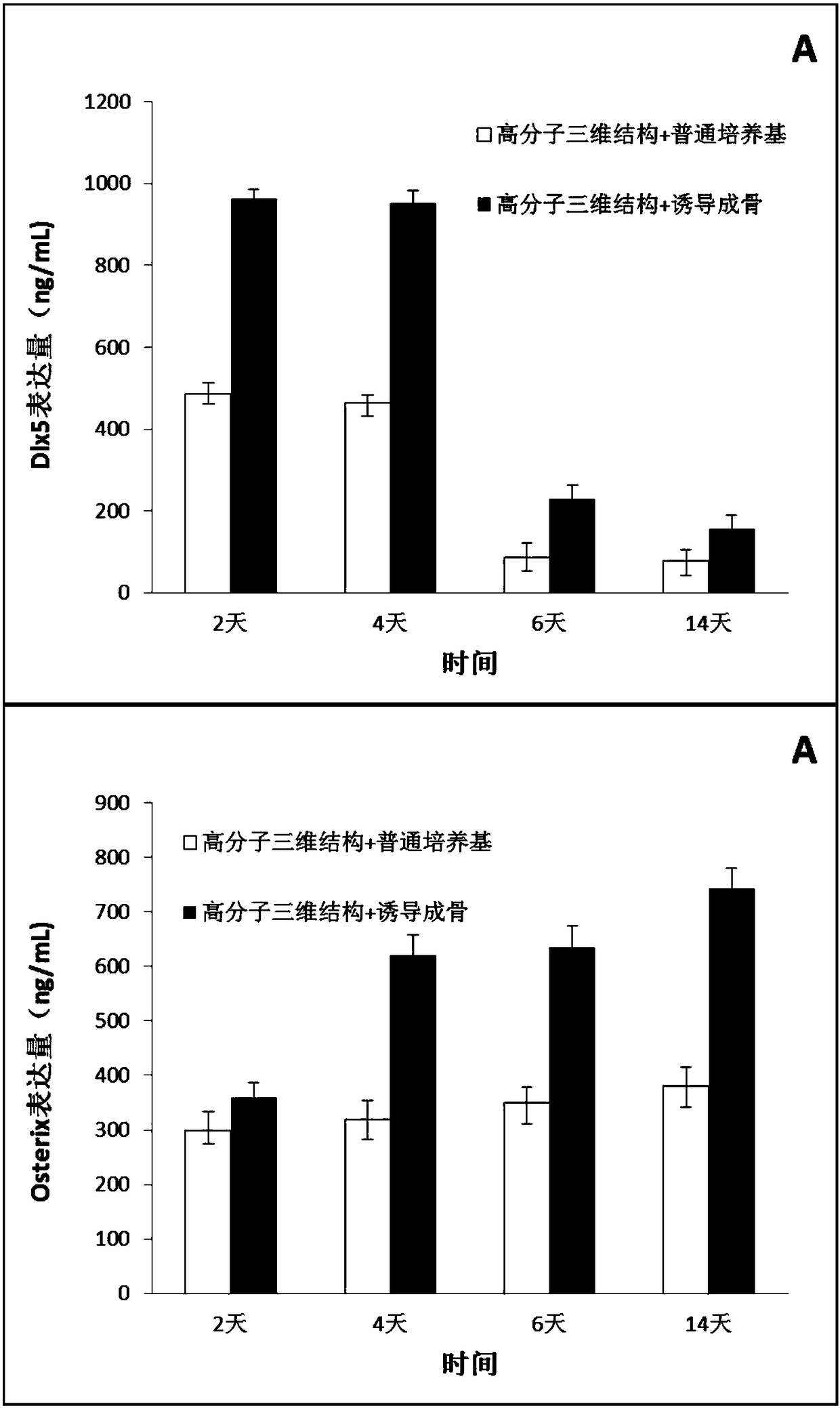
Figure 2
Abstract
Description
technical field
[0001] The invention belongs to the field of biomedical engineering, and in particular relates to a method for inducing directional differentiation of bone marrow mesenchymal stem cells into osteoblasts. Background technique
[0002] Bone marrow mesenchymal stem cells (BMSCs) are a kind of adult stem cells that can self-renew and have multi-directional differentiation potential. Under appropriate induction conditions, they can differentiate into cartilage, bone, muscle, fat, nerve, etc. Various tissue cells. MSCs have become a research hotspot in the field of basic medicine and clinical tissue and organ damage repair and regeneration, but there are still some technical problems, such as low differentiation efficiency or non-directional differentiation to form heterogeneous cells or even abnormal differentiation into tumor cells. In the application of bone tissue engineering, directional induction of MSCs to differentiate into osteoblasts is a key step in the...
Examples
Embodiment 1
[0050] Example 1 Method for preparing three-dimensional polymer structure and inducing osteogenesis
[0051] Weigh 1g PLGA, 10% chitosan, put into trifluoroethanol solution, stir magnetically, dissolve evenly. Under the parameters of positive pressure 18.5kv, negative pressure 2.8kv, humidity 35%, and temperature 19°C, a film with a three-dimensional structure was prepared by electrospinning, and the obtained film was dried in a vacuum oven for 48 hours to remove the solvent; The thin film material with a three-dimensional structure was subjected to surface functionalization treatment with dopamine, in a Tris-HCl solution with a pH value of 8.5 and a concentration of 0.3 wt% dopamine, reacted for 24 hours, and washed three times with deionized water. After pretreatment in 2% glutaraldehyde for 1 h, they were washed 3 times with deionized water. In a 5wt% collagen solution, react for 24 hours, control the temperature at 37° C., wash with deionized water three times, and dry ...
Embodiment 2
[0052] Example 2 Method for preparing three-dimensional polymer structure and inducing osteogenesis
[0053] Weigh 1g PLGA, 10% chitosan, put into trifluoroethanol solution, stir magnetically, dissolve evenly. Under the parameters of positive pressure 18.5kv, negative pressure 2.8kv, humidity 35%, and temperature 19°C, a film with a three-dimensional structure was prepared by electrospinning, and the obtained film was dried in a vacuum oven for 48 hours to remove the solvent; The thin film material with a three-dimensional structure was subjected to surface functionalization treatment with dopamine, in a Tris-HCl solution with a pH value of 8.5 and a concentration of 0.3 wt% dopamine, reacted for 24 hours, and washed three times with deionized water. After pretreatment in 2% glutaraldehyde for 1 h, they were washed 3 times with deionized water. In a 5wt% collagen solution, react for 24 hours, control the temperature at 37° C., wash with deionized water three times, and dry ...