
Rolling pacing-improving load distribution method of reversible single-rack four-roller rough rolling mill
A technology of load distribution and rough rolling mill, applied in the direction of roll speed control, etc., can solve the problems of low rolling efficiency of rough rolling mill, and achieve the effects of shortening rough rolling rolling time, improving load utilization rate, good economic and social benefits
Patent Information
- Authority / Receiving Office
- CN · China
- Patent Type
- Applications(China)
- Current Assignee / Owner
- Publication Date
- 2019-02-22
Smart Images
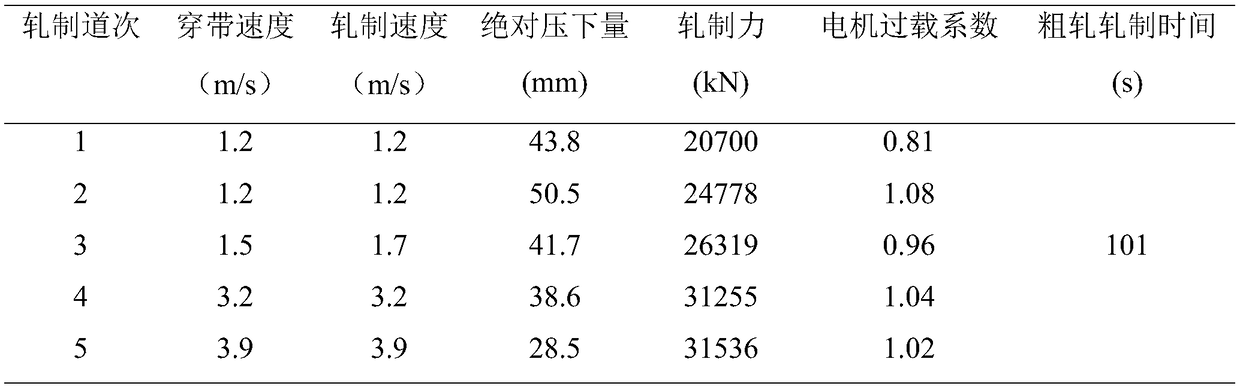
Figure 1 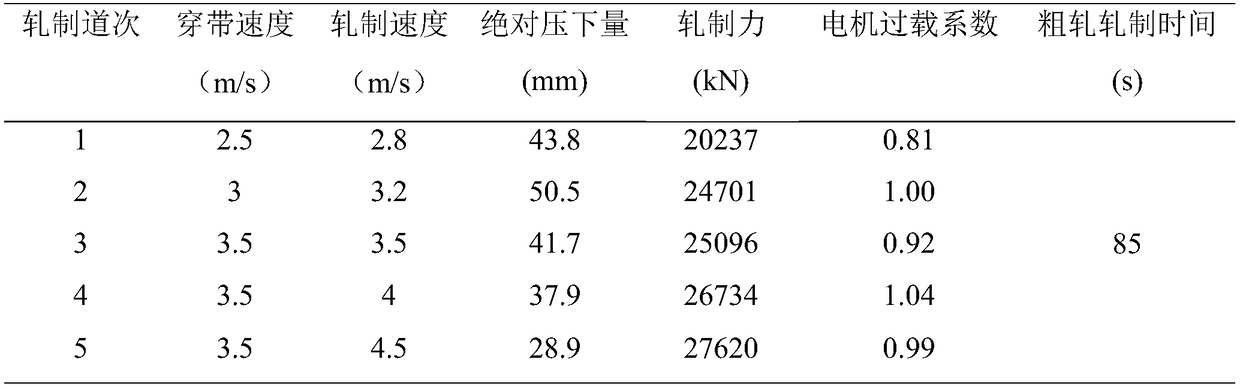
Figure 2 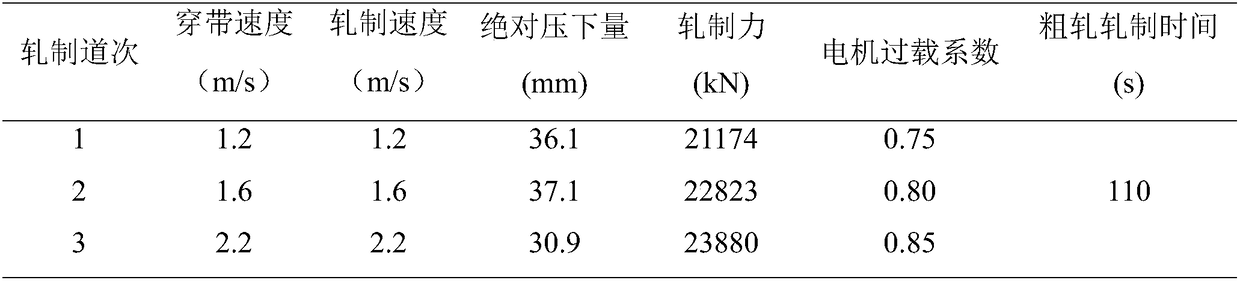
Figure 3
Abstract
Description
technical field
[0001] The invention belongs to the technical field of rolling, and in particular relates to a load distribution method of a reversible single-stand four-high roughing mill for improving the rolling rhythm. Background technique
[0002] At present, for a hot continuous rolling production line with only one four-high reversing roughing mill, the rolling rhythm of the roughing mill has become a bottleneck restricting the improvement of the rolling rhythm of the entire production line. The main factors affecting the rolling rhythm of the roughing mill are the total number of rolling passes, the strip threading speed and rolling speed of each pass, and the reduction rate of each pass. The existing rough rolling model only accesses the model settings according to the steel type, and calculates the required strip threading speed, rolling speed limit value, and reduction distribution strategy value. Since the principle of dividing the steel race is to classify stee...
Examples
Embodiment 1、 comparative example 1
[0052] The steel type is marked as steel type A, the size of the incoming slab is 230mm×1300mm×9900mm, the size of the intermediate billet is 41.7mm×1260mm×59m, and the total number of rolling passes is 5.
[0053] In Comparative Example 1, the rough rolling time before implementation of the scheme was 101 seconds, and Table 1 is the rolling parameter table of Comparative Example 1.
[0054] In Example 1, the strip threading speed of the first 4 passes is increased to near the limit value, and the rolling speed of each pass is gradually increased to near the maximum value according to the equipment capacity and process requirements. Table 2 is the rolling parameter table after the implementation of the scheme , the rough rolling time has been reduced by 16 seconds.
Embodiment 2、 comparative example 2
[0056] The steel type is marked as steel type B, the size of the incoming slab is 230mm×1300mm×9900mm, the size of the intermediate billet is 46mm×1270mm×53m, and the total number of rolling passes is 7.
[0057] In Comparative Example 2, the rough rolling time before the implementation of the scheme was 110 seconds, and Table 3 is the rolling parameter table of Comparative Example 2.
[0058] In Example 2, the strip threading speed of the first 3 passes is increased to near the limit value, and the rolling speed of each pass is gradually increased to near the maximum value according to the equipment capacity and process requirements. Table 4 is the rolling parameter table after the implementation of the scheme , the rough rolling time has been reduced by 14 seconds.
Embodiment 3、 comparative example 3
[0060] The steel grade is marked as steel grade C, the size of the incoming slab is 230mm×1300mm×9900mm, the size of the intermediate billet is 42mm×1276mm×56m, and the total number of rolling passes is 5.
[0061] In Comparative Example 3, the rough rolling time before the implementation of the scheme was 63 seconds, and Table 5 is the rolling parameter table of Comparative Example 3.
[0062] In Example 3, the strip threading speed of the first two passes is increased to near the limit value, and the rolling speed of each pass is gradually increased to near the maximum value according to the equipment capacity and process requirements. Table 6 is the rolling parameter table after the implementation of the scheme , the rough rolling time has been reduced by 7 seconds.
[0063] Table 1
[0064]
[0065] Table 2
[0066]
[0067] table 3
[0068]
[0069]
[0070] Table 4
[0071]
[0072] table 5
[0073]
[0074] Table 6
[0075]