

Multistimuli-responsive material as well as preparation method and application thereof
A stimulus-response and multi-stimulus technology, applied in luminescent materials, chemical instruments and methods, character and pattern recognition, etc., can solve problems such as the unclear relationship between molecular structure and luminescent mechanism, and achieve remarkable results
Patent Information
- Authority / Receiving Office
- CN · China
- Current Assignee / Owner
- Publication Date
- 2021-02-05
Smart Images
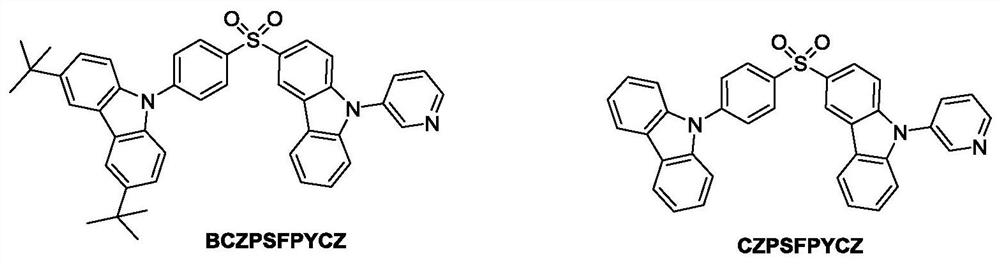
Figure 1 
Figure 2 
Figure 3
Abstract
Description
technical field
[0001] The invention belongs to the technical field of stimuli-responsive materials, in particular to a preparation method of a material with long afterglow at room temperature and piezoluminescent properties, and to applications in latent fingerprint identification imaging and electroluminescence. Background technique
[0002] Multifunctional organic light-emitting materials have good photoelectric properties and are widely used in smart displays, biosensors and other fields. Stimuli-responsive materials play a vital role as an important part of this type of materials, because they have the ability to adjust the luminous color by physical and chemical stimuli. So far, many reports on multi-excitation-responsive materials with tunable emission colors have been found, and these studies provide theoretical reference for the design of new materials. Although such traditional luminescent materials can exhibit color changes when subjected to external stimuli, the...
Examples
Embodiment 1
[0041] The preparation method of the stimulus response material BCZPSFPYCZ comprises the following steps:
[0042] (1) Weigh 2.21g (5.97mmol) of raw material 3-iodo-9-(3-pyridine)carbazole, 1.73g (17.97mmol) of sodium tert-butoxide powder, 0.12g (0.60mmol) of cuprous iodide, 0.13g (0.72mmol) of 1,10-phenanthroline was added to the flask reactor, and after nitrogen protection, anhydrous 80mL n-butanol solution was added; stirred at room temperature for 5min to fully dissolve the solid and disperse the system uniformly; then 0.77 g (6.03mmol) 4-thiophenol was added to the reaction system and continued to stir for 1min; the system was heated to 110°C and continued to reflux for 24h after the temperature stabilized; after the reaction, the crude product was added to 20mL dichloromethane and 100mL water, and Dichloromethane extraction (50mL×4); after removal of the solvent, a viscous liquid was obtained; the viscous liquid was dissolved in 30mL ethyl acetate and recrystallized at -...
Embodiment 2
[0047] Example 2 The preparation method for preparing the stimuli-responsive material is the same as that of Example 1, except that the raw material in step (1) is 2.21 g (5.97 mmol) of 3-iodo-9-(2-pyridine) carbazole; step (2) The raw material is 3-(4-fluorophenyl)mercapto-9-(2-pyridine)carbazole 2.12g (5.72mmol); the raw material of step (3) is 3-(4-fluorophenyl)sulfone-9-(2- Pyridine) carbazole 1.97g (4.89mmol), the structure is characterized as: 1 H NMR (400MHz, DMSO-d 6 ): δ9.16(d,1H),8.92(d,1H),8.83(dd,1H),8.56(d,1H),8.32(d,2H), 8.23(d,2H),8.18–8.10( m, 2H), 7.92 (d, 2H), 7.76 (dd, 1H), 7.59–7.54 (m, 2H), 7.47–7.38 (m, 6H), 7.30 (t, 2H).
[0048]
Embodiment 3
[0050] Example 3 The preparation method for preparing the stimuli-responsive material is the same as that of Example 1, except that the raw material in step (1) is 2.21 g (5.97 mmol) of 3-iodo-9-(4-pyridine) carbazole; step (2) The raw material is 2.12g (5.72mmol) of 3-(4-fluorophenyl)mercapto-9-(4-pyridine)carbazole; the raw material of step (3) is 3-(4-fluorophenyl)sulfone-9-(4- Pyridine) carbazole 1.97g (4.89mmol), the structure is characterized as: 1 H NMR (400MHz, DMSO-d 6 ): δ9.16(d,1H),8.92(d,1H),8.81(dd,1H),8.56(d,1H),8.32(d,2H), 8.23(d,2H),8.18–8.10( m, 2H), 7.92 (d, 2H), 7.76 (dd, 1H), 7.59–7.54 (m, 2H), 7.47–7.38 (m, 6H), 7.30 (t, 2H).
[0051]