
Benzisothiazole hypoxia-inducible factor 2 agonist compound or pharmaceutically acceptable salt, preparation method and application thereof
A hypoxia-inducible factor, benzisothiazole technology, applied in organic chemistry, pharmaceutical formulations, medical preparations containing active ingredients, etc., can solve problems such as weak activity, achieve high-efficiency EPO levels, avoid subtype selectivity, The effect of increasing EPO levels
Patent Information
- Authority / Receiving Office
- CN · China
- Patent Type
- Applications(China)
- Current Assignee / Owner
- Publication Date
- 2021-08-03
Smart Images
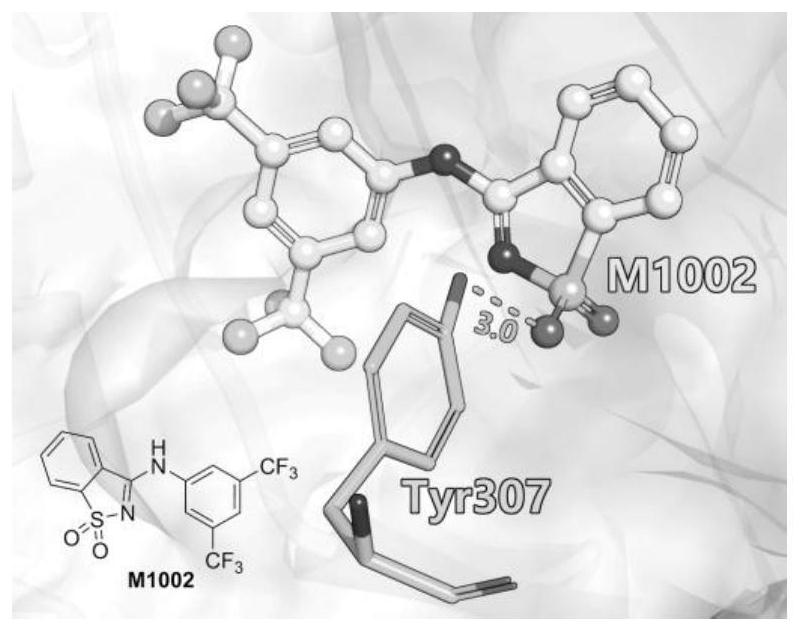
Figure 1 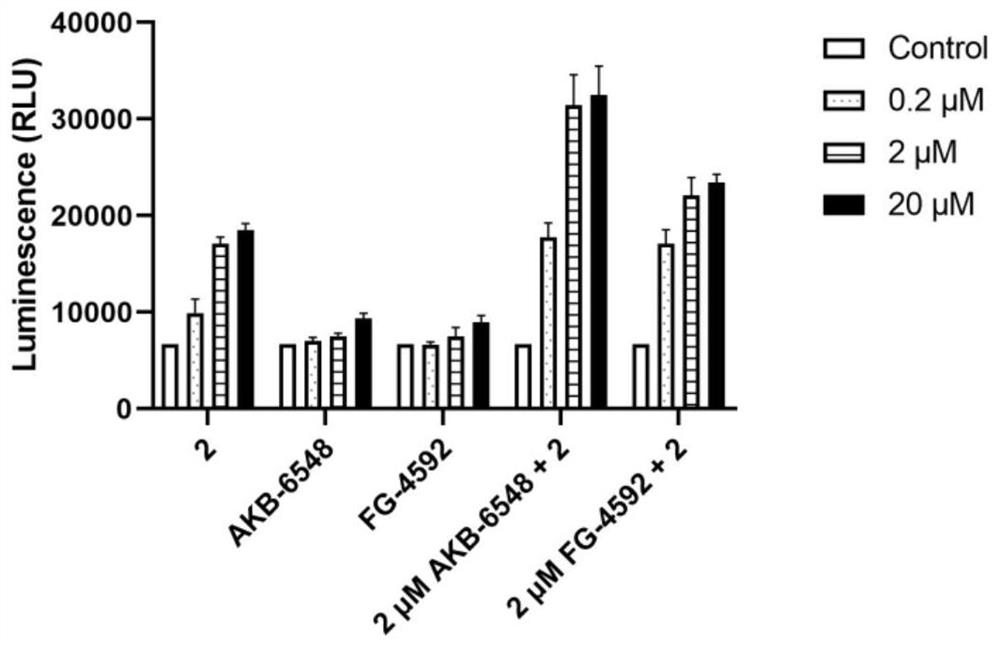
Figure 2 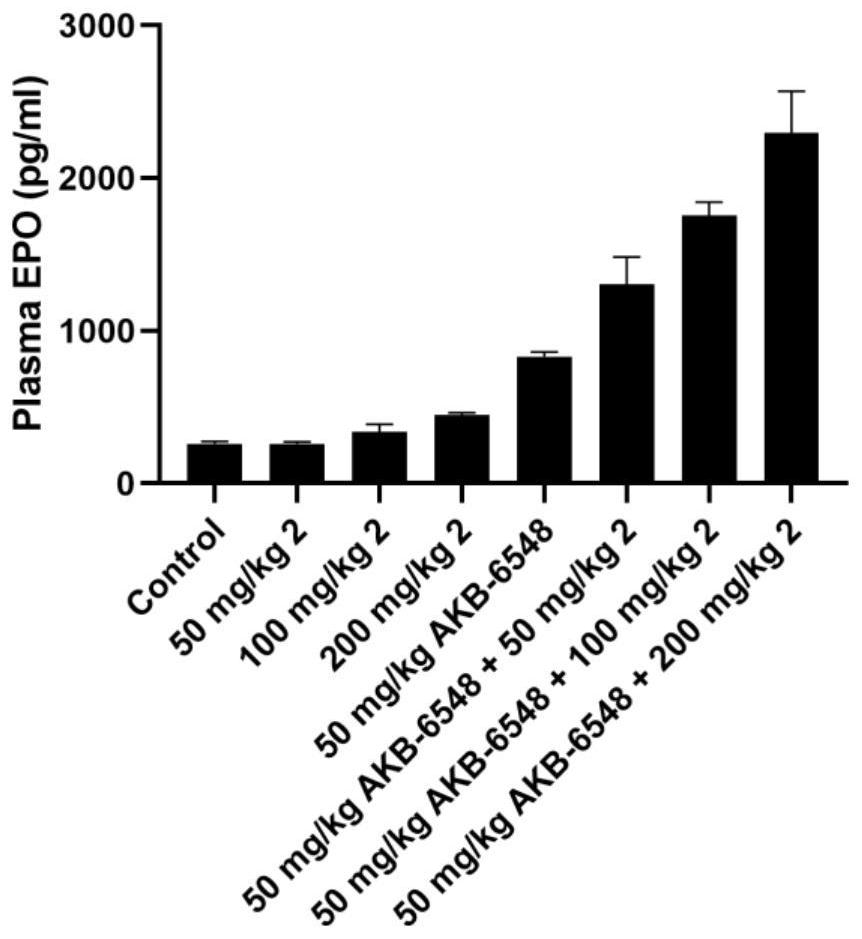
Figure 3
Abstract
Description
technical field
[0001] The present invention relates to the field of medicinal chemistry, in particular to a benzisothiazole hypoxia-inducible factor 2 agonist compound or a pharmaceutically acceptable salt thereof, and also to a preparation method and application of the compound. Background technique
[0002] Anemia is a common condition in which the level of red blood cells in the blood is insufficient for oxygen transport in the body. Adults need about 2 to 3 × 10 13 red blood cells to ensure oxygen delivery, but the lifespan of red blood cells is only 100 to 120 days. The process of erythropoiesis is mainly carried out in the bone marrow, and hemoglobin is the main component of red blood cells, which is composed of globin and heme. In the process of erythropoiesis, erythropoietin (EPO) is the most critical hormone in erythropoiesis, and ferrous ion is an important raw material of heme, and the levels of both are crucial to the production of erythrocytes .
[0003] Hy...
Examples
Embodiment 1
[0044]
[0045] N-(3,5-Dibromophenyl)benzo[d]isothiazol-3-amine (1)
[0046] (1) Preparation of 2-chloro-N-(3,5-dibromophenyl)benzamide
[0047] Add sodium hydride (31.3 mg, 1.2 mmol) and 3,5-dibromoaniline (276.0 mg, 1.1 mmol). After the reaction was stirred for 0.5 hours in an ice bath, the reaction gradually returned to room temperature, and the reaction was maintained at room temperature for 24 hours. After the reaction, the reaction solution was quenched by adding water (5 mL). The reaction solution was adjusted to pH ~ 3.0 with dilute hydrochloric acid, the target product was protonated and dissolved in the water phase, and the water phase was washed with dichloromethane (3×10 mL) to remove impurities in the organic phase. The aqueous phase was adjusted to pH~7.0 with saturated sodium bicarbonate solution and extracted with dichloromethane (3 x 10 mL). The organic phases were combined, dried over anhydrous sodium sulfate, and the solvent was evaporated under reduc...
Embodiment 2
[0051]
[0052] N-(3,5-dimethoxyphenyl)benzo[d]isothiazol-3-amine (2)
[0053] (1) Preparation of 2-chloro-N-(3,5-dimethoxyphenyl)benzamide
[0054] In an ice bath, 3,5-dimethoxyaniline (1.23g, 8.0 mmol) and sodium hydride (0.524 g, 22.0 mmol). React at room temperature for 1 hour. After the reaction, the reaction solution was quenched by adding ice water (25 mL). The reaction solution was adjusted to pH ~ 3.0 with dilute hydrochloric acid. Dichloromethane (3 x 10 mL) was added to wash the aqueous phase to remove impurities from the organic phase. The aqueous phase was adjusted to pH ~ 7.0 with saturated sodium bicarbonate solution and extracted with dichloromethane (3 x 10 mL). The organic phases were combined, and the solvent was distilled off under reduced pressure to obtain a red oily product. The next reaction was carried out directly without further purification.
[0055] (2) Preparation of N-(3,5-dimethoxyphenyl)benzo[d]isothiazol-3-amine
[0056] Dissolve 2-...
Embodiment 3
[0058]
[0059] N-(3,5-Dimethylphenyl)benzo[d]isothiazol-3-amine (3)
[0060] (1) Preparation of 2-chloro-N-(3,5-dimethylphenyl)benzamide
[0061]Add sodium hydride (31.3 mg, 1.2 mmol) and 3,5-dimethylaniline ( 133.3 mg, 1.1 mmol). The reaction solution was reacted in an ice bath for 0.5 hours, then returned to room temperature, and kept at room temperature for 24 hours. After the reaction, the reaction solution was quenched by adding water (5 mL). The reaction solution was adjusted to pH ~ 3.0 with dilute hydrochloric acid. Dichloromethane (3 x 10 mL) was added to wash the aqueous phase to remove impurities from the organic phase. The aqueous phase was adjusted to pH ~ 7.0 with saturated sodium bicarbonate solution and extracted with dichloromethane (3 x 10 mL). The organic phases were combined, and the solvent was distilled off under reduced pressure to obtain a brown oily crude product, which was directly used in the next reaction without further purification.
[0...