
A compound with ppar multiple agonistic activity and its preparation method and application
A compound and active technology, applied in the field of chemical medicine, can solve problems such as single effect of hypoglycemic or lipid-lowering drugs, inability to regulate glucose and lipid metabolism at the same time, and linking clinical diseases, etc., to achieve wide application prospects and significant medicinal value Effect
Patent Information
- Authority / Receiving Office
- CN · China
- Patent Type
- Patents(China)
- Current Assignee / Owner
- Publication Date
- 2020-06-26
Smart Images
Figure 1 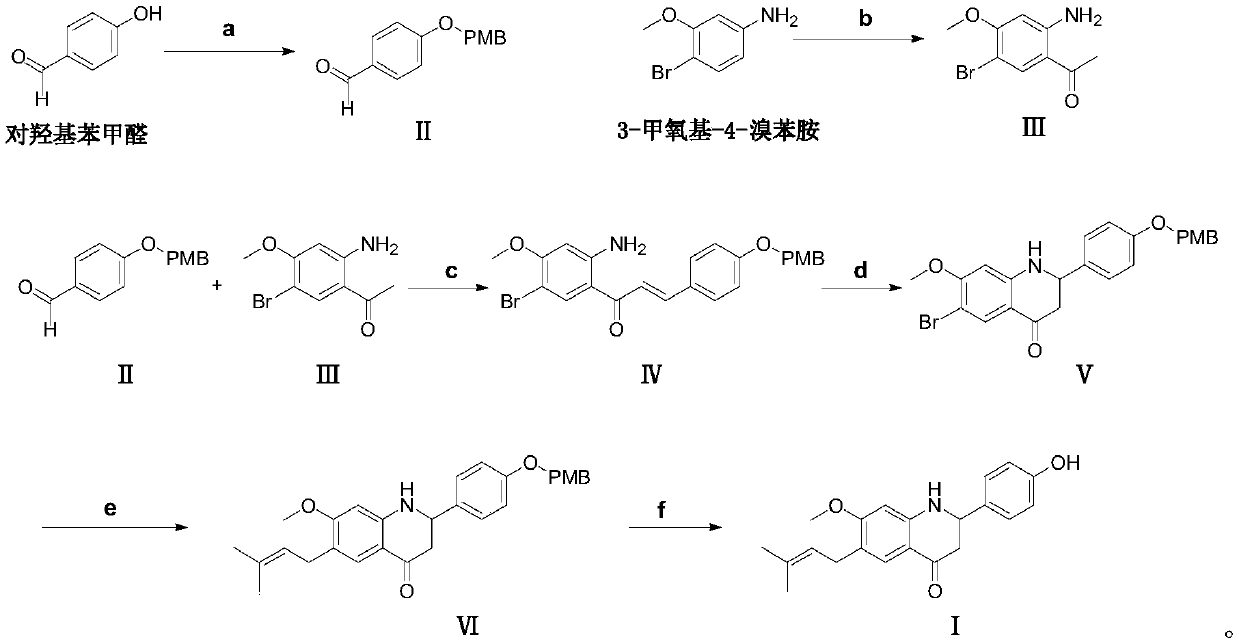
Figure 2 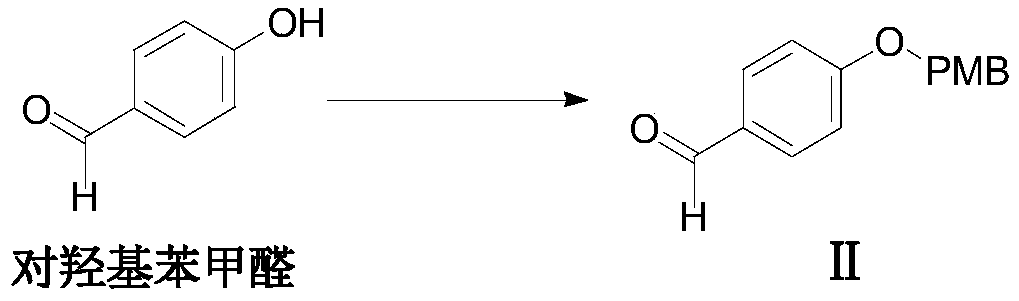
Figure 3
Abstract
Description
technical field
[0001] The invention relates to a compound with multiple agonistic activities of PPAR and its preparation method and application, belonging to the technical field of chemistry and medicine. Background technique
[0002] According to the World Health Organization, about 20%-25% of adults worldwide suffer from metabolic syndrome, 70%-80% of diabetic patients suffer from metabolic syndrome, and up to 86% of type II diabetic patients are diagnosed with metabolic syndrome. disorder. Studies have shown that: people's weight gain and inactive lifestyle can cause insulin resistance in fat cells, leading to more and more people suffering from metabolic syndrome (Diabetes&Metabolic Syndrome Clinical Research&Reviews[J],2015,9(2):124 -126). Metabolic syndrome is related to the disturbance of glucose metabolism in the body (Journal of Diabetes & Metabolic Disorders[J],2014,13(1):1-7), and is a risk factor leading to obesity, central obesity, insulin resistance, dyslipi...
Examples
Embodiment 1
[0053] Embodiment 1: the preparation of formula II compound
[0054]
[0055] Add p-hydroxybenzaldehyde (3.7g, 30.0mmol) and potassium carbonate (12.4g, 90.0mmol) into DMF (40mL), stir and dissolve at room temperature, slowly drop p-methoxybenzyl chloride (3.5g, 30.0 mmol), react at room temperature (about 20-25° C.) for 12 hours, end the reaction, add saturated NaCl solution to quench the reaction, then add ethyl acetate for extraction until the extraction is complete, combine the organic phases, and dry the organic phases with anhydrous sodium sulfate. Suction filtration, concentrated under reduced pressure until no solution distilled off to obtain a white powder substance, which is the compound of formula II (named: 4-p-methoxybenzylhydroxy-benzaldehyde): 6.2g, 25.6mmol, molar yield was 85.3%.
Embodiment 2
[0056] Embodiment 2: the preparation of formula III compound
[0057]
[0058] Dissolve 3-methoxy-4-bromoaniline (6.0g, 30.0mmol) in dichloromethane (30mL), cool to 0°C in an ice bath, and slowly add BCl dropwise at 0°C 3 Dichloromethane solution (1.0mol / L, 33mL), keep stirring for half an hour, then slowly add AlCl 3 (4.4g, 33.0mmol) and CH 3 CN (3.2mL, 60.0mmol), after the addition is complete, stir the reaction at room temperature for half an hour, then rise to 70°C and keep the temperature for 12 hours, and then end the reaction. After the reaction solution is cooled, add 2N HCL to quench the reaction (the process of adding hydrochloric acid The reaction solution will have a lot of white bubbles, try to add it slowly in an ice bath at 0°C), then stir at 70°C for 2 hours, after cooling to room temperature, add 1N NaHCO 3 Adjust the solution to neutral, then add dichloromethane to extract until the extraction is complete, combine the organic phases, dry the organic phas...
Embodiment 3
[0061] Embodiment 3: the preparation of formula IV compound
[0062]
[0063] Add the compound of formula II (1.7g, 6.5mmol) and the compound of formula III (1.2g, 5.0mmol) into absolute ethanol (20mL), then add solid sodium hydroxide (800.0mg, 20.0mmol), after the addition is complete, the temperature is raised Reaction at 60°C for 12 hours, the reaction was terminated, the reaction solution was cooled to room temperature, filtered, the filter cake was washed with ethanol, and dried to obtain a yellow powder substance, which was the compound of formula IV (named: 1-(2'-amino-4 '-methoxy-5'-bromo)-3-(4'-methoxybenzylanisole)-2E-propen-1-one): 2.2 g, 4.66 mmol, and the molar yield is 93.2%.
[0064] Tested:
[0065] 1 H NMR (300MHz, CDCl 3 )δ8.00(s,1H,ArH),7.70(d,J=15.3Hz,1H,=H),7.59(d,J=8.4Hz,2H,ArH),7.44–7.33(m,3H,= H / ArH), 6.96(dd, J=21.1, 8.3Hz, 4H, ArH), 6.59(s, 2H, NH2), 6.13(s, 1H, ArH), 5.04(s, 2H, OCH 2 ),3.89(s,3H,ArOCH 3 ),3.82(s,3H,ArOCH 3 ).