
Low-voltage low-loss electrolytic capacitor paper and preparation method and application thereof
An electrolytic capacitor paper, low-loss technology, applied in the field of low-voltage low-loss electrolytic capacitor paper and its preparation, can solve the problems of weakening the fiber bonding force in the wet paper web, poor fiber fiber bonding force, and short circuit of the electrolytic capacitor, so as to improve the quality of the paper Strength, good absorption, and the effect of reducing the short circuit rate
Patent Information
- Authority / Receiving Office
- CN · China
- Current Assignee / Owner
- Publication Date
- 2022-04-01
Smart Images
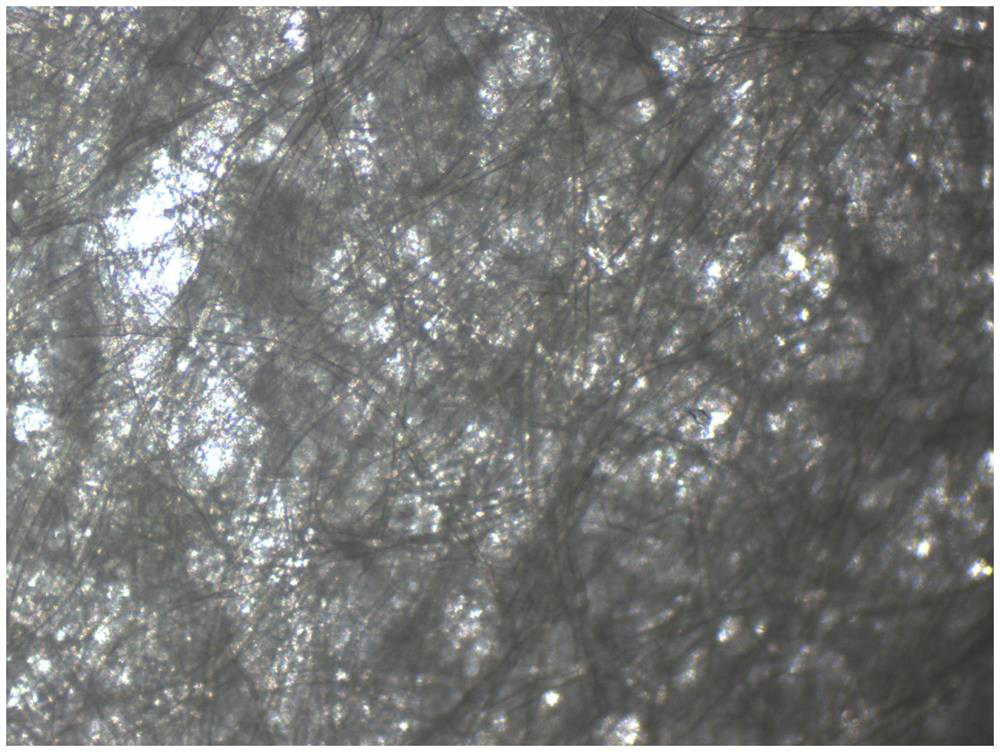
Figure 1 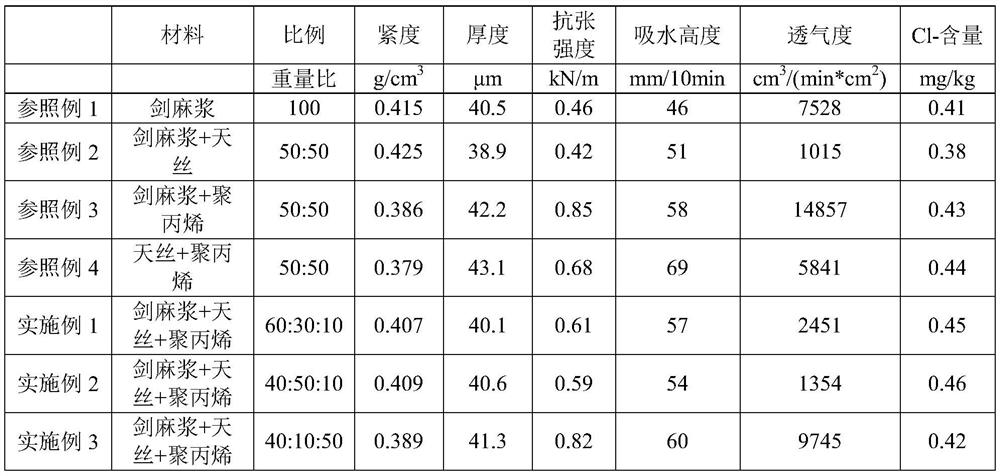
Figure 2 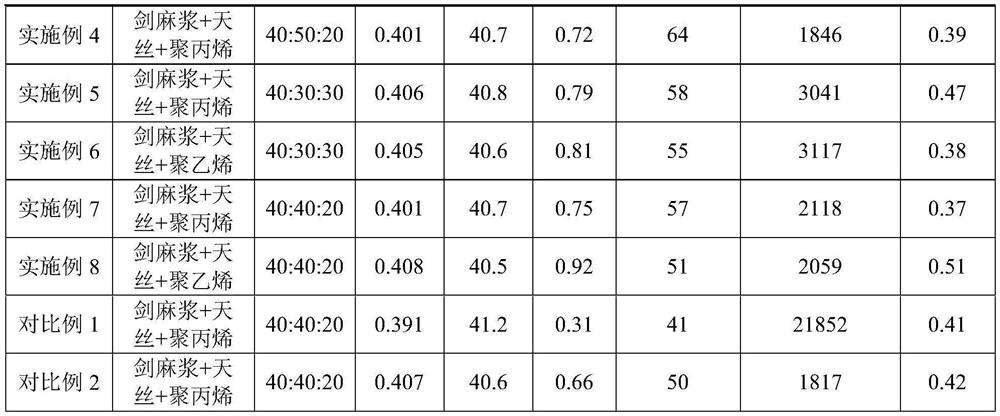
Figure 3
Abstract
Description
technical field
[0001] The invention relates to the technical field of new materials for aluminum electrolytic capacitor paper, in particular to a low-voltage low-loss electrolytic capacitor paper and its preparation method and application. Background technique
[0002] Electrolytic capacitors are one of the important components in the electronics industry. In addition to the functions of filtering, decoupling and signal coupling in the circuit, they also play a special role in special circuits such as rectification circuits, power circuits and AC motor starting circuits. Widely used in the automotive industry, security industry, medical electronics, computer TV, electronic toys and industrial control and other fields.
[0003] Electrolytic capacitor paper mainly plays the role of isolating positive and negative electrodes and absorbing electrolyte in electrolytic capacitors. According to the requirements of use, it can be divided into high-voltage electrolytic paper and low...
Examples
example 2
[0047] The beating degree of sisal pulp is 25°SR, the beating specific energy is 200kW*h / t, the tencel fiber is soaked for 24 hours and then beating, the beating degree is 50°SR, the beating specific energy is 60kW*h / t, the sisal pulp and tencel The fibers are mixed according to the absolute dry weight of 50% and 50% respectively, and sent to the paper machine papermaking system, and 0.05% of the total dry weight of the raw materials is added to the batching box of the paper machine flow delivery system. Non-ionic polyacrylamide solution , using inclined wire paper machine papermaking, papermaking process according to the conventional process.
[0048] Reference example 3
[0049] The beating degree of sisal pulp is 25°SR, the beating specific energy is 200kW*h / t, the specification of polypropylene fiber is 1.0dtex*5mm, the polypropylene fiber is stirred and dispersed for 40 minutes, and then filtered through a 60-mesh filter, and then added again Ionized water is configured ...
example 4
[0051] Tencel fibers are soaked for 24 hours and then beaten, the degree of beating is 50°SR, the specific energy of beating is 60kW*h / t, the specification of polypropylene fibers is 1.0dtex*5mm, the polypropylene fibers are stirred and dispersed for 40 minutes, and then filtered through a 60-mesh filter. After filtering, deionized water is added to form a fiber suspension with a concentration of 0.1% to 1.0%. The tencel pulp and polypropylene fiber are mixed at 50% and 50% by absolute dry weight and sent to the paper machine papermaking system. Add non-ionic polyacrylamide solution of 0.05% relative to the dry weight of the raw materials in the batching box of the paper machine flow delivery system, and use an inclined wire paper machine for papermaking. The base paper obtained by papermaking is shaped by a sizing machine, and the surface temperature of the sizing dryer is 240 ℃, setting speed 100m / min, setting once.
Embodiment 1
[0053] The beating degree of sisal pulp is 25°SR, the beating specific energy is 200kW*h / t, the tencel fiber is soaked for 24 hours and then beating, the beating degree is 50°SR, the beating specific energy is 60kW*h / t, and the specification of polypropylene fiber is 1.0dtex *5mm, polypropylene fibers were stirred and dispersed for 40 minutes, and then filtered through a 60-mesh filter. After filtration, deionized water was added to make a fiber suspension with a concentration of 0.1% to 1.0%. Sisal pulp, tencel fibers and polypropylene The fibers are mixed and sent to the paper machine papermaking system according to the dry weight ratio of 60%, 30%, and 10%, and 0.05% of the total dry weight of the raw materials is added to the batching box of the paper machine. The acrylamide solution is made by inclined wire paper machine, and the base paper obtained by papermaking is shaped by a setting machine. The surface temperature of the setting drying cylinder is 240°C, the setting s...