
Comprehensive estimation method and system for clean greenhouse gas emission of regional agricultural planting system
A planting system and greenhouse gas technology, applied in the field of agricultural information, can solve the problems of difficult carbon emission, large uncertainty, oversimplification and so on
Patent Information
- Authority / Receiving Office
- CN · China
- Patent Type
- Applications(China)
- Current Assignee / Owner
- Publication Date
- 2022-07-22
Smart Images
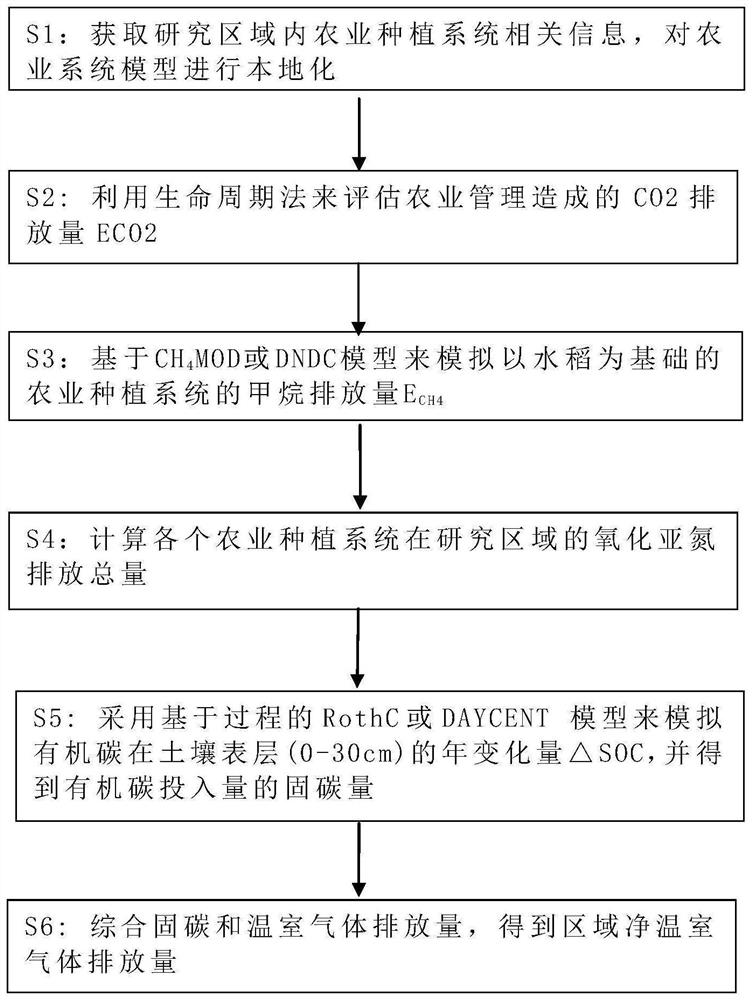
Figure 1 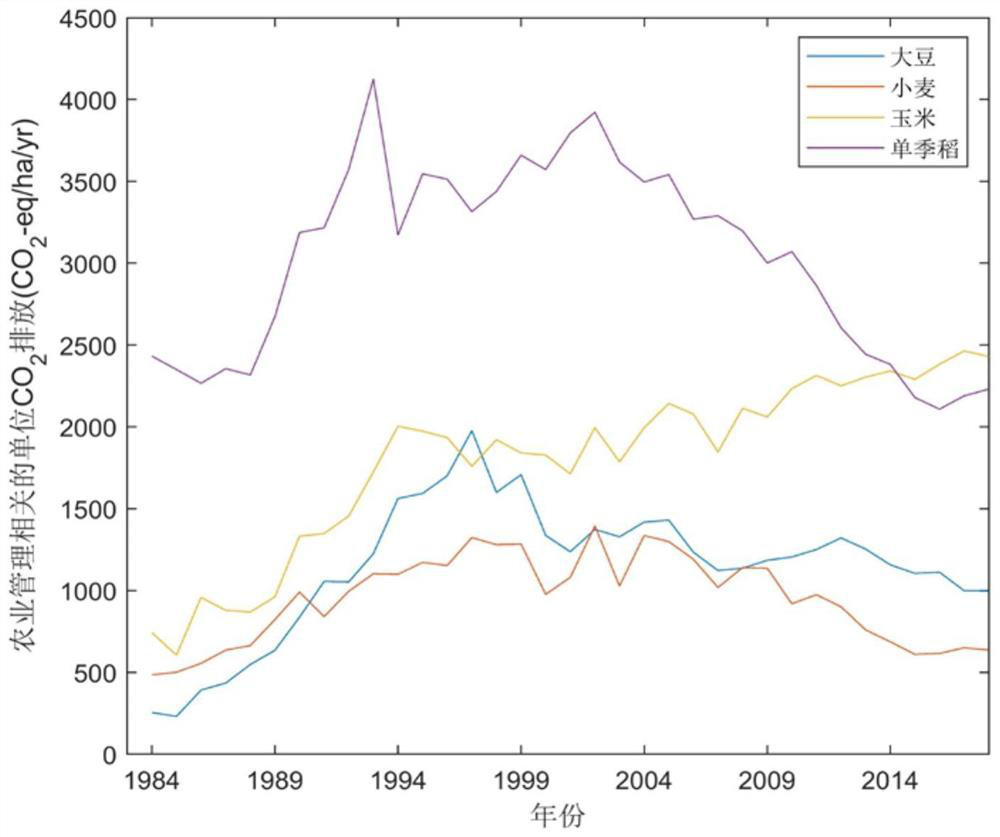
Figure 2 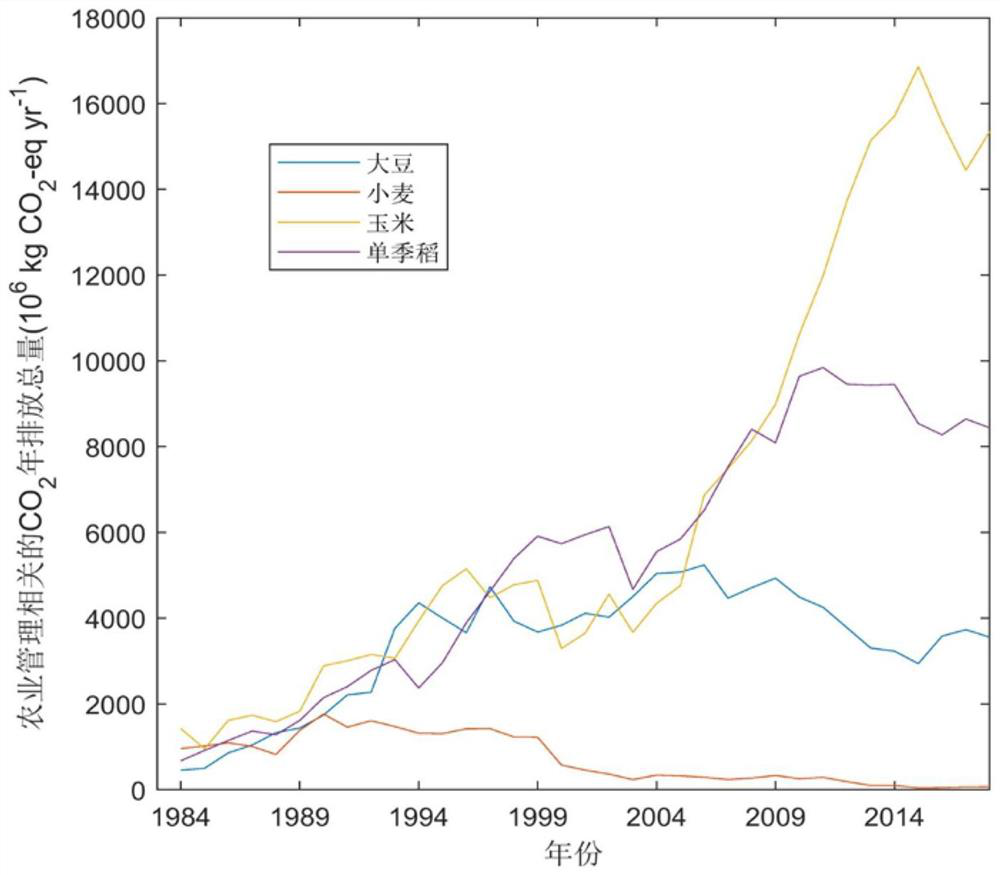
Figure 3
Abstract
Description
technical field
[0001] The invention relates to the technical field of agricultural information, and more particularly to a method and system for comprehensively estimating net greenhouse gas emissions in a regional agricultural planting system. Background technique
[0002] In 2020, my country solemnly promises that CO 2 Emissions strive to peak by 2030 and carbon neutrality by 2060. Carbon peaking and carbon neutrality in 2021 will be written into the government work report. As a result, carbon peaking and carbon neutralization have become a major social and technological task.
[0003] Agricultural production consumes a lot of chemical fertilizers, pesticides and water resources, and is an important source of greenhouse gas (GHG) emissions. Agricultural GHG emissions account for about 10-12% of total global GHG emissions. At the same time, agriculture plays an important role in carbon sequestration. Therefore, strengthening carbon sequestration and emission reduction...
Examples
Embodiment
[0055] Taking Heilongjiang Province as an example, the technical method of the present invention is used to predict and study the comprehensive estimation of net greenhouse gas emissions from agricultural planting systems in the study area for many years from 1984 to 2018. The life cycle method, SRNM model, CH4MOD model and The RothC model uses many years of experimental observation data on climate, soil, and site history. The specific process is as follows.
[0056] Obtain relevant information and data to build a database for the simulation of net greenhouse gas emissions from wheat, rice, corn and soybeans. The data sets involved are shown in Table 1 below:
[0057] Table 1
[0058]
[0059] After that, the life cycle method recommended by the IPCC2019 Greenhouse Gas Emission Inventory was used to evaluate the CO2 emissions caused by agricultural management. The material input of the following model was nitrogen fertilizer, phosphate fertilizer, potash fertilizer, pestic...