
Microbial destruction using a gas phase decontaminant
a technology of decontaminant and gas phase, applied in the field of sanitizing systems, can solve the problems of high temperature steam, foodtuffs and other fragile items that cannot be used on items that would be damaged, and achieve the effect of reducing pressure differential and minimizing the risk of explosion
Patent Information
- Authority / Receiving Office
- US · United States
- Patent Type
- Applications(United States)
- Current Assignee / Owner
- Publication Date
- 2005-07-07
- Estimated Expiration
- Not applicable · inactive patent
Smart Images
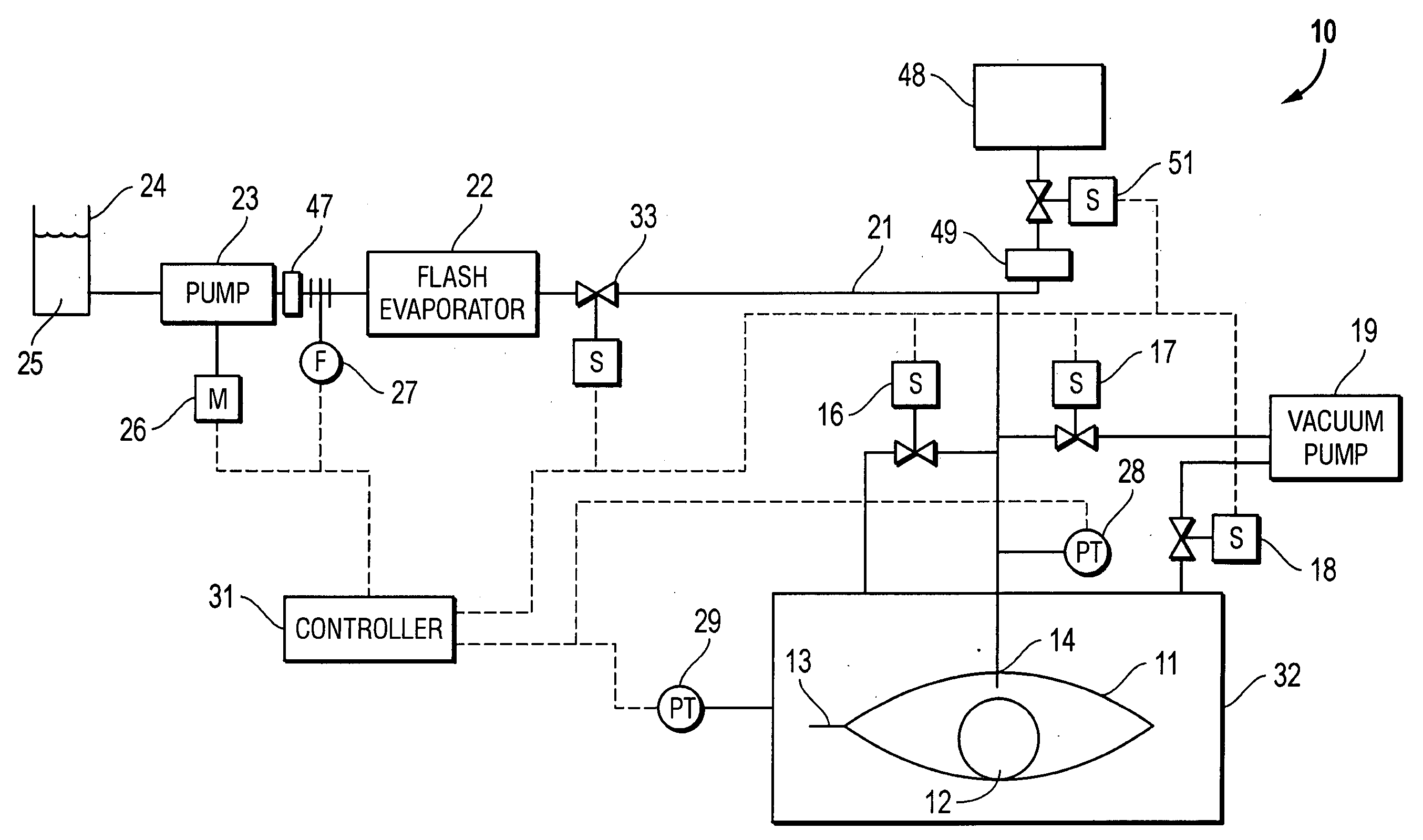
Figure 1 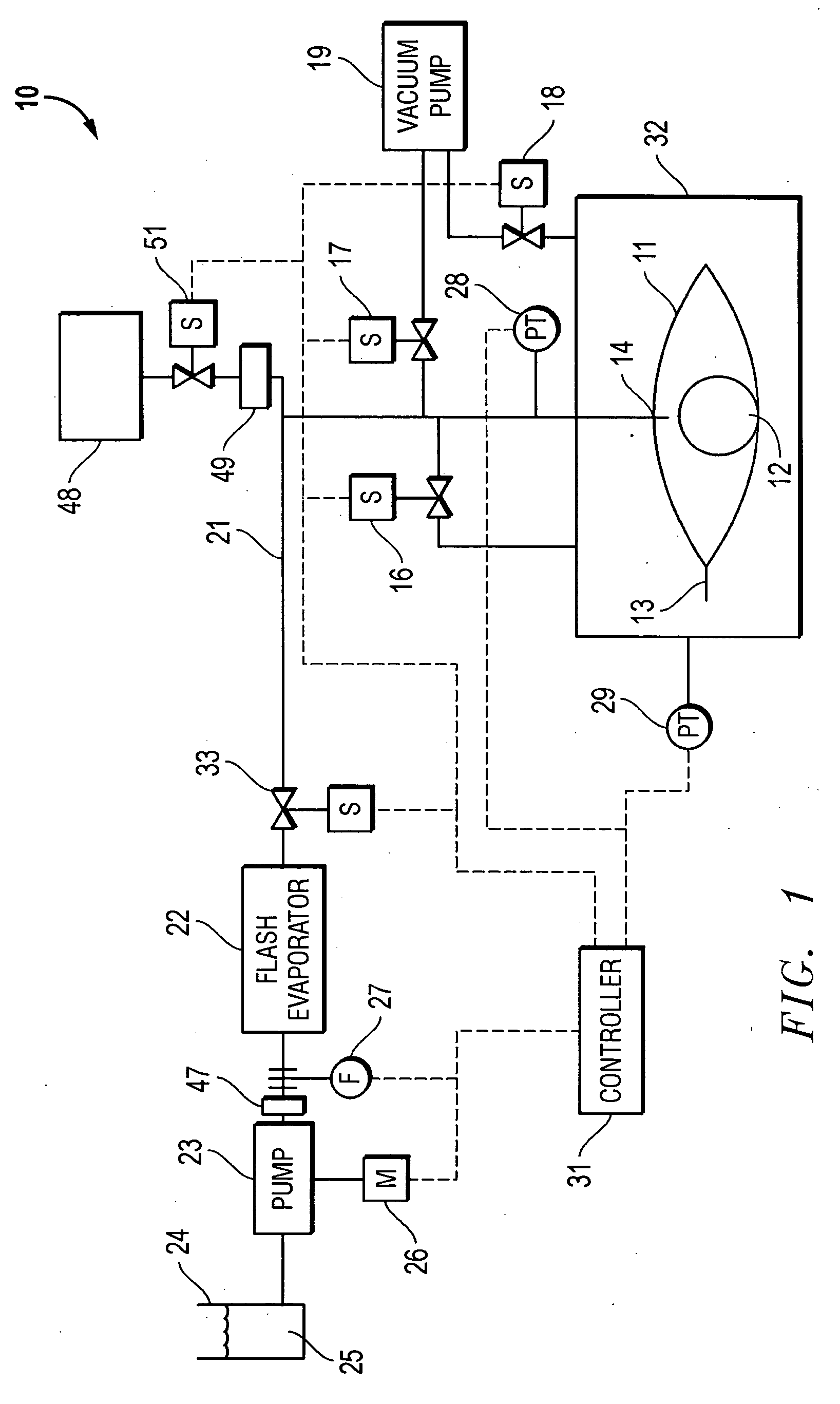
Figure 2 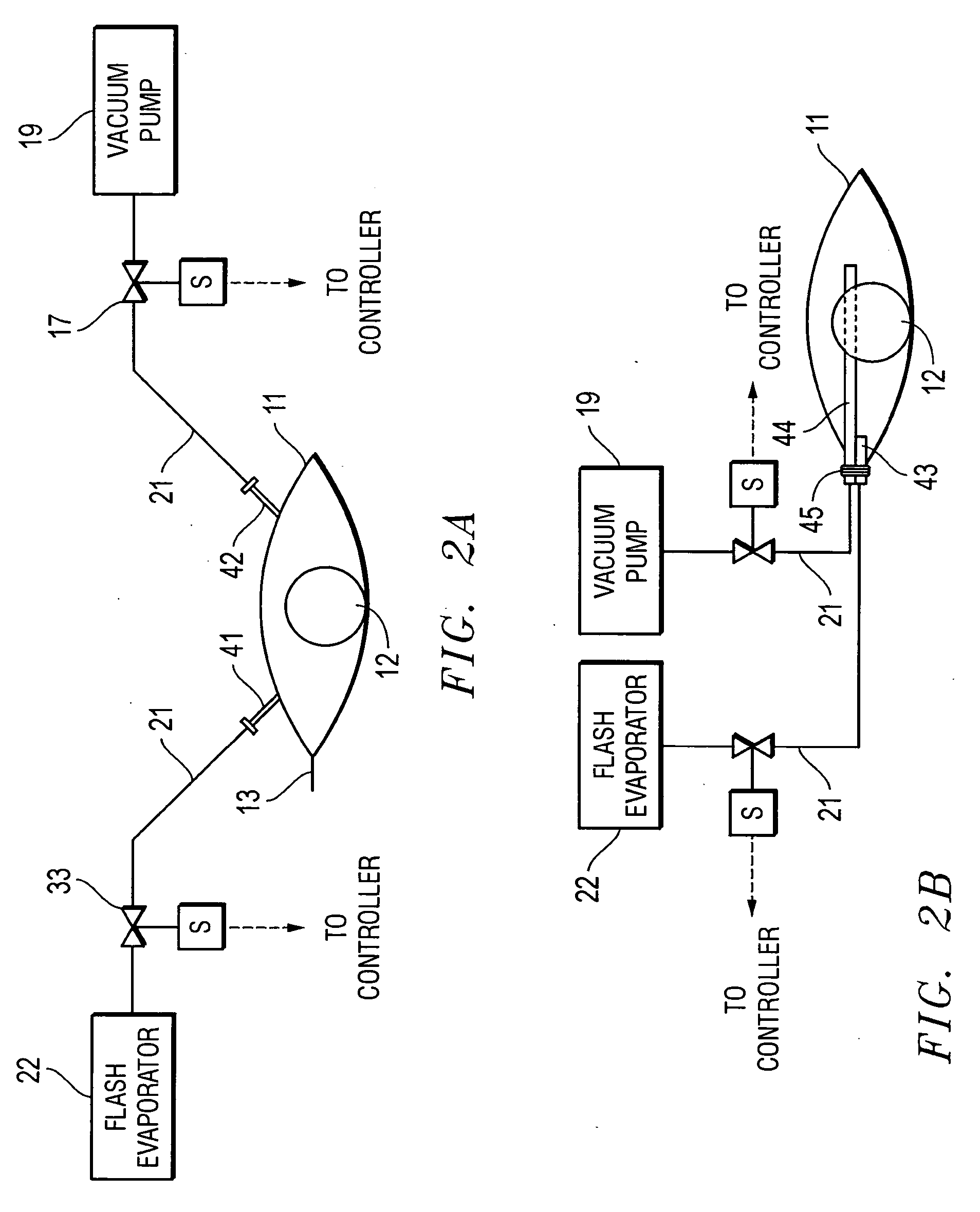
Figure 3
Abstract
Description
BACKGROUND OF THE INVENTION
[0001] 1. Field of the Invention
[0002] The present invention relates to sanitizing systems, and more particularly to apparatus and methods for disinfecting and sterilizing vacuum packed objects.
[0003] 2. Description of the Related Art
[0004] Microbial spoilage is the main determinant of the shelf life of many foodstuffs that are stored at ambient or chill room temperatures. The rate at which microbes act to deteriorate food is governed by many factors. Generally, the number of microbes that are present on the foodstuff when it goes into storage is the single greatest factor that determines the rate of microbial growth, and hence the shelf life of the foodstuff. Therefore, to maximize shelf life, it is important to ensure that the foodstuff is exposed to the lowest concentration of microbes as possible.
[0005] Preservation of food products can be achieved using a variety of approaches. Physical manipulations of food products that have a preservative effe...
Examples
example 1
Disinfection Efficacy
[0059] The following experiments were performed using a system in accordance with the present invention. Food crops were pruned of inedible roots, leaves, etc., and weighed. A given food crop was then inoculated with a single challenge microorganism. All challenge microorganisms were purchased from ATCC as streptomycin-resistant strains-Esherichia coli (E. coli), Staphylococcus aureus (S. aureus), and Salmonella choleraesuis (S. choleraesuis). This was done so that when plating was performed on agar containing streptomycin, any natural flora that contaminated the food upon purchase would be eradicated by the antibiotic thereby allowing only the specific challenge microbe used the opportunity to grow on the plates. After inoculation, the crops were left to dry for 30 minutes to 1 hour. The crops were then placed in the Ziploc® bag and into the vacuum chamber. The bag was then connected to the metal hydrogen peroxide dispensing line via a tubing connector, the de...