
Printing plate material, printing plate manufacturing method, and printing method
a printing plate and manufacturing method technology, applied in the direction of thermography, instruments, photomechanical equipment, etc., can solve the problems of easy occurrence of control errors, inability to avoid occurrence of a certain degree of width fluctuation in printing quality, and high labor intensity
Patent Information
- Authority / Receiving Office
- US · United States
- Patent Type
- Applications(United States)
- Current Assignee / Owner
- Publication Date
- 2006-09-21
- Estimated Expiration
- Not applicable · inactive patent
Smart Images
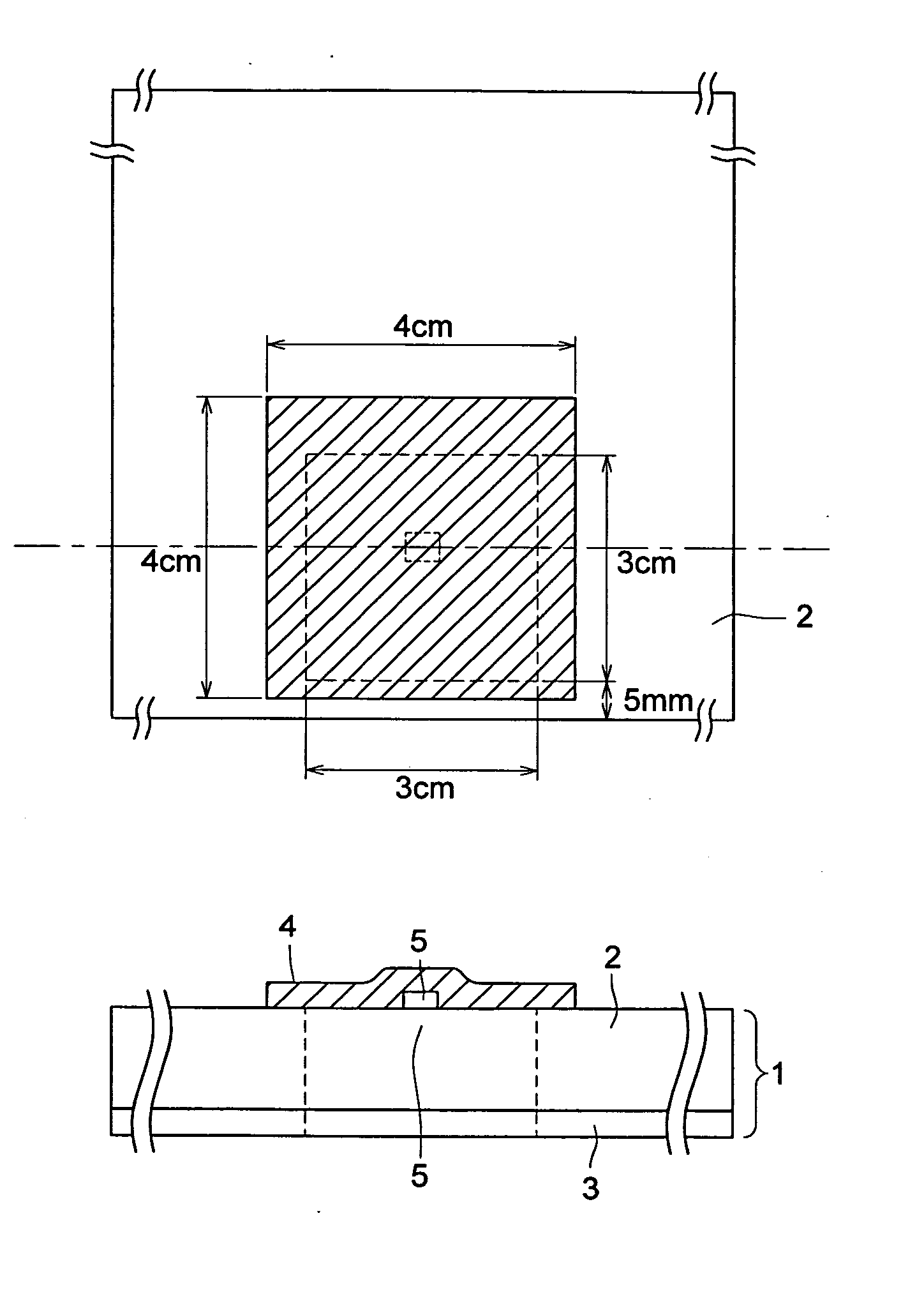
Figure 1 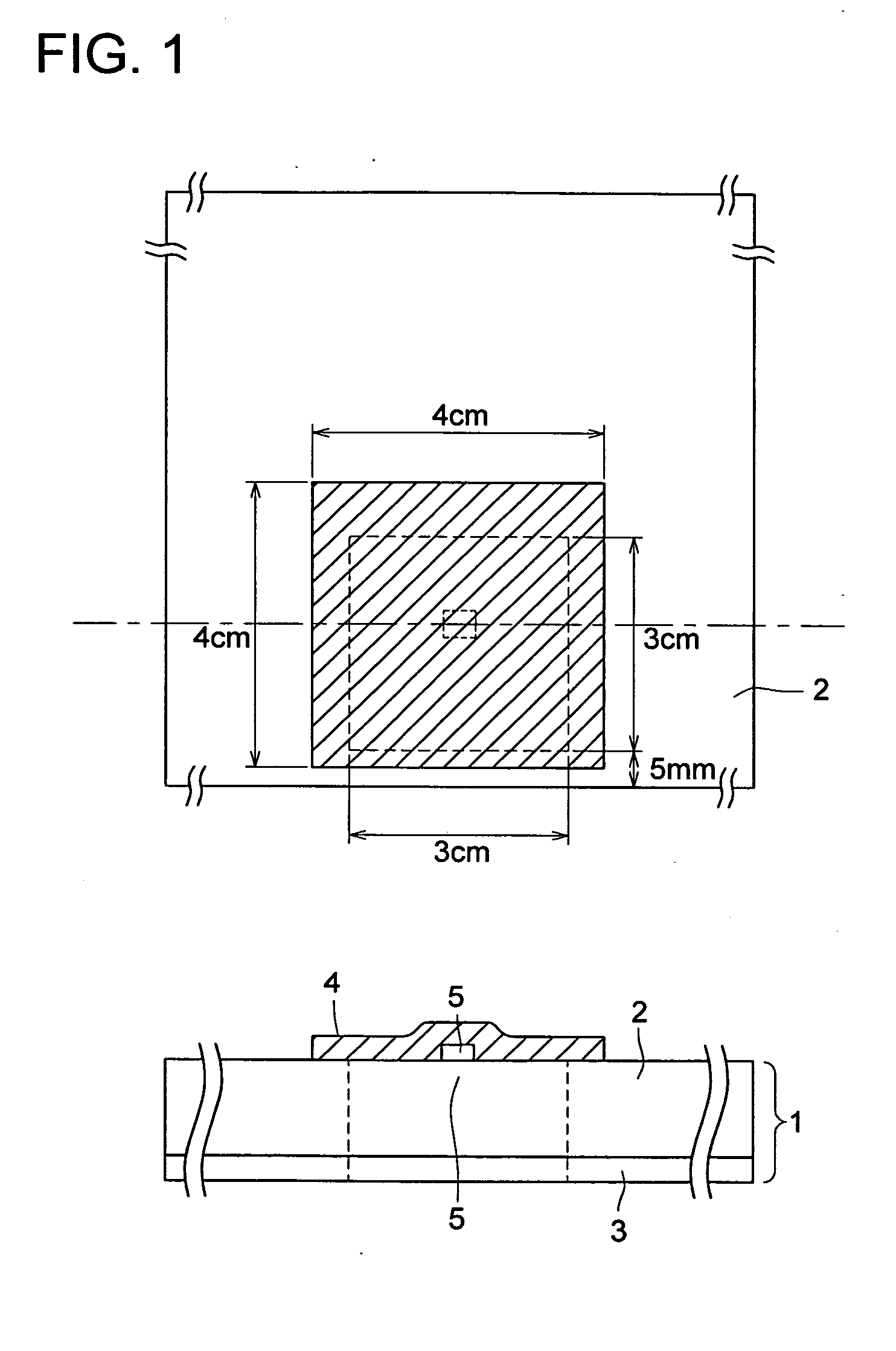
Figure 2 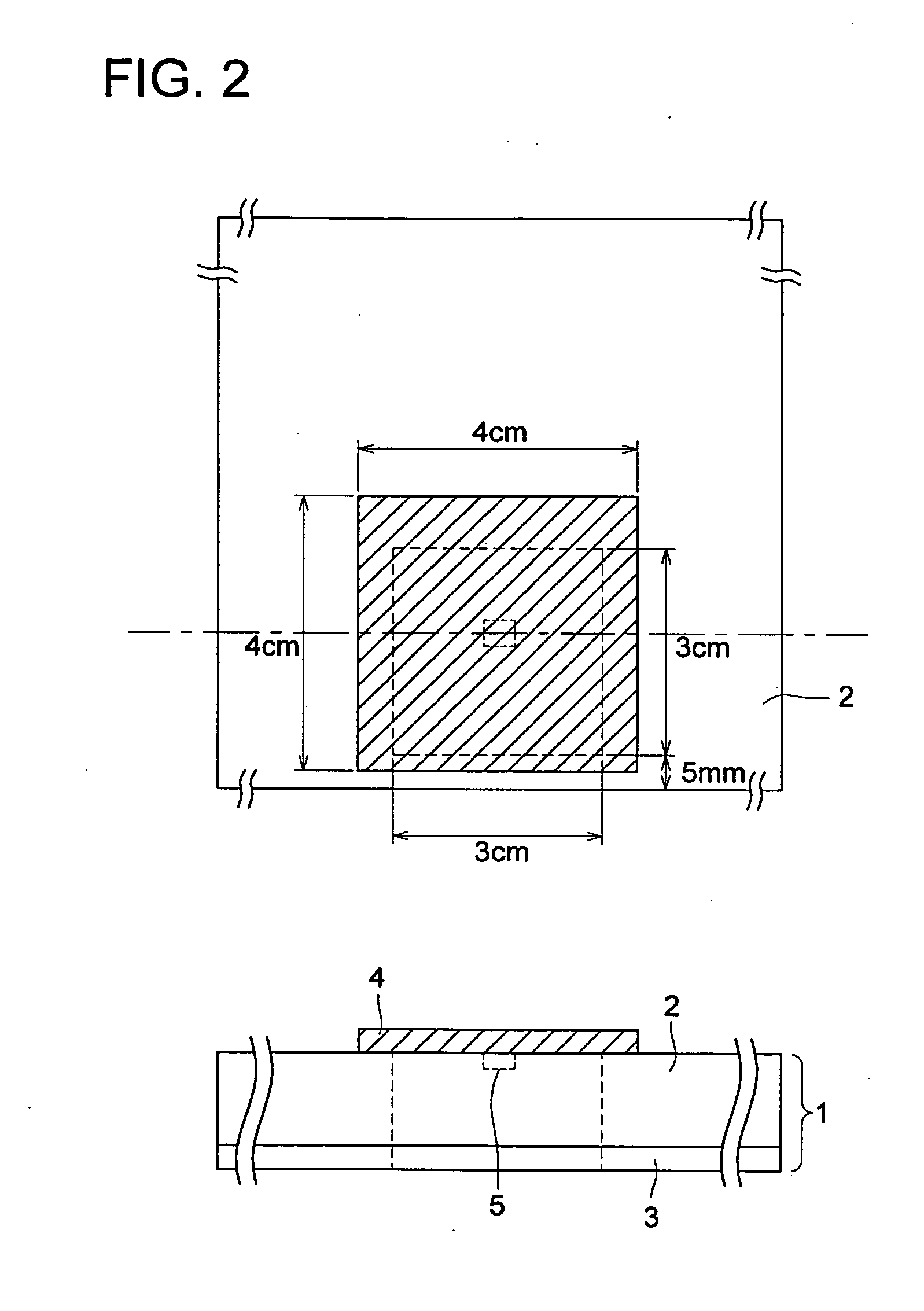
Figure 3
Abstract
Description
[0001] This application is based on Japanese Patent Application Nos. 2005-010102 filed on Jan. 18, 2005, and 2005-055601 filed on Mar. 1, 2005, in Japanese Patent Office, the entire content of which is hereby incorporated by reference. BACKGROUND OF THE INVENTION
[0002] The present invention relates to a printing plate material for a computer-to-plate (hereinafter referred to as CPT) system having an aluminum support, a plate-making method and a printing method.
[0003] In recent years, in manufacturing technologies of printing plates for offset printing, there have been developed CPTs for recording digital data of images directly on a photosensitive printing plate with a laser light source, and they have been put to practical use.
[0004] In the field of printing where relatively long plate life is required among the aforesaid technologies, there is known a method to use a printing plate material having thereon an aluminum plate representing a support and an image forming layer provi...
Examples
example 1
(Preparation of Aluminum Support)
[0283] An aluminum plate (material: 1050, quality: H16) of 0.24 thick, 1003 mm wide and 800 mm long, after having been subjected to a degrease treatment at 60° C. for 1 minute in a 5% caustic soda aqueous solution, was subjected to an electrolytic etching treatment, under a condition of a temperature of 25° C., a current density of 60 A / dm2 and a processing time of 30 seconds, in a 0.5 mol / l hydrochloric acid aqueous solution.
[0284] Next, the aluminum plate, after having been subjected to a desmut treatment at 60° C. for 10 seconds in a 5% caustic soda aqueous solution, was subjected to an anodic oxidation treatment under a condition of a temperature of 20° C., a current density of 3 A / dm2 and a processing time of 1 minute, in a 20% sulfuric acid solution. Further, the aluminum plate was subjected to a hot water sealing treatment with hot water of 30° C. for 20 seconds, whereby an aluminum support as a support for a planographic printing plate mat...
example 2
[0338] Next, similar evaluation was performed by changing an adhesion method of an RF-ID on a printing plate into the following 2 types.
(Adhesion of Wireless Tag (RF-ID) in Protrusion Form)
[0339] A PET film (3 cm×6 cm) having a thickness of 175 μm was pasted on the back surface of a photosensitive planographic printing plate, which had been cut (730 mm wide, 600 mm long) after coating and drying similarly to the above-described manner, at the center portion along the extended longitudinal direction, and an RF-ID similar to one described above was adhered with a double coated tape on the center of a protruded portion (3 cm×3 cm) (mounted in a form shown in FIG. 4).
[0340] Thereafter, by utilizing an RF-ID adhered on the extruded potion as described above, writing / reading was carried out and plate making and printing were performed over half a year.
[0341] The plate making condition was possible to be controlled similarly to the above-described manner, except that time required to ...
example 3
(Feedback to Printing Condition)
[0346] Next, utilizing printing plate material lot 1, plate making was performed in a similar manner to example 1 except the following.
[0347] That is, exposure condition 2 (a mark data in which a rotation number was set slower than an ordinary condition by 20%) was recorded on a wireless tag (an RF-ID) by a writer immediately before laser exposure and exposure was performed under this condition.
[0348] When a mark data was read utilizing a program, which had been set based on printing paper and an exposure condition in advance, by use of an RF-ID reader equipped on a printing machine, a 2-steps feeding paper supply of wood free paper and coated paper was automatically changed into wood free paper to perform printing.
[0349] The printed dot image portion on a printed matter was observed and the result was shown in table 3. As a comparison, the case of an exposure condition being not changed was shown.
[0350] The results are shown in table 3. It is c...