
Method of treating fluoropolymer particles and the products thereof
Patent Information
- Authority / Receiving Office
- US · United States
- Current Assignee / Owner
- Publication Date
- 2007-03-15
Smart Images
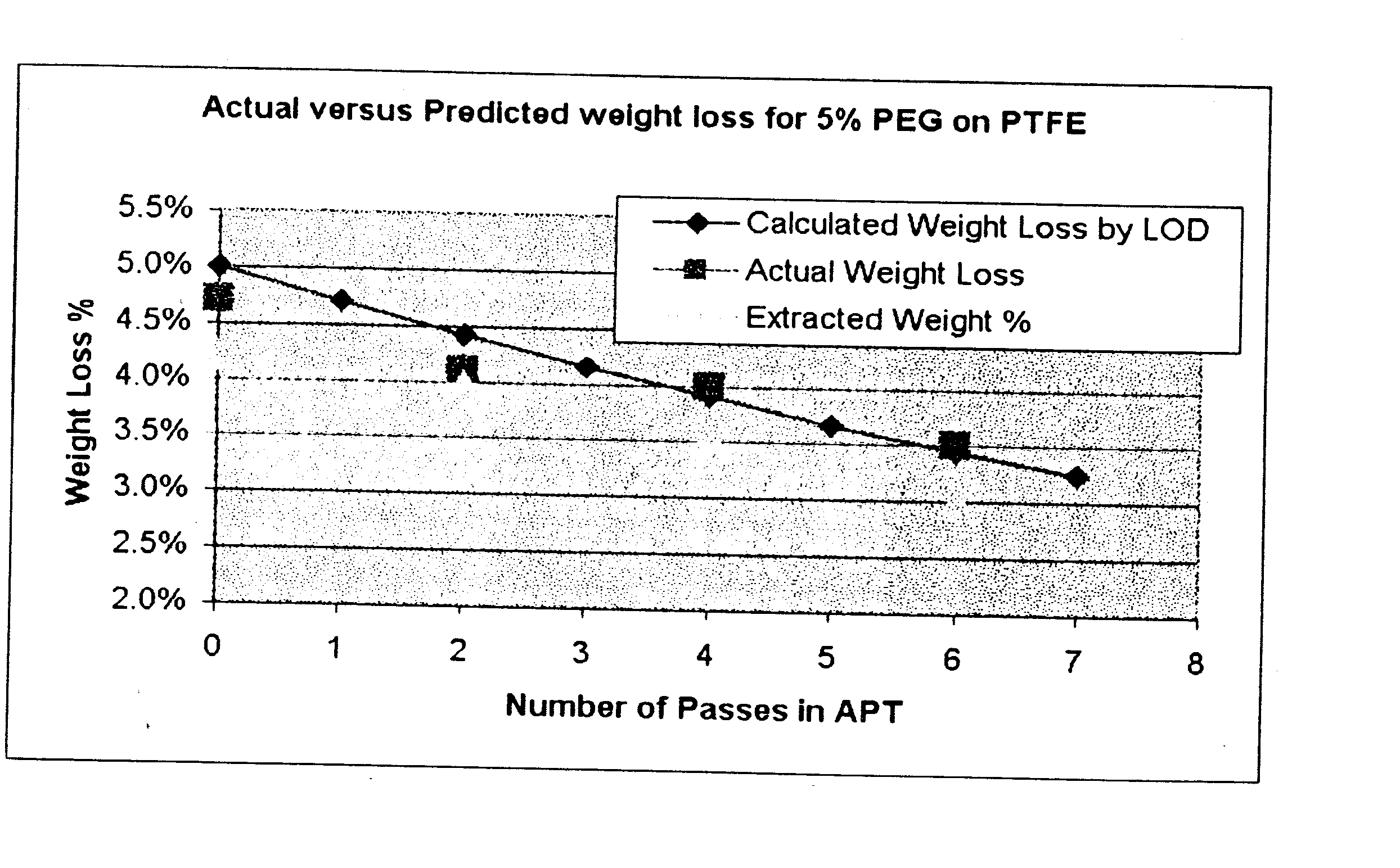
Figure 1 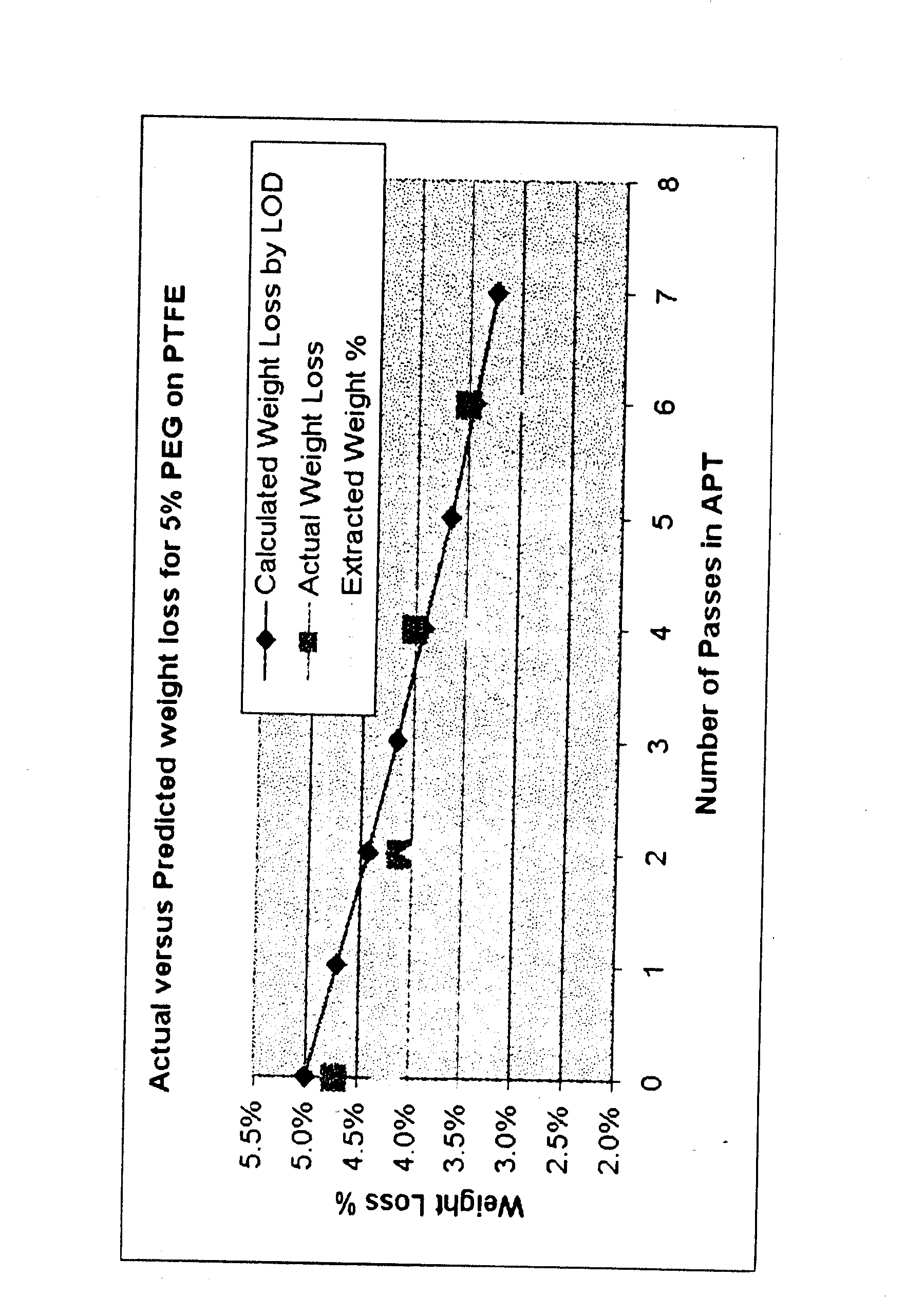
Figure 2
Abstract
Description
CROSS-REFERENCE TO RELATED APPLICATIONS
[0001] The present application is a continuation of U.S. patent application Ser. No. 10 / 345,541 filed Jan. 16, 2003, which is a continuation-in-part of U.S. patent application Ser. No. 10 / 128,185, filed Apr. 23, 2002.TECHNICAL FIELD
[0002] The present invention relates to fluoropolymers. More particularly, the present invention is directed at producing a novel fluoropolymer by using a high energy source to immobilize macromolecules on the surface of fluoropolymer particles and / or to modify the molecular weight of the fluoropolymer particles. BACKGROUND ART
[0003] Fluoropolymers, are defined herein broadly as any of the fluorine containing polymers (or inert polymers), including homopolymers, copolymers, and terpolymers that have non-wettable and chemical inert surfaces which, although being desired in some applications, limit the use of these materials in other applications.
[0004] The technology of coating of articles with fluoropolymers has ...
Examples
example 1
Surface Treatment of Powders
[0066] In this Example, fluoropolymer powder particles were surface treated with a number of macromolecular chemical species.
[0067] Table 1 lists the fluoropolymer powders, their average particle size and molecular weight. Table 2 lists the macromolecular chemical species, their molecular weights, minimum and maximum concentrations, cross linking-agents and concentrations of the cross-linking agents.
TABLE 1Average ParticleBase PowderSize. D50 MicronsMolecular Weight / Melt IndexPTFE35>1 × 10⁶Irradiated PTFE3 to 151 × 103-1 × 10⁶PVDF5Melt Viscosity 30 Kp @ 232° C.FEP5 to 25Melt Index 2 to 20 @ 375° C.ECTFE25Melt Index 12
[0068]
TABLE 2Typical conc.Min Conc.Max Conc.cross-linkingCommercialTypical Moleculargm / gmgm / gmCross-linkingagent gm / gm ofMacromolecularNameweightof powderof powderagentmacromoleculePEGCarbowax 900300, 900 and 14500.0030.1Polycup 1720.1PVOHCelvol 50215,0000.0010.05Polycup 1720.1PAASokalen PA 80S90,0000.0030.05Diak #30.05Epoxy FunctionalCoa...
example 2
Hydroxyl and Acid Numbers
[0071] Titrating both alcohol and acid functions of the surface treated fluoropolymer powder particles can be used to determine the degree of surface treatment.
[0072] In this Example the method of ASTM D 1957-86 was followed. This method utilizes acetylation reaction, which converts the primary alcohol to an ester through reaction with acetic anhydrate, liberating one mole of acetic acid. Upon hydrolysis, the same will require less potassium hydroxide to reach the phenolphthalein end point (neutralization) relative to a control, which upon hydrolysis yields 2 moles of acetic acid.
[0073] In this Example, 10.0 g of each individual surface treated powder was placed in a 250 ml Erlenmeyer flask and the total weight of the sample and flask were recorded. 5 ml of 3:1 volume mixture of pyridine: acetic anhydride was added to the flask.
[0074] 9.0-11.0 g of the same sample was placed in a second flask for acid value titration and the total weight of the sample an...
example 3
Weight Loss and Extraction Results
[0080] In this Example extraction tests were performed to determine the amount of surface treated material which is neither covalently attached nor permanently adsorbed one the fluoropolymer powder.
[0081] About 5 g of each sample was placed on an analytical balanced and the weight was recorded. 60 ml of an appropriate solvent (isopropanol for polyethylene glycol, deionized water for polyvinyl alcohol, etc.) was mixed with the sample. The mixture was mixed for 2 hours over low heat (about 100° F.). After heating, the sample mixture was poured into a 150 ml Durapore™ 0.22 μm filtration device. The material that was removed as the solvent passes through the filter and was collected. The total weight of the solvent (containing the extracted material) was recorded. About 1 g of the solvent was placed into an aluminum weighting dish and the total weight of the solvent and dish are weighed. The solvent was evaporated in a vented oven that was heated to 1...