
Compositions and methods for prevention and treatment of fungal diseases
a technology for fungal diseases and compositions, applied in the field of pharmaceutical compositions, can solve the problems of difficult to dissect the relative contribution of lymphopenia to the overall risk of invasive aspergillosis, major morbidity and mortality in highly immunocompromised patients, and achieve effective adjuvants, significant clinical importance, and effective therapeutic effects
Patent Information
- Authority / Receiving Office
- US · United States
- Patent Type
- Applications(United States)
- Current Assignee / Owner
- Publication Date
- 2007-10-18
- Estimated Expiration
- Not applicable · inactive patent
Smart Images
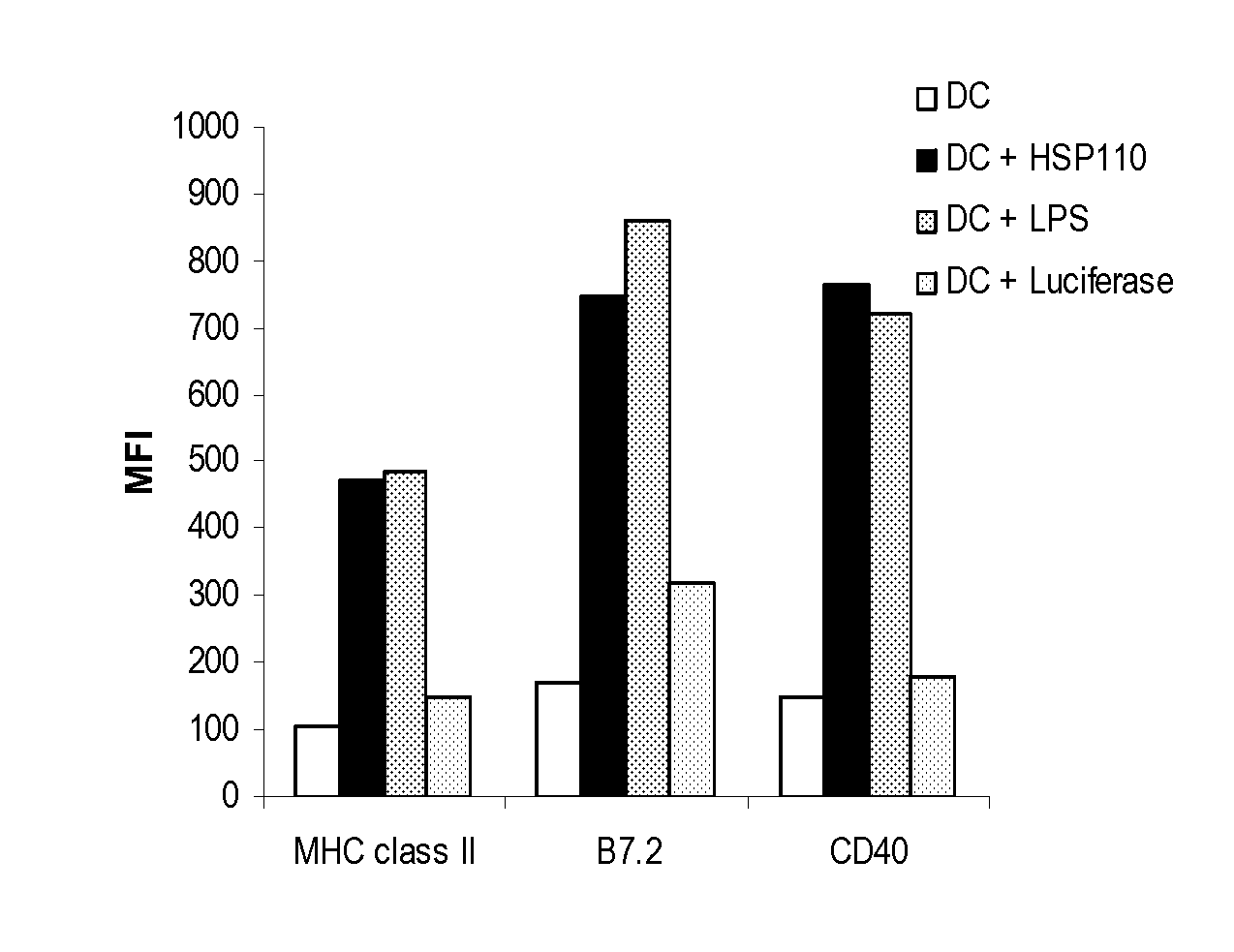
Figure 1 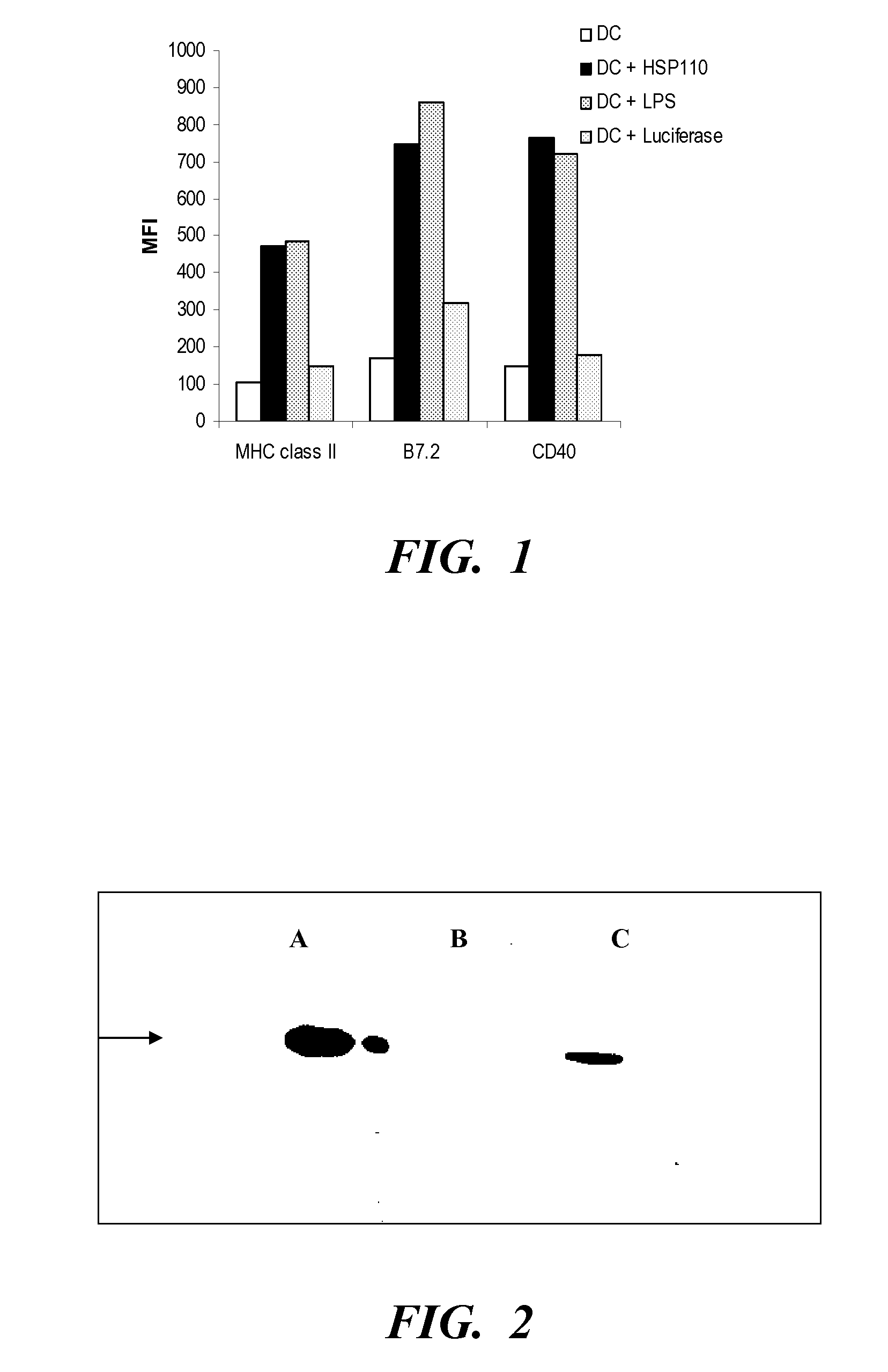
Figure 2 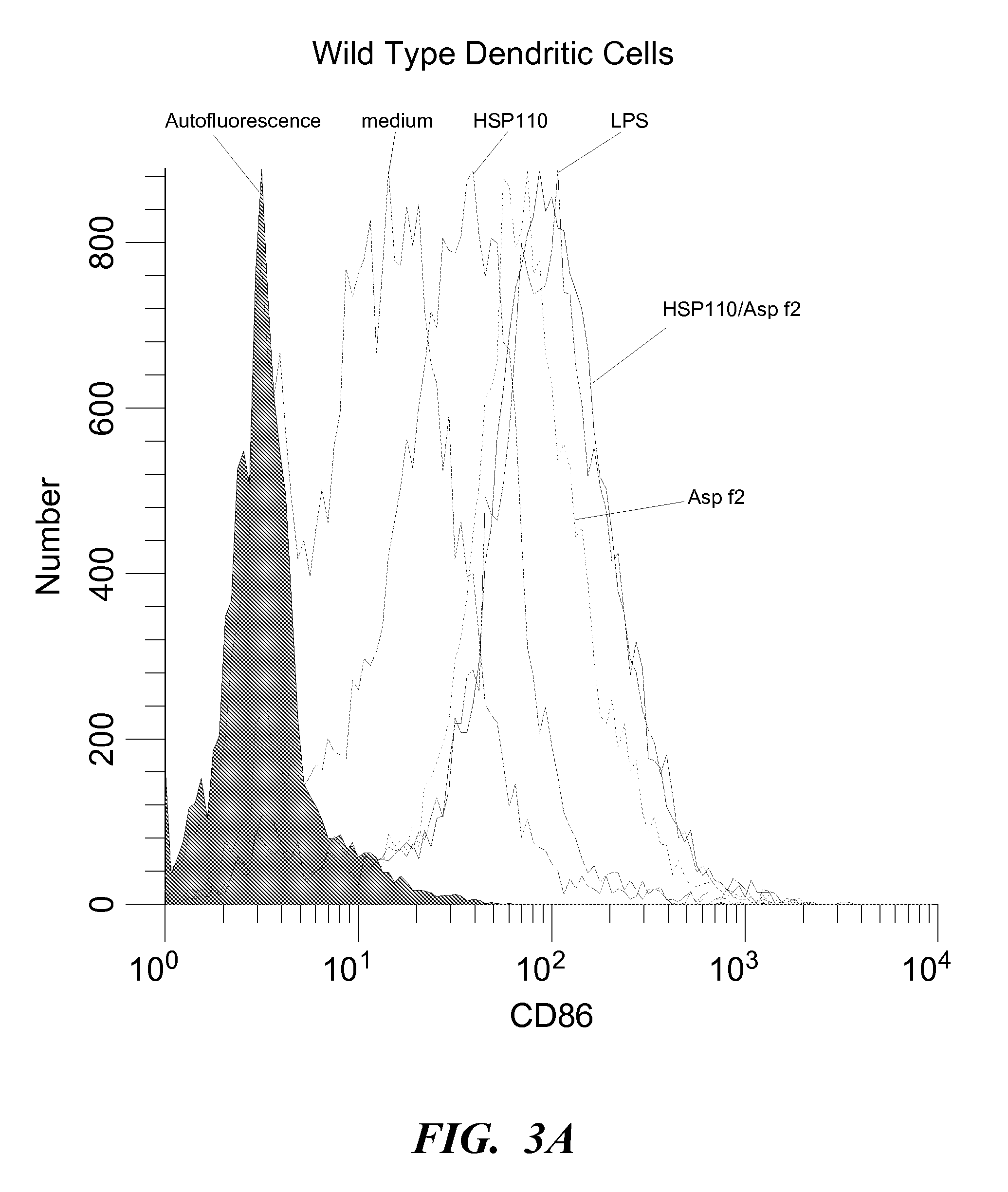
Figure 3
Abstract
Description
[0001] This application claims the priority benefit of U.S. Provisional Patent Application Ser. No. 60 / 731,628, filed Oct. 28, 2005, which is hereby incorporated by reference in its entirety.
[0002] The subject matter of this application was made with support from the United States Government under The National Institutes of Health (NIH) grants ROI-A146382 and T32-Al 07621. The U.S. Government may have certain rights.FIELD OF THE INVENTION
[0003] The present invention relates to pharmaceutical compositions having at least a portion of a stress protein or polypeptide complexed with a fungal immunogenic peptide, and the use thereof for the prevention and treatment of fungal diseases. BACKGROUND OF THE INVENTION
[0004] Aspergillus species are filamentous fungi (molds) that are ubiquitous in the environment. Aspergillus spp. are well-known to play a role in three different clinical settings in man: (i) opportunistic infections; (ii) allergic states; and (iii) toxicoses. Immunosuppression...
Examples
example 1
HSP110 Matures Dendritic Cells
[0102] Heat shock proteins are a ubiquitous group of intracellular molecules that function as molecular chaperones in numerous processes such as protein folding, assembly, transport, and peptide trafficking and antigen processing (Manjili et al., “Immunotherapy of Cancer Using Heat Shock Proteins,”Front Biosci 7:d43-52 (2002); Manjili et al., “Cancer Immunotherapy: Stress Proteins and Hyperthermia,”Int J Hyperthermia 18:506-20 (2002), which are hereby incorporated by reference in their entirety). They are induced by several environmental stressors, such as fever, oxidative stress, alcohol, inflammation, and heavy metals. HSP expression is also induced by conditions associated with injury and necrosis, including infection, trauma, and ischemic reperfusion injury. During such periods of physiologic stress, HSPs bind to exposed hydrophobic sites within polypeptides and mediate conformational changes, prevent misfolding of peptides, and facilitate peptide ...
example 2
Generation of HSP110 / Asp f2 Complex
[0109] Asp f2 was selected as the initial fungal antigen for evaluation because it has been the most extensively characterized in human and mouse models of allergic bronchopulmonary aspergillosis (ABPA) (Banerjee et al., “Purification of a Major Allergen, Asp f2 Binding to IgE in Allergic Bronchopulmonary Aspergillosis, From Culture Filtrate of Aspergillus Fumigatus,” J Allergy Clin Immunol 99:821-7 (1997); Banerjee et al., “Molecular Cloning and Expression of a Recombinant Aspergillus Fumigatus Protein Asp fII With Significant Immunoglobulin E Reactivity in Allergic Bronchopulmonary Aspergillosis,”J Lab Clin Med 127:253-62 (1996); Banerjee et al., “Immunological Characterization of Asp f2, a Major Allergen From Aspergillus Fumigatus Associated With Allergic Bronchopulmonary Aspergillosis,”Infect Immun 66:5175-82 (1998); Banerjee et al., “Conformational and Linear B-Cell Epitopes of Asp f2, a Major Allergen of Aspergillus Fumigatus, Bind Different...
example 3
Immunogenicity of HSP / Asp f2 Complex
[0111] To further characterize the effect of HSP110 and the HSP / Asp f2 complex on DC activation, CD86 expression was evaluated. T cell activation is dependent upon signals delivered through the antigen-specific T cell receptor and accessory receptors on the T cell. A primary costimulatory signal is delivered through the CD28 receptor after engagement of its ligands, CD80 (B7.1) or CD86 (B7.2). Integration of signals through this family of costimulatory receptors and their ligands is critical for IL-2-dependent activation of T-cell responses. Bone marrow was harvested from C.C3-TLR 4Lps-d / J and control BALB / cJ mice (Jackson Laboratories, Bar Harbor, Me.). Red blood cells were lysed and remaining cells were incubated with 50 ng GM-CSF / ml complete RPMI and pulsed with the same on days 2 and 5. On day six, 106 cells / ml complete RPMI were plated in each well of a 6 well plate and pulsed and incubated overnight with 150 μg HSP110, 50 μg Asp f2, HSP110 / ...