
Modulators of paraptosis and related methods
a paraptosis and module technology, applied in the field of molecular medicine and programmed cell death, can solve the problems that the modulation of the apoptotic pathway genetically or pharmacologically may prove ineffective in situations in which such nonapoptotic cell death occurs, and achieve the effect of inhibiting paraptotic cell death
Patent Information
- Authority / Receiving Office
- US · United States
- Patent Type
- Applications(United States)
- Current Assignee / Owner
- Publication Date
- 2009-02-12
- Estimated Expiration
- Not applicable · inactive patent
Smart Images
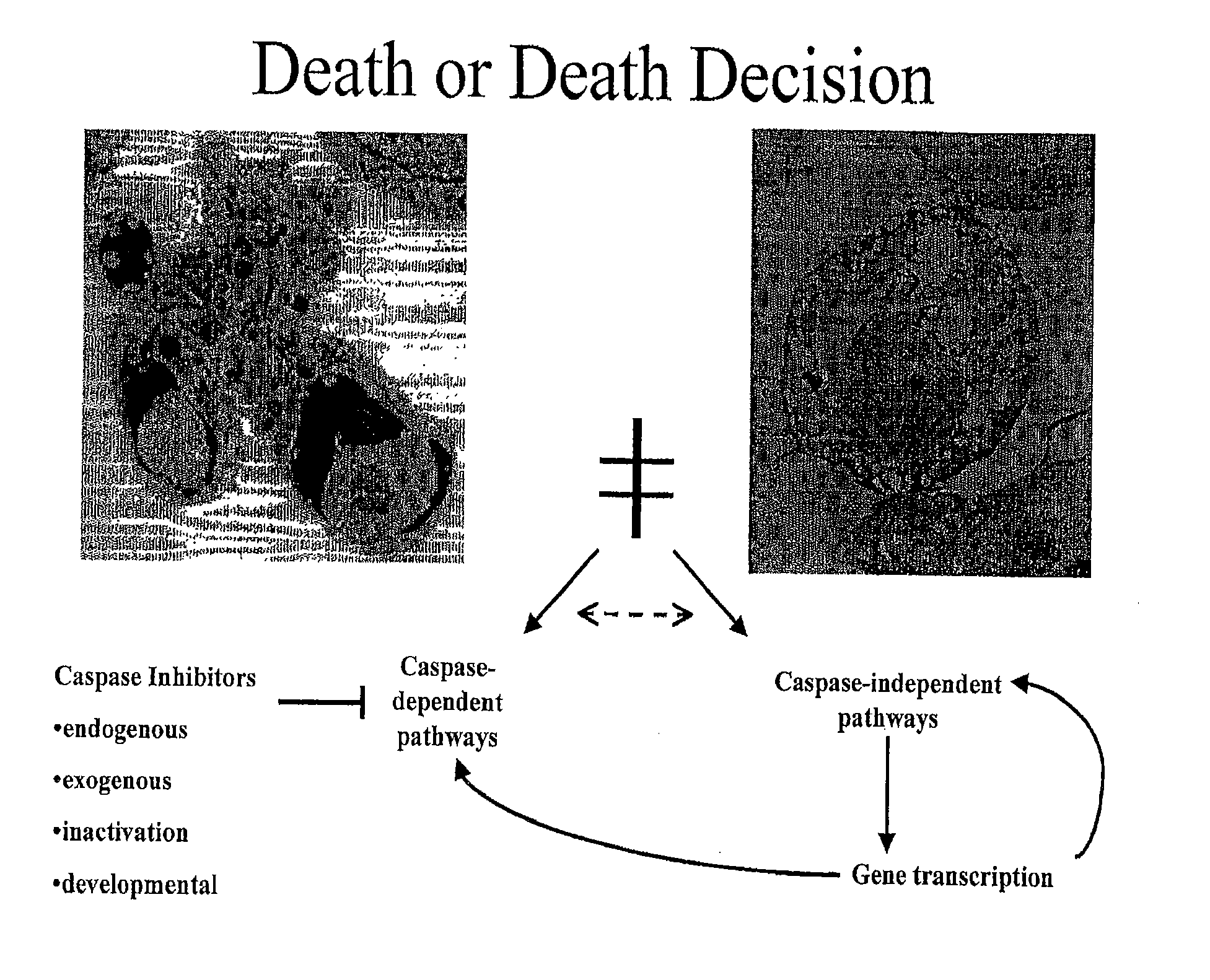
Figure 1 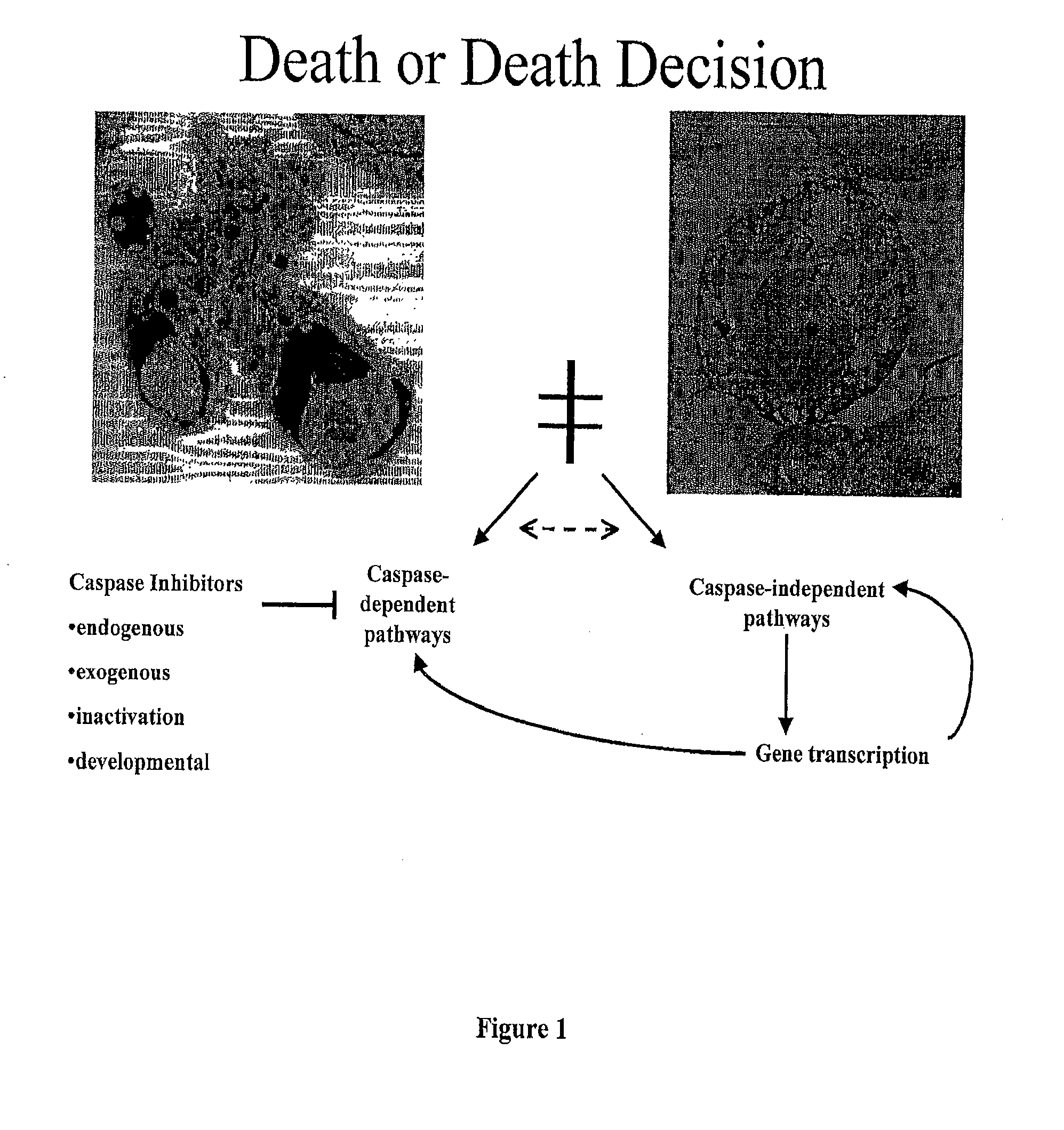
Figure 2 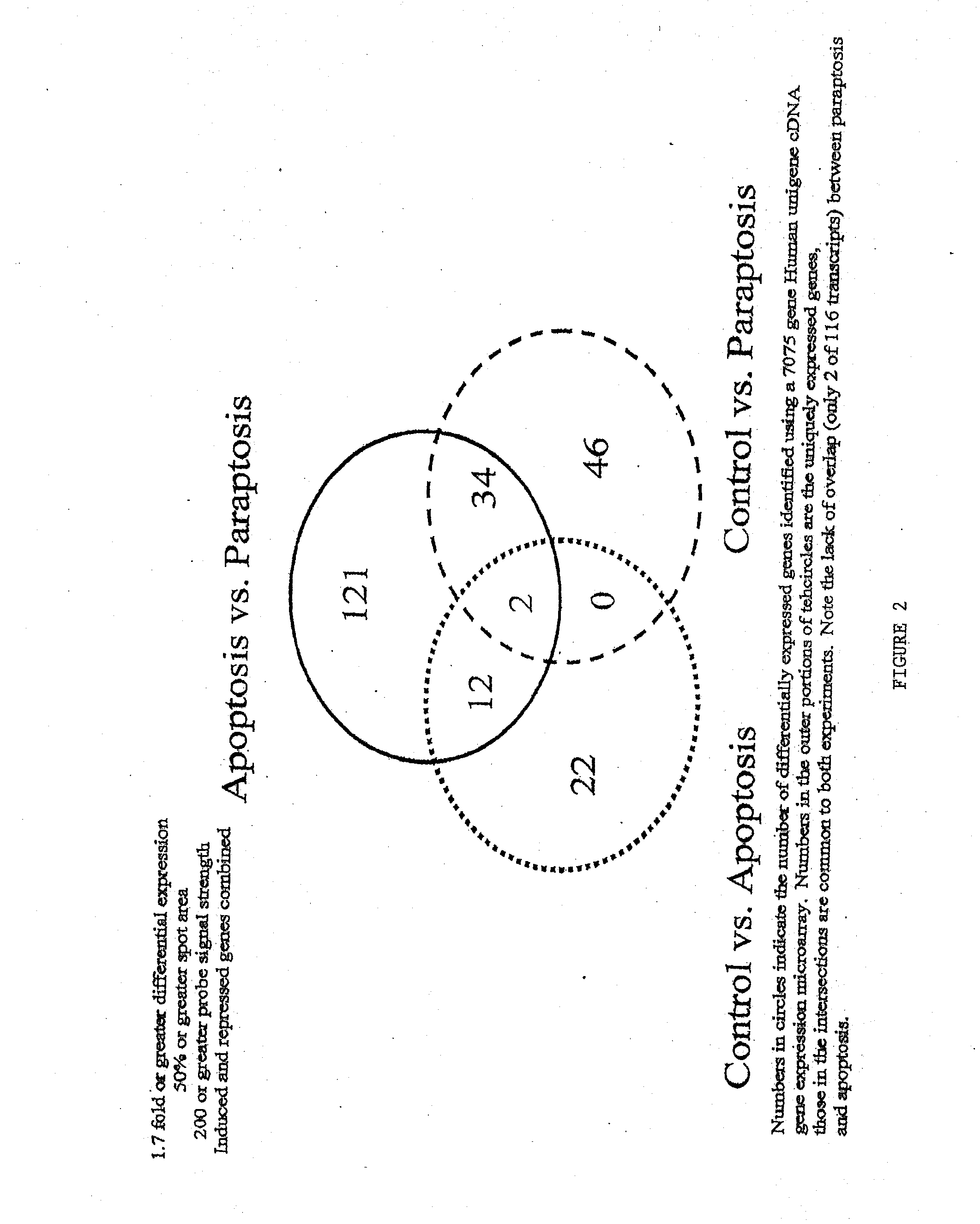
Figure 3
Abstract
Description
[0001] This invention was made with government support under grant number AG12282 awarded by the National Institutes of Health. The United States Government has certain rights in this invention.BACKGROUND OF THE INVENTION
[0002] The present invention relates generally to molecular medicine and programmed cell death and more specifically to methods of modulating non-apoptotic programmed cell death. Apoptosis is the most common and best understood of the programs of cell death. The central set of cysteine-aspartyl proteases or caspases that drive the process are instrumental in the vast majority of apoptotic events that occur during normal embryonic development, as was initially illustrated in studies of the nematode Caenorhabditis elegans where elimination of the caspase homologue led to complete cessation of the 131 programmatic cell deaths that normally occur during development of that organism. The role of caspase-driven apoptotic events in human pathogenesis is less clear. However, ...
Examples
example i
Inducers of Paraptosis
[0070]This example demonstrates the identification of agents capable of inducing paraptotic cell death.
[0071]Human embryonic kidney 293T cell line cells were used to assay for inducers and inhibitors of paraptosis. These cells were cultured in high glucose DMEM (Life Technologies) supplemented with 10% FBS (Sigma) and 1 penicillin / streptomycin (Life Technologies). The cultures were incubated at 37° C. in 95% air 5% carbon dioxide with 95% humidity.
[0072]Rat neuronal primary cell cultures were also used to assay for inducers and inhibitors of paraptosis. Briefly, primary striatal, cortical and hippocampal cultures were prepared from 17-day-old Sprague-Dawley rat embryos (B&K). The tissue was dissected, minced and trypsinized for five minutes using 0.25% trypsin (Cell Grow). After the addition of 10% horse serum (Life Technologies) to inhibit the trypsin, the cell suspension was triturated 15-20 times with a 10 ml syringe and centrifuged for five minutes at 800×g...
example ii
Inhibitors of Paraptosis
[0081]This example demonstrates the identification of agents capable of inhibiting paraptotic cell death.
[0082]Paraptosis was induced in 293T cells by expressing the intracellular domain of the insulin-like growth factor I receptor (IGFIR-IC) in these cells using transient transfection as described above.
[0083]Test compounds were added to IGFIR-IC transfected 293T cells at the time of transfection. The copper chelator, 1-10-phenantroline (ortho-phenantroline) was able to inhibit IGFIR-IC induced paraptosis when added to transfected 293T cells at a concentration of 50 nM. In addition, H89, an inhibitor of protein kinase A, was able to inhibit IGFIR-IC induced paraptosis when added at a concentration of 10-20 μM. Furthermore, 1-10-phenantroline was able to inhibit paraptosis induced by caspase 8 or caspase 9.
[0084]In addition, AIP-1 (Alg-2 interacting protein 1) and a dominant negative mutant of TRAF2 were able to inhibit IGFIR-IC induced paraptosis when co-tra...