
Synthesis of PtCo Nanoparticles
Patent Information
- Authority / Receiving Office
- US · United States
- Current Assignee / Owner
- Publication Date
- 2010-01-28
Smart Images
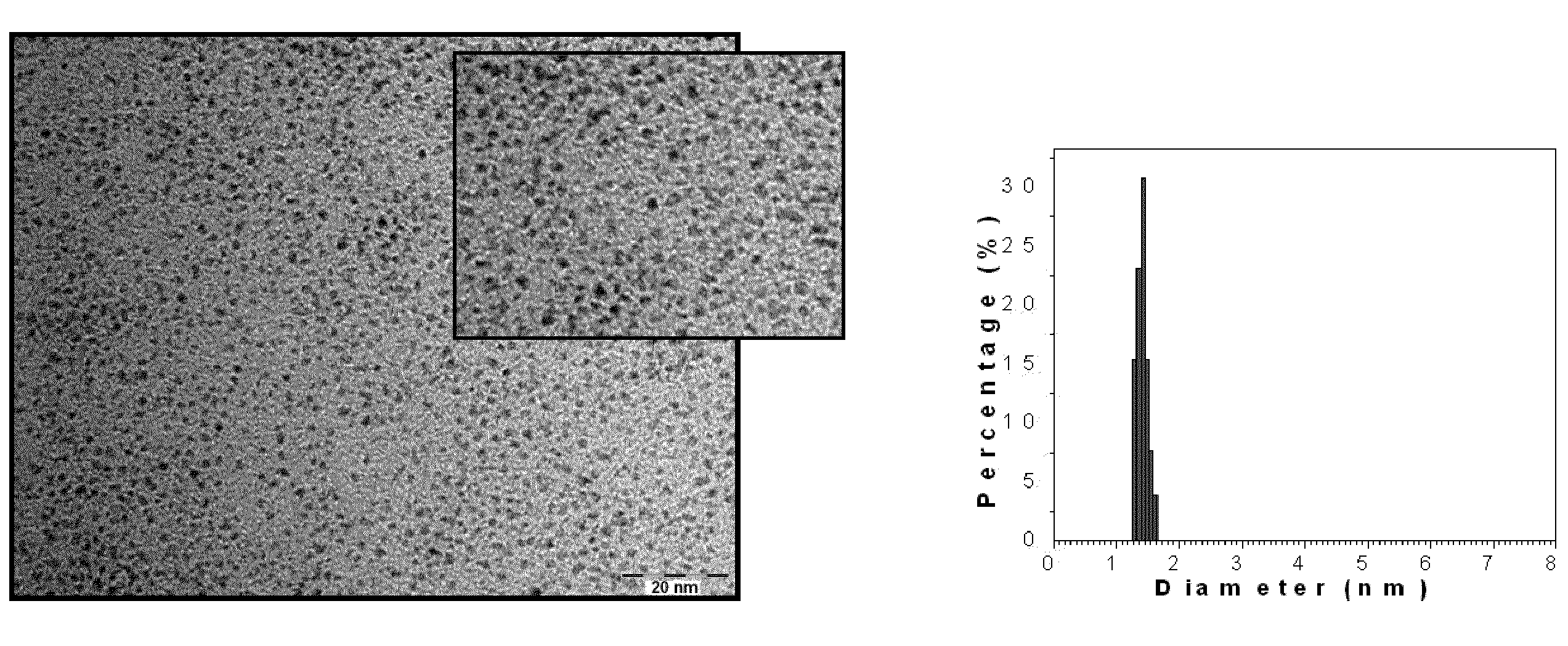
Figure 1 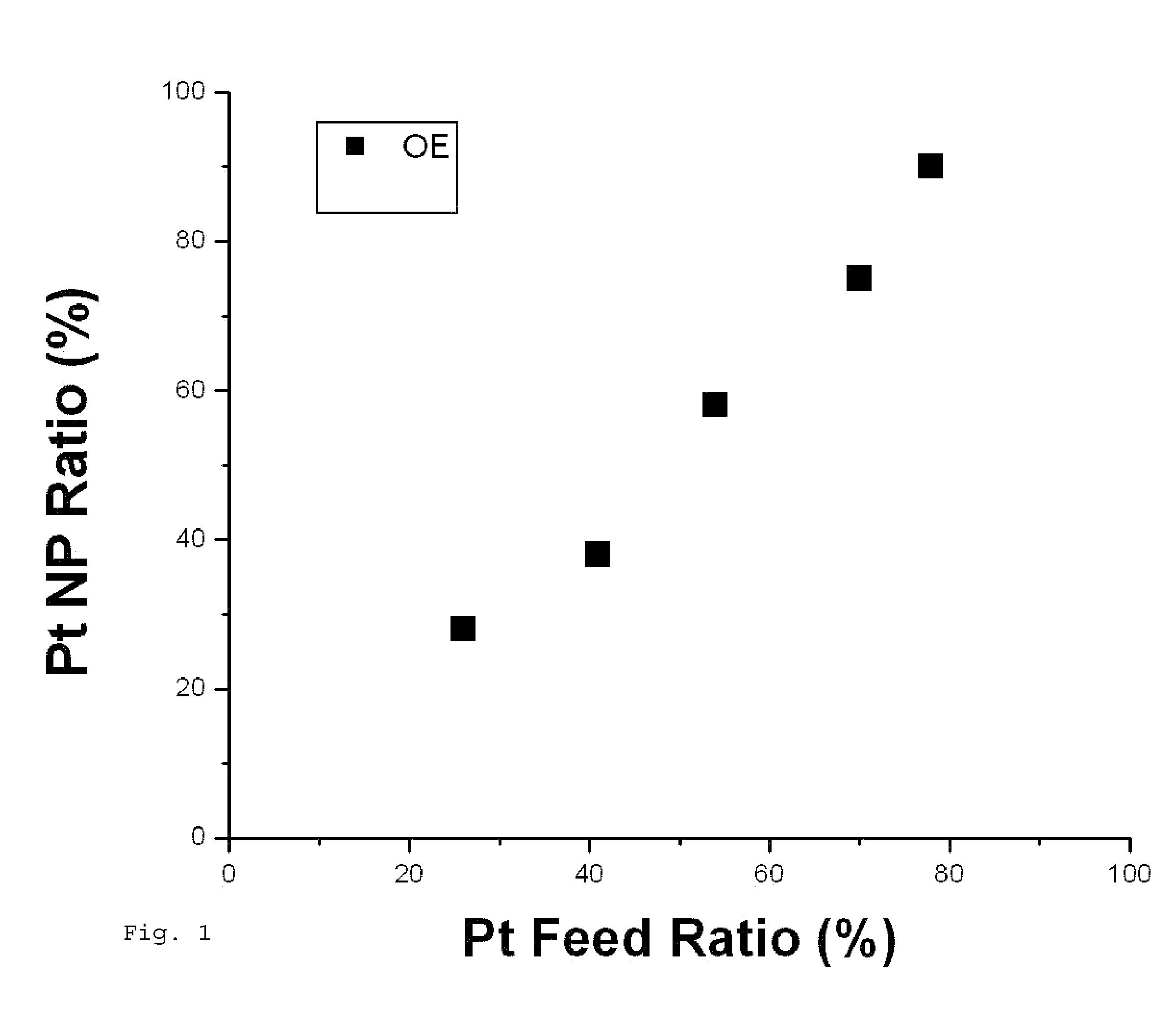
Figure 2 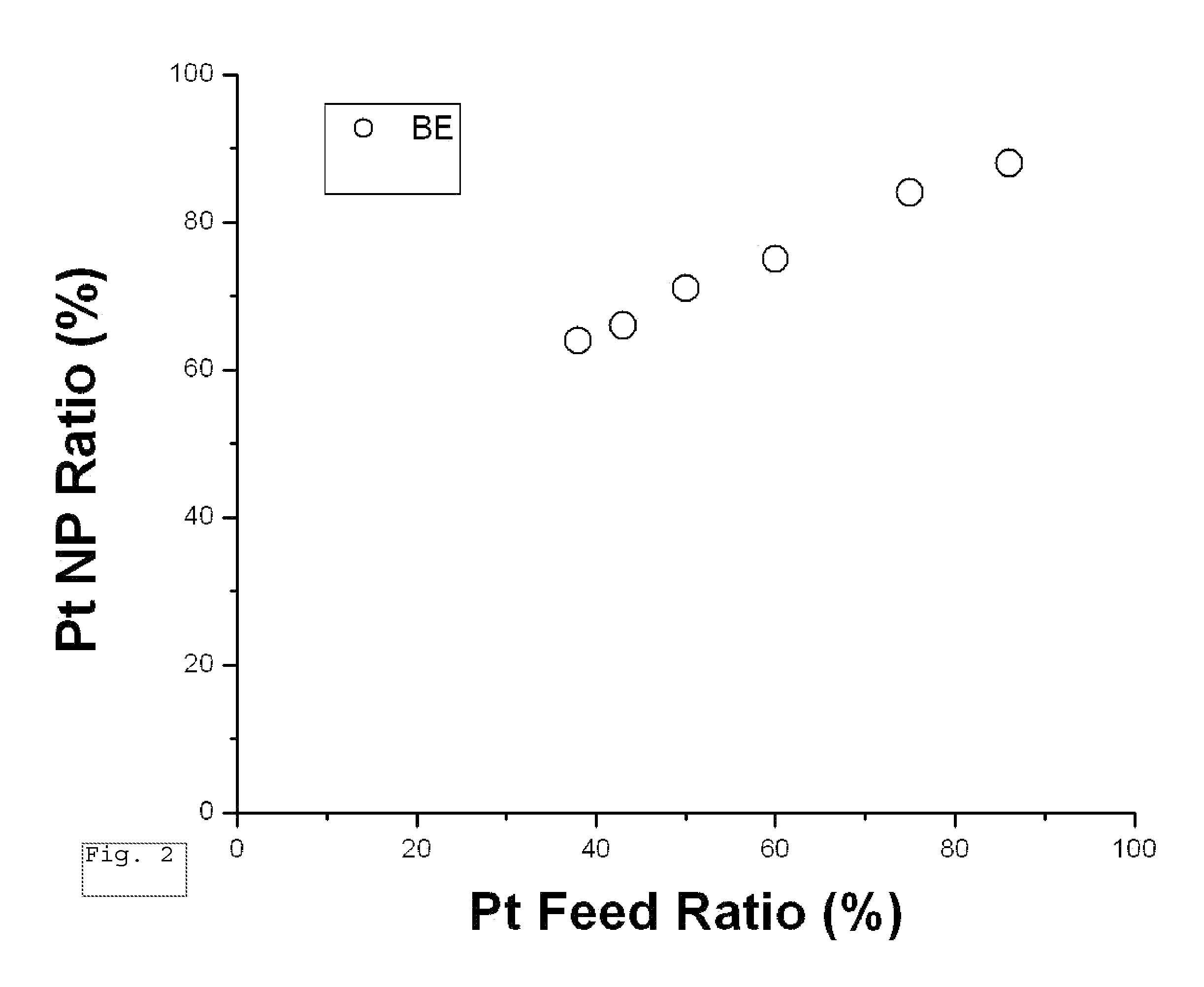
Figure 3
Abstract
Description
CROSS-REFERENCE TO RELATED APPLICATIONS
[0001] The present application claims benefit from earlier filed U.S. Provisional Patent Application No. 61 / 083,989, filed Jul. 28, 2008, which is incorporated herein in its entirety by reference for all purposes.BACKGROUND
[0002] 1. Field of the Invention
[0003] The present teachings relate to PtCo alloy nanoparticles and methods to synthesize the nanoparticles with control over the particle size distribution, dispersion and particle composition.
[0004] 2. Discussion of the Related Art
[0005] Benchmark Pt catalysts used in the cathode of low temperature fuel cells exhibit high cost, low activity and poor durability, which are some of the major barriers to commercialization of this type of fuel cell technology. Alloy catalysts have the potential to enhance catalytic activity as well as improve durability. Among alloy catalyst compositions, PtCo alloy catalysts have shown recent promise in the laboratory.
[0006] Use of Pt alloy nanoparticles that can incre...
Examples
example 1
Synthesis of 2-nm Pt75Co25
[0047]To a 250 ml 3-neck flask containing 60 mL octyl ether (99%) were added 543 mg 1,2-hexadecanediol (1.89 mmol) and 275 mg platinum acetylacetonate Pt(acac)2 (0.68 mmol) while stirring. The solution was purged with nitrogen and heated to 105° C. The solution appeared dark green color. A separate solution containing 103 mg CO2(CO)8 (0.30 mmol) dissolved in 3 mL octyl ether was prepared.
[0048]At this 105° C. temperature and under nitrogen atmosphere, 0.5 mL oleylamine (1.06 mmol), 0.5 mL oleic acid (1.56 mmol), and the solution containing CO2(CO)8 prepared above were added to the heated solution. Nitrogen purging was stopped and the solution was kept under nitrogen. The mixture was heated to 270° C., and kept at 270° C. for 30 minutes. The solution turned black in color.
[0049]After the reaction mixture was allowed to cool down to room temperature, the solution was transferred into a large flask under ambient environment. The black product was precipitated...
example 2
Synthesis of 5-nm Pt75CO25
[0052]In a 100 ml 3-neck flask containing 40 ml octyl ether, 600 mg platinum acetylacetonate (3.0 mmol), 0.2 ml oleylamine (0.5 mmol) and 0.16 ml oleic acid (0.5 mmol) were added into the octyl ether solution under stirring. The solution was purged with nitrogen and heated to 100° C. The solution appeared yellowish color.
[0053]At temperature and under nitrogen atmosphere, 171 mg CO2(CO)8 (0.5 mmol) were added into the octyl ether solution. The solution was kept under nitrogen. The mixture was heated to 270° C., and refluxed for 2 hours. The solution appeared black in color.
[0054]After the reaction mixture was allowed to cool down to room temperature, the solution was transferred into a large flask under ambient environment. The black product was precipitated by adding ethanol (about 200 ml). The complete precipitation was achieved either by overnight precipitation or by centrifugation. The yellow-brown supernatant was discarded. The black precipitate was d...
example 3
Synthesis of 8-nm Pt75CO25
[0056]In a 100 ml 3-neck flask containing 20 ml oleylamine and 14 ml oleic acid, 600 mg platinum acetylacetonate (3.0 mmol) and 129 mg cobalt(II) acetylacetonate (0.25 mmol) were added into the above solution under stirring. The solution was purged with nitrogen and heated to 250° C. The solution appeared black in color.
[0057]After the reaction mixture was allowed to cool down to room temperature, the solution was transferred into a large flask under ambient environment. The black product was precipitated by adding ethanol (about 100 ml). The complete precipitation was achieved either by overnight precipitation or by centrifugation. The yellow-brown supernatant was discarded. The black precipitate was dispersed in hexane (about 10 ml) in the presence of oleic acid (about 0.1 ml) and oleylamine (about 0.1 ml) and precipitated out by adding ethanol (about 100 ml) and centrifuging. The product was re-dispersed in hexane (about 10 ml), centrifuged to remove an...