
Method and apparatus for treating organic matter-containing water
a technology of organic matter and treatment method, applied in the direction of multi-stage water/sewage treatment, membrane, treatment water nature, etc., can solve the problems of long time of high temperature, insufficient disinfection effect, and inability to deliver naclo to the whol
Patent Information
- Authority / Receiving Office
- US · United States
- Current Assignee / Owner
- Publication Date
- 2010-08-19
- Estimated Expiration
- Not applicable · inactive patent
Smart Images
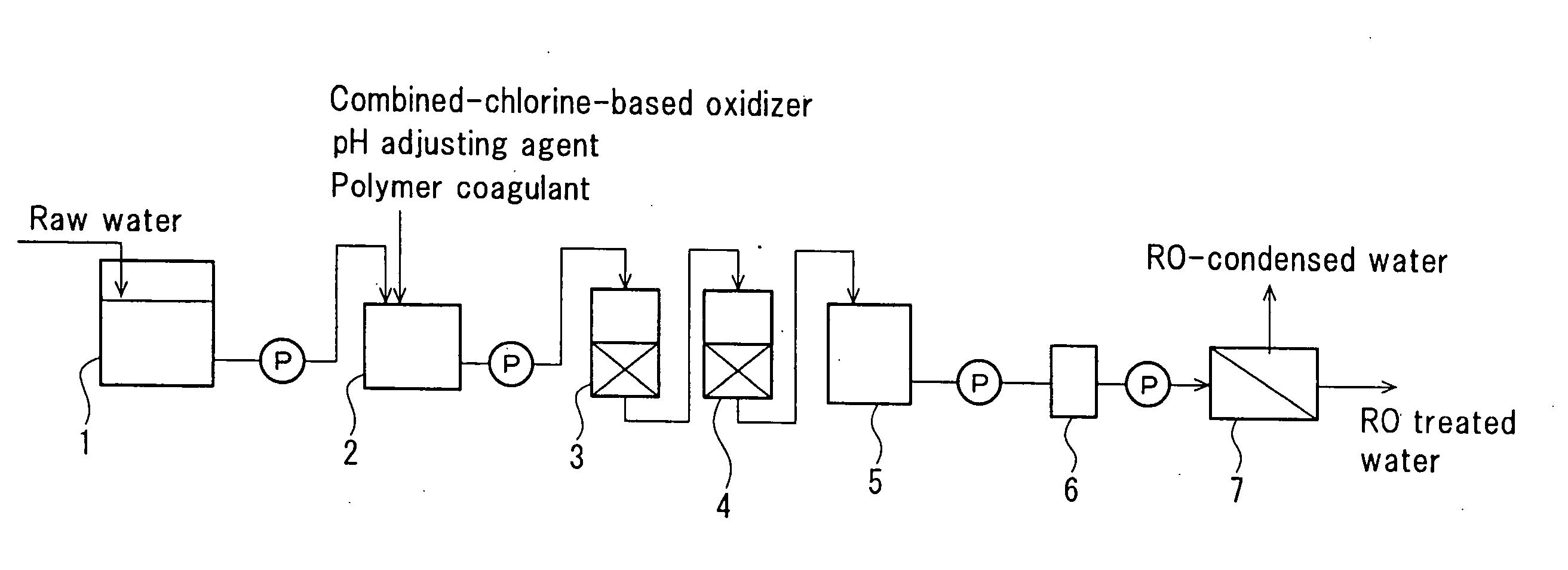
Figure 1 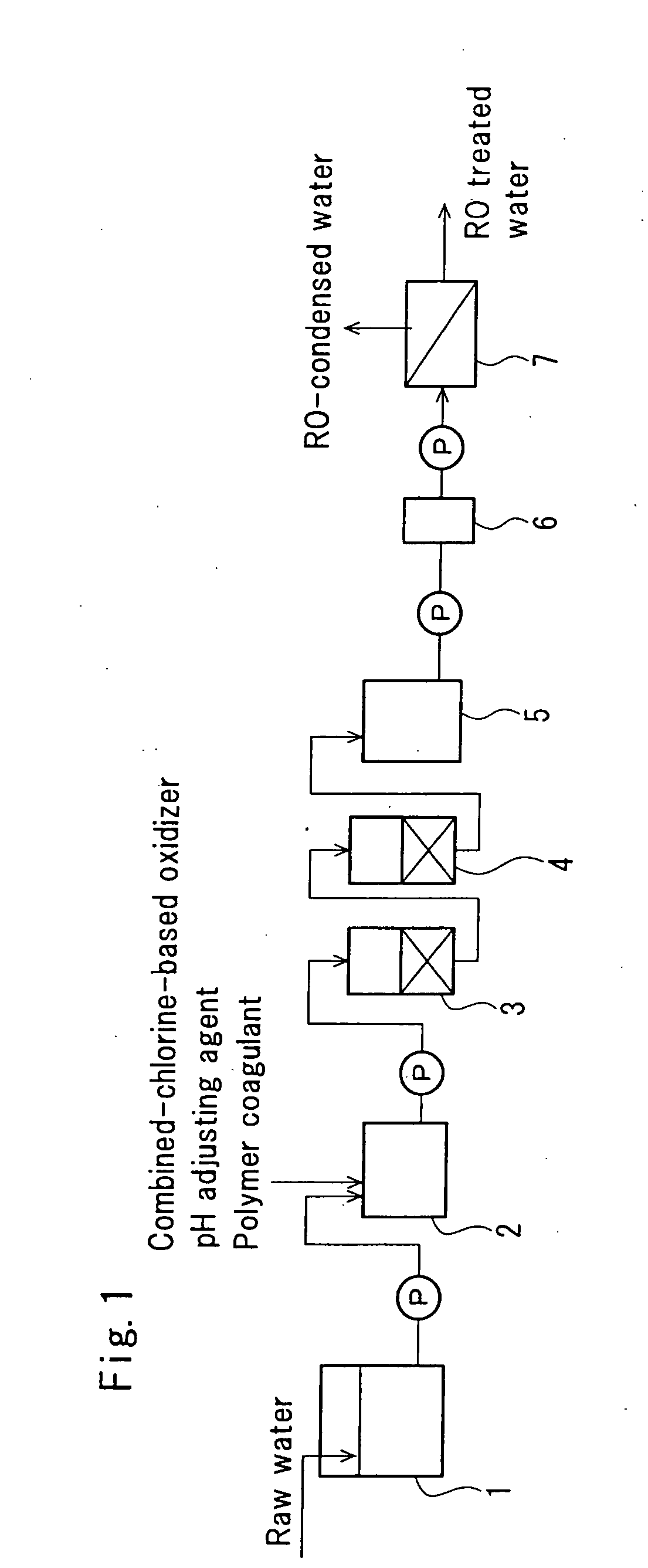
Figure 2 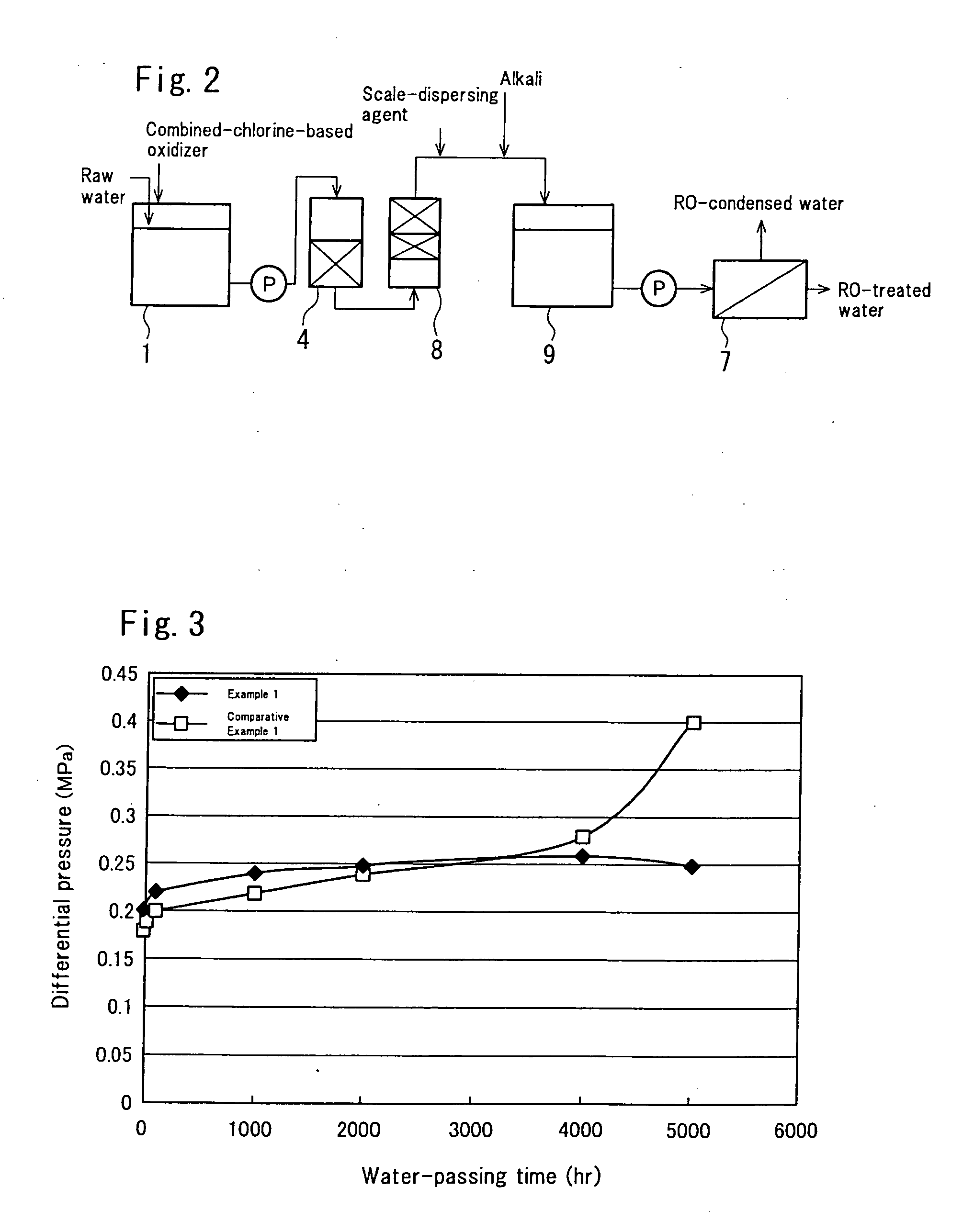
Figure 3
Abstract
Description
FIELD OF INVENTION
[0001] The present invention relates to a method and an apparatus for treating organic matter-containing water, the method and the apparatus being suitable for use in systems for producing ultrapure water used in electronic-device-manufacturing plants and treatment facilities for wastewater from electronic-device-manufacturing plants.BACKGROUND ART
[0002] In electronic-device-manufacturing plants, ultrapure water is used as rinse water. Ultrapure water is typically manufactured by a process including activated carbon treatment and subsequent reverse osmosis (RO) membrane separation treatment from industrial water or wastewater from a plant as raw water.
[0003] The activated carbon treatment aims to remove an oxidizer, organic matter, chromaticity, or the like in the raw water. The organic matter is adsorbed and concentrated on the activated carbon. The organic matter serves as an energy source, so that the activated carbon column has an environment in which microorganis...
Examples
examples
[0085]The present invention will be described in more detail below by examples, comparative examples, and reference examples.
Example and Comparative Example of Embodiment Illustrated in FIG. 1
example 1
[0086]Chloramine T was added to industrial water with a TOC concentration of 1 mg / L as C in such a manner that the concentration of combined chlorine was 5 mg-Cl2 / L. Next, coagulation-filtration treatment was performed under conditions in which the amount of polyaluminum chloride (PAC) added was 10 mg / L and the pH was 6. The water that had been subjected to the coagulation-filtration treatment was passed through an activated carbon column at an SV of 20 hr−1. Then the water was passed through an RO membrane separator (with an aromatic-polyamide ultra-low-pressure RO membrane “ES-20”, manufactured by Nitto Denko Corporation) at a permeate flow of 60 L / hr and a recovery rate of 80%. The RO feed water had a pH of 5.5.
examples 2 to 5
[0088]Treatment was performed under the same conditions as those in Example 1, except that chloramine T was added to the industrial water with a TOC concentration of 1 mg / L as C in such a manner that the concentration of combined chlorine was 0.5 mg-Cl2 / L (Example 2), 0.8 mg-Cl2 / L (Example 3), 1 mg-Cl2 / L (Example 4), or 3 mg-Cl2 / L (Example 5).