
Frequency monitoring of gradient pulses during magnetic resonance imaging
a magnetic resonance imaging and pulse technology, applied in the field of frequency monitoring of gradient pulses during magnetic resonance imaging, can solve the problems of significant mechanical force influences in the gradient system, significant technical problems, and correspondingly rapid change of gradient fields employed, so as to achieve precise prospective frequency monitoring, large influence on the increase of mechanical force flow, and the effect of carrying ou
Patent Information
- Authority / Receiving Office
- US · United States
- Patent Type
- Applications(United States)
- Current Assignee / Owner
- Publication Date
- 2015-10-01
Smart Images
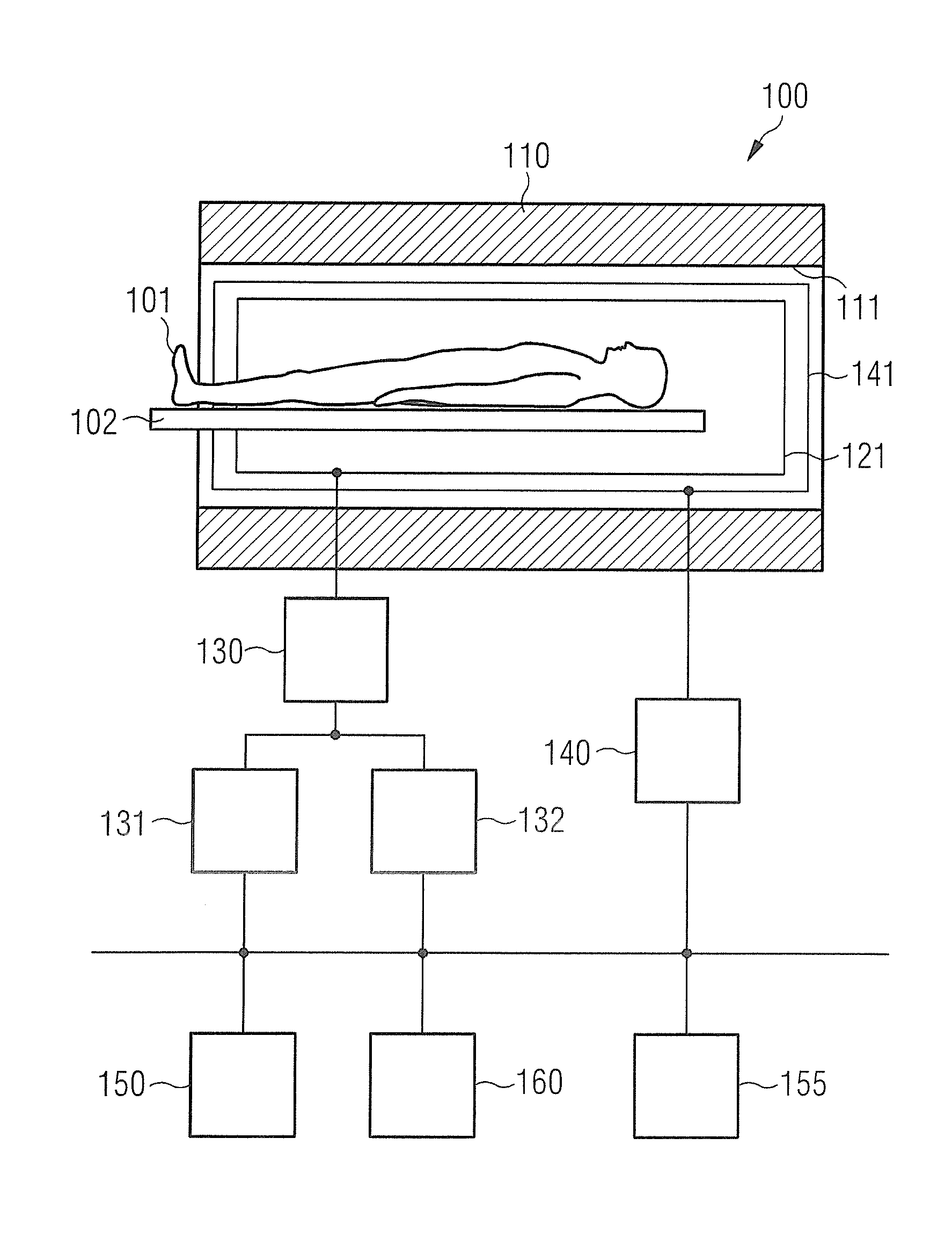
Figure 1 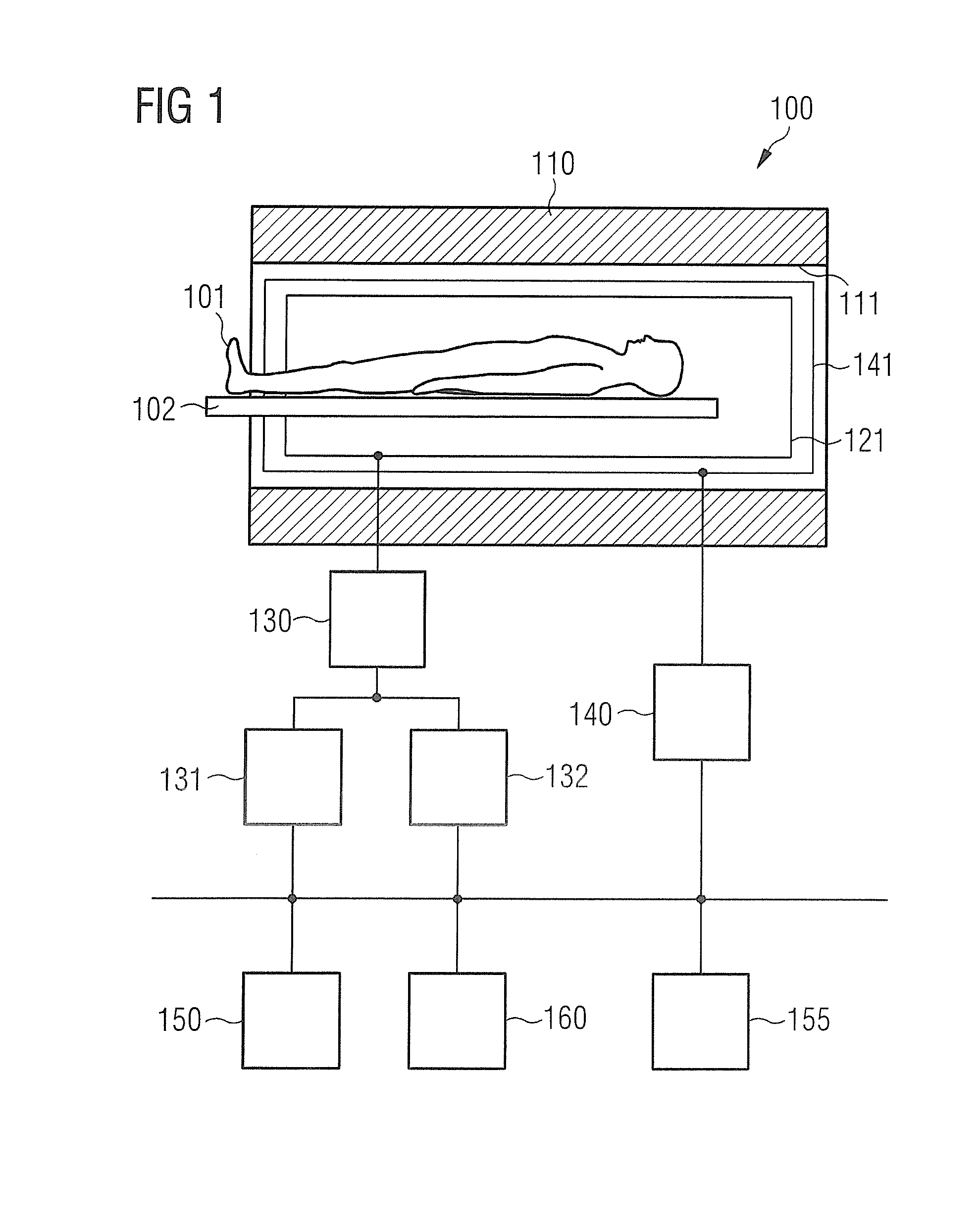
Figure 2 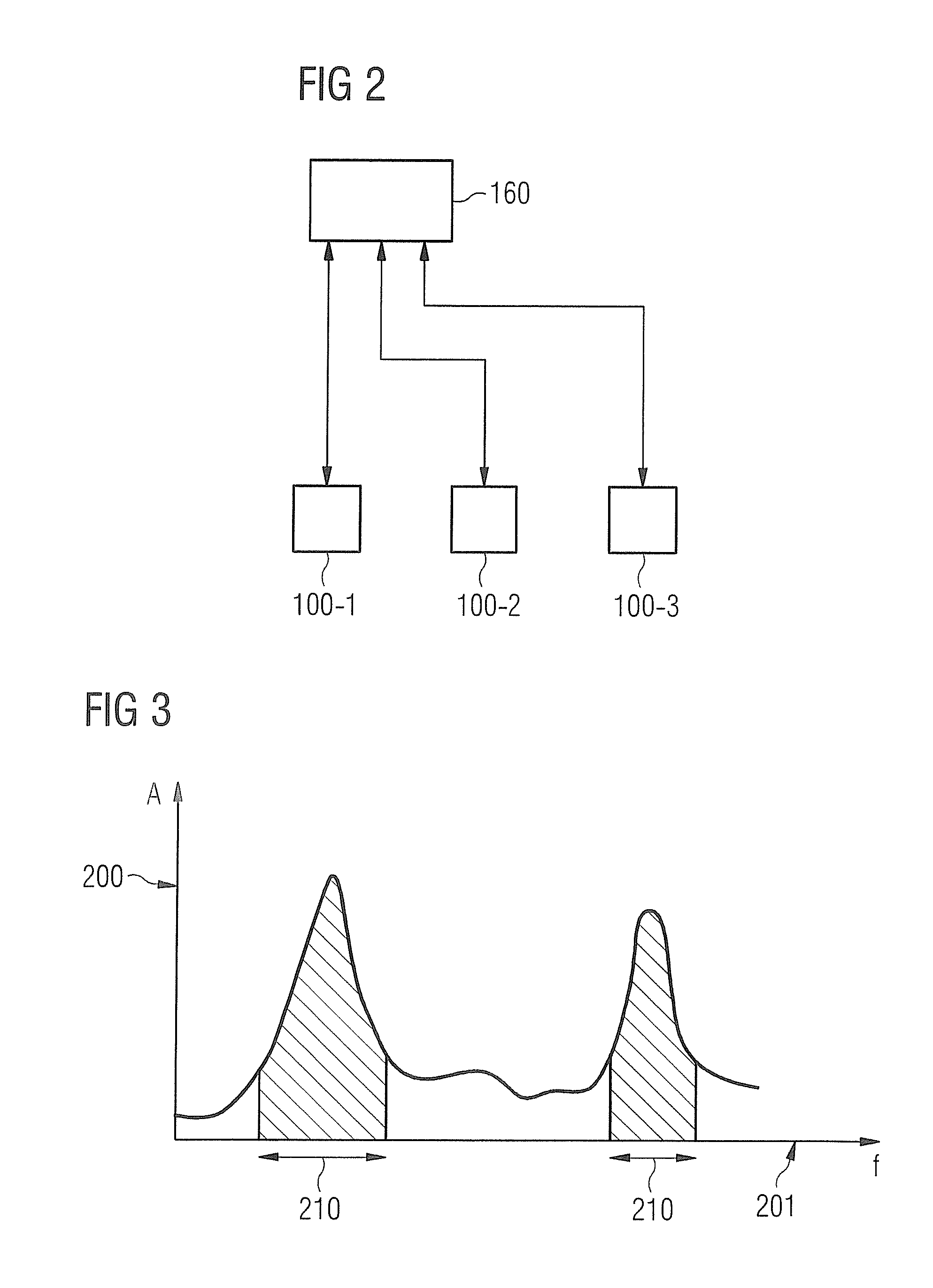
Figure 3
Abstract
Description
BACKGROUND OF THE INVENTION
[0001] 1. Field of the Invention
[0002] The invention concerns techniques for selectively carrying out a magnetic resonance measurement sequence with specific machine control parameters of a magnetic resonance system, as a function of a comparison of the machine control parameters with reference control parameters that are stored in a database.
[0003] 2. Description of the Prior Art
[0004] An MR measurement sequence is typically carried out as part of magnetic resonance (MR) imaging. The MR measurement sequence includes—as well as radio frequency pulses and read-out windows, for example—the switching (activation) of gradient pulses of a gradient system, i.e. the time-dependent application of gradient fields by feeding power to gradient coils of a gradient system. The switching of the gradient pulses typically enables local encoding of the MR data acquired as part of MR imaging to be achieved. With typically dimensioned gradient systems it can be necessary for cur...
Examples
Embodiment Construction
[0038]The present invention is explained in greater detail below on the basis of preferred forms of embodiment which refer to the drawings. In the figures the same reference characters designate the same or similar elements. The figures are schematic representations of different forms of embodiment of the invention. Elements presented in the figures are not necessarily presented true-to-scale. Instead the various elements shown in the figures are reproduced such that their function and general purpose is understandable to the person skilled in the art. Connections and couplings between functional units shown in the figures can also be implemented as indirect connections or couplings. A connection or coupling can be implemented hard-wired or wirelessly. Functional units can be implemented as hardware, software or as a combination of hardware and software.
[0039]Techniques for frequency monitoring of a timing sequence of gradient pulses in MR imaging are explained below. Before an MR m...