
Novel antimicrobial peptide and use thereof
Patent Information
- Authority / Receiving Office
- US · United States
- Current Assignee / Owner
- Publication Date
- 2018-11-08
Smart Images
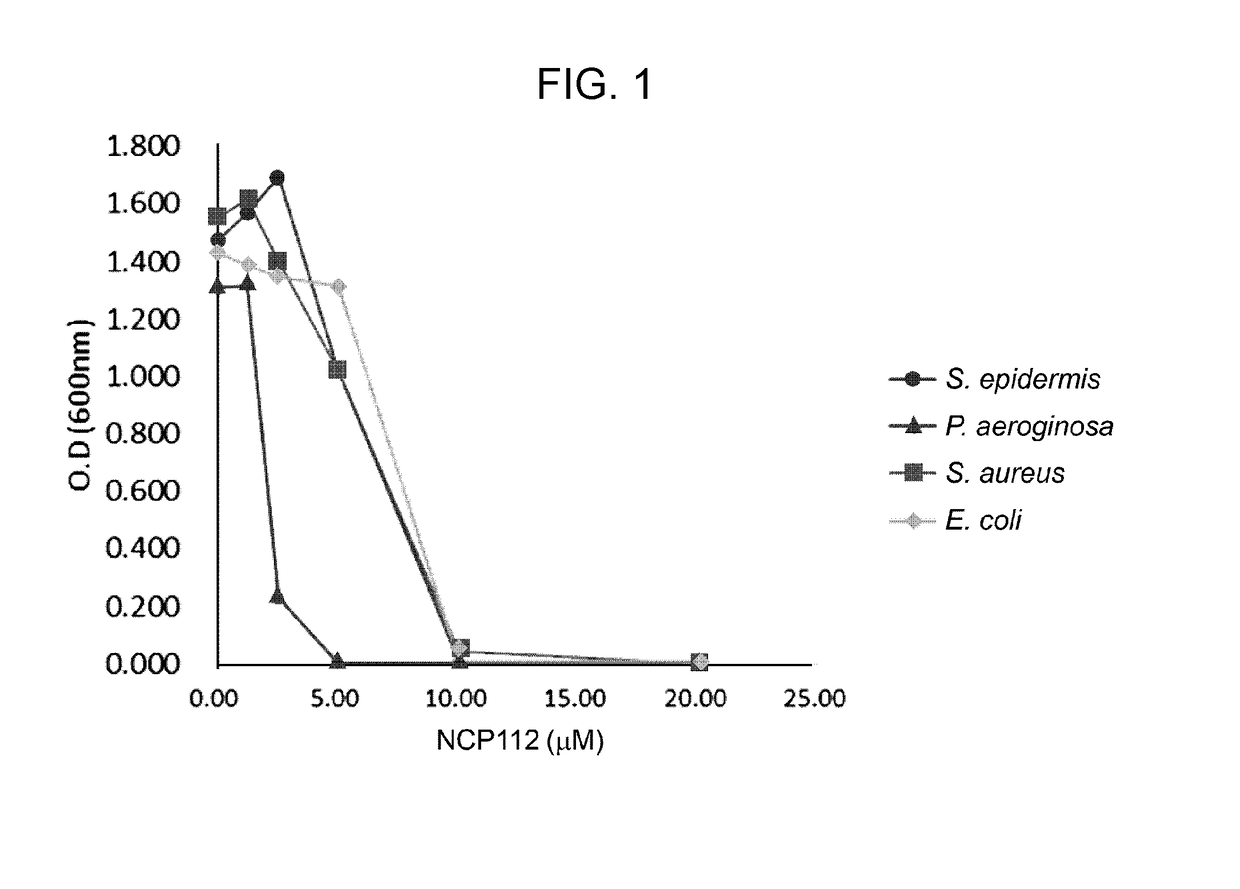
Figure 1 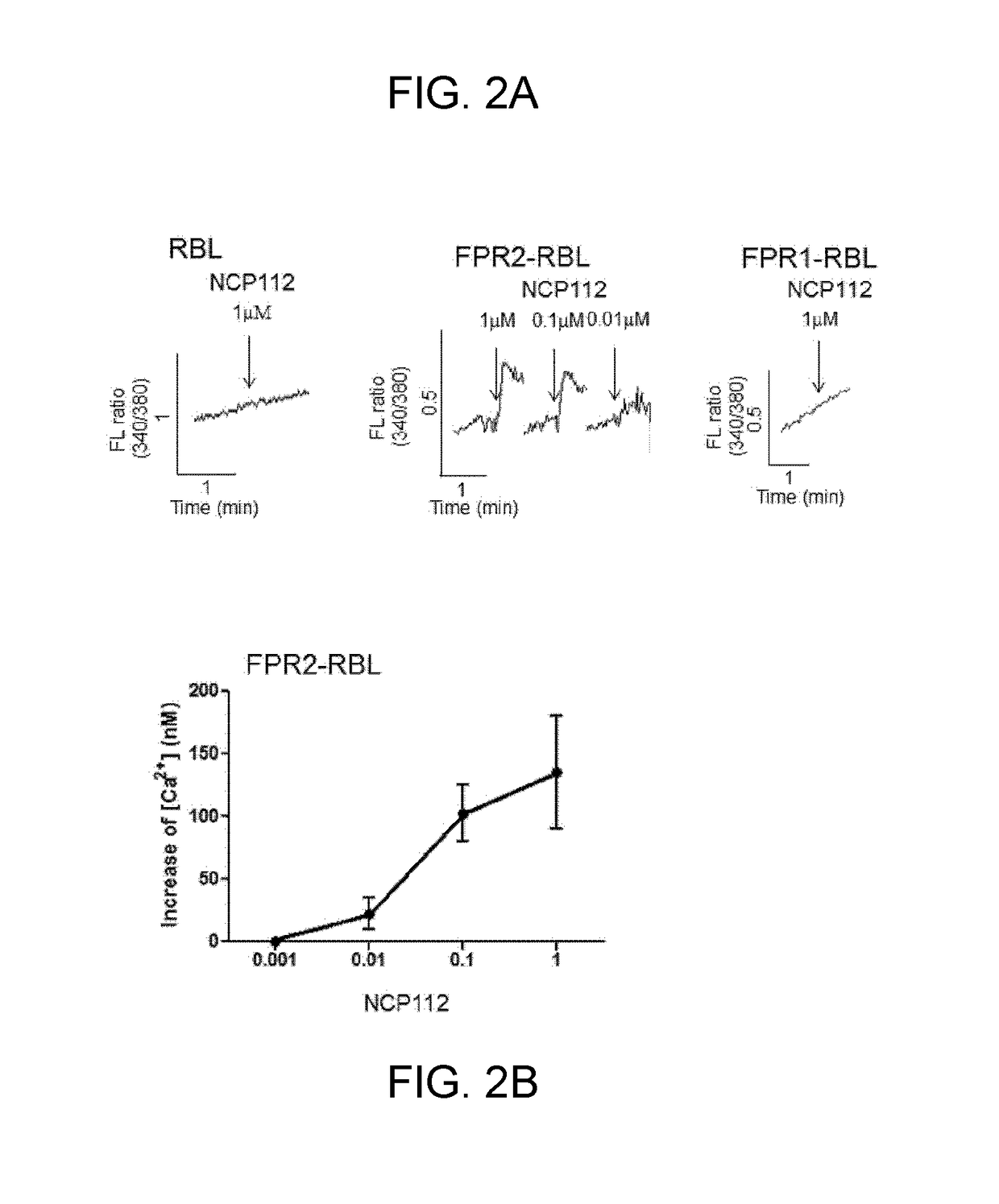
Figure 2 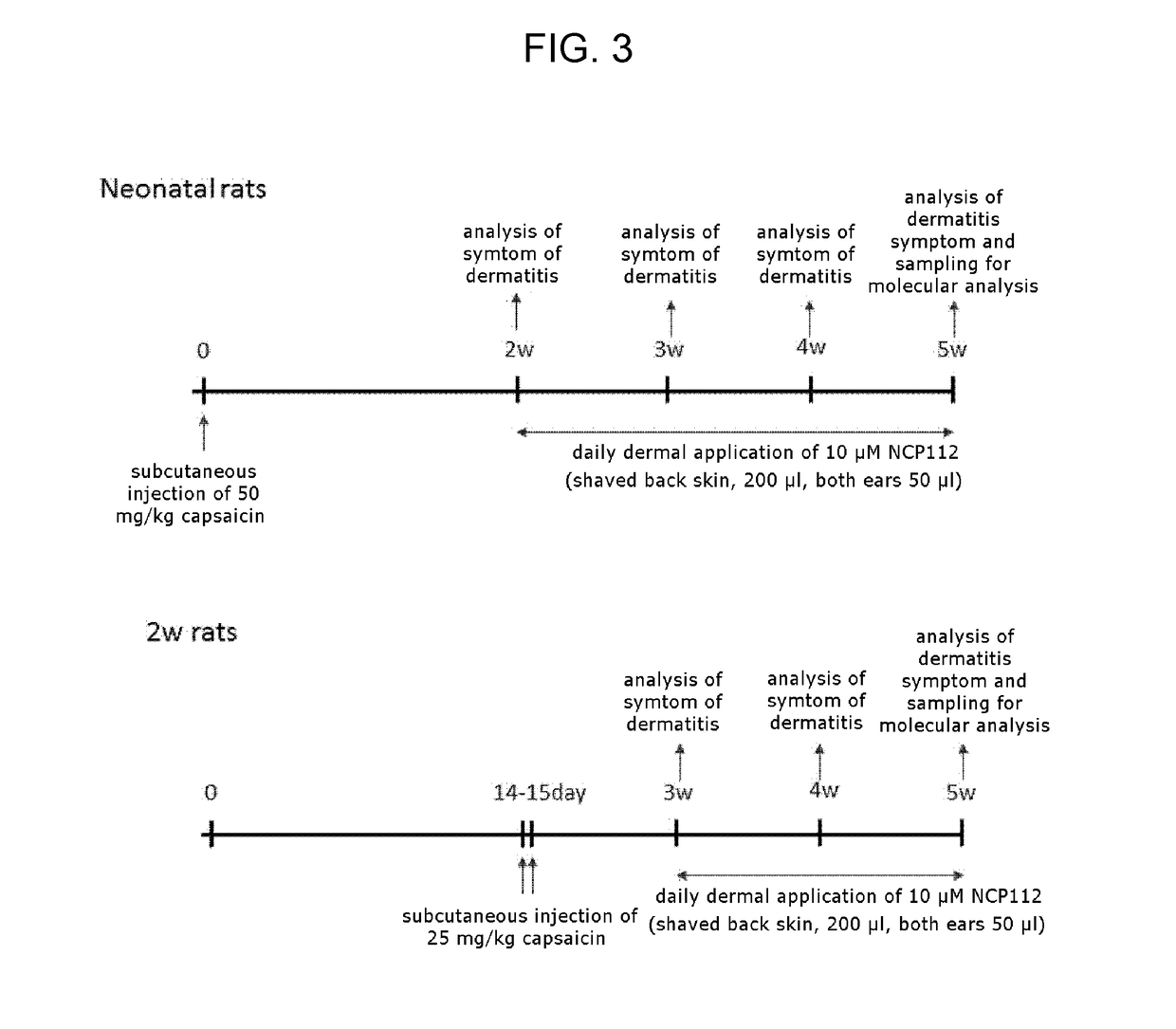
Figure 3
Abstract
Description
TECHNICAL FIELD
[0001] The present invention relates to a novel antimicrobial peptide and a use thereof, and more specifically, to a novel peptide having both an antimicrobial effect and a function of regulating immunocyte activity and a use thereof.BACKGROUND ART
[0002] Antimicrobial peptides may be found in nature and may also be found in synthetic peptides. These antimicrobial peptides consist of relatively short amino acid sequences (10 to 100 amino acid residues) compared to normal proteins. When these antimicrobial peptides mostly bind to the cell membrane, 1) they form ion channels on the cell membrane and thereby inhibit the energy production of the microorganism, or 2) generate large holes in the cell membrane, resulting in the death of the cell. Since these antimicrobial peptides physically destroy microorganisms, it is very difficult for microorganisms to have resistance to these antimicrobial peptides unlike conventional antibiotics that inhibit the synthesis of microbial ce...
Examples
example 1
t on Antibacterial Activity of Novel Peptide
[0034]In order to further improve the antibacterial activity of the peptides prepared in Example 2, an antibacterial test was performed. Gram-positive bacteria Staphylococcus epidermidis and Staphylococcus aureus) and gram-negative bacteria (Pseudomonas aeruginosa and E. coli) were prepared, streaked on agar plate medium using a four-quadrant sequential streak technique, and cultured in a 36° C. incubator overnight. On the next day, the strain colonies on the agar plate medium were inoculated into nutrient broth (3 mL) and cultured overnight at 36° C. and 220 rpm in a shaking incubator. On the next day, the bacteria culture was diluted and the absorbance at 600 nm was measured and adjusted to 0.5. Then, the bacteria culture was diluted in nutrient broth in a 1:100 ratio. Then, the peptides prepared in Example 2 were sequentially diluted in nutrient broth at concentrations of 0 μM, 1.25 μM, 2.5 μM, 5 μM, 10 μM, and 20 μM in an amount of 1 m...
example 2
of Intracellular Ca Ions Through FPRL1
[0036]To examine whether the peptide according to an embodiment of the present invention activates the in vivo immunological function of a living organism, the present inventors observed the changes in calcium ion permeability. Specifically, they measured the concentration of intracellular calcium ions to examine whether the peptide activates FPR2. To this end, the present inventors used RBL cells in which FPR2 was not expressed, RBL cells in which FPR1 was overexpressed (FPR1-RBL), and RBL cells in which FPR2 was overexpressed, and used Fura-2 / AM, a staining material having a strong binding affinity for calcium, as a method for sensitive measurement of the release of intracellular calcium ions. That is, the cells were cultured in RPMI medium containing 10% fetal bovine serum, centrifuged in the mid-log phase (1 to 3×10⁷ cells / mL), and harvested. Then, the cells were washed several times with RPMI medium containing no fetal bovine serum and resu...
experimental example 3
of Dermatitis in Model of Atopic Dermatitis
[0037]3-1: Analysis of External Changes
[0038]As such, to confirm whether the peptide according to an embodiment of the present invention can actually treat immune-related diseases by activating immunological functions in vivo, the present inventors examined whether the symptoms of atopic dermatitis can be ameliorated by treating the peptide on the animal model of atopic dermatitis. Specifically, to confirm whether the peptide has the effect of ameliorating dermatitis in a model of atopic dermatitis induced by capsaicin, the present inventors observed the degree of skin improvement after treating the peptide (NCP112) according to an embodiment of the present invention on the animals with atopy (Neo-Cap and 2 W Cap) in the dermis of atopy-induced skin tissue, the applied site in the dermis, and the site with scratches. Neo-Cap, which is a representative model of atopic dermatitis, was subcutaneously injected with capsaicin (50 mg / kg) on the b...