
Mest as biomarker for cancer diagnosis and prognosis and method for using thereof
a biomarker and cancer technology, applied in biochemistry apparatus and processes, instruments, ict adaptation, etc., can solve the problems of inability to accurately diagnose cancer patients, undeveloped method capable of diagnosing cancer with certainty without surgical operation, etc., and achieve the effect of rapid and accurate manner
Patent Information
- Authority / Receiving Office
- US · United States
- Patent Type
- Applications(United States)
- Current Assignee / Owner
- Publication Date
- 2019-12-19
Smart Images
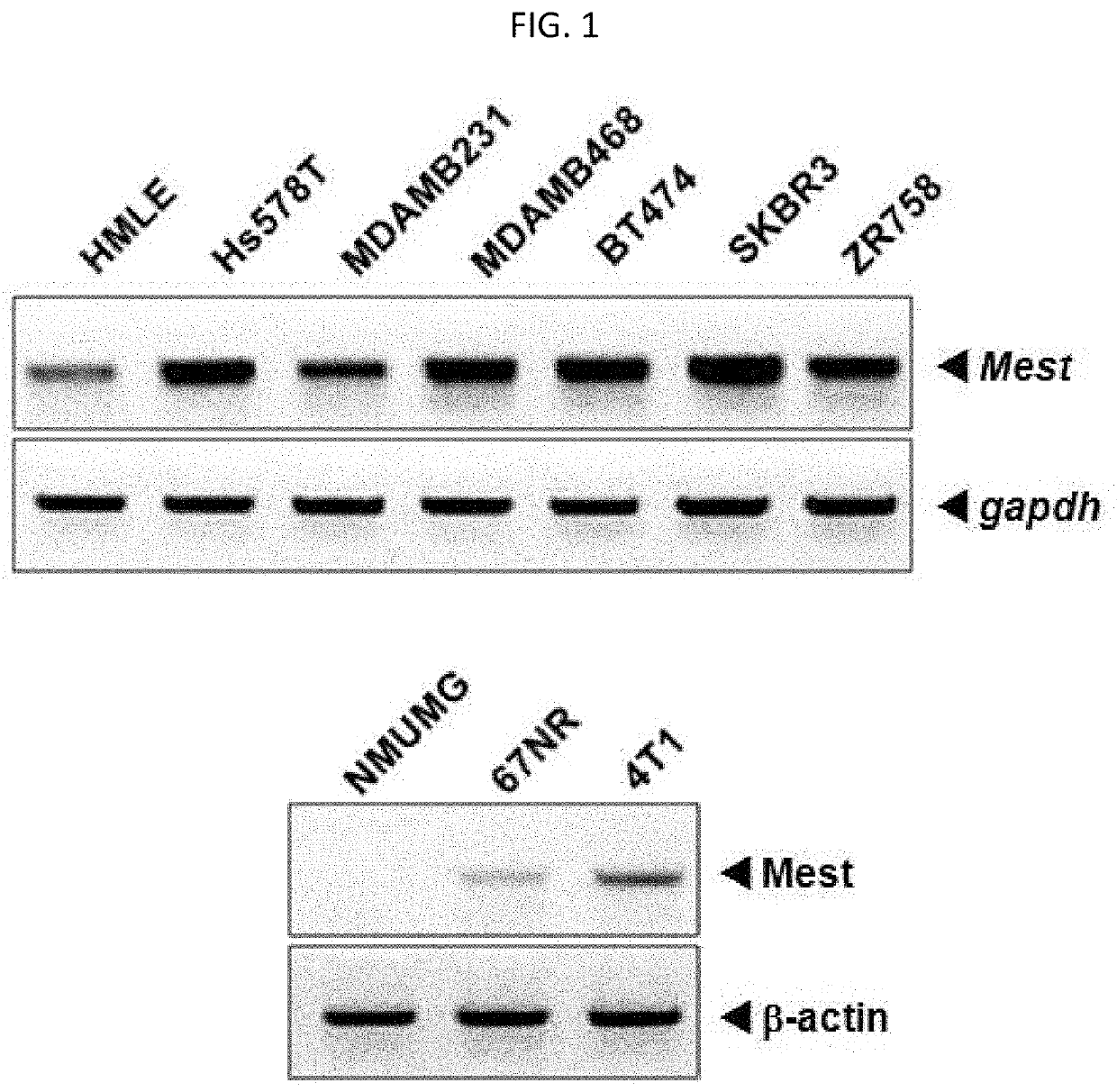
Figure 1 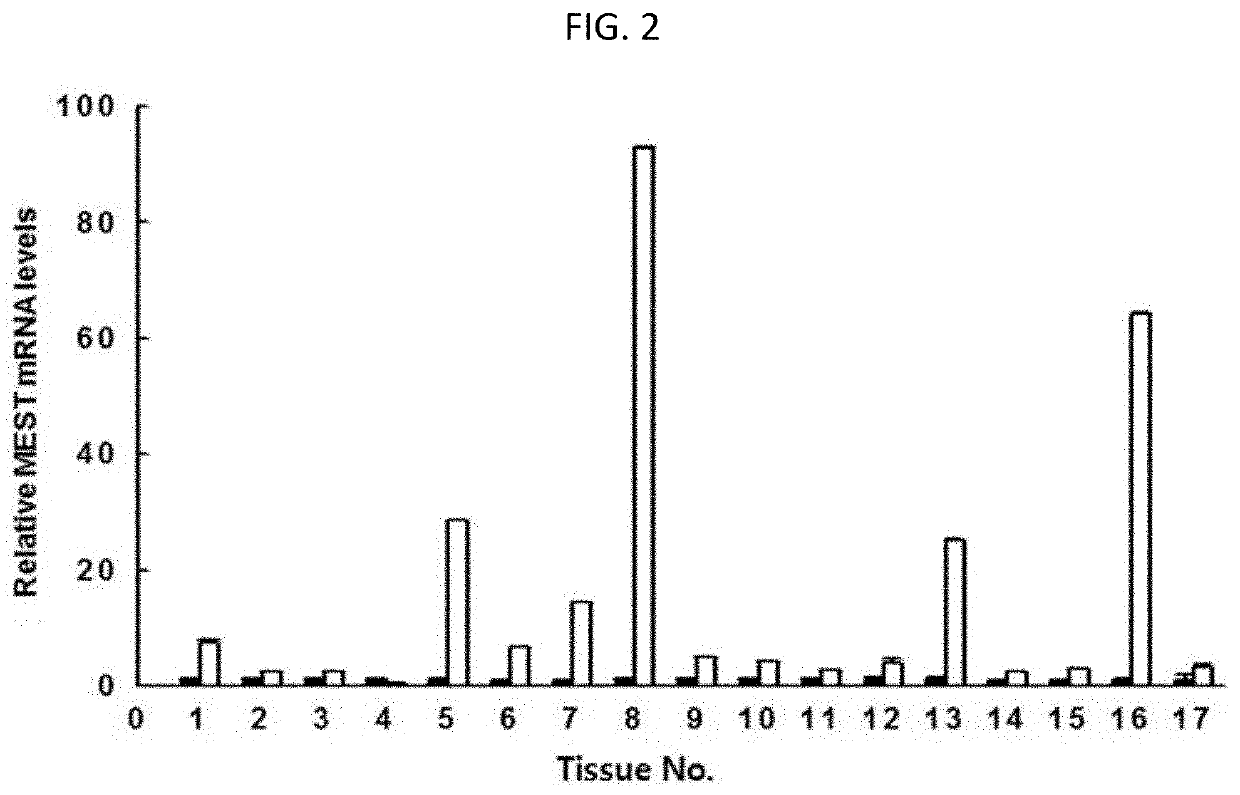
Figure 2 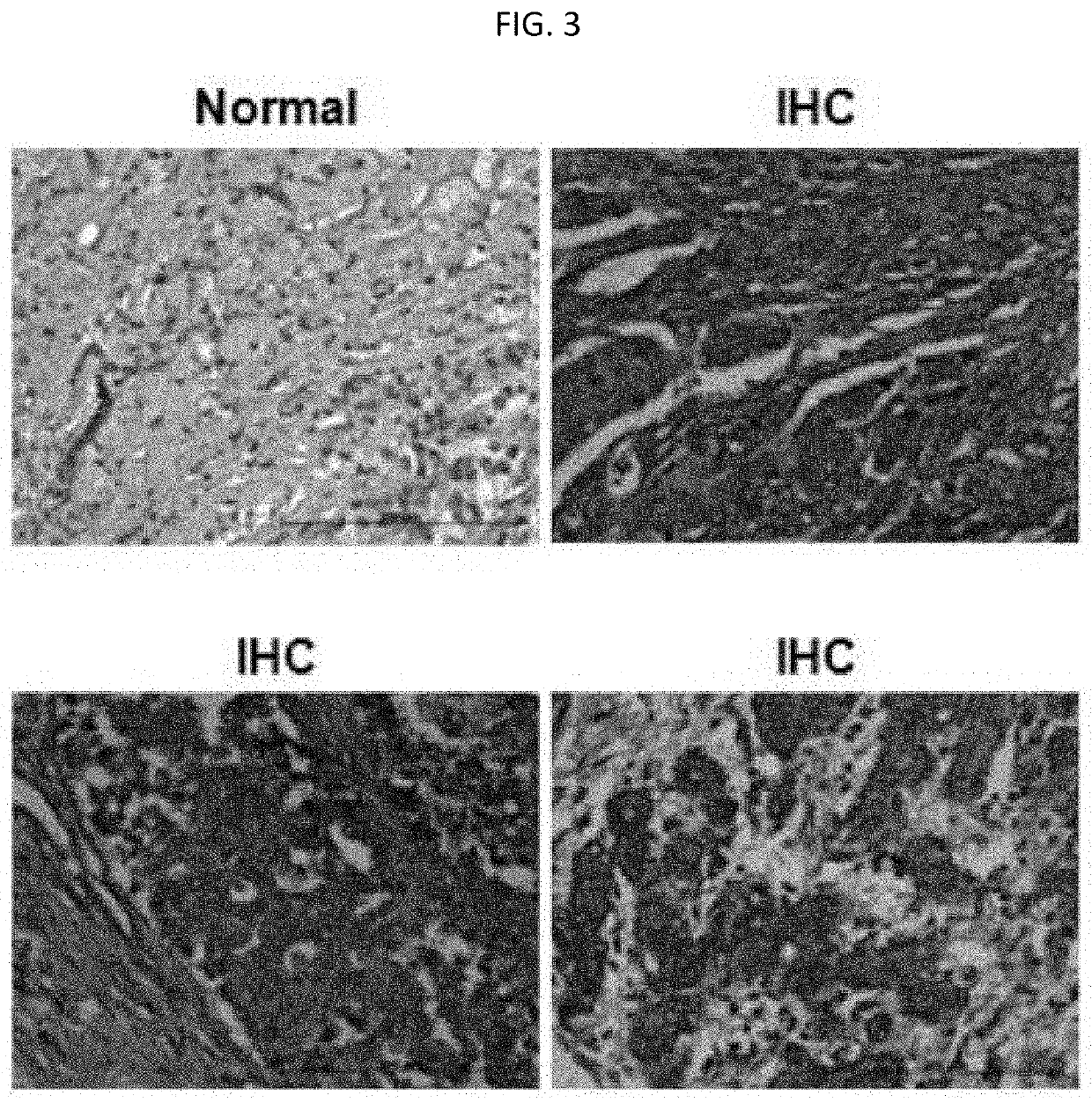
Figure 3
Abstract
Description
CROSS REFERENCE TO RELATED APPLICATIONS AND CLAIM OF PRIORITY
[0001] This application is a Continuation-In-Part application of U.S. application Ser. No. 14 / 001,655, filed on Sep. 10, 2013, which is a National Phase application under 35 U.S.C. § 371 of International Application No. PCT / KR2012 / 001471, filed Feb. 27, 2012, which claims priority to Korean Patent Application No. 10-2011-0016983 filed Feb. 25, 2011, entire contents of which are incorporated herein by reference.BACKGROUND1. Technical Field
[0002] The present invention relates to biomarkers for cancer diagnosis and prognosis and method for using biomarkers.2. Background Art
[0003] Studies on cancer diagnosis together with studies on cancer treatment are receiving a great deal of attention in the fields of molecular biology and medicine. Although there were numerous studies on cancer diagnosis, a method capable of diagnosing cancer with certainty without any surgical operation has not yet been developed. With the development of mo...
Examples
example 1
[0090]Cell culture, Antibobies and Reagents.
[0091]Mouse 4T1 cell line was cultured in high-glucose DMEM (Gibco, Grand Island, N.Y.) supplemented with 10% heat-inactivated fetal bovine serum (hereinafter “FBS”). Immortalized human mammary epithelial cells (hereinafter “HMLE”) was cultured in DMEM / F12 supplemented with insulin (10 μg / ml), human EGF (epidermal growth factor, 10 ng / ml), hydrocortisone (0.5 μg / ml) and 10% heat-inactivated FBS in a 37° C., 5% CO2 incubator.
[0092]Anti-rabbit HRP-link IgG (7074), anti-rabbit HRP-link IgG (7076), and anti-mouse IgG were purchased from Cell Signaling Techonology, anti-E-cadherin (61181). anti-N-cadherin (610920), anti-CD24 (555428), anti-Cd44 (555478), anti-fibronectin (610077) were purchased from BD sciences, anti-β-catenin (13-9700), anti-α-catenin (13-8400) from Zymed, anti-Twist1 (sc-6269) from Santa Cruz technology. Also, anti-V5 (R96125), Mito Tracker (M7512), goat serum (50062Z), ProLong Gold antifade reagent with DAPI (P36935) and Vir...
example 2
[0095]Human Tumor Samples.
[0096]RNAs isolated from Human tissue samples of normal and invasive breast carcinoma derived from patients were generously provided from Gangnam Severance Hospital, and the tissues were purchased from Imgenex.
example 3
[0097]MEST siRNA Plasmid.
[0098]For each two siRNA-coding oligo of mouse MEST, BLAST search from mouse genome was applied and MEST siRNA oligo targeting 5′-GCCCTTGATITCTTAGGCTIT-3′ (SEQ ID NO: 1) and 5′-CCACATCAGTACTCCATATIT-3′ (SEQ ID NO: 2) was designed and confirmed.
[0099]For hairpin-type single RNAi vectors, 5 μl of 100 mM synthetic sense and antisense oligonucleotide (5′-CTAGACCCCACATCAGTACTCCATATTTCTCGAG AAATATGGAGTACTGATGTGGTTTTTGGAAAC-3′) (SEQ ID NO: 3) and (5′-CTAGACCGCCCTTGATITCTTAGGCTTT TTCAAGAGAAAAGCCTAAGAAATCAAGGGCTTTTTGGAAAC-3′) (SEQ ID NO: 4) were mixed with 1 μl of 1 M NaCl. Then, annealing at 95° C. for 2 min, cooling at 72° C., and then slowly cooling at room temperature was performed.
[0100]Mouse MEST-siRNA inserts were sub-cloning to XbaI / XhoI loci of pFG12 lentivirus vector (Inhibiting HIV-1 infection in human T cells by lentiviral-mediated delivery of small interfering RNA against CCR5. Qin X F et al. (Proc Natl Acad Sci USA. 2003 Jan. 7. 100(1):183-8. Pubmed)). ...