

Medical device
Patent Information
- Authority / Receiving Office
- US · United States
- Current Assignee / Owner
- Publication Date
- 2020-05-28
Smart Images
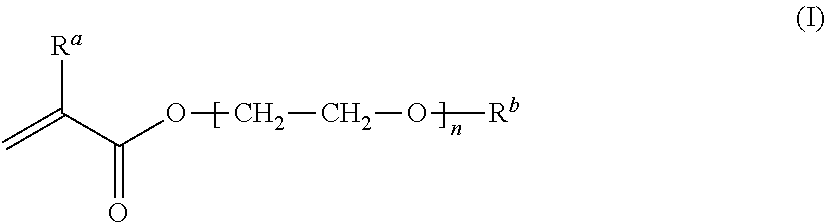
Figure 1 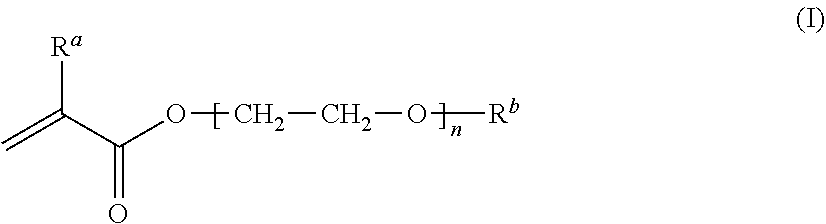
Figure 2 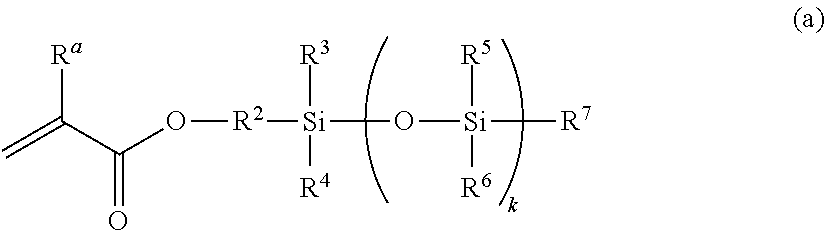
Figure 3
Abstract
Description
CROSS REFERENCE TO RELATED APPLICATIONS
[0001] This is the U.S. National Phase application of PCT / JP2018 / 016155, filed Apr. 19, 2018, which claims priority to Japanese Patent Application No. 2017-093709, filed May 10, 2017, the disclosures of these applications being incorporated herein by reference in their entireties for all purposes.FIELD OF THE INVENTION
[0002] The present invention relates to a medical device, especially to a medical device using a silicone hydrogel.BACKGROUND OF THE INVENTION
[0003] Medical devices to be in direct contact with part of the human body are well known, and flexible materials that are less likely to injure the human body are required therefor. In particular, for medical devices to be in contact with wet sites such as mucosae, hydrous materials having excellent flexibility such as hydrogels are suitable. Examples of such medical devices include ophthalmic lenses, endoscopes, and catheters. All of these are medical devices to be in contact with wet sites s...
Examples
example 1
[0226]A mixture was prepared by sufficiently mixing 22% by mass MEA, 43% by mass mPDMS, 25% by mass DMAA, 10% by mass 164B, 0.5% by mass NB, 0.02% by mass RB, 0.2% by mass IC, and 40% by mass TAA together, and the mixture was filtered through a membrane filter (0.45 μm) to remove insoluble components, to obtain a monomer composition. Here, the total of MEA, mPDMS, DMA, and 164B, which form a silicone hydrogel after polymerization, is regarded as 100% by mass in the calculation. The monomer composition was injected into a contact lens mold made of a transparent resin (base curve side, polypropylene; front curve side, cyclic polyolefin), and irradiated with light (1.01 mW / cm2, 20 minutes) using a fluorescent lamp (Toshiba, FL-6D, daylight color, 6 W, four tubes) under a nitrogen atmosphere to allow polymerization. After the polymerization, the composition, together with the mold, was immersed in a solution of isopropyl alcohol:water=1:1, and warmed at 60° C. for 1 hour, followed by de...
examples 2 to 6
[0228]Lenses were prepared in the same manner as in Example 1 except that the monomer mixing ratio was changed as shown in Table 1, and subjected to evaluation. The measurement results are summarized in Table 2.
[0229]Table 2 shows the results of measurement of various physical properties required for contact lenses. All of Examples 1 to 6 showed results sufficient for use as contact lenses.
examples 8 to 13
[0231]The components described in Table 3 were mixed well, and the resulting mixture was filtered through a membrane filter (0.45 μm) to remove insoluble components, to obtain a monomer composition. The monomer composition was injected into a contact lens mold made of a resin (polypropylene). Under air atmosphere, irradiation was performed using an LED light with a center wavelength of 405 nm at 0.8 mW / cm2 for 1 hour from above and below the monomer composition, to allow polymerization. After the polymerization, the composition, together with the mold, was immersed in a solution of isopropyl alcohol:water=7:3 (volume ratio before mixing), and warmed at 70° C. for 1 hour, followed by detaching a molded article having a contact lens shape from the mold. The resulting molded article was immersed in a solution of isopropyl alcohol:water=7:3 (volume ratio before mixing) at 70° C. for 3 hours, and then immersed in clean RO water. The article was then left to stand and stored overnight. Th...