
Time-release and micro-dose formulations for topical application of estrogen and estrogen analogs or other estrogen receptor modulators in the treatment of dry eye syndrome, and methods of preparation and application
a technology of estrogen receptor and estrogen analog, applied in the field of topical application of estrogen and estrogen analog and other estrogen receptor modulators, can solve the problems of increasing not addressing the cause of dry eye, and often producing side effects of parenteral estrogen administration, so as to reduce the frequency of doses, reduce the risk of dry eye, and the effect of full
Patent Information
- Authority / Receiving Office
- US · United States
- Patent Type
- Patents(United States)
- Current Assignee / Owner
- Publication Date
- 2015-03-24
Smart Images
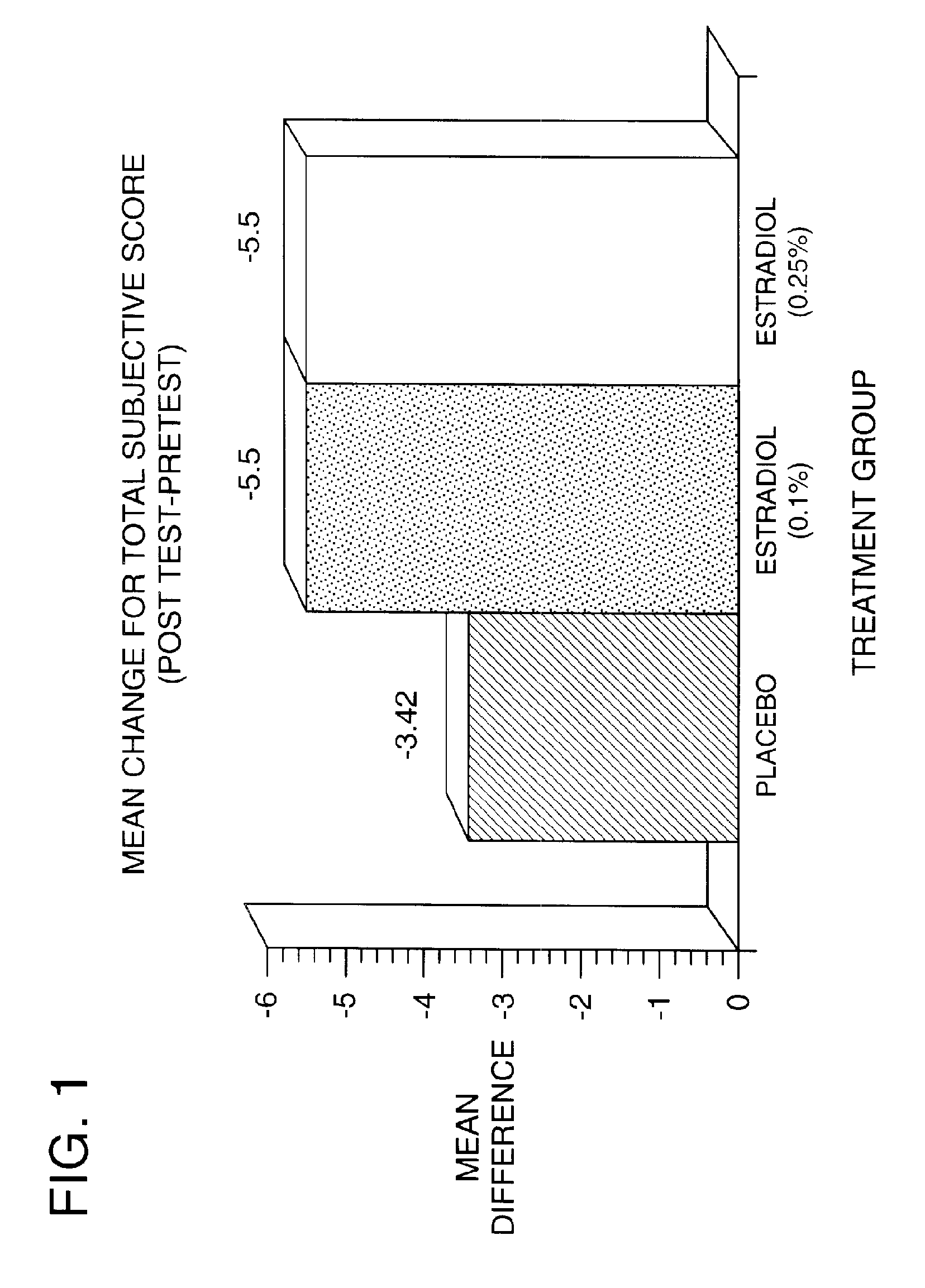
Figure 1 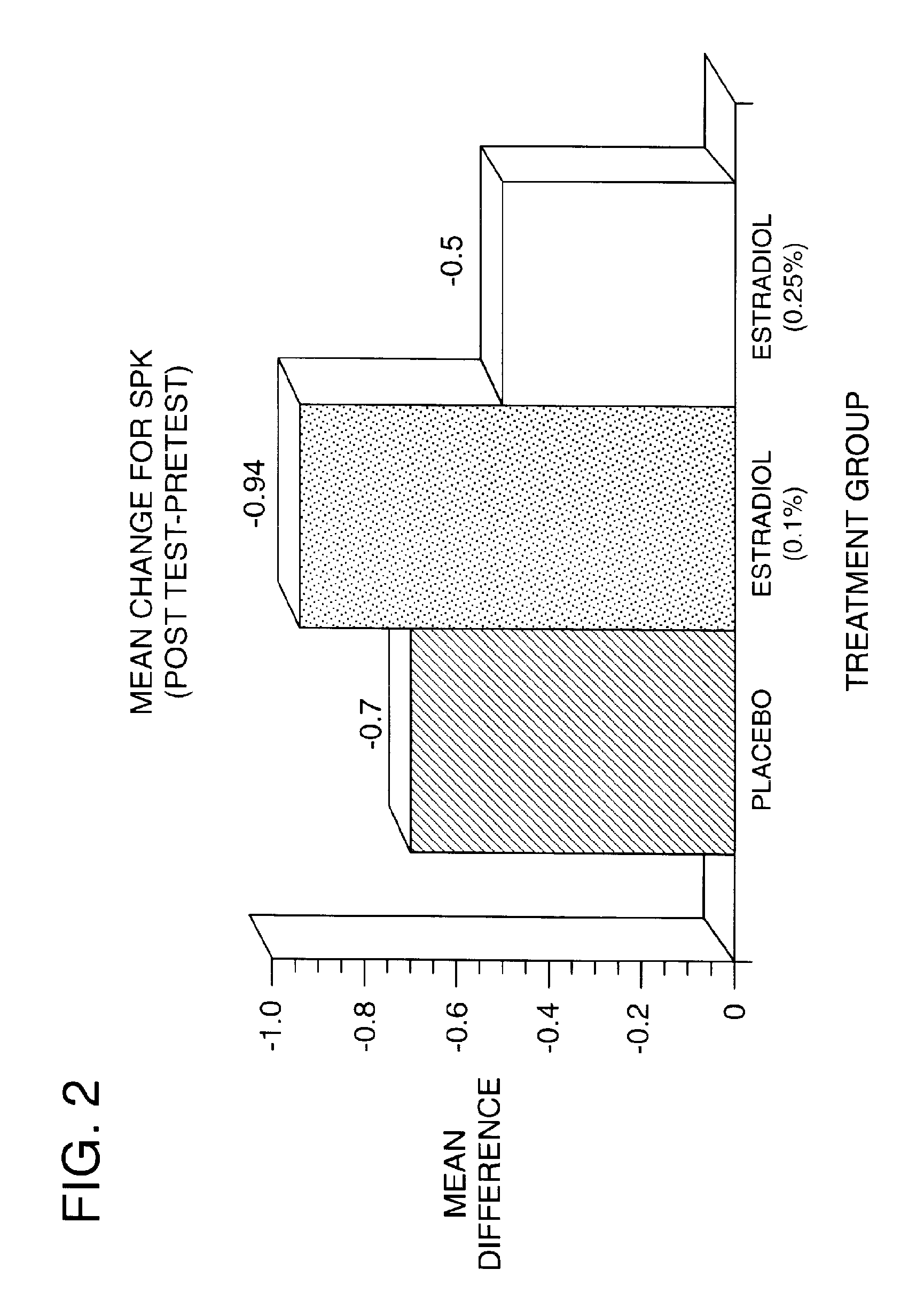
Figure 2 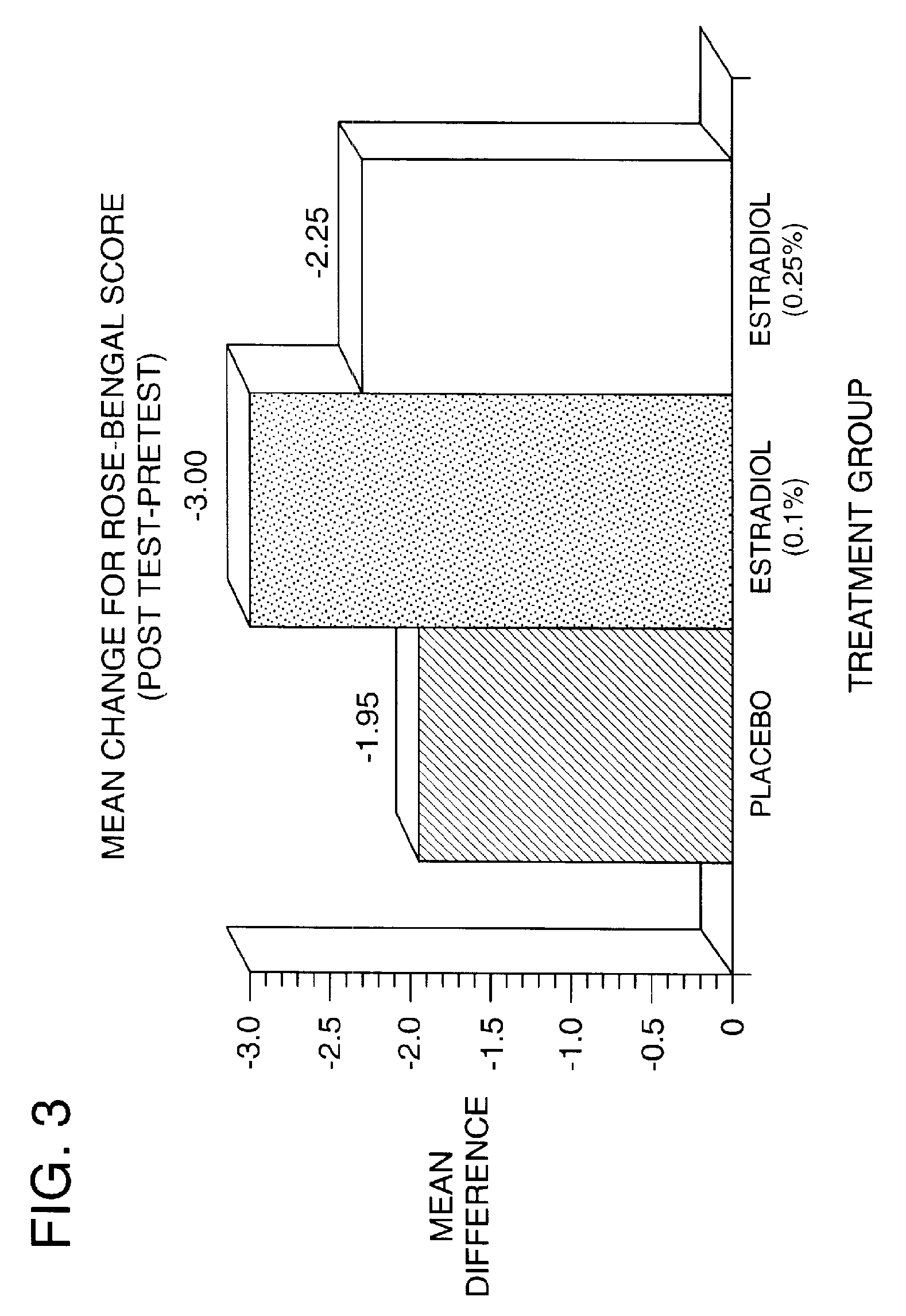
Figure 3
Abstract
Description
CROSS-REFERENCE TO RELATED APPLICATIONS
[0001] This application is a U.S. National Phase patent application of PCT / US2010 / 039250, filed Jun. 18, 2010, which claims the benefit of U.S. Provisional Application No. 61 / 218,899, filed Jun. 19, 2009, each of which is hereby incorporated by reference, in its entirety.BACKGROUND OF THE INVENTION
[0002] 1. Field
[0003] This invention relates to the topical application of estrogen and estrogen analogs and other estrogen receptor modulators in the treatment of primary or secondary dry eye syndrome (also known as keratoconjunctivitis sicca (KCS)) and, in certain embodiments, to the preparation and application of 17-β-estradiol and its derivatives in lipid, liposomes, polymers, or aqueous or non-aqueous vehicles for the topical treatment of the ocular surface tissues particularly as time-release or micro-dose formulations. This invention may also be useful in treating other conditions where KCS may occur, such as post-operative refractive surgery and ...
Examples
example 1
Initial Dose Studies
[0096]Although the present invention has been described with reference to several illustrative examples, it will be understood that the invention is not limited to the examples given herein by way of illustration, but only by the scope of the appended claims.
[0097]Prior to an application of a drug formulated in accordance with the present invention it was necessary to establish the presence of dry eye syndrome in the test population and to follow its course under treatment. It is imperative that the diagnosis of dry eye syndrome be correct and the patient not be suffering from other or additional ophthalmic diseases such as Sjörgen's syndrome.
[0098]The diagnosis of dry eye syndrome in the present invention, was made on the basis of the following tests. Initially, microscopic evaluation of the tear film with particular attention to the marginal tear strip, viscosity and debris content of the precorneal tear film, and lid examination is performed. This is followed ...
example 2
Results of Clinical Trials Using 17-β-Estradiol to Teat Dry Eye
[0106]A phase 1 human clinical trial was conducted between November 1993 and December 1995. The objective of the present study was to evaluate the efficacy and safety of a non-time release formulation of 17-β-estradiol in relieving the signs and symptoms of dry eye syndrome in postmenopausal women. 45 completed subjects were studied in the single-center, randomized, double-masked, parallel, placebo controlled study. The trial was conducted as follows:
[0107]The initial visit (Visit 1) occurred 7 days prior to the actual start of the study, where subjects were screened. Information regarding health, ophthalmic history, and patient evaluation and inclusion / exclusion based on FDA approved criteria were performed. A complete ophthalmic examination which included:
[0108]Acuity testing
[0109]Biomicroscopy
[0110]Intraocular pressure (IOP)
[0111]Ophthalmoscopy
[0112]Color vision
[0113]Tear osmolarity
[0114]Schimer's test
[0115]Tear film ...
example 3
Formulation of Time-Release Topical Application Pharmaceutical
[0133]Various pharmaceutical compositions will be formulated based upon the following starting composition:
[0134]
TABLE 8CompoundConcentration (w / v %)17-β-estradiol (microcrystalline)Desired amountpolysorbate 80 (USP)0.2povidone (USP) (K-30 type)1.0hydroxyethylcellulose (USP)0.5sodium chloride (USP)0.5disodium edate (USP)0.05benzalkonium chloride (USP)0.005dil. HCL for pH adjustmentqspurified water (USP)qs
[0135]The formulations will not include any preservative. The following bioadhesive viscoelastic compounds will be added each in its own formulation: Sodium Hyaluronate (0.05% to 0.2%), xanthan gum, hydroxypropyl methyl cellulose (0.5% to 2.0%) and polycarbophil. After addition of the bioadhesive viscoelastic compound has been added, the excipients will be adjusted to maintain isotonicity of the formulation. After adjustment of the isotonicity, the formulations will be subject to basic diffusion studies to verify adequate...