Device for efficiently measuring tree height

A tree-height and high-efficiency technology, applied in the field of forest survey, can solve problems such as difficult reading, and achieve the effect of improving work efficiency

CN101749988BInactive Publication Date: 2012-01-25SHANDONG AGRICULTURAL UNIVERSITY
0 Cites 1 Cited by

Patent Information

Authority / Receiving Office
CN · China
Patent Type
Patents(China)
Current Assignee / Owner
Publication Date
2012-01-25
Estimated Expiration
Not applicable · inactive patent

Smart Images

  • Figure 1
    Figure 1
  • Figure 2
    Figure 2
  • Figure 3
    Figure 3
Patent Text Reader

Abstract

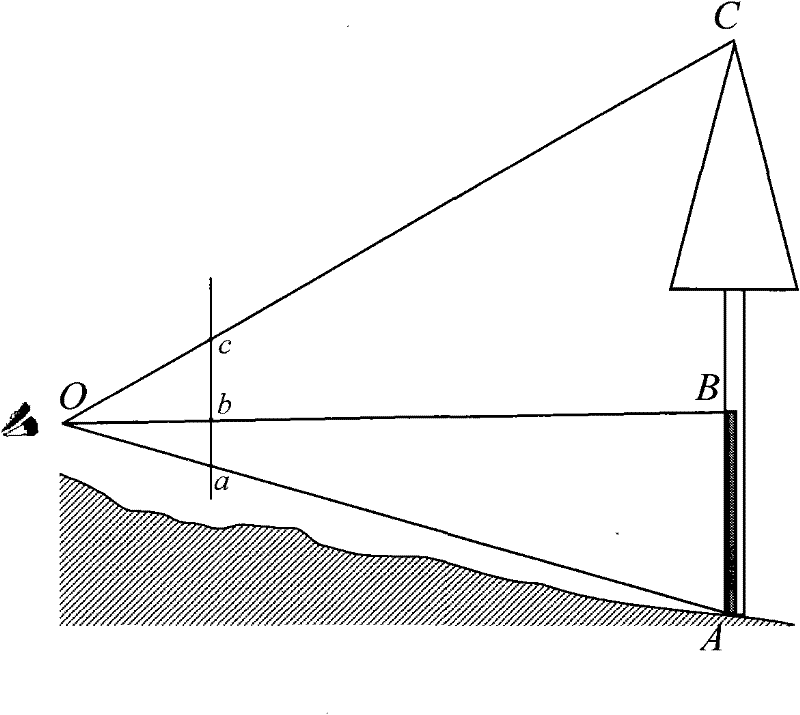
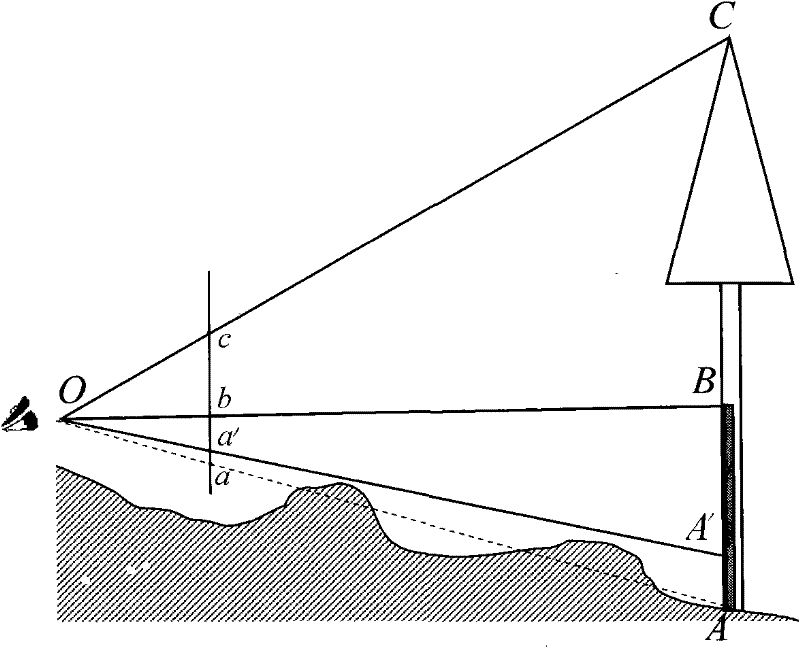
The invention discloses a device for efficiently measuring the height of a tree, in particular to a device which is suitable for use in forest operation environment. The device mainly comprises three key parts: a ruler body [1], an upper ruler foot [3] and a lower ruler foot [4], wherein the ruler body is marked with tree height readings. Two ruler feet can slide or be fixed along the ruler body.During measurement, the positions, where two ruler feet are to be fixed, can be determined first according to the length of a marker post in front of the tree, and then the marker post is collimated according to two ruler feet, and the tree height can be read from the ruler body. The invention has the advantages of simple structure, easy production and strong practicability. The device not only avoids the trouble of measuring a horizontal distance like using the traditional device for measuring the tree height, but also can measure the full height of the tree when the tree base is blocked, sothe device for efficiently measuring the tree height has a great significance for the improvement on forest survey speed.
Need to check novelty before this filing date? Find Prior Art

Description

technical field

[0001] The invention belongs to the technical field of forest investigation, in particular to a high-efficiency tree height measuring device suitable for use in forest operating environments. Background technique

[0002] At present, the most commonly used altimetry tool in forest survey work is the Blume-Leiss altimeter designed by German forest officer Carl Blume in the early 20th century. It can also meet the needs of most forestry investigations, so it has been loved by people for nearly 100 years. However, the Brulai altimeter is not without disadvantages, that is, it is required to measure a standard length of horizontal distance (15, 20, 30 or 40m) before measuring the height of a tree. The terrain in the forest is undulating and overgrown with shrubs. Needless to say, it is difficult to measure the standard horizontal distance. It is inapplicable or inefficient in slightly larger mountain forests. In view of the above reasons, whether to invent an ...

Examples

Embodiment Construction

[0030] Embodiments of the present invention are given below in conjunction with the accompanying drawings.

[0031] Such as figure 1 Shown, main body of the present invention is made up of total three parts of ruler body [1], upper ruler foot [2], lower ruler foot [3]. In addition, there are fixed screws [4] on the feet of the ruler, anti-off screws [6] for preventing the feet from slipping are installed on the ruler body, and hand-held holes [5] for convenient holding are also provided on the upper part of the ruler body. ] and other basic structures.

[0032] The ruler body [1] has no width and thickness restrictions, and the material can be made of stainless steel, aluminum plate or hard plastic, and the tree height readings are directly engraved on it, and the engraving ratio can be 1:100 (or 1:50) , that is: directly engrave 1m at 1cm from point O, 2m directly at 2cm, and so on. In addition to being able to slide freely and keep perpendicular to the ruler body, specia...