
Method and system for an improved reservation system optimizing repeated search requests
A data processing system and user technology, applied in reservations, data processing applications, instruments, etc., can solve the problem of repeated search requests, and achieve the effects of data calculation optimization, resource consumption rationalization, and cost reduction
- Summary
- Abstract
- Description
- Claims
- Application Information
AI Technical Summary
Problems solved by technology
Method used
Image

Examples
example 1
[0079] Example 1: Products of the pre-order system
[0080] We consider products dedicated to pre-order system support. For each flight solution matching the specified pair of city and carrier, it calculates the lowest applicable price for all combinations of departure date and layover time. The calculation relies on all data automatically submitted to the GDS through the intermediary of the price list publisher. Recommendations are returned only if there are seats available on the flight. Since checking for vacant seats is resource intensive, it is only done for queries that have the customer's partner as the carrier.
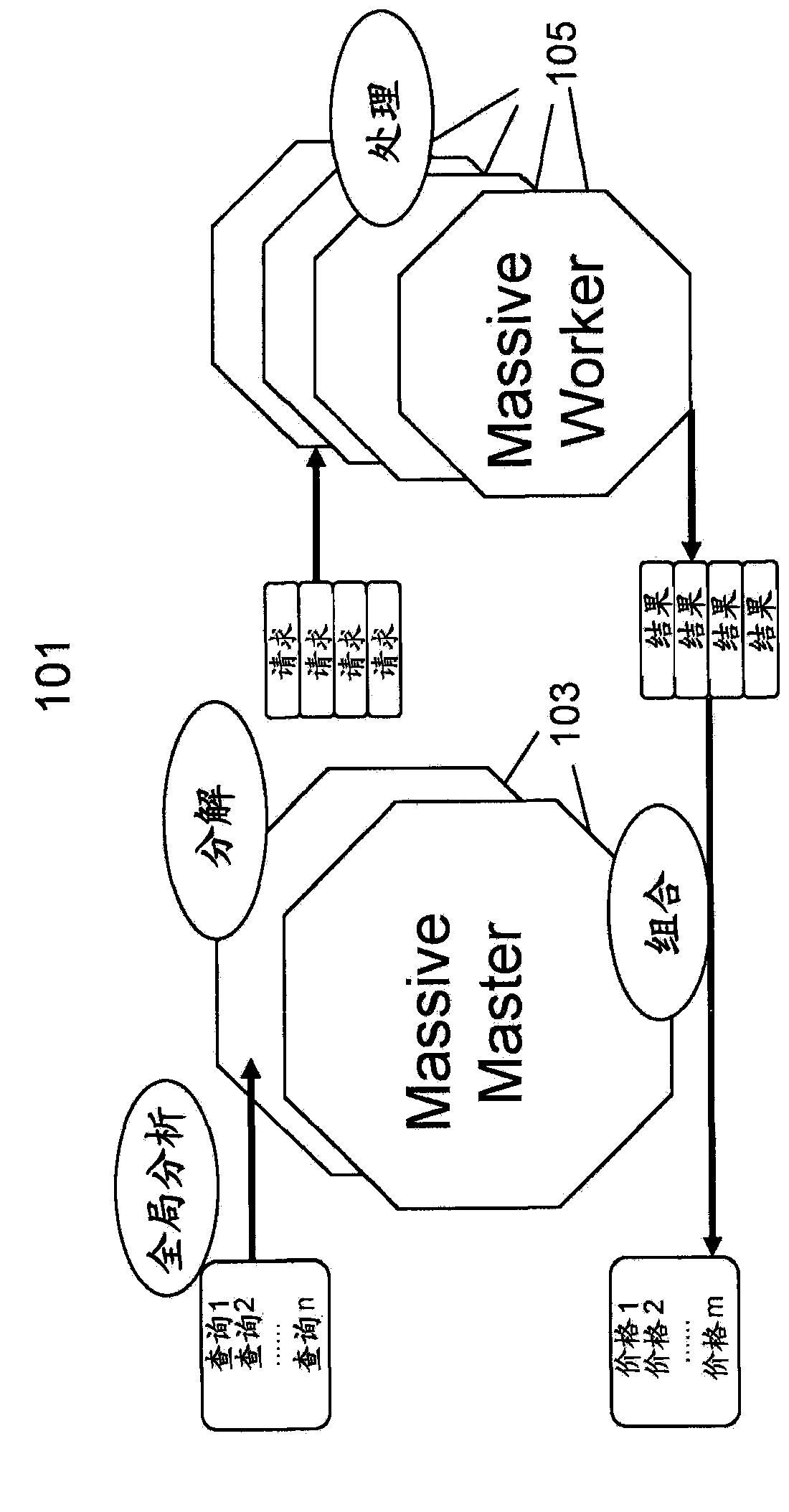
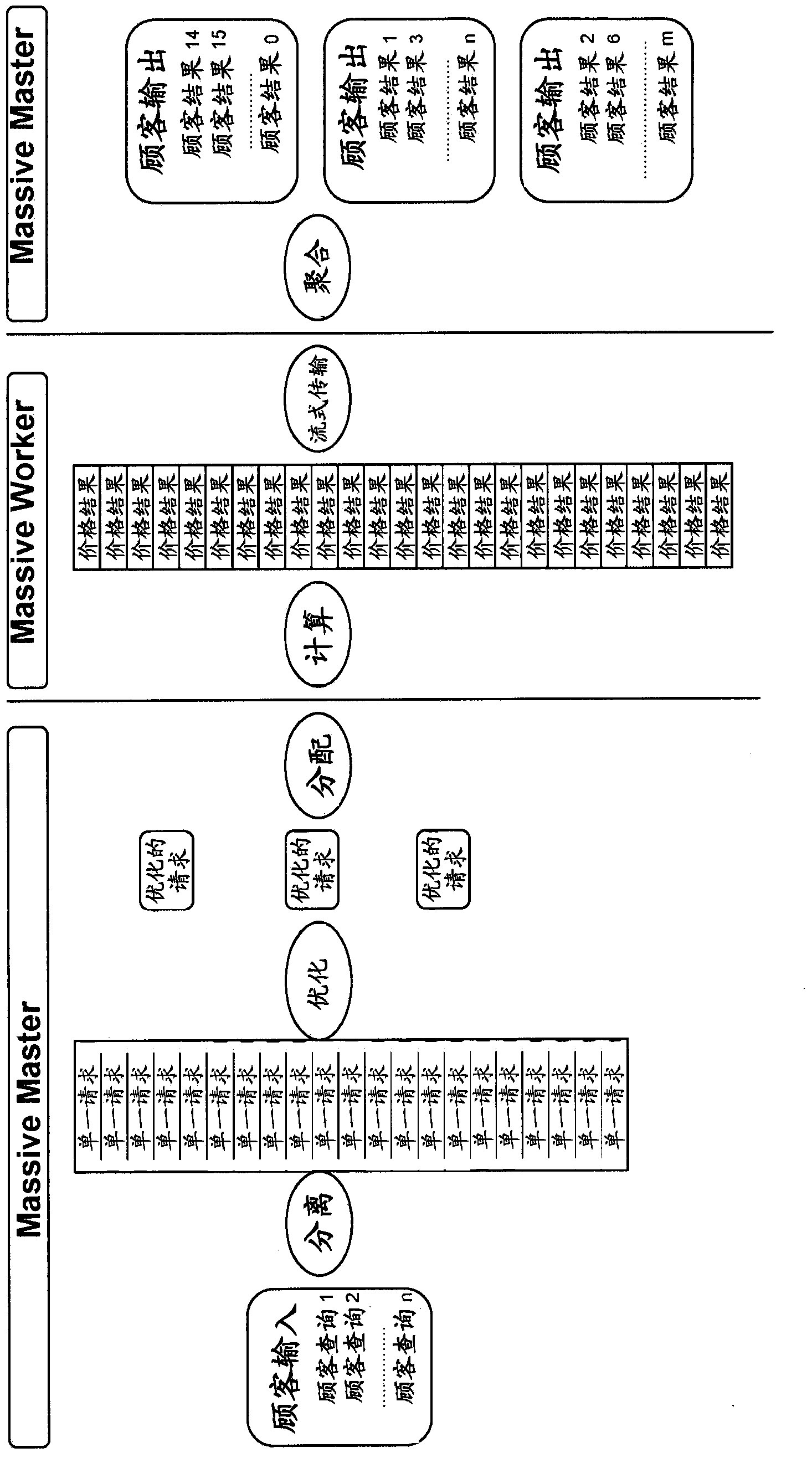
[0081] By creating a single request, due to business rules, the separation module is able to identify the partners in the request and flag these requests to enable "empty seat check".
[0082] The optimization module merges journey requests to prevent redundancies caused by date combinations. The merge operation utilizes an optimized plugin that takes into...
example 2
[0083] Example 2: Product of revenue management system
[0084] We consider products dedicated to yield management support. For each flight solution that matches a given market, it calculates the lowest applicable price for all combinations of departure date, layover time, advance purchase conditions, and reservation code (hereafter referred to as RBD). The same RBD must be used throughout the trip. This calculation relies on all data automatically submitted to the GDS through the intermediary of the price list publisher. Calculations for requests with a departure date within the next 45 days must rely on all data manually submitted to the GDS by the customer during office hours of the day.
[0085] The optimization module bundles date combinations and advance purchases to optimize the calculation of journey solutions. When merging, it applies business rules to separate requests with departure dates within the next 45 days. Its processing is delayed until after the client ...
PUM
 Login to View More
 Abstract
Description
Claims
Application Information
 Login to View More