[0007] 1) Ambulance transportation In order to shorten the cold and hot
ischemia time as much as possible, the organ harvesting is often carried out on the way back to the hospital, but the transplant centers are usually carried out in ordinary ambulances and are not equipped with professional equipment for organ harvesting. The main reasons for surgical vehicles are as follows: firstly, it is necessary to modify ordinary ambulances to a large extent to equip corresponding facilities, which is costly and difficult to find professional vehicle modification manufacturers; Does not meet the actual application
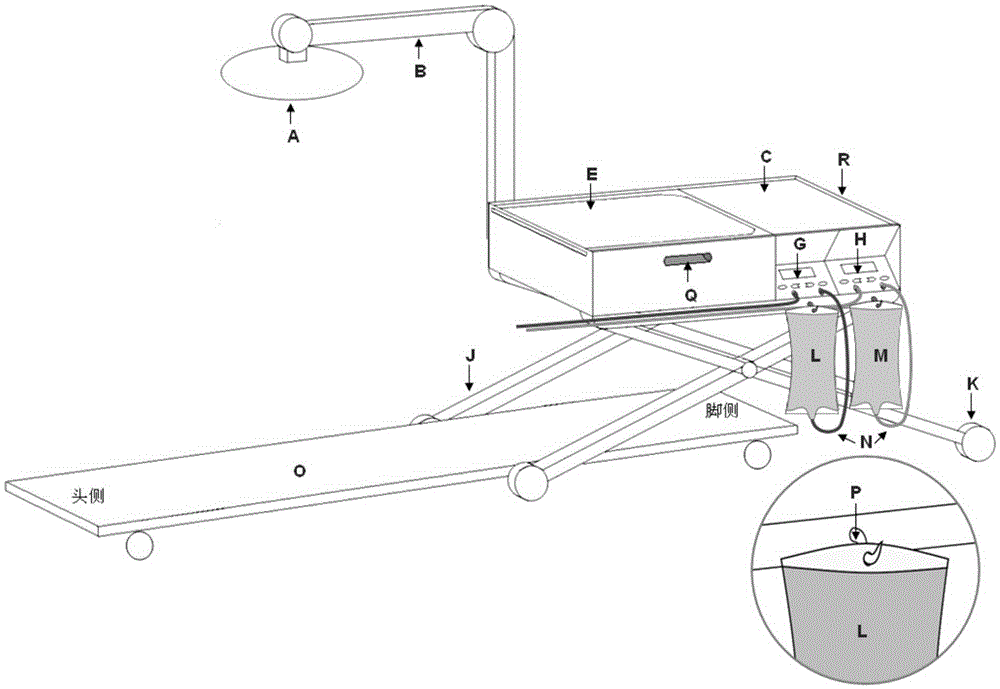
[0008] 2) There is no special equipment table. At present, the process of harvesting organs from the
cadaver is often to place the stretcher where the corpse is placed in the center of the ambulance, the operator sits on both sides of the stretcher, and the equipment nurse uses boxes and other items to set up a temporary simple table at the head or
tail of the stretcher.
Instrument table [0009] 3) There is no special organ storage equipment. At present, after the organ is harvested, it is put into the organ preservation bag together with the
perfusion fluid, and then placed in a pre-prepared
incubator filled with ice cubes for transfer to the operating room or for long-distance transfer.
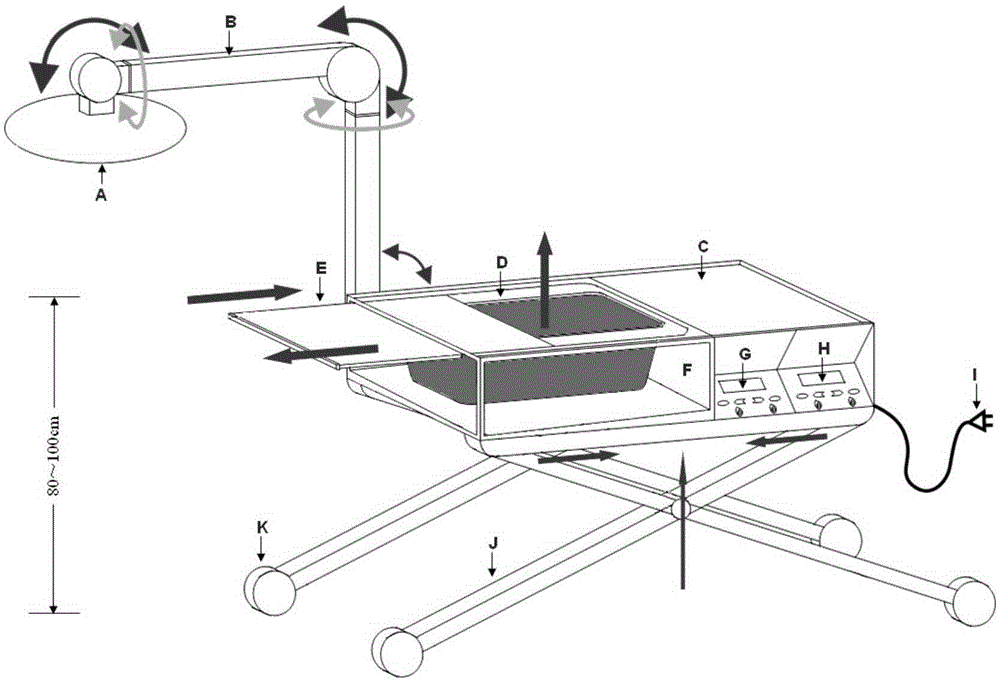
[0010] 4) There is no professional organ trimming table. Most centers use temporarily prepared instrument tables for organ repair, and a few transplant centers improve the
operating table to meet the needs of organ trimming (Figure 10), and the effect is acceptable.
[0012] 1) The air quality in the operating area cannot be guaranteed. Compared with the laminar flow conditions in the operating room, the space inside the ambulance is airtight, the air is not circulated, and there is no sterilization and disinfection equipment, which increases the
risk of infection of
transplanted organs [0013] 2) Imperfect lighting facilities When performing organ harvesting in the operating vehicle, the lighting facilities can only use the existing lighting equipment or hanging light bulbs in the vehicle. The light in the vehicle is dim or there are shadows and blind spots, which cannot meet the surgical requirements and may directly affect the surgeon’s performance. Judgment, and even affect the quality of organ harvesting
On the one hand, precise
pressure control cannot be achieved. If the pressure is too high, the
endothelium of the pipeline may be damaged. roof, the vehicle is shaky while driving, and it is very likely to accidentally fall, which may pollute the field
[0015] 4) The probability of
contamination is high. On the one hand, a large amount of blood and perfusate continuously flow into the chest and
abdominal cavity during organ harvesting. If there is no good outflow channel, not only the surgical field will be unclear, which will affect the operation of the surgeon, but also the blood and perfusate may overflow.
Pollution of the compartment, while the existing operating trolley is not equipped with a suction device, it is necessary to carry a mobile negative pressure suction device with the vehicle, which occupies limited space and affects the operating range
On the other hand, there is no bulge on the edge of the
operating table during the organ trimming process, which may easily cause the instrument to slip and the liquid on the table to overflow
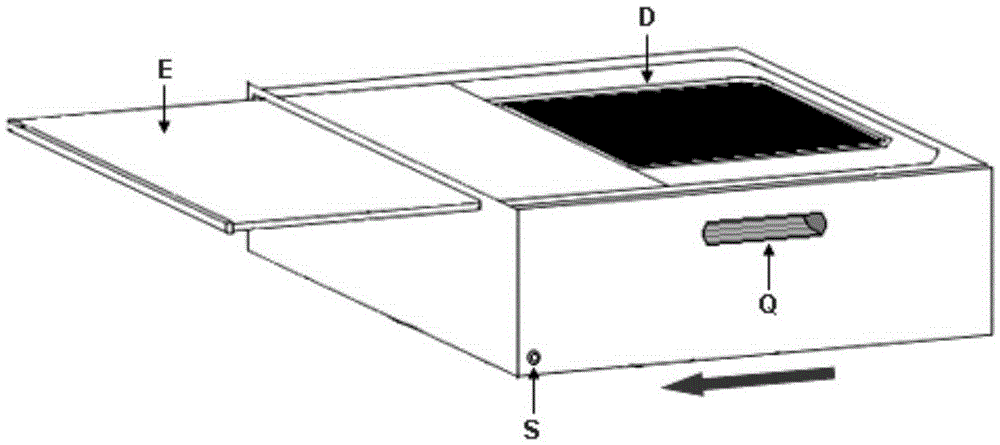
[0016] 5) The organ trimming table is simple. At present, after the organ is obtained and transferred to the operating room, the
operating table for trimming the organ needs to be rebuilt. Most centers still use the general
instrument table, and the container for trimming the organ is placed on the table. The hand rests on the edge of the container. Although this method is simple and easy to implement, the operator may feel hand fatigue after long-term operation, and once the hand rest is applied unevenly on the edge of the container, the container is prone to tipping over, causing
perfusion fluid and
organ damage. Overflow; while a few transplant centers have remodeled this operating table, but the remodeled operating table has single functions and is not cost-effective


 Login to View More
  Login to View More