
Spunbond nonwoven fabrics
A non-woven fabric and spun-bonded technology, applied in the field of spun-bonded non-woven fabrics, can solve the problems of increased complexity, increased cost, and reduced capacity of various resins
- Summary
- Abstract
- Description
- Claims
- Application Information
AI Technical Summary
Problems solved by technology
Method used
Image



Examples
Embodiment
[0061] The following examples illustrate the invention but are not intended to limit the scope of the invention. The examples of the present invention demonstrate that monocomponent fibers comprising ethylene-based polymer compositions facilitate the spinning of fine denier fibers and soft / drapeable spunbond nonwovens while maintaining Maximum highest tensile strength accepted.
[0062] Invention Example Compositions 1-5
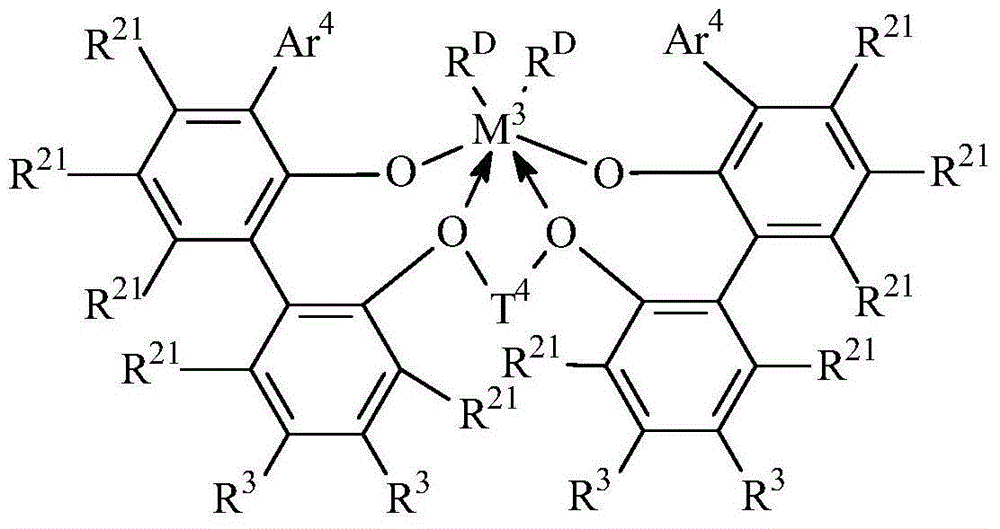
[0063] Inventive Example Compositions 1-2 and 4-5 are ethylene prepared as described above by a solution polymerization process in a two-reactor configuration connected in series in the presence of a catalyst system comprising a metal complex of a polyvalent aryloxyether. - Octene copolymer. The properties of the ethylene-octene copolymer compositions of Inventive Example Compositions 1-2 and 4-5 are reported in Table 1.
[0064] Inventive Example Composition 3 is an ethylene-hexene copolymer prepared as described above by a gas phase polymerization pro...
PUM
| Property | Measurement | Unit |
|---|---|---|
| density | aaaaa | aaaaa |
| melt flow index | aaaaa | aaaaa |
| melt flow index | aaaaa | aaaaa |
Abstract
Description
Claims
Application Information
 Login to View More