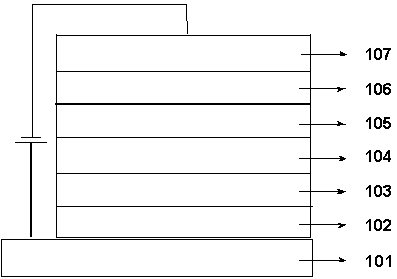
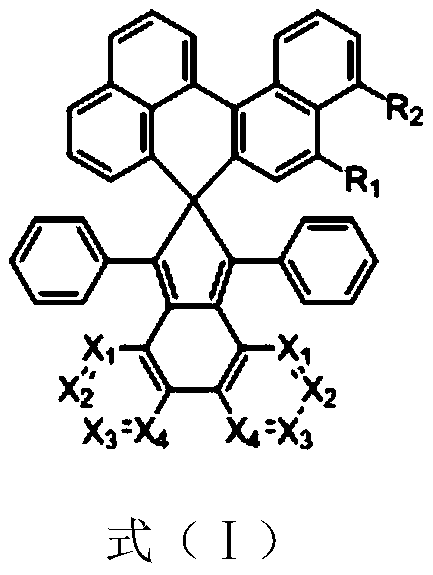
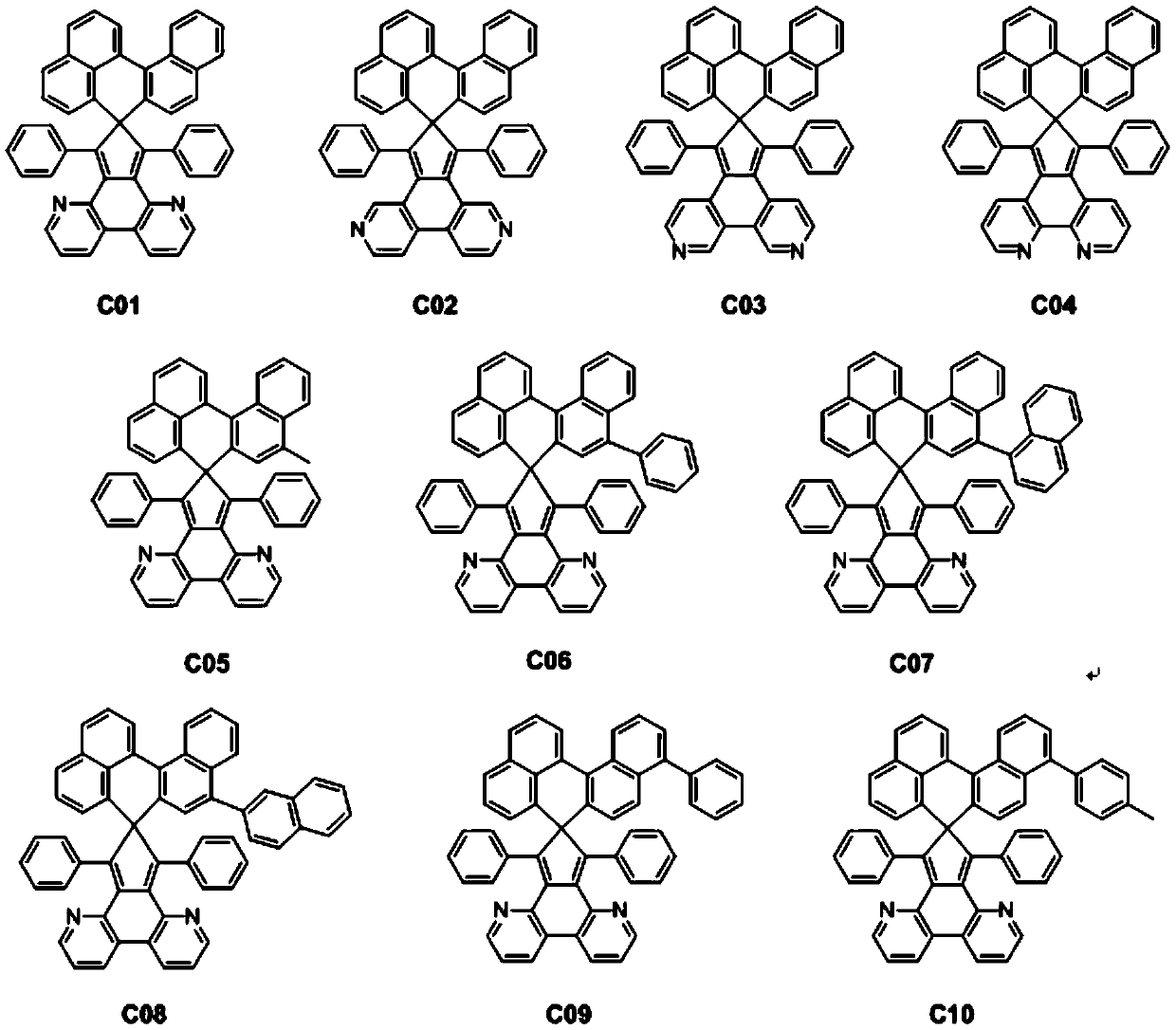
Blue light-emitting OLED material and its application

A blue-light and luminescent technology, which is applied in luminescent materials, electrical components, circuits, etc., can solve the problems of blue-light device life and efficiency to be improved, and achieve excellent film stability, expansion adaptability, and excellent molecular quality.

CN110105360AInactive Publication Date: 2019-08-09VALIANT CO LTD
0 Cites 0 Cited by

Patent Information

Authority / Receiving Office
CN · China
Patent Type
Applications(China)
Current Assignee / Owner
Publication Date
2019-08-09
Estimated Expiration
Not applicable · inactive patent

Smart Images

  • Figure 1
    Figure 1
  • Figure 2
    Figure 2
  • Figure 3
    Figure 3
Patent Text Reader

Abstract

The invention relates to a blue light-emitting OLED material and its application. The material has a screw structure, the top half of the screw structure is a naphthonaphthalene structural unit, and the bottom half of the screw structure has a 5,7-diphenyl-6H-cyclofluorenyldienylphenanthroline structural unit. Compared with OED materials in the prior art, the blue light-emitting OLED material hasan appropriate molecular mass and an excellent thermal stability, can be sublimated to form an organic film, has an appropriate molecular energy level and a good film stability, and is suitable for being applied to the field of organic electroluminescence as a luminescent layer material for OLED devices, especially a blue light-emitting layer material.
Need to check novelty before this filing date? Find Prior Art

Description

technical field

[0001] The invention belongs to the field of organic electroluminescence, and in particular relates to a blue light OLED material and the application of the material in the field of organic electroluminescence. Background technique

[0002] Organic electroluminescent diode (OLED) was produced in the 1980s. It is an organic device that converts electrical energy into light energy. It has self-illumination, wide viewing angle, fast response speed, wide color gamut, and flexible display. After 30 years of continuous development, this technology has gradually matured. At present, organic electroluminescence technology has been widely used in many products such as smart phones, flat-panel TVs, wearable devices, and virtual reality.

[0003] Organic electroluminescent diode is a solid thin film light-emitting component, which has a sandwich-like multi-layer sandwich structure. The functional layer is called a hole transport layer, the functional layer that transpo...

Examples

Embodiment 1

[0032] The preparation of embodiment 1 intermediate D01

[0033]

[0034] Using compound A01 and compound B01 as raw materials, intermediate D01 was prepared by referring to the method described in the literature (DOI: 10.1021 / ol502418k), and 32.5 g of the target compound was obtained. High resolution mass spectrum, positive ion mode, molecular formula C27H16N2O, theoretical value 384.1263, test value 384.1258 .

Embodiment 2

[0035] The preparation of embodiment 2 intermediate D02

[0036]

[0037] Using compound A02 and compound B01 as raw materials, intermediate D02 was prepared by referring to the method described in the literature (DOI: 10.1021 / ol502418k), and 25.3 g of the target product was obtained. High-resolution mass spectrometry, positive ion mode, molecular formula C27H16N2O, theoretical value 384.1263, test value 384.1255 .

Embodiment 3

[0038] The preparation of embodiment 3 intermediate D03

[0039]

[0040] Using compound A03 and compound B01 as raw materials, intermediate D03 was prepared by referring to the method described in the literature (DOI: 10.1021 / ol502418k), and 21.8 g of the target compound was obtained. High resolution mass spectrum, positive ion mode, molecular formula C27H16N2O, theoretical value 384.1263, test value 384.1268 .