System and method for handling display device requests for display data from a frame buffer

a display device and frame buffer technology, applied in the field of graphics systems, can solve the problems of increasing the complexity and amount of data being sent to the display device, affecting the display of images, and incorporating graphics processors with a great deal of processing power

US20030169262A1Inactive Publication Date: 2003-09-11ORACLE INT CORP
11 Cites 141 Cited by

Patent Information

Authority / Receiving Office
US · United States
Patent Type
Applications(United States)
Current Assignee / Owner
Publication Date
2003-09-11
Estimated Expiration
Not applicable · inactive patent

Smart Images

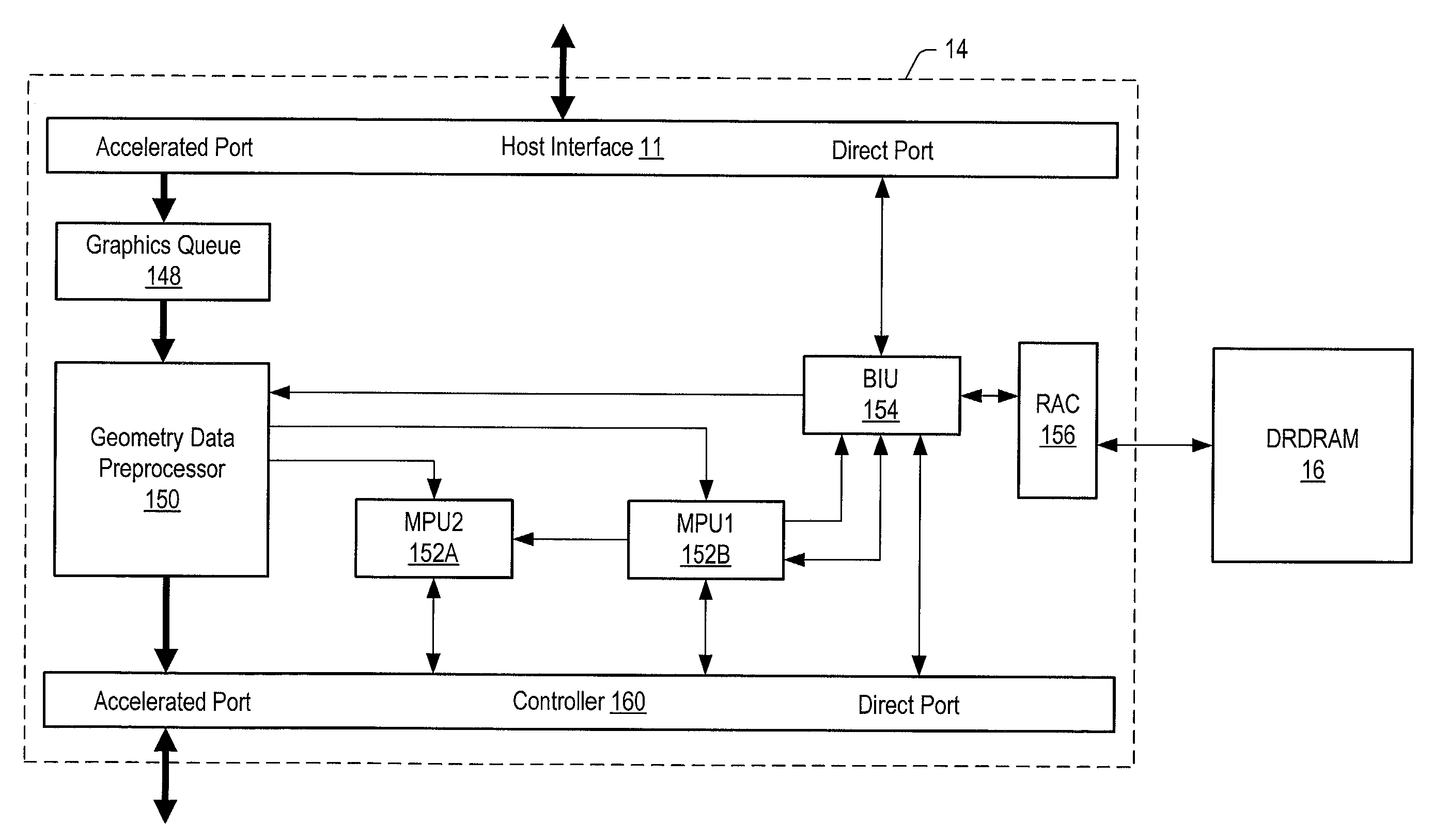
  • Figure 1
    Figure 1
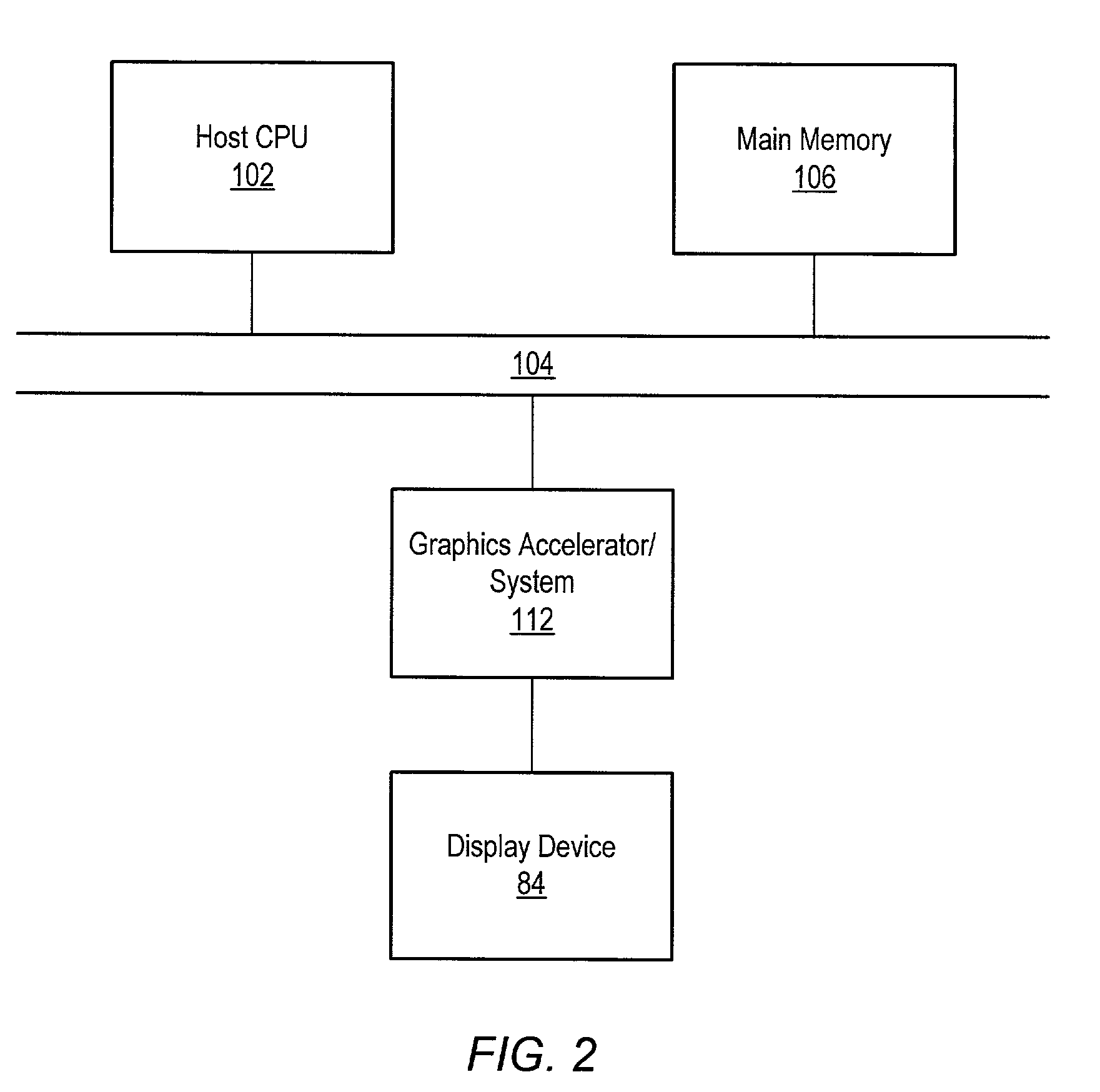
  • Figure 2
    Figure 2
  • Figure 3
    Figure 3
Patent Text Reader

Abstract

A graphics system may include a frame buffer, a processing device coupled to access data in the frame buffer, a frame buffer interface coupled to the frame buffer, and an output controller configured to assert a request for display data to provide to a display device. The frame buffer interface may receive the request for display data from the output controller and delay providing the request for display data to the frame buffer if the processing device is currently requesting access to a portion of the frame buffer targeted by the request for display data. For example, if the frame buffer includes several memory banks and the request for display data targets a first bank, the frame buffer interface may delay providing the request for display data to the frame buffer if the processing device is currently requesting access to the first bank.
Need to check novelty before this filing date? Find Prior Art

Description

[0001] 1. Field of the Invention

[0002] This invention relates to graphics systems and, more particularly, to handling requests for display data from a frame buffer.

[0003] 2. Description of the Related Art

[0004] A computer system typically relies upon its graphics system for producing visual output on the computer screen or display device. Early graphics systems were only responsible for taking what the processor produced as output and displaying it on the screen. In essence, they acted as simple translators or interfaces. Modern graphics systems, however, incorporate graphics processors with a great deal of processing power. They now act more like coprocessors rather than simple translators. This change is due to the recent increase in both the complexity and amount of data being sent to the display device. For example, modern computer displays have many more pixels, greater color depth, and are able to display more complex images with higher refresh rates than earlier models. Simil...

Examples

Embodiment Construction

[0027] Computer System--FIG. 1

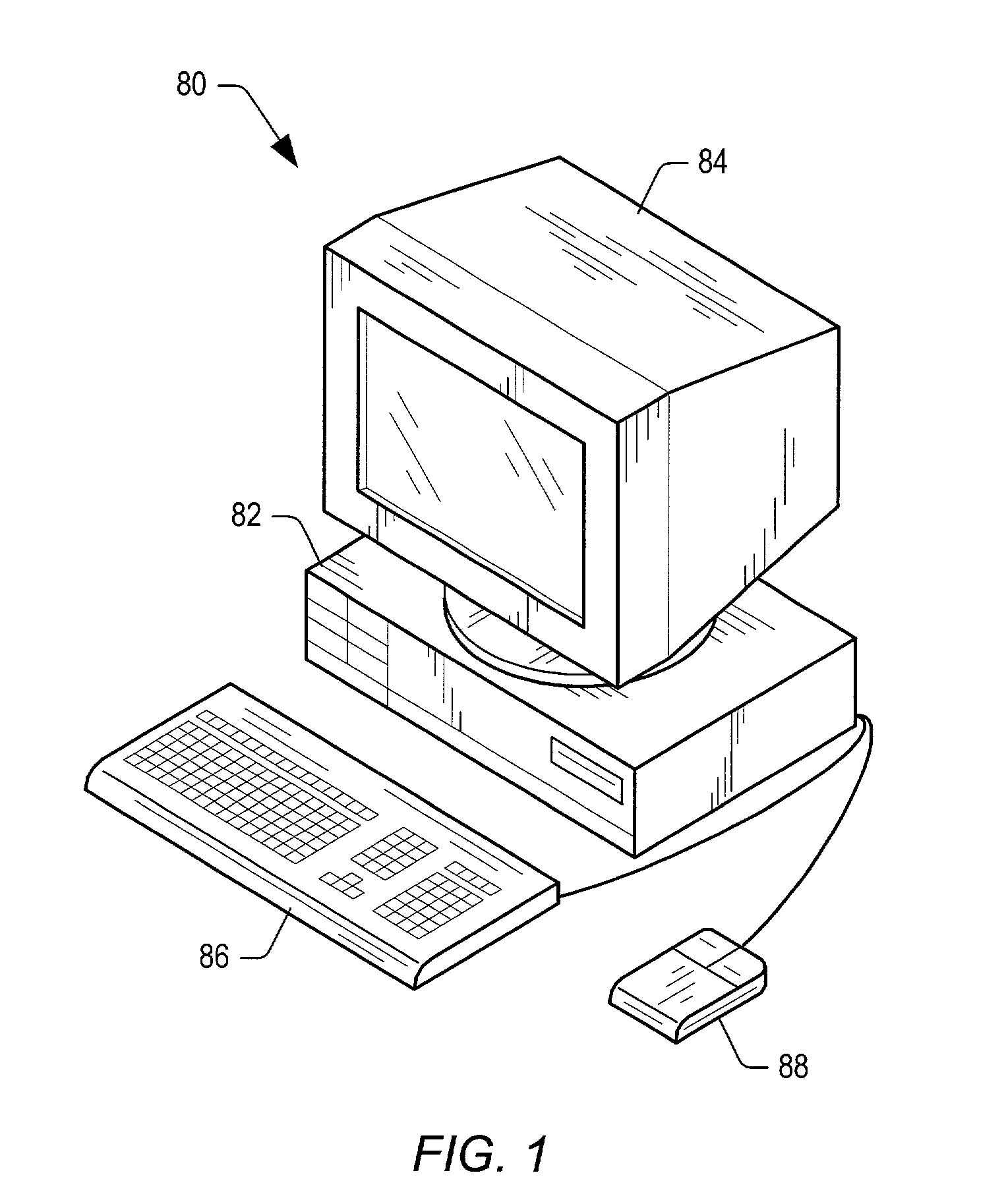
[0028] FIG. 1 illustrates one embodiment of a computer system 80 that includes a graphics system. The graphics system may be included in any of various systems such as computer systems, network PCs, Internet appliances, televisions (e.g. HDTV systems and interactive television systems), personal digital assistants (PDAs), virtual reality systems, and other devices that display 2D and / or 3D graphics, among others.

[0029] As shown, the computer system 80 includes a system unit 82 and a video monitor or display device 84 coupled to the system unit 82. The display device 84 may be any of various types of display monitors or devices (e.g., a CRT, LCD, or gas-plasma display). Various input devices may be connected to the computer system, including a keyboard 86 and / or a mouse 88, or other input device (e.g., a trackball, digitizer, tablet, six-degree of freedom input device, head tracker, eye tracker, data glove, or body sensors). Application software may be e...