
Adaptive router architecture using logical internal addressing
- Summary
- Abstract
- Description
- Claims
- Application Information
AI Technical Summary
Benefits of technology
Problems solved by technology
Method used
Image

Examples
Embodiment Construction
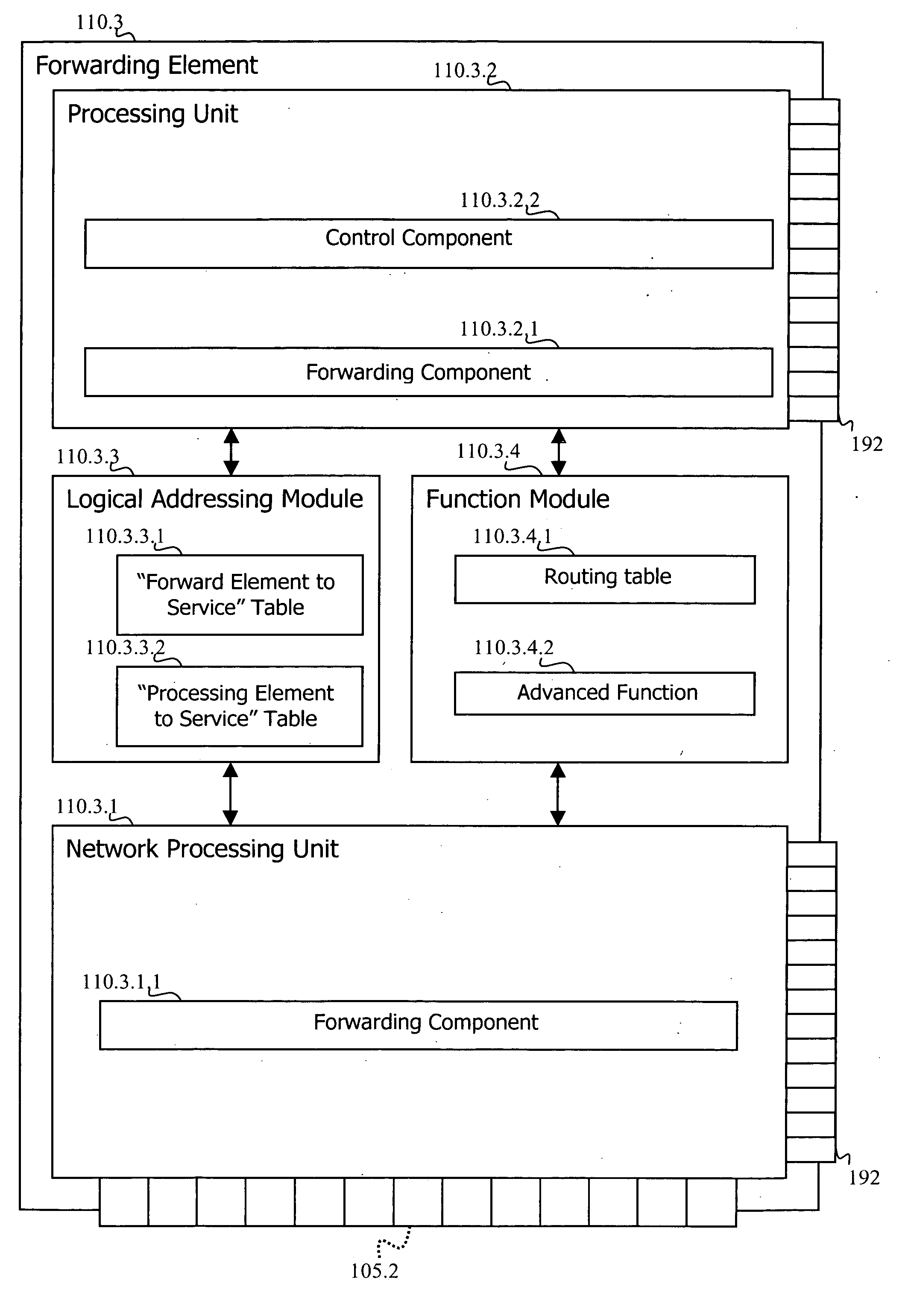
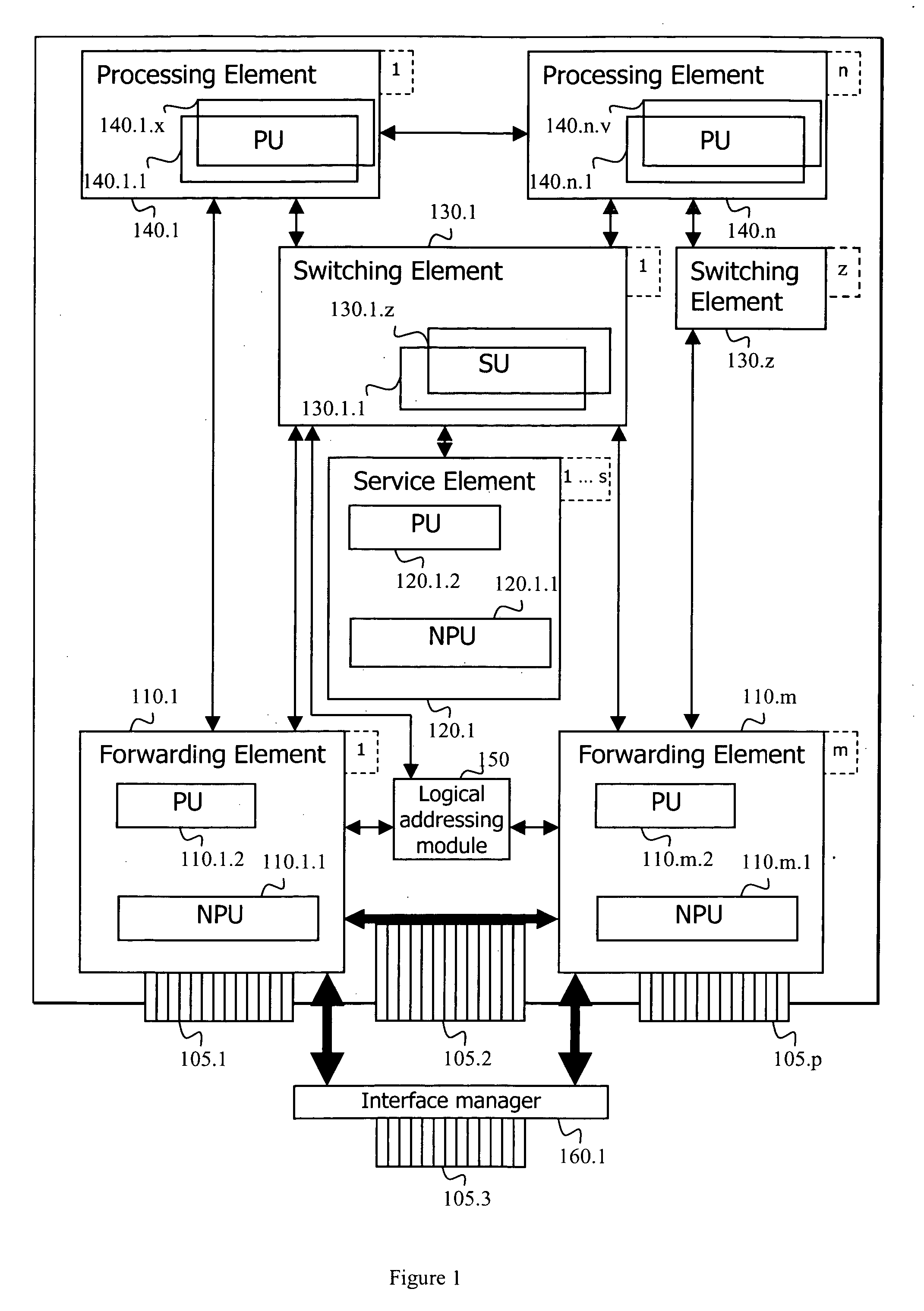
[0021] The present invention presents at least five major improvements over the prior art solutions. A first improvement comes from the internal architecture of the router. The basic principle of this improvement is to split the responsibilities usually taken care by one entity in conventional routers over multiple simple components. For instance, a router architecture based on the present invention could have forwarding elements connected to the network interfaces of the router, processing elements connected to the forwarding elements through switching elements. The forwarding elements handle the tasks at high speed (e.g. wire speed of 10 Gigabit per second) and can delegate the tasks that are non-time critical to processing elements. The invention further suggests using switching elements to handle the transfer of information between the various elements of the router (e.g. between the forwarding elements and the processing elements). This enables an abstraction of the resources i...
PUM
 Login to View More
 Abstract
Description
Claims
Application Information
 Login to View More