
Method for Detecting Objects Left-Behind in a Scene
a technology of left-behind objects and detection methods, applied in the field of methods, can solve the problems of increasing computational costs, affecting so as to reduce processing time and improve the accuracy of the left-behind object detection method
- Summary
- Abstract
- Description
- Claims
- Application Information
AI Technical Summary
Benefits of technology
Problems solved by technology
Method used
Image

Examples
Embodiment Construction
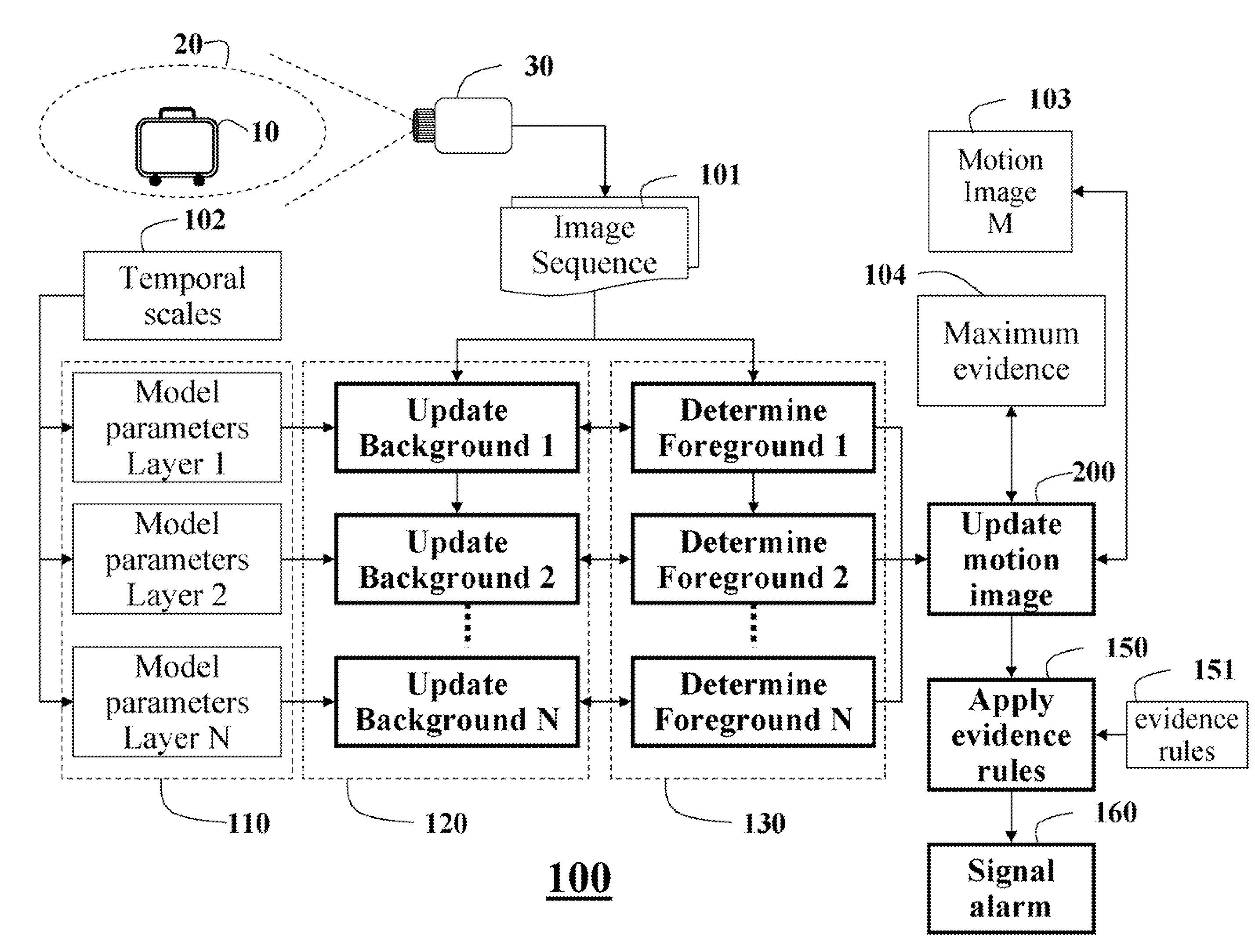
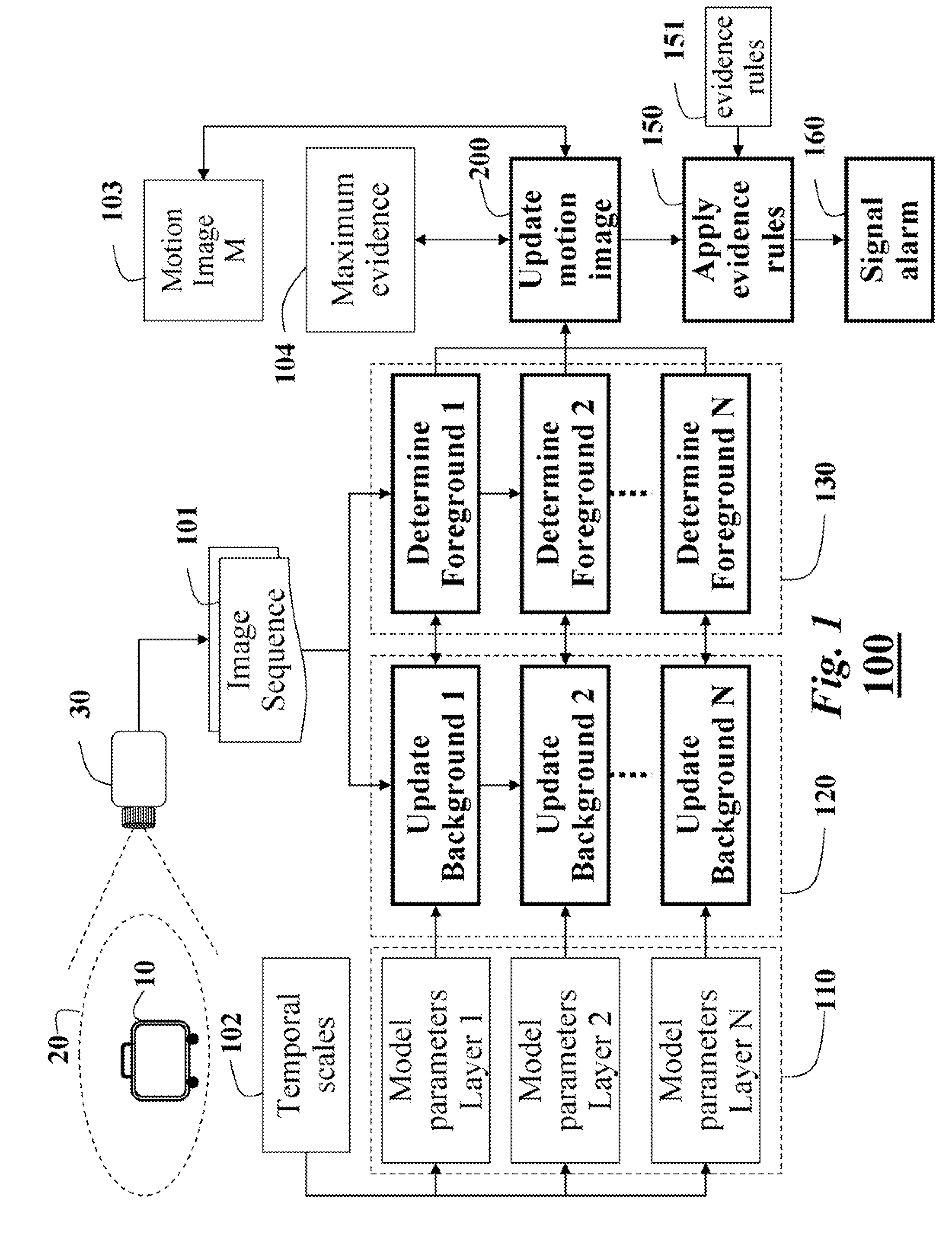
[0017]FIG. 1 is a flow diagram of a method for detecting an object left behind in a scene according to an embodiment of the invention;
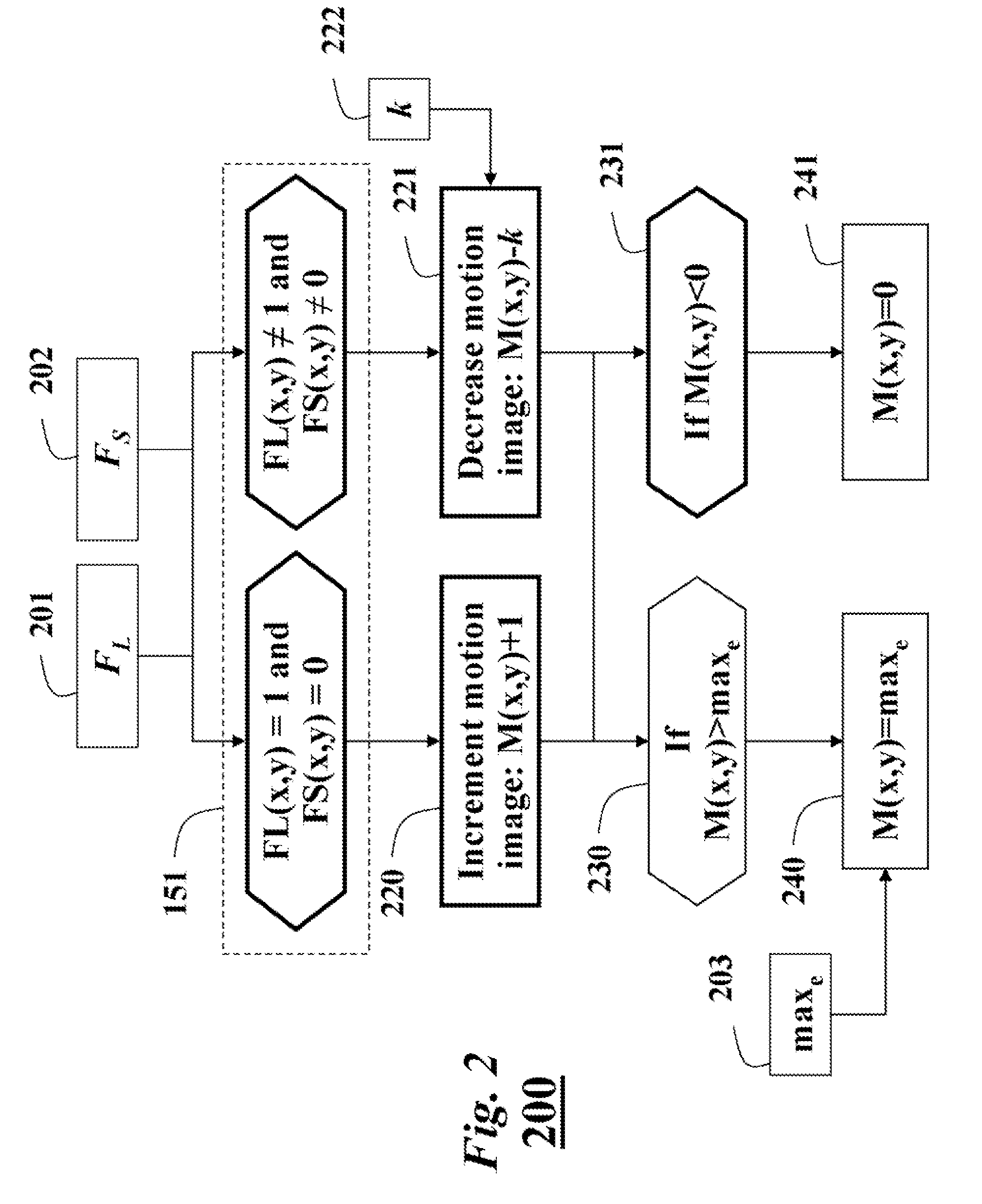
[0018]FIG. 2 is a flow diagram of a procedure for maintaining a motion image according to an embodiment of the invention; and
[0019]FIG. 3 is a block diagram, of pseudo code of a procedure for updating background model parameters according to an embodiment of the invention.
DETAILED DESCRIPTION OF THE PREFERRED EMBODIMENTS
[0020]FIG. 1 shows a method 100 for detecting an object 10 left-behind in a scene 20 according to embodiments of our invention. A camera 30 acquires a sequence of image 101 of the scene, e.g., the camera is a surveillance camera.
[0021]Our left-behind object detection method is based on an inference of pixel color evolution over time. The left-behind object can be considered as a static object in the scene, which was not there before. This observation indicates that by modeling 120 the background, which refers to long-term, static backg...
PUM
 Login to View More
 Abstract
Description
Claims
Application Information
 Login to View More