Non-captured intrinsic discrimination in cardiac pacing response classification

a non-captured intrinsic discrimination and cardiac pacing technology, applied in the field of implantable medical devices, can solve the problems of ineffective pacing, discomfort, and reduced pumping efficiency

US20080275522A1Active Publication Date: 2008-11-06CARDIAC PACEMAKERS INC
99 Cites 32 Cited by

Patent Information

Authority / Receiving Office
US · United States
Patent Type
Applications(United States)
Current Assignee / Owner
Publication Date
2008-11-06

Smart Images

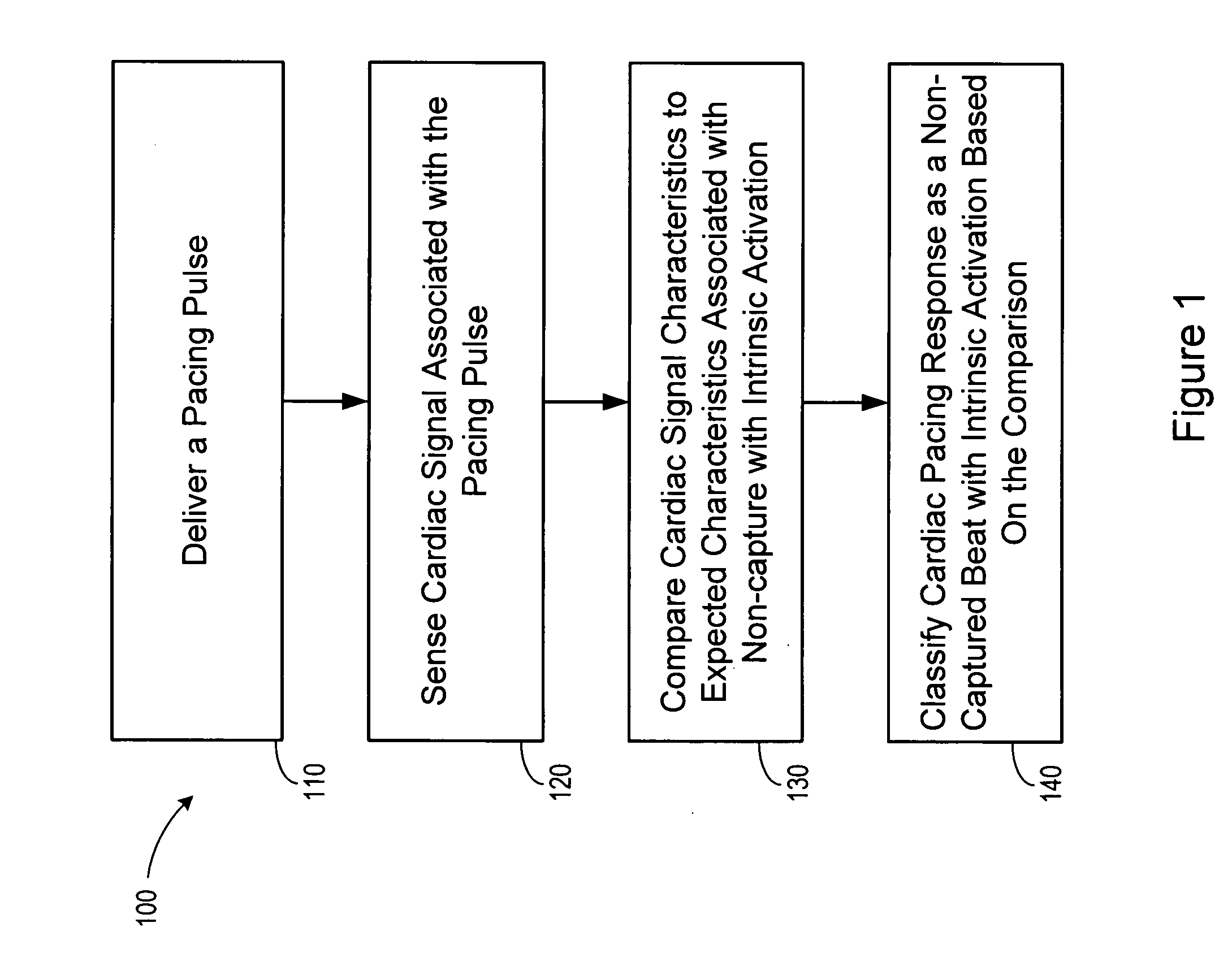
  • Figure 1
    Figure 1
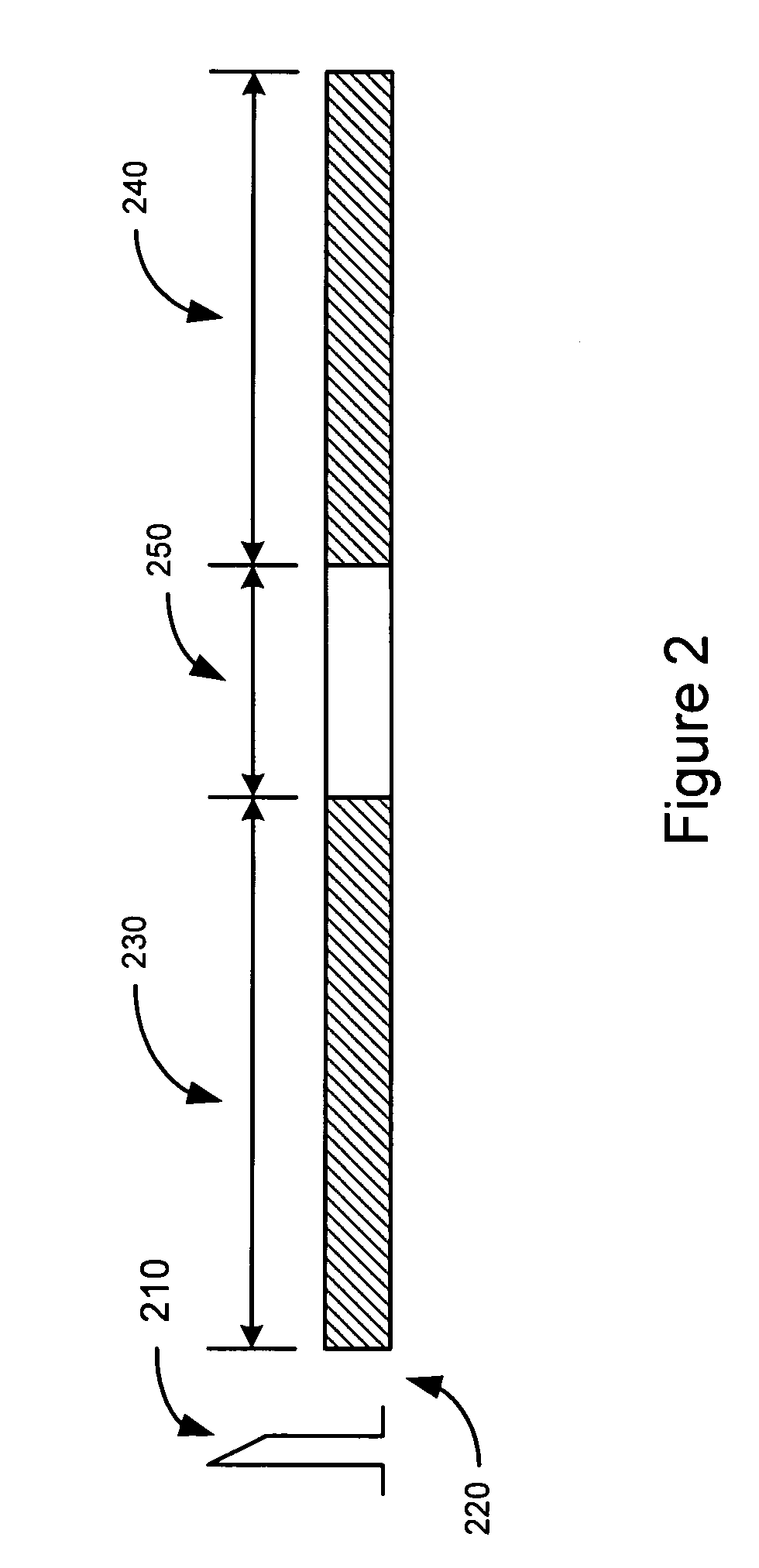
  • Figure 2
    Figure 2
  • Figure 3
    Figure 3
Patent Text Reader

Abstract

Cardiac devices and methods discriminate non-captured intrinsic beats during evoked response detection and classification by comparing the features of a post-pace cardiac signal with expected features associated with a non-captured response with intrinsic activation. Detection of a non-captured response with intrinsic activation may be based on the peak amplitude and timing of the cardiac signal. The methods may be used to discriminate between a fusion or capture beat and a non-captured intrinsic beat. Discriminating between possible cardiac responses to the pacing pulse may be useful, for example, during automatic capture verification and / or a capture threshold test.
Need to check novelty before this filing date? Find Prior Art

Description

RELATED APPLICATIONS

[0001] This application is a continuation of pending U.S. patent application Ser. No. 11 / 116,558, filed on Apr. 28, 2005, and is a continuation-in-part of pending U.S. patent application Ser. No. 12 / 008,876, filed on Jan. 15, 2008, which is a continuation of U.S. patent application Ser. No. 10 / 733,869, filed on Dec. 11, 2003 and now issued as U.S. Pat. No. 7,319,900, which are hereby incorporated herein by reference.FIELD OF THE INVENTION

[0002] The present invention relates generally to implantable medical devices and, more particularly, to cardiac devices and methods that discriminate non-captured intrinsic beats during evoked response detection.BACKGROUND OF THE INVENTION

[0003] When functioning normally, the heart produces rhythmic contractions and is capable of pumping blood throughout the body. However, due to disease or injury, the heart rhythm may become irregular resulting in diminished pumping efficiency. Arrhythmia is a general term used to describe heart r...

Examples

Embodiment Construction

[0025]In the following description of the illustrated embodiments, references are made to the accompanying drawings forming a part hereof, and in which are shown by way of illustration, various embodiments by which the invention may be practiced. It is to be understood that other embodiments may be utilized, and structural and functional changes may be made without departing from the scope of the present invention.

[0026]Cardiac response classification may be implemented by a pacemaker or other cardiac rhythm management (CRM) device to determine whether an applied electrical pacing stimulus captures the heart. Embodiments of the invention are directed to cardiac devices and methods that discriminate non-captured intrinsic beats during cardiac pacing response determination. The methods described herein use one or more characteristics of the cardiac signal, e.g., cardiac signal features, samples, discrete and / or analog morphological waveform characteristics, to discriminate between var...