Method, a Device and a System For Duplex Communications

US20080279125A1Inactive Publication Date: 2008-11-13NOKIA TECHNOLOGLES OY
17 Cites 67 Cited by

Patent Information

Authority / Receiving Office
US · United States
Current Assignee / Owner
Publication Date
2008-11-13
Estimated Expiration
Not applicable · inactive patent

Smart Images

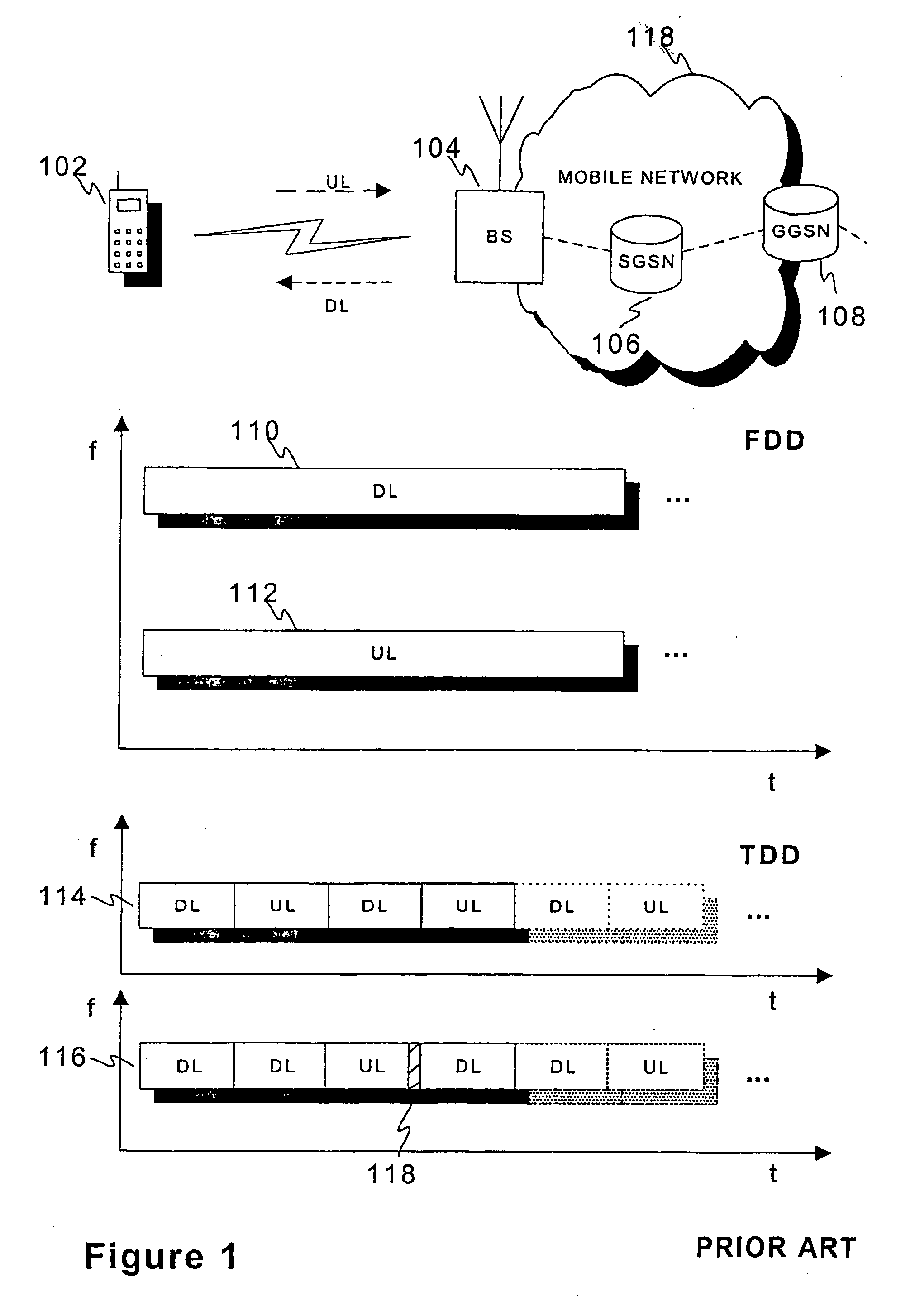
  • Figure 1
    Figure 1
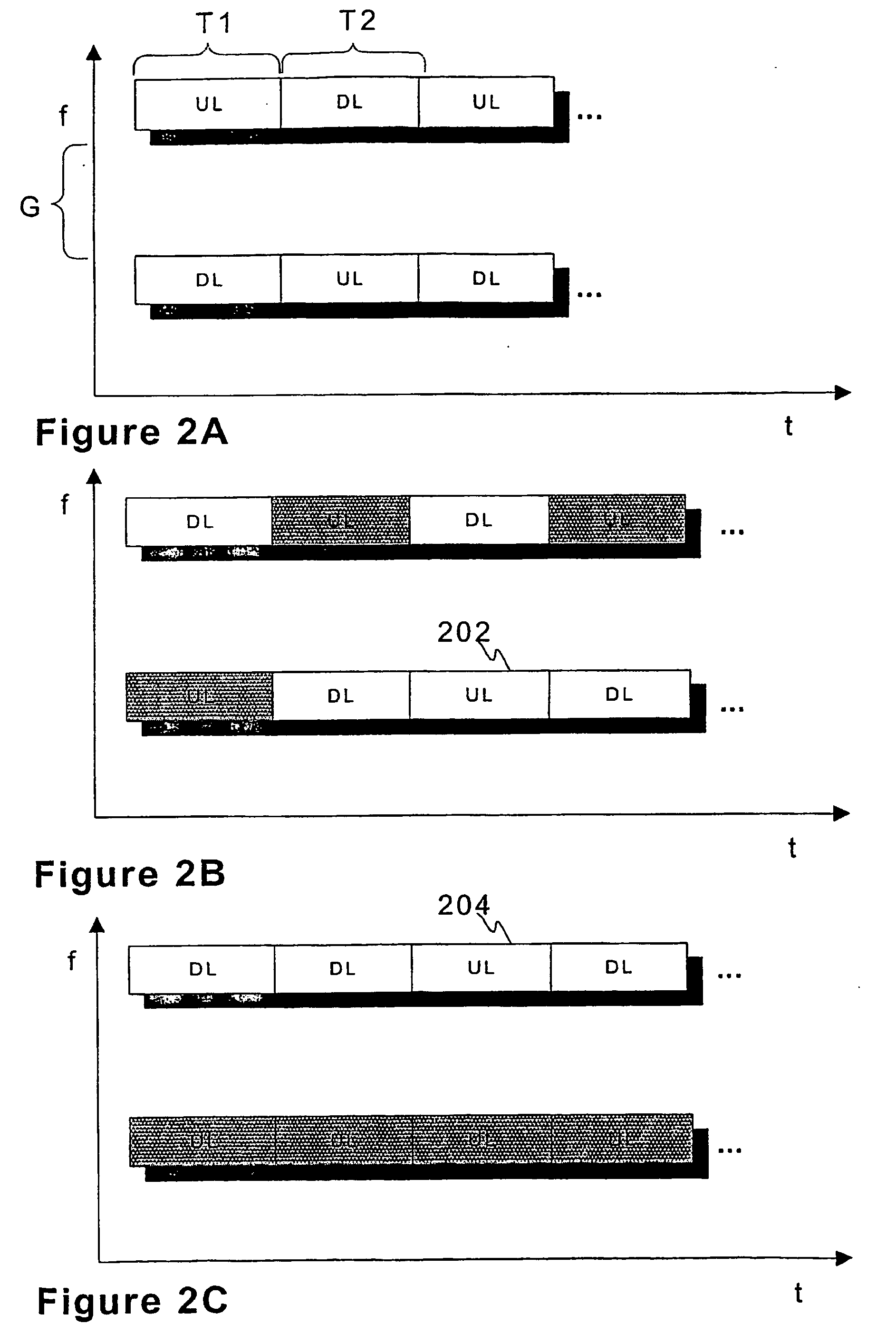
  • Figure 2
    Figure 2
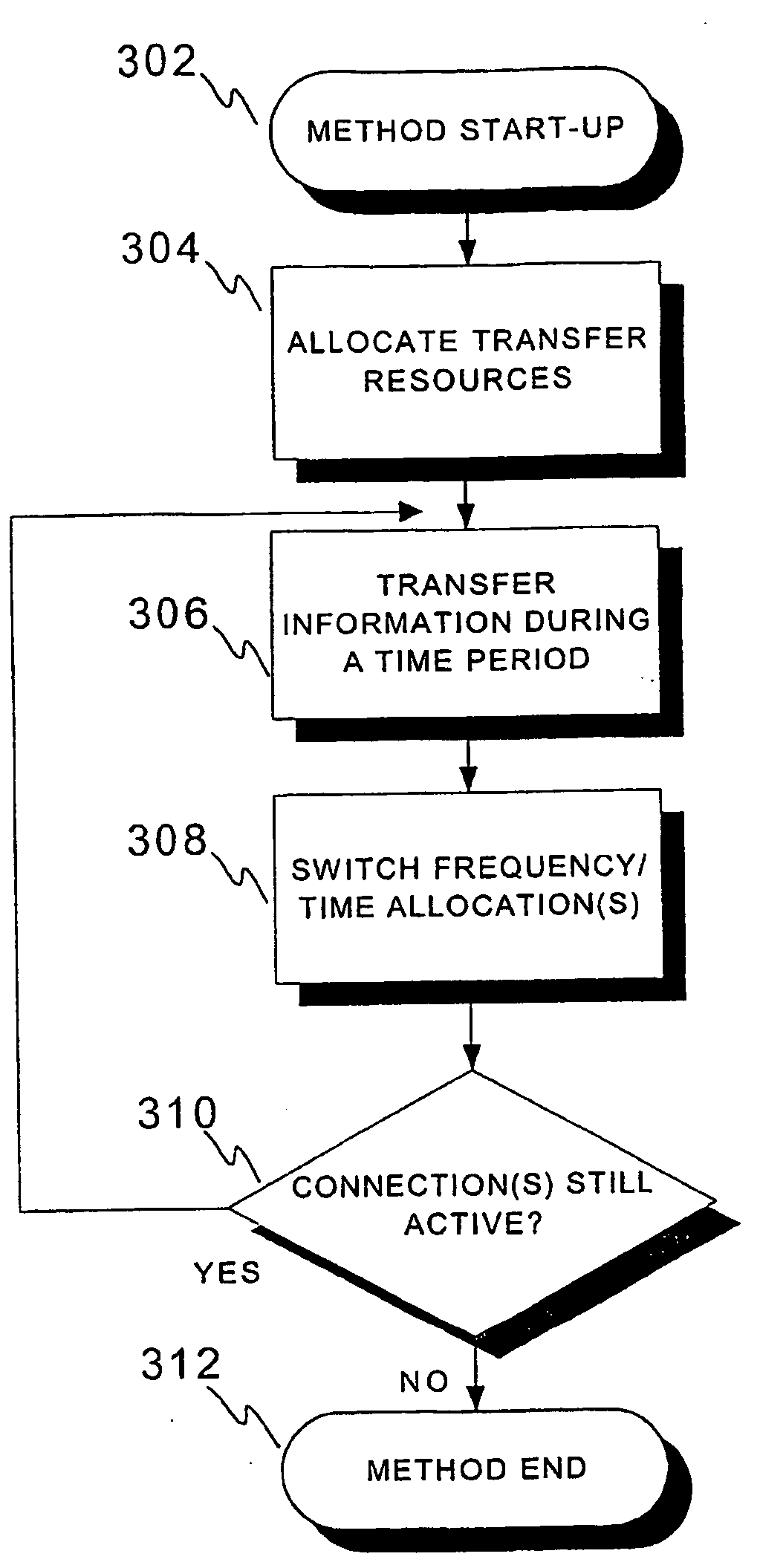
  • Figure 3
    Figure 3
Patent Text Reader

Abstract

A method, a device, and a system for duplex communications. Uplink and downlink frequencies are allocated in an orthogonal manner such that at one time instant a certain carrier frequency is used for uplink (downlink) transmission and at some other time instant for downlink (uplink) transmission. Correspondingly, at said one time instant a second carrier frequency is used for downlink (uplink) transmission and at said some other time instant optionally for uplink (downlink) transmission.
Need to check novelty before this filing date? Find Prior Art

Description

FIELD OF THE INVENTION

[0001] The present invention relates generally to communication systems. In particular the invention concerns air interfaces of wireless communications networks and duplexing methods thereof.BACKGROUND OF THE INVENTION

[0002] Modern wireless communications systems such as the widely adopted GSM (Global System for mobile communications) and the UMTS (Universal Mobile Telecommunications System), which has been selected as the European third generation mobile communications standard, are capable of transferring various types of data over the air interface between the network elements such as a base station and a mobile terminal. For that purpose, both the GSM and UMTS utilize a mature duplex transmission method called FDD (Frequency Division Duplex) in which uplink and downlink transfer directions are realized on two different frequency bands (˜paired bands). FDD thus employs frequency domain separation of transfer directions and enables continuous two-way transmissi...

Examples

Embodiment Construction

[0034]FIG. 1 was already described above in conjunction with the description of relevant prior art.

[0035]Different scenarios, being only exemplary though, of the invention are sketched out in FIGS. 2A, 2B, and 2C.

[0036]FIG. 2A represents a simplest duplex hopping case wherein, in accordance with the FDD aspect of the invention, two or more separate frequencies (or, in practise, frequency bands) are allocated for information (speech or other data, control information etc) transfer and within a certain period T1 one carrier frequency (band) is utilized in UL direction and another carrier frequency in DL direction. Within a second time period T2 in accordance with the TDD aspect of the invention, the carrier frequency utilized in UL direction during period T1 is now utilized in DL direction, and optionally correspondingly, the carrier frequency utilized in DL direction during period T1 is reversely utilized in UL direction. Guard band is marked with reference sign G in the figure.

[0037...