

Refrigerant service port valve for air conditioners
- Summary
- Abstract
- Description
- Claims
- Application Information
AI Technical Summary
Benefits of technology
Problems solved by technology
Method used
Image

Examples
Embodiment Construction
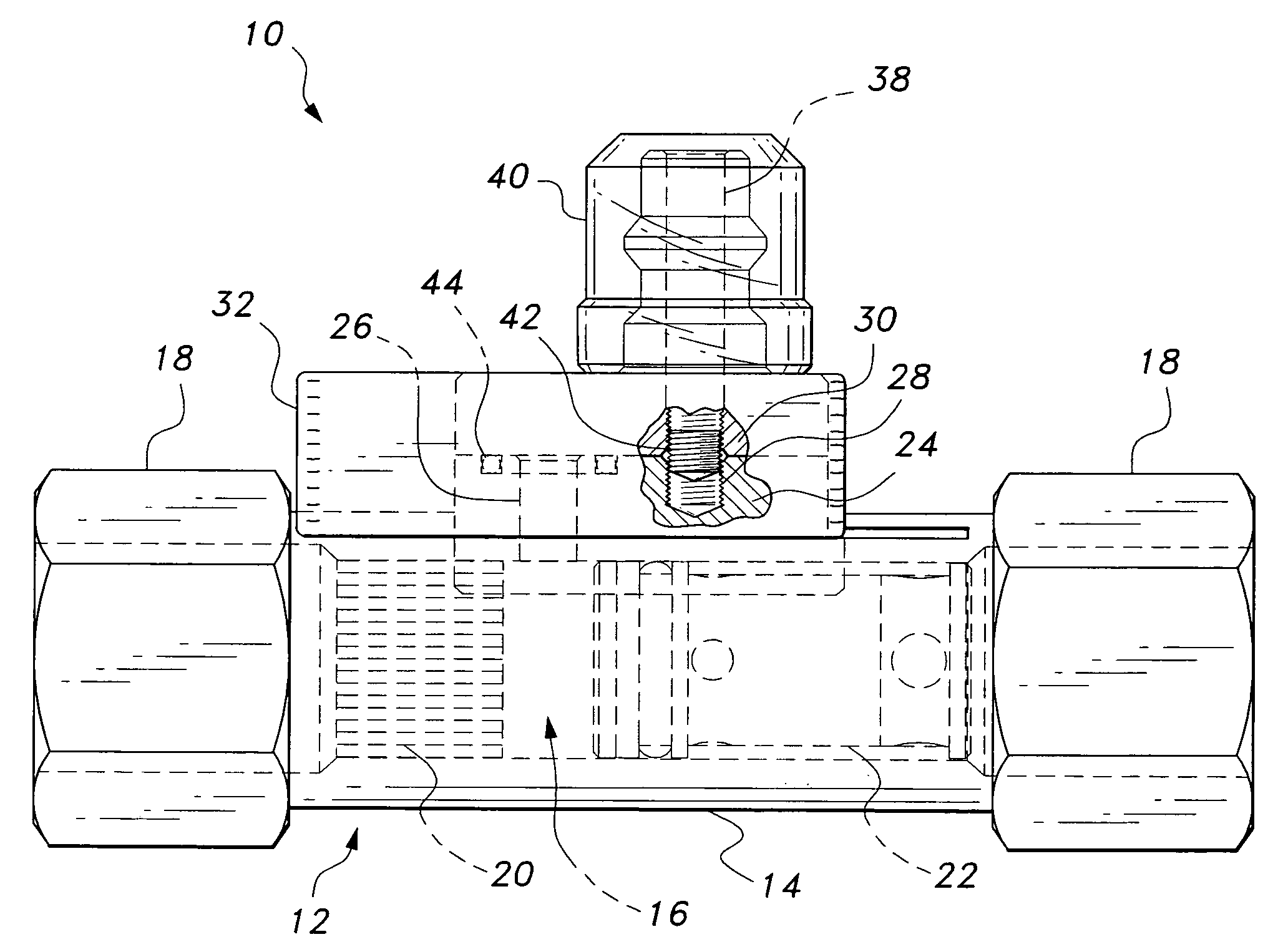
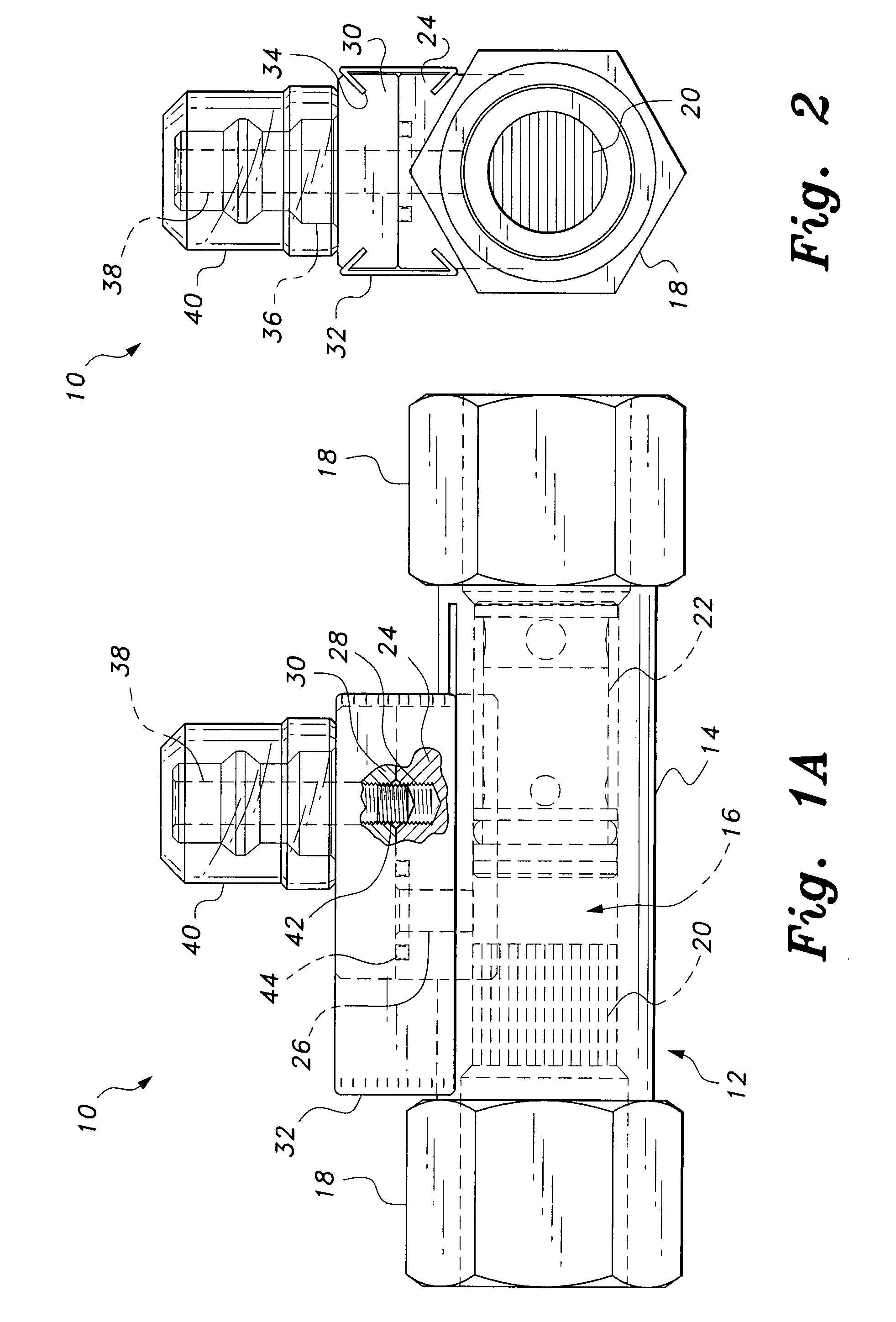
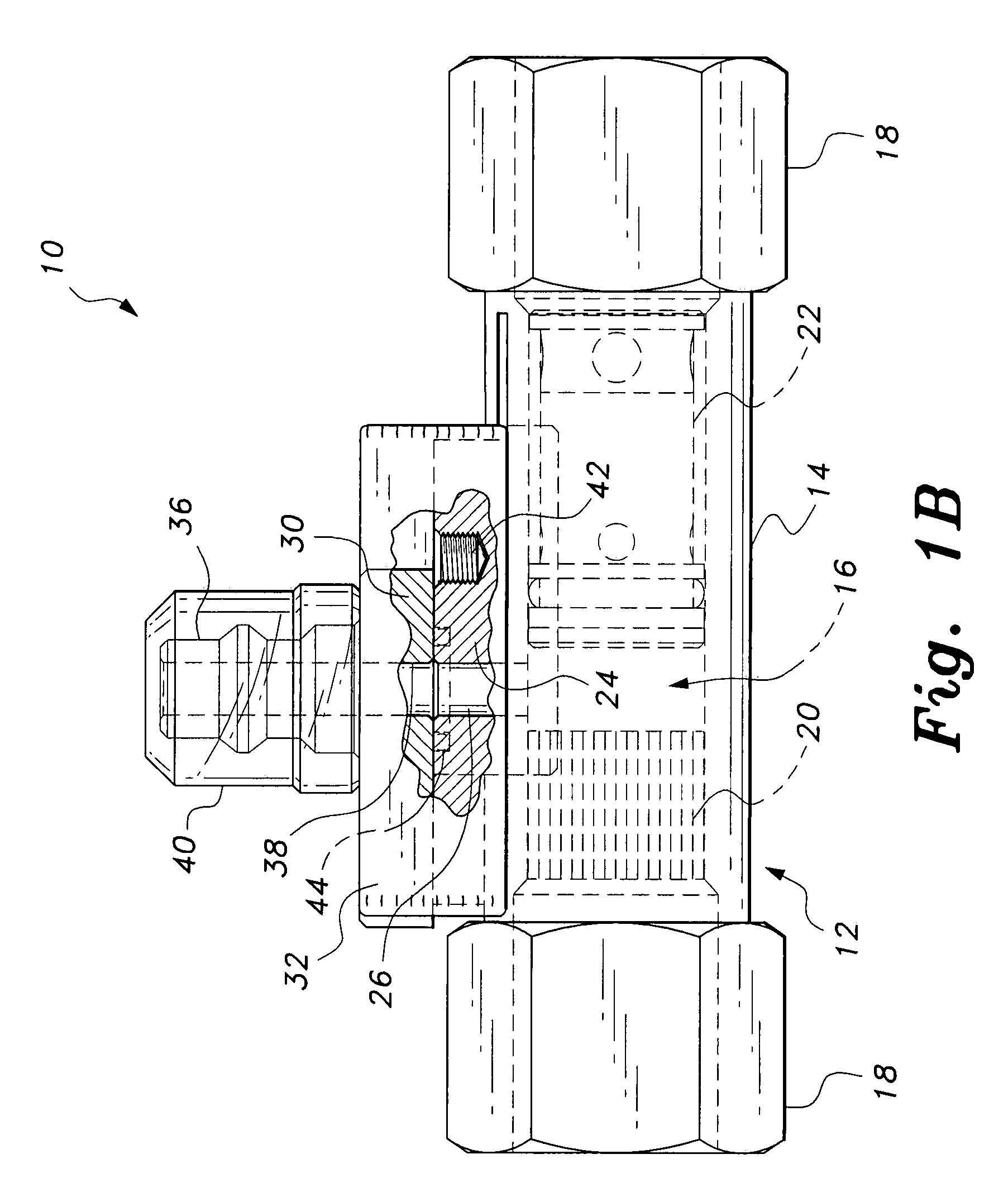
[0019]The present invention is a refrigerant service port valve, designated generally as 10 in the drawings, for use in air conditioning systems that use a hydrocarbon refrigerant, such as HCR188C. The valve 10 will be described as it might be used in an automotive air conditioning system, particularly to retrofit automotive air conditioning systems that were originally designed for HFC-134a and other legacy cooling systems. However, it will be understood that the valve 10 may be used in other air conditioning and refrigeration systems where hydrocarbon refrigerants may be used.
[0020]Referring to FIGS. 1A, 1B, and 2, the valve 10 is a three-way slider valve having a valve body 12 that includes an elongated section of pipe 14 defining a main fluid conduit 16. The pipe 14 may be equipped with compression fittings 18 at opposite ends adapted for inserting the valve 10 inline into either the high pressure or low pressure side of the cooling system. Alternatively the pipe 14 may be equip...
PUM
 Login to View More
 Abstract
Description
Claims
Application Information
 Login to View More