System and Method For Treatment of Non-Ventilating Middle Ear by Providing a Gas Pathway Through the Nasopharynx

US20100305697A1Active Publication Date: 2010-12-02ACCLARENT INC
111 Cites 16 Cited by

Patent Information

Authority / Receiving Office
US · United States
Patent Type
Applications(United States)
Current Assignee / Owner
Publication Date
2010-12-02

Smart Images

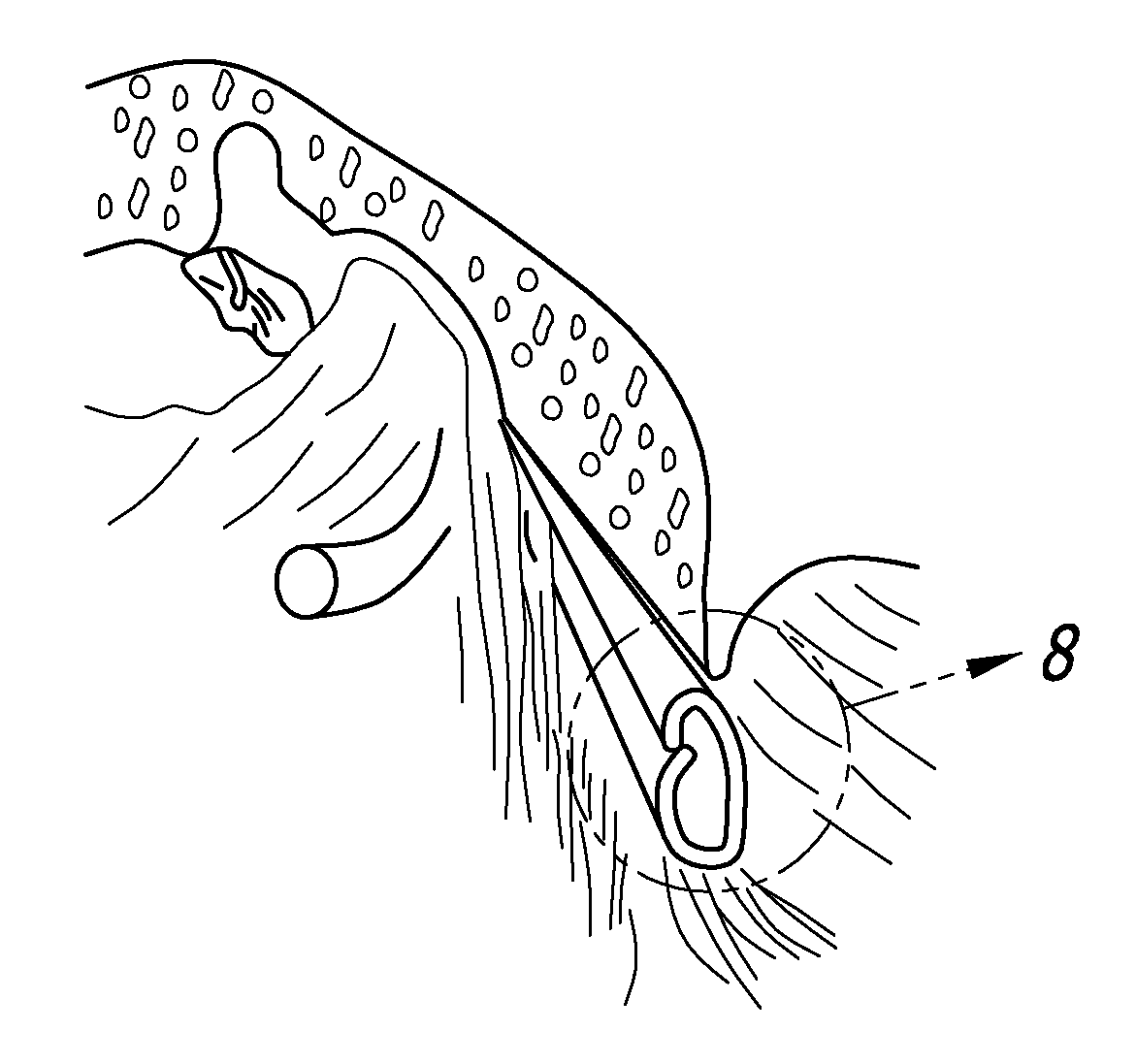
  • Figure 1
    Figure 1
  • Figure 2
    Figure 2
  • Figure 3
    Figure 3
Patent Text Reader

Abstract

Methods and devices for providing a gas pathway between the nasopharynx and the Eustachian tube are provided. One device may include a lumen with a valve. A portion of the valve may be tethered to adjacent muscle. Another portion of the valve may be tethered to adjacent cartilage. When the muscle contracts the valve may open through movement of the tethers, and provide a gas pathway between the nasopharynx and the Eustachian tube.
Need to check novelty before this filing date? Find Prior Art

Description

CROSS-REFERENCES TO RELATED APPLICATIONS

[0001] This application claims the benefit of U.S. Provisional Patent Application Ser. No. 61 / 165,448, filed Mar. 31, 2009, the full disclosure of which is hereby incorporated by reference.BACKGROUND OF THE INVENTION

[0002] The present invention is related to methods and systems for accessing, diagnosing and / or treating target tissue regions within the middle ear and the Eustachian tube.

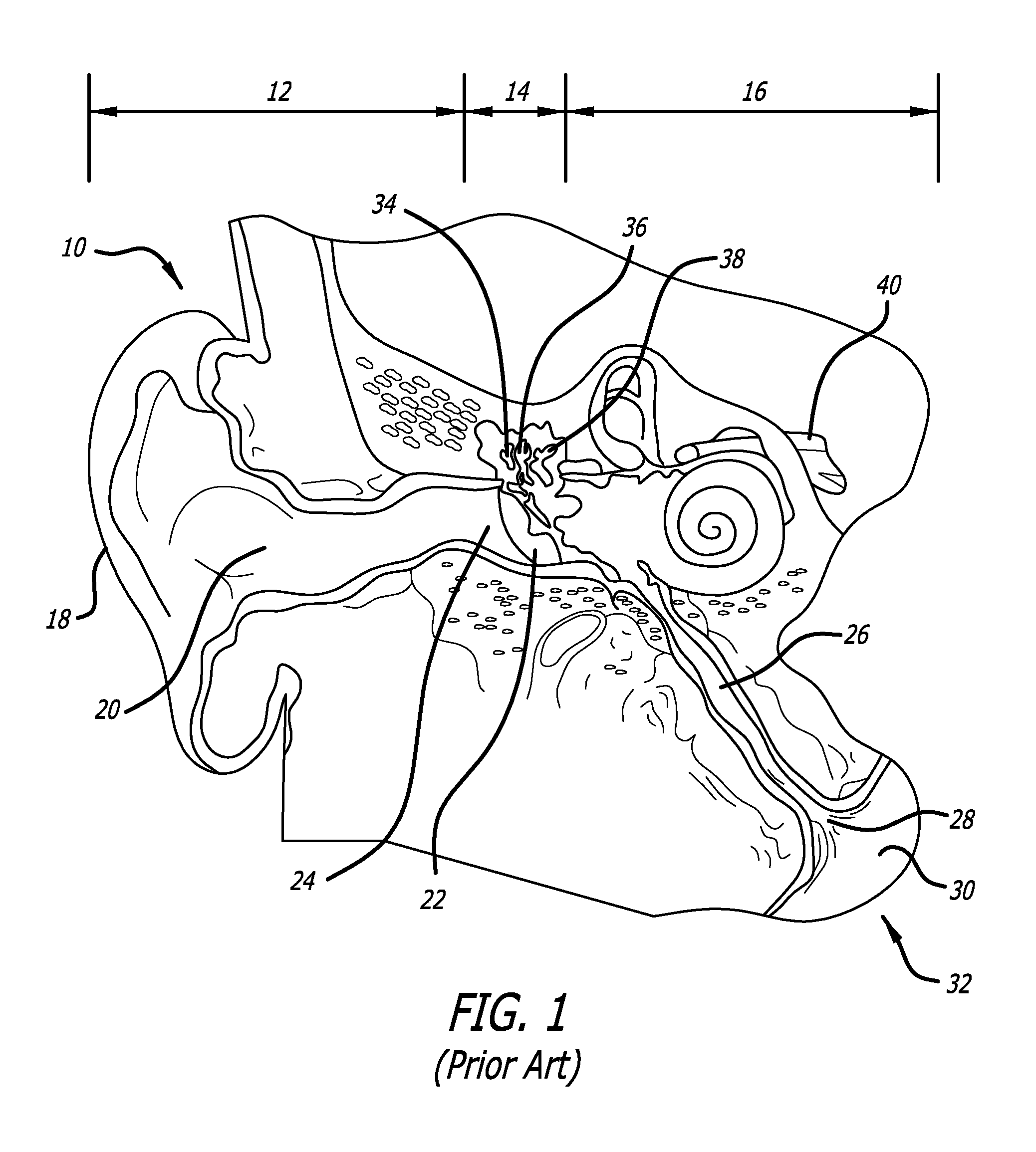
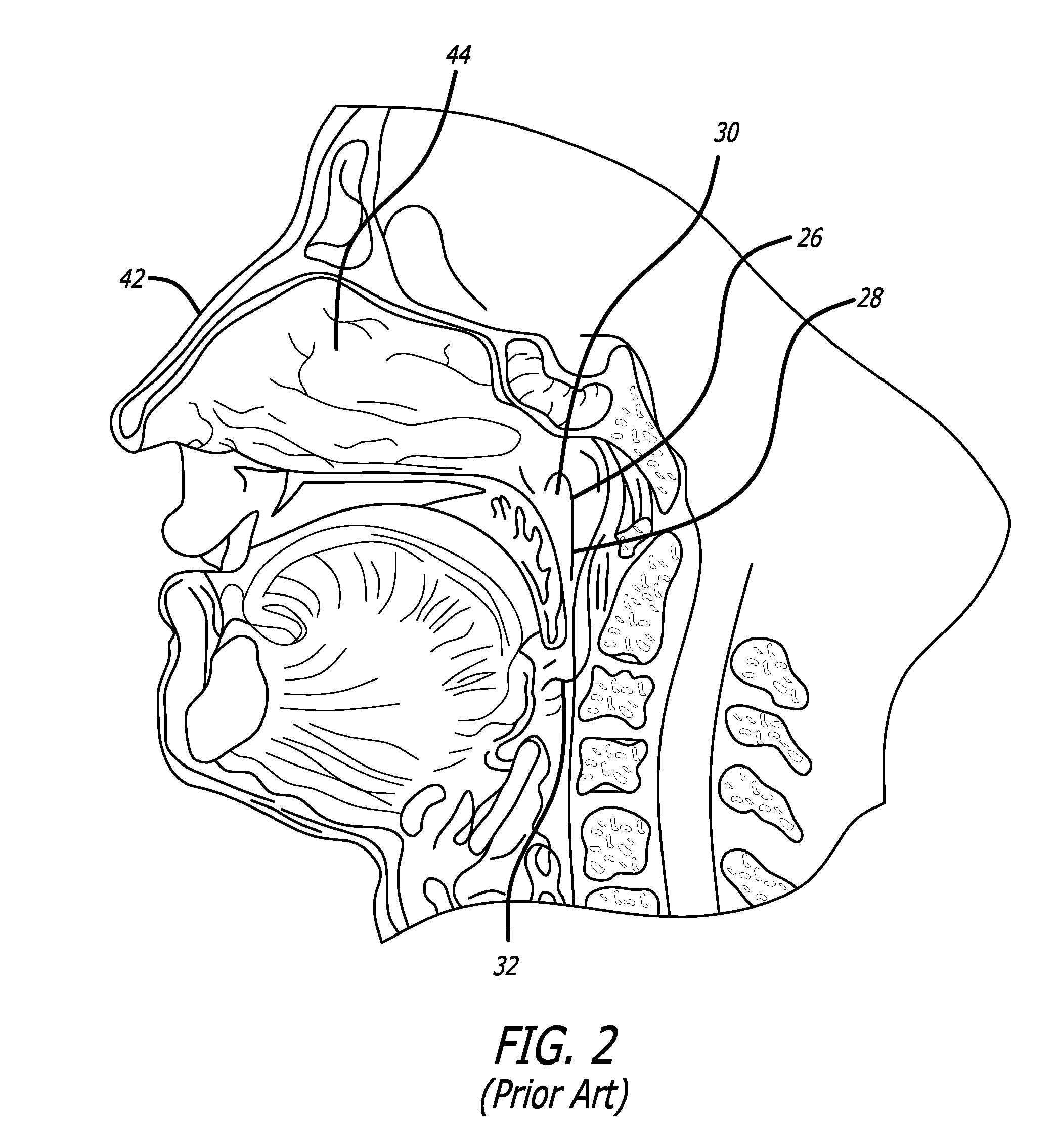
[0003] Referring to FIGS. 1-2, the ear 10 is divided into three parts: an external ear 12, a middle ear 14 and an inner ear 16. The external ear 12 consists of an auricle 18 and ear canal 20 that gather sound and direct it towards a tympanic membrane 22 (also referred to as the eardrum) located at an inner end 24 of the ear canal 20. The middle ear 14 lies between the external and inner ears 12 and 16 and is connected to the back of the throat by a Eustachian tube 26 which serves as a pressure equalizing valve between the ear 10 and the sinuses. The Eustachian tube...

Examples

Embodiment Construction

[0047]The embodiments of the present invention are directed toward methods and systems for accessing, diagnosing and treating target tissue regions within the middle ear and the Eustachian tube.

[0048]Access

[0049]One embodiment of the present invention is directed toward using minimally invasive techniques to gain trans-Eustachian tube access to the middle ear. A middle ear space may be accessed via a Eustachian tube (ET). To obtain this access to the Eustachian tube orifice, a guide catheter having a bend on its distal tip greater than about 30 degrees and less than about 90 degrees may be used. Once accessed, diagnostic or interventional devices may be introduced into the Eustachian tube. Optionally, to prevent damage to the delicate middle ear structures, a safety mechanism may be employed. In one embodiment, the safety mechanism may include a probe and / or a sensor introduced into the middle ear via the tympanic membrane as shown in FIG. 7. For example, the probe may be an endosco...