
Sleeve type fixing method and device for anastomosis for tubular organs such as intestines, stomach, esophagus etc
a tubular organ and fixing method technology, applied in wound clamps, medical science, surgery, etc., can solve the problem of high cost of existing anastomosis devices, and achieve the effect of good
- Summary
- Abstract
- Description
- Claims
- Application Information
AI Technical Summary
Benefits of technology
Problems solved by technology
Method used
Image

Examples
embodiment 1
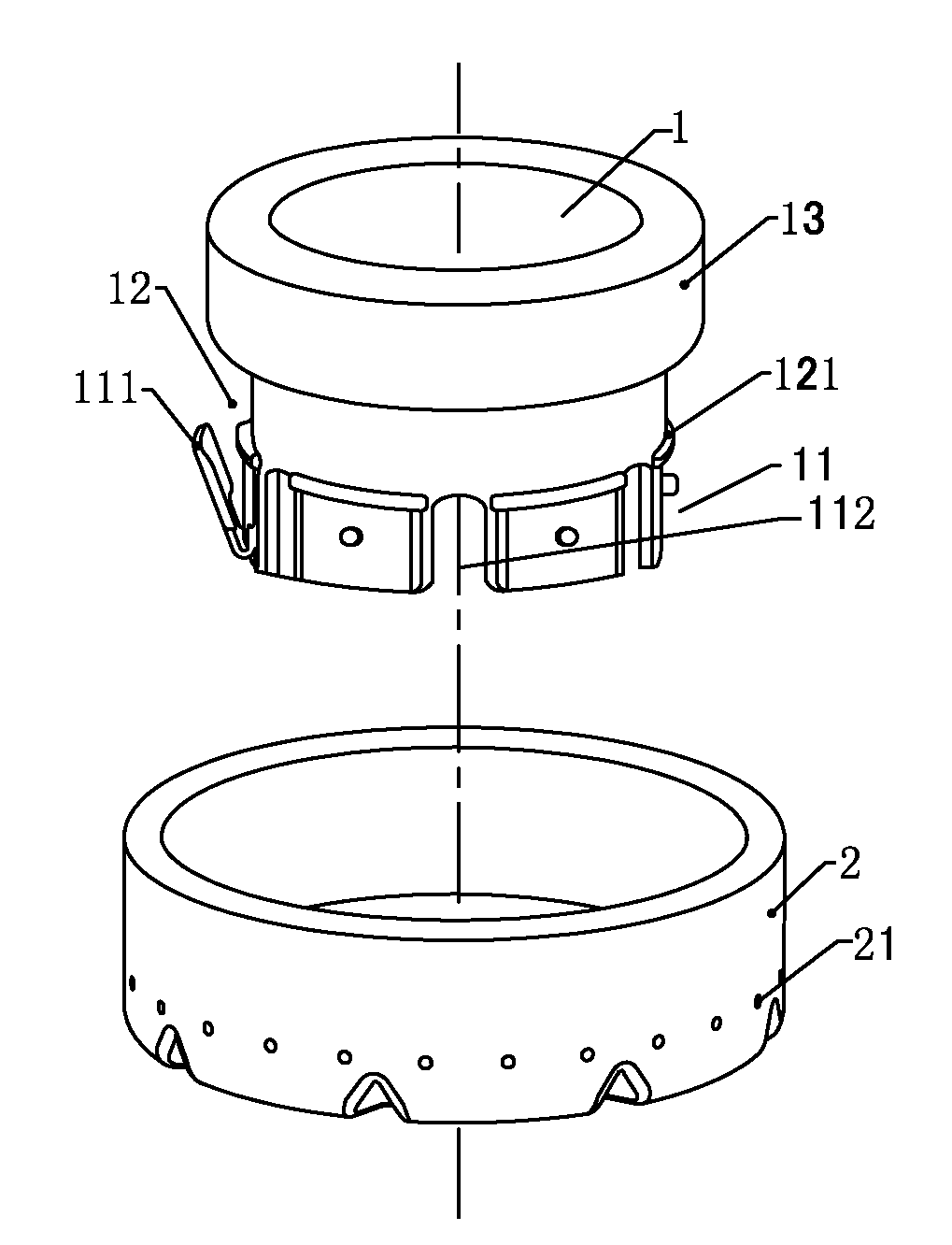
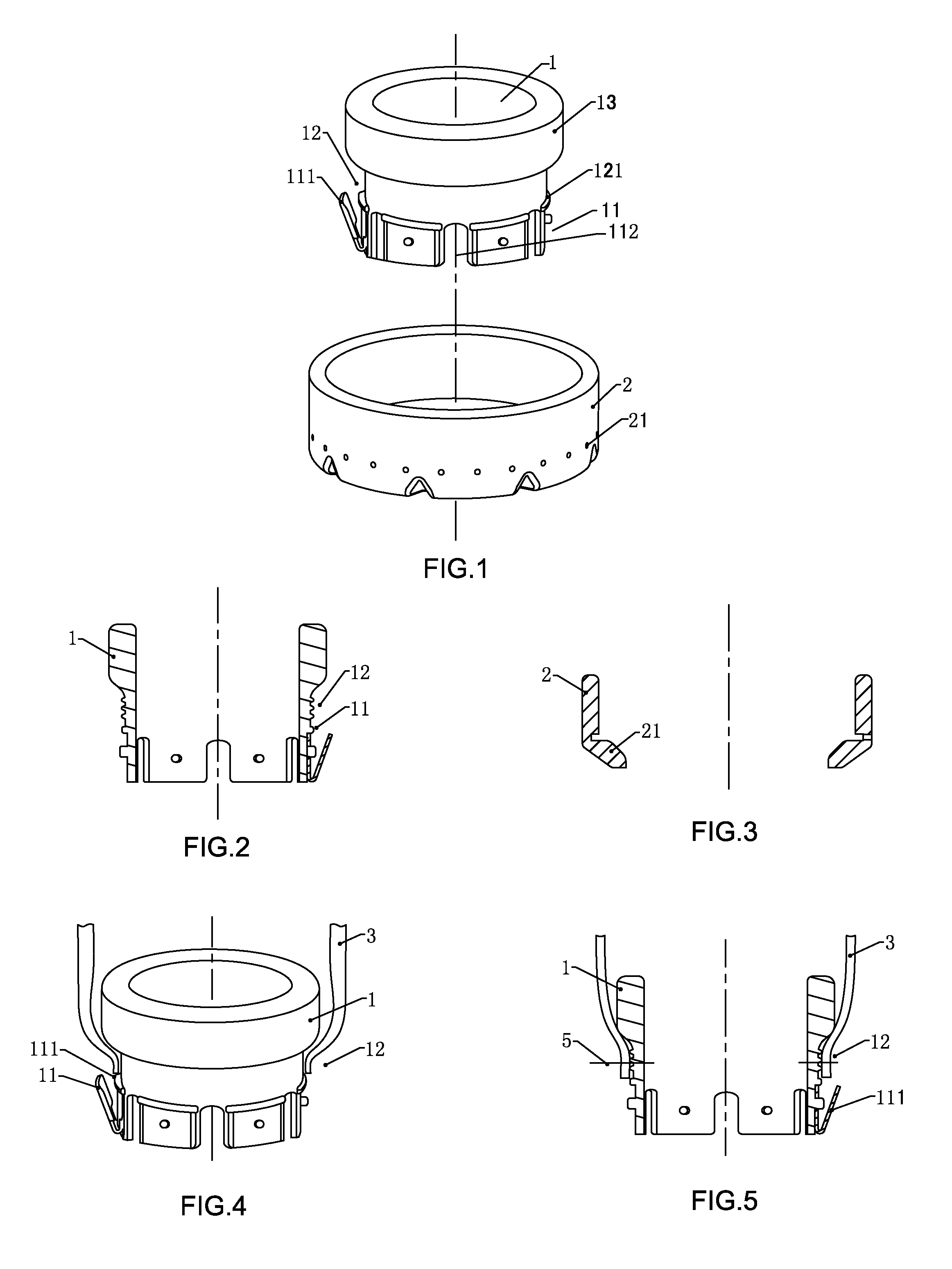
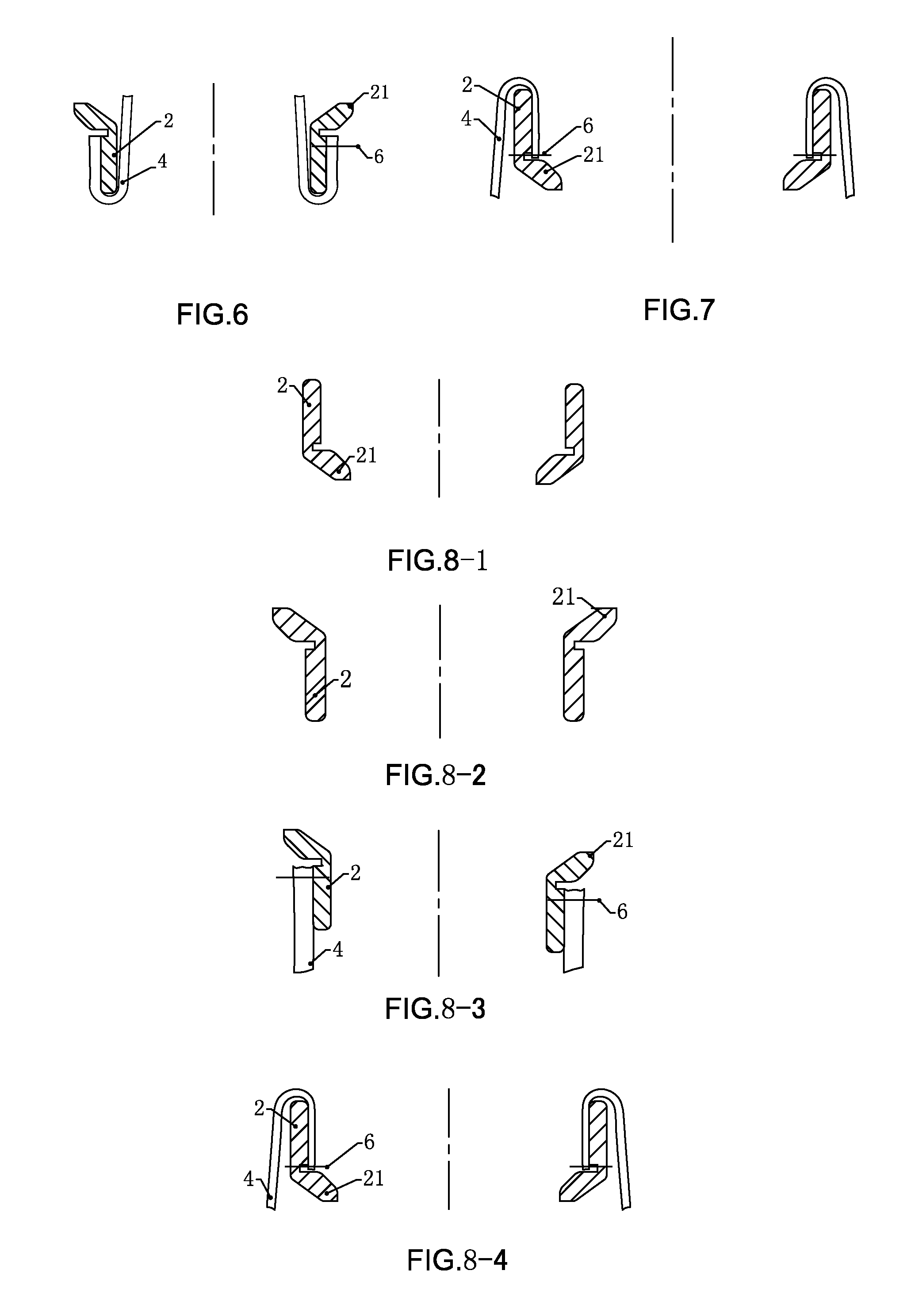
[0029]Referring to FIG. 1 to FIG. 3, the anastomosis device comprises an inner ring 1 and an outer ring 2, the upper portion of the inner ring is an anastomosis portion 13, the middle portion is a connection portion 12 and the lower portion is an insertion portion 11, the diameter of the connecting portion 12 is smaller than the insertion portion 11 and the anastomosis portion 13, the outer ring 2 is made of elastic material, and the side wall of the outer ring 2 is provided with thread holes 21 set according to the sewing position of the intestines, the bottom of the outer ring is set a protruded ring 21, the protruded ring 21 is clamp to the connecting portion 12 of the inner ring, the lower edge of the connecting portion of the inner ring is formed a circle or several flanges 121. The insertion portion 11 of said inner ring has axial grooves 112, thus the diameter of the insertion portion has a narrowed variable. The insertion portion 11 has barbs 111 which can prevent the outer ...
embodiment 2
[0033]In this embodiment, the outer ring is different from the embodiment 1, as is shown in FIG. 10 and FIG. 11, the outer ring 7 is extended out a ring 71 in the inner side of the outer ring 7, the inner ring 1 has the same structure as embodiment 1, so in operation, the inner ring do not need to be overturned, the intestines are sewed in the outer ring 7 and then overturned, and the other process is the same as embodiment 1.
PUM
 Login to View More
 Abstract
Description
Claims
Application Information
 Login to View More