Food Additive Containing Eugenol, Cinnamaldehyde and an Alliaceous Extract

a technology of cinnamaldehyde and alliaceous extract, which is applied in the field of food additives containing eugenol, cinnamaldehyde and an alliaceous extract, can solve the problems of abandoning solutions, and achieve the effect of large reduction in the production of methan

US20120171323A1Inactive Publication Date: 2012-07-05PANCOSMA
4 Cites 5 Cited by

Patent Information

Authority / Receiving Office
US · United States
Current Assignee / Owner
Publication Date
2012-07-05
Estimated Expiration
Not applicable · inactive patent

Smart Images

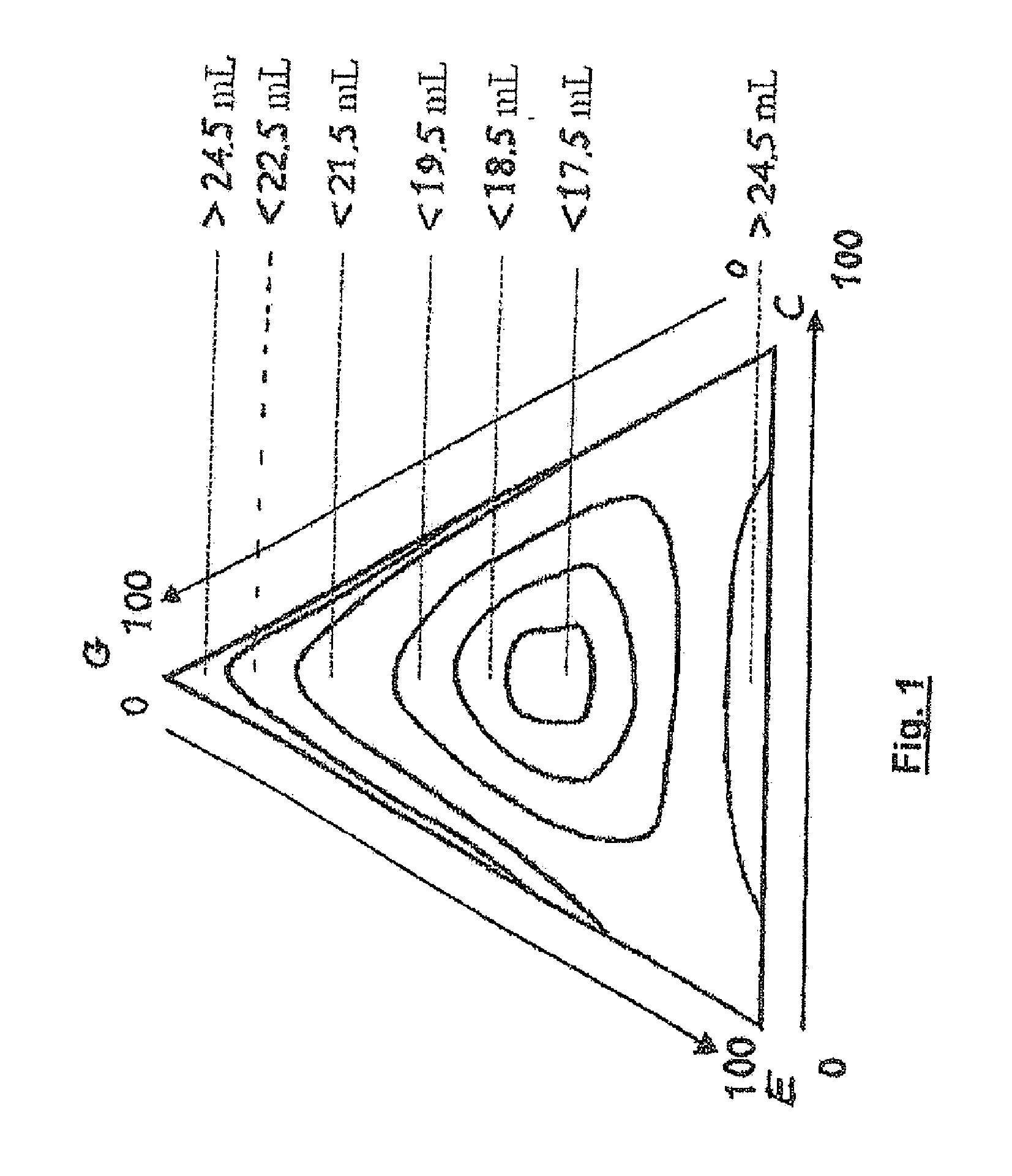
  • Figure 1
    Figure 1
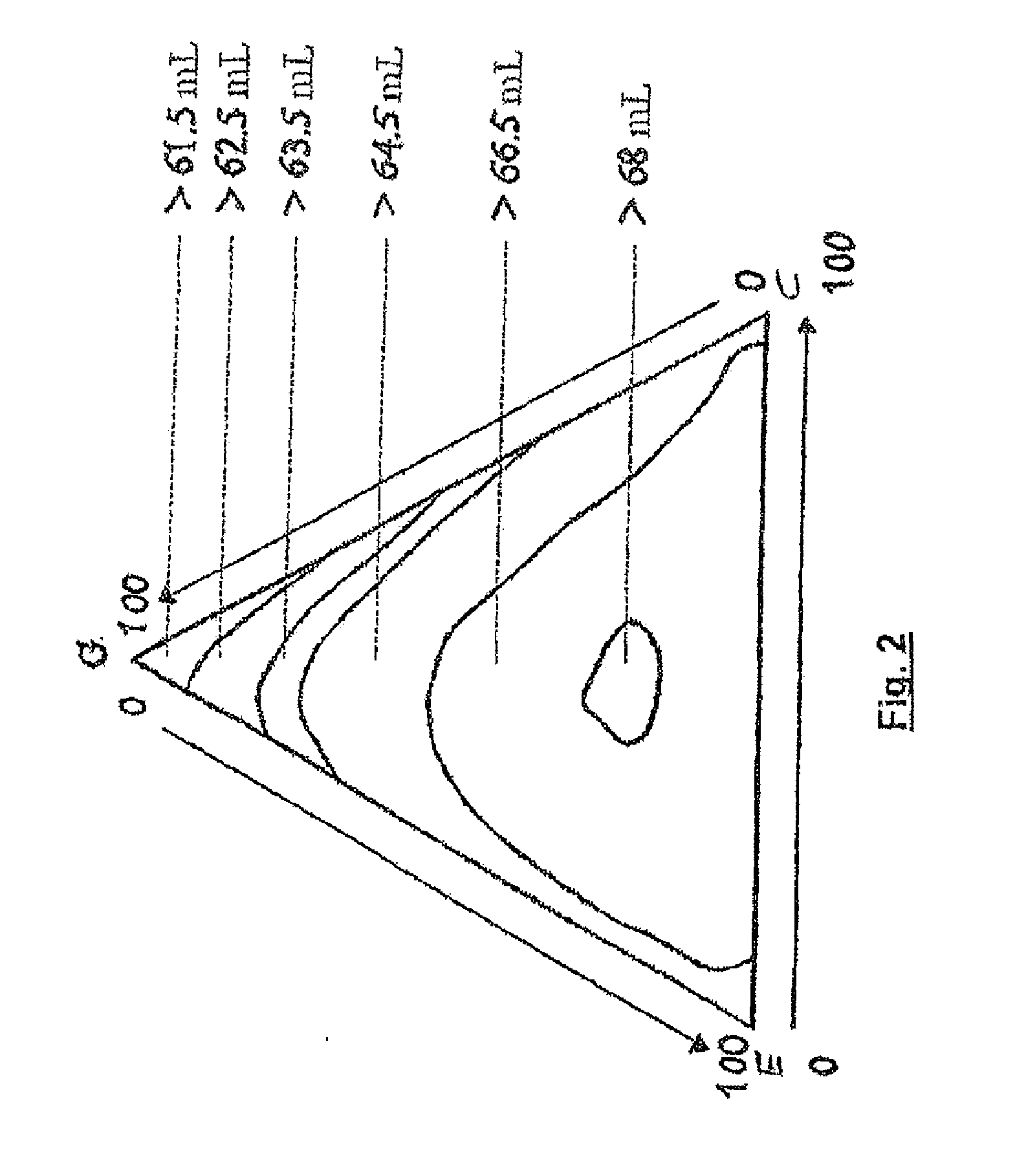
  • Figure 2
    Figure 2
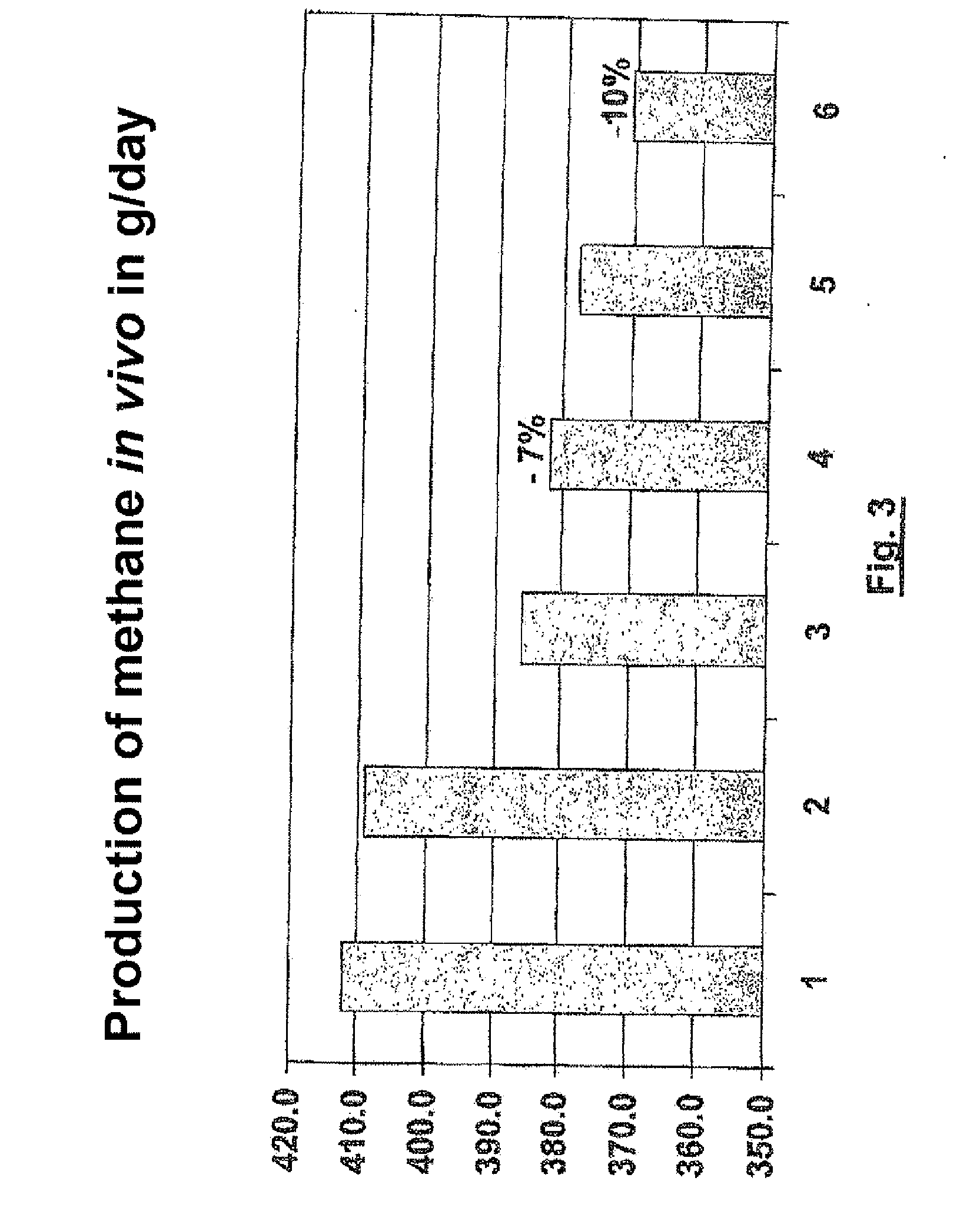
  • Figure 3
    Figure 3
Patent Text Reader

Abstract

The invention relates to a food additive including: 30 to 45% of eugenol; 30 to 45% of cinnamaldehyde; 10 to 40% of extract of a plant belonging to the alliaceous family; the remainder up to 100% optionally comprising other compounds, in particular, organosulphur compounds. Such an additive can be added to the feed for certain animals, in particular bovines, with a view to reducing the methane production thereof. The invention also relates to a method for reducing methane emissions into the earth's atmosphere, which includes the following steps: adding a food additive according to the invention to the food ration of a ruminant; and feeding the ruminant the obtained food ration.
Need to check novelty before this filing date? Find Prior Art

Description

[0001] The invention relates to a food additive comprising eugenol, cinnamaldehyde and an extract of Alliaceae in certain proportions. Such an additive may be added to the feed of certain animals, in particular bovines, in order to reduce their methane production.BACKGROUND OF THE INVENTION

[0002] It is now well known that farm animals produce more greenhouse gases than vehicles.

[0003] It is considered in particular that ruminants are responsible for 18% of emissions of methane whose greenhouse effect, according to experts of Giec (Intergovernmental Group of Experts on Climate Change), is 23 times more powerful than that of carbon dioxide.

[0004] According to Argentinean scientists, a cow of about 550 kg emits, essentially through eructations, between 800 and 1000 liters of gas per day, mainly methane.

[0005] The result is that preserving the environment is a major constraint for agriculture and some American states are considering taxing more and more severely the production of methane by ...

Examples

examples

a) Tests In Vitro

[0071]Ruminal Fluid is Collected from a Cow.

[0072]A 1:1 (by volume) solution of ruminal fluid and of a buffer solution is then prepared.

[0073]50 ml of the solution are introduced into a polypropylene tube.

[0074]A ration is prepared (on a dry matter basis) consisting of alfalfa hay (34.7%), ryegrass hay (14.8%), ground barley grain (11.4%), ground corn grain (11.4%), soybean oil cake (1.6%), cotton seed (7.9%), corn gluten (11.6%), molasses (3.2%), calcium salts of fatty acids (1.3%), and a mineral and vitamin premixture (2.1%).

[0075]A feed concentrate is prepared which consists of corn, soybean oil cake, wheat and optionally other raw materials which usually enter into the composition of feed concentrates.

[0076]300 mg of ration, 200 mg of feed concentrate (which is equivalent to a 60 / 40 mixture of ration and concentrated feed) and 6.25 mg of food additive are introduced into the polypropylene tube, that is 250 mg of additive per 1 l of 1 / 1 mixture of ruminal fluid / b...