
Flexible seating surface
a seating surface and flexible technology, applied in the field of seating surfaces, can solve the problems of high pressure areas, discomfort for users, and much time and effort spent designing contoured areas, and achieve the effect of relieving pressure for users and beneficial support characteristics
- Summary
- Abstract
- Description
- Claims
- Application Information
AI Technical Summary
Benefits of technology
Problems solved by technology
Method used
Image

Examples
Embodiment Construction
[0023]I. Overview
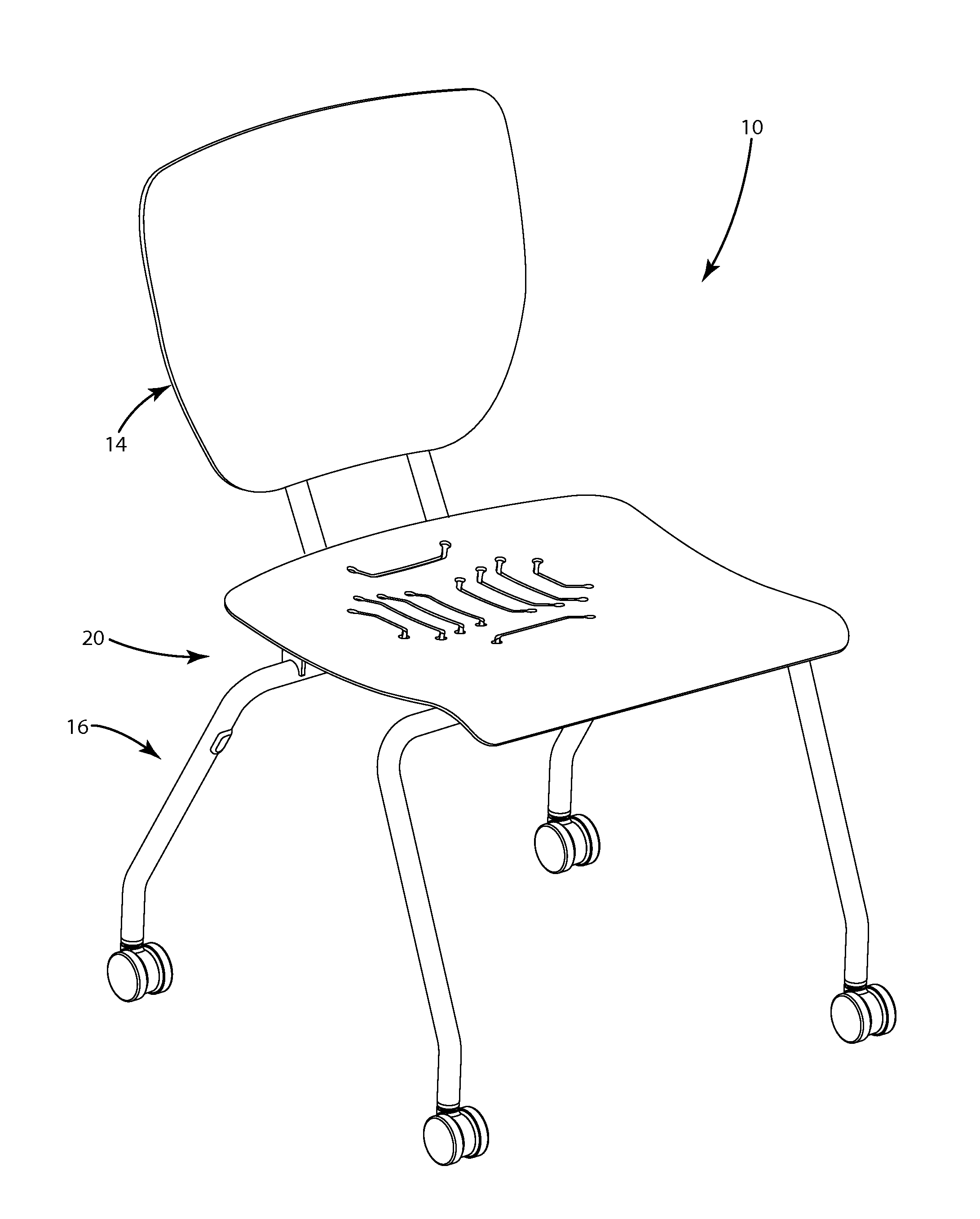
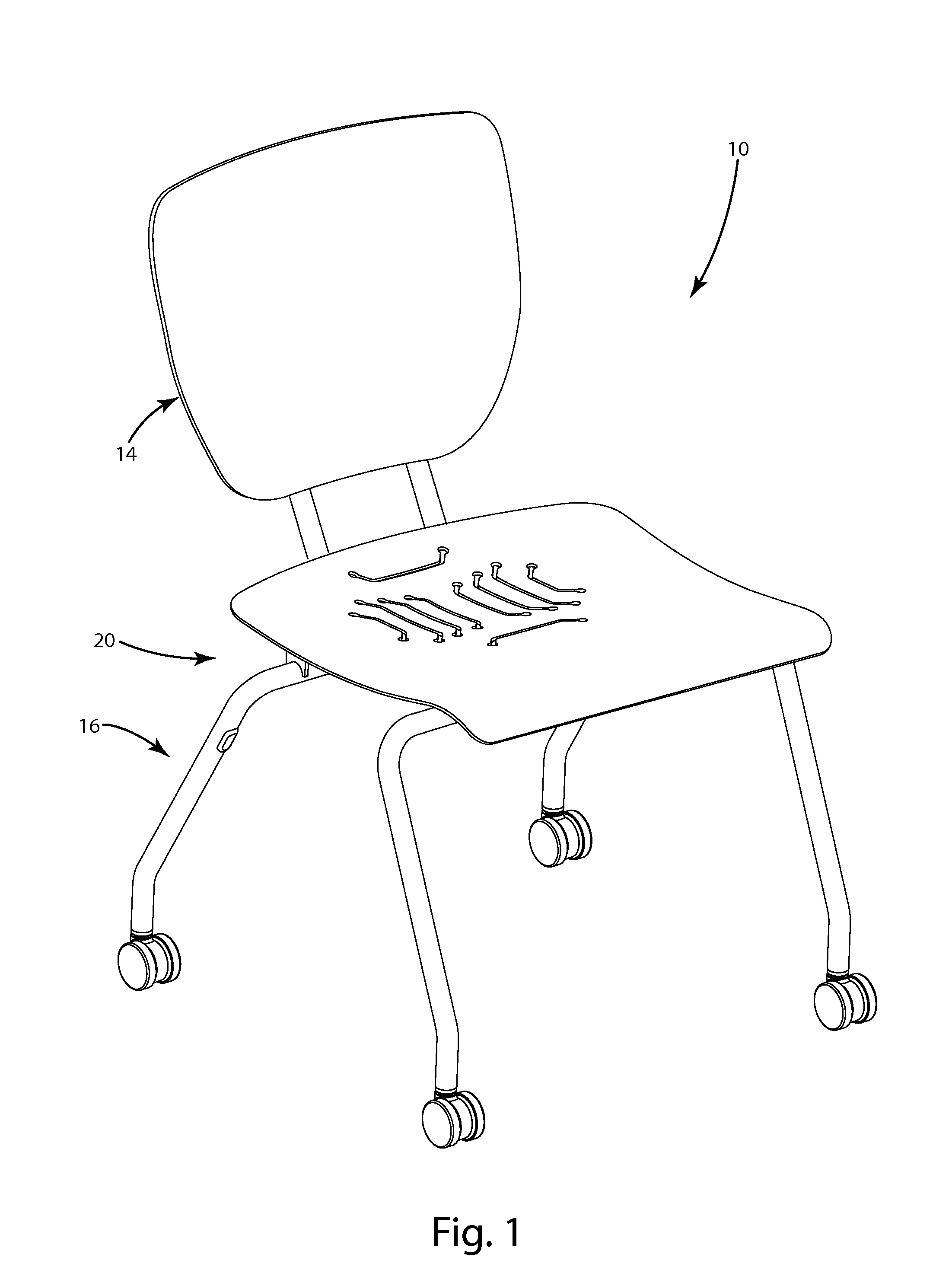
[0024]A seat assembly 10 is shown in FIG. 1 and includes a seat 20 constructed in accordance with one embodiment of the present invention. Although FIG. 1 illustrates the seat 20 as part of a complete seat assembly 10 with a seat back 14 and support structure 16, this is only exemplary. The seat 20 may be generally used in connection with any structure intended to provide seated support.
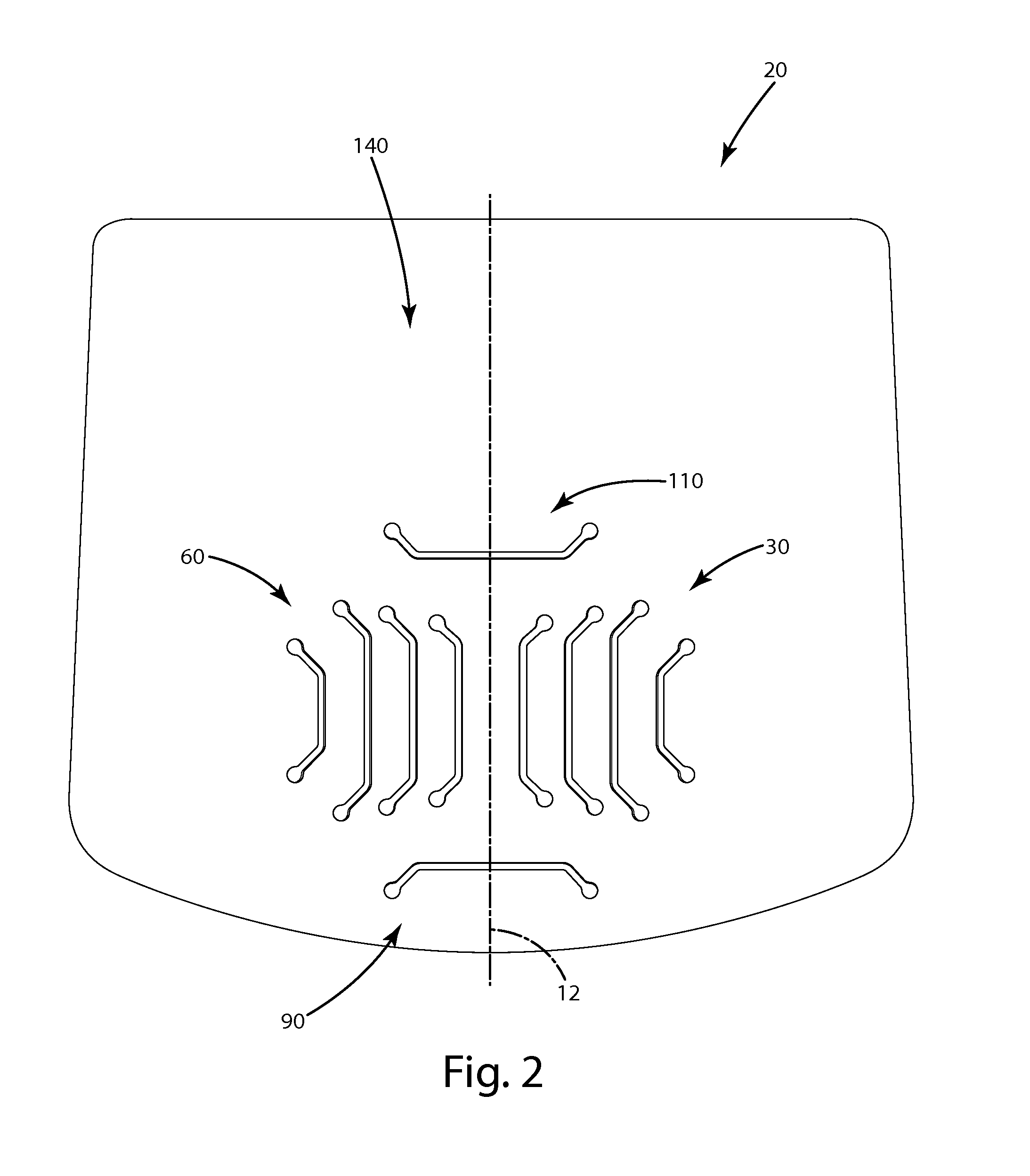
[0025]As shown in FIG. 2, the seat 20 generally includes a longitudinal axis 12 drawn from a front of the seat 20 to a rear of the seat 20 and generally dividing the seat 20 into two equal halves. As shown in FIG. 2, the seat 20 includes multiple high pressure regions. A first ischial region 30 is generally positioned below the right ischial (hip) bone of a user and is located on a first side of the longitudinal axis 12. A second ischial region 60 is generally positioned below the left ischial bone of a user and is located on a second side of the longitudinal axis 12. A tailbone regi...
PUM
| Property | Measurement | Unit |
|---|---|---|
| tensile strength | aaaaa | aaaaa |
| toughness | aaaaa | aaaaa |
| elongation | aaaaa | aaaaa |
Abstract
Description
Claims
Application Information
 Login to View More