
Qpcr-based method to assess t cell function
a t cell function and qpcr technology, applied in the field of molecular biology, immunology, cancer biology and medicine, can solve the problems of large blood volume, reduced ifn- secretion capacity of nkt cells from cancer patients, and reduced ifn- secretion capacity of nkt cells from healthy patients
- Summary
- Abstract
- Description
- Claims
- Application Information
AI Technical Summary
Benefits of technology
Problems solved by technology
Method used
Image

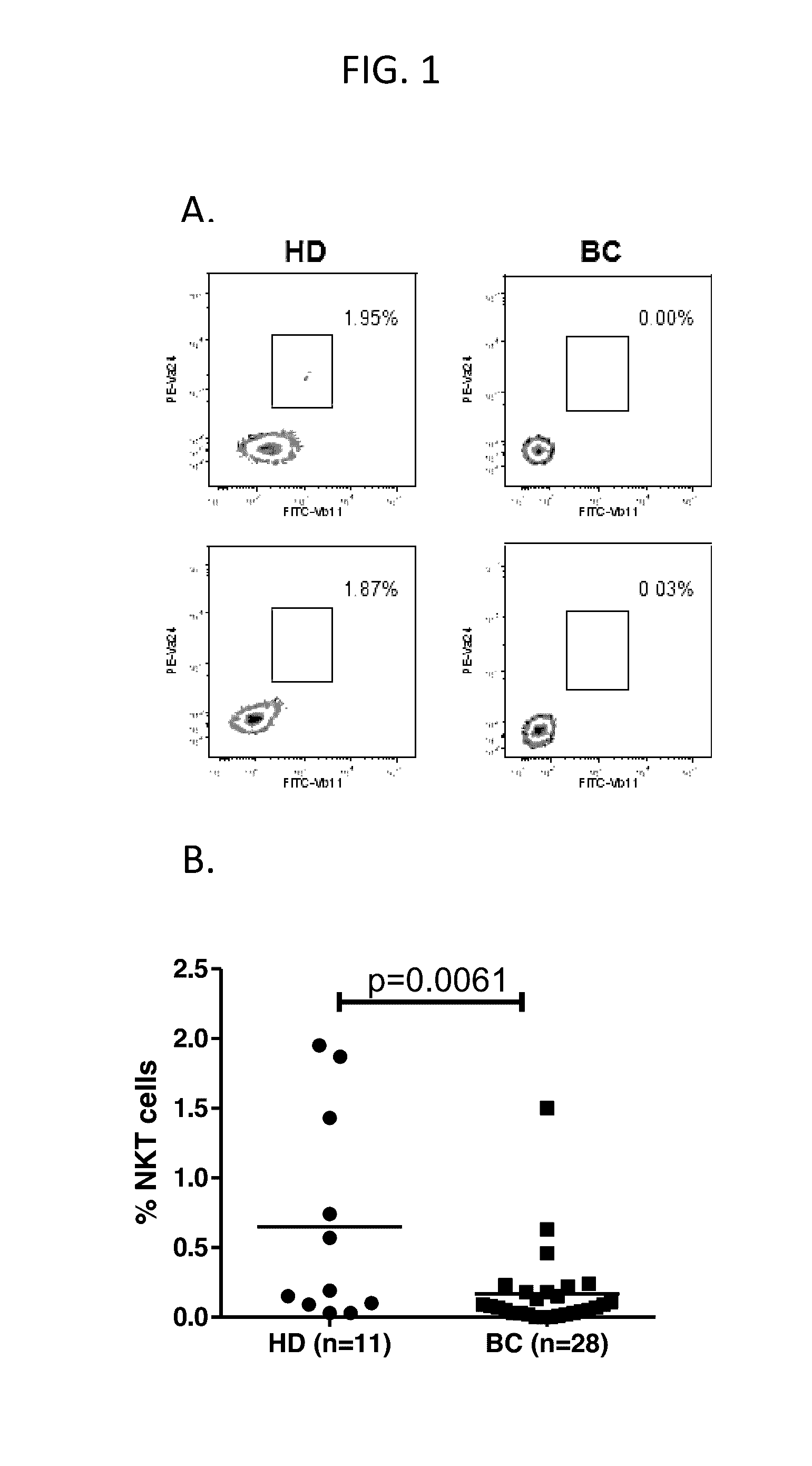
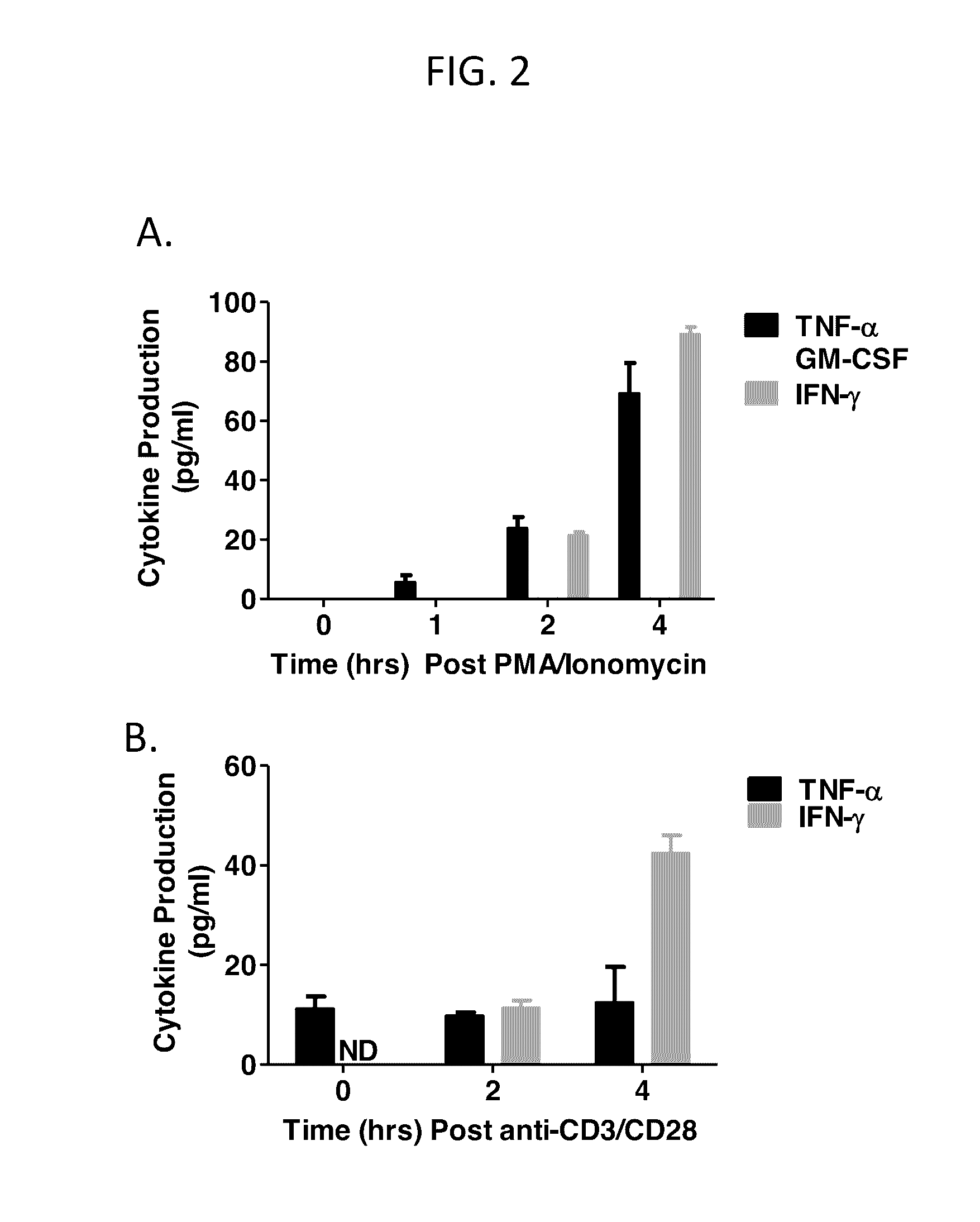
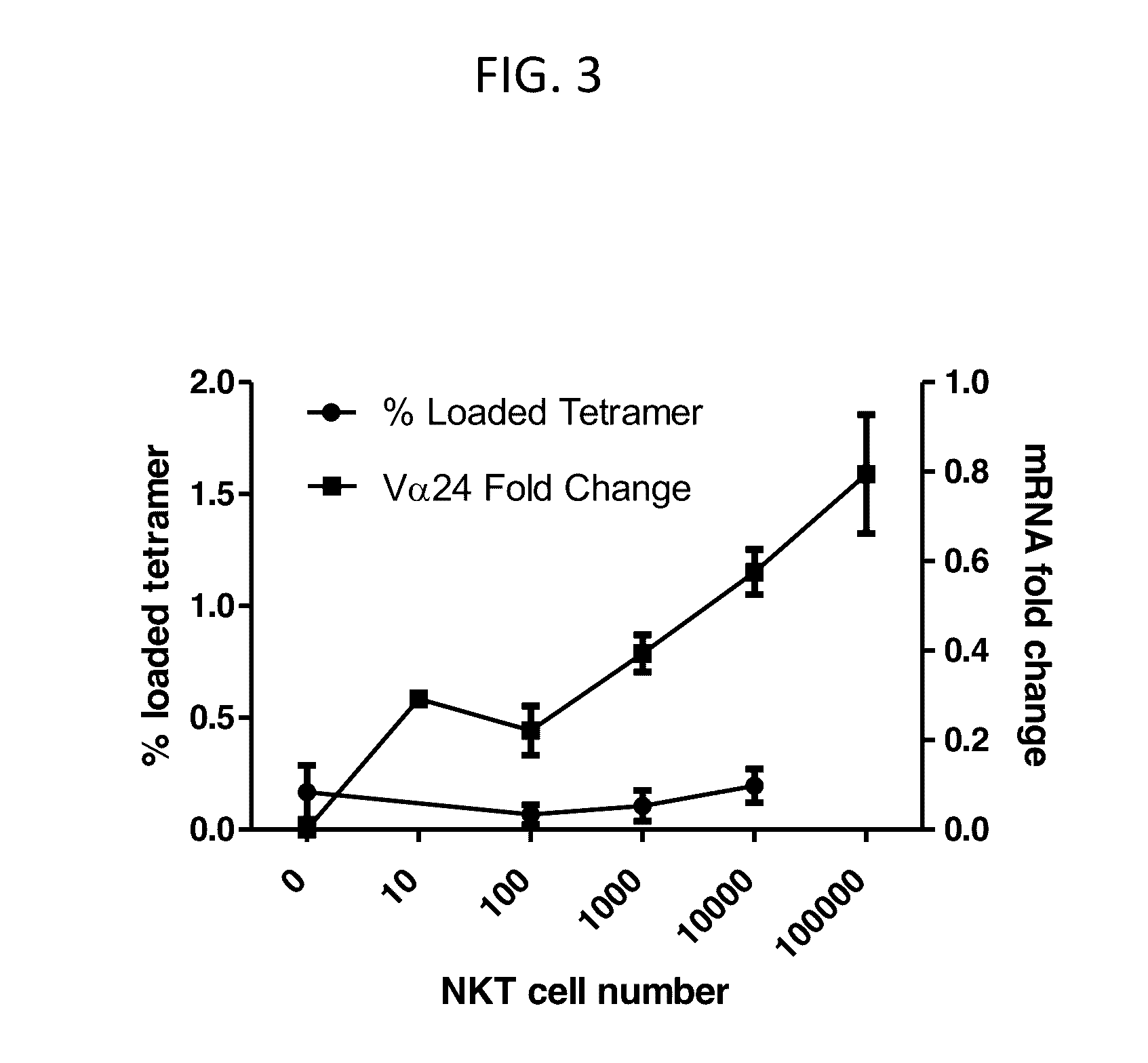
Examples
example 1
[0099]Development of a qPCR Method to Rapidly Assess the Function of NKT Cells
[0100]NKT cells comprise a rare, but important subset of T cells which account for ˜0.2% of the total circulating T cell population. NKT cells are known to have anti-tumor functions and rapidly produce high levels of cytokines following activation. Several clinical trials have sought to exploit the effector functions of NKT cells. While some studies have shown promise, NKT cells are approximately 50% lower in cancer patients compared to healthy donors of the same age and gender, thus limiting their therapeutic efficacy. These studies indicate that baseline levels of activation should be assessed before initiating an NKT cell based immunotherapeutic strategy, thus the goal of this study was to develop a sensitive method to rapidly assess NKT cell function. We utilized artificial antigen presenting cells in combination with qPCR in order to determine NKT cell function in peripheral blood mononuclear cells fr...
PUM
| Property | Measurement | Unit |
|---|---|---|
| Temperature | aaaaa | aaaaa |
| Fraction | aaaaa | aaaaa |
| Fraction | aaaaa | aaaaa |
Abstract
Description
Claims
Application Information
 Login to View More