Macrophage markers in cancer

a cancer and macrophage technology, applied in the field of macrophage markers in cancer, can solve the problems of breast cancer mortality reduction, overdiagnosis and potentially unnecessary treatment, and other early detection screening methods (e.g., mri, ultrasonography, clinical and self-breast examination) are inadequate at present to reduce breast cancer mortality, and achieve the effects of reducing breast cancer mortality, and reducing tumor cell proliferation

US20220128543A1Pending Publication Date: 2022-04-28THE UNIV COURT OF THE UNIV OF EDINBURGH
0 Cites 0 Cited by

Patent Information

Authority / Receiving Office
US · United States
Patent Type
Applications(United States)
Current Assignee / Owner
Publication Date
2022-04-28

Smart Images

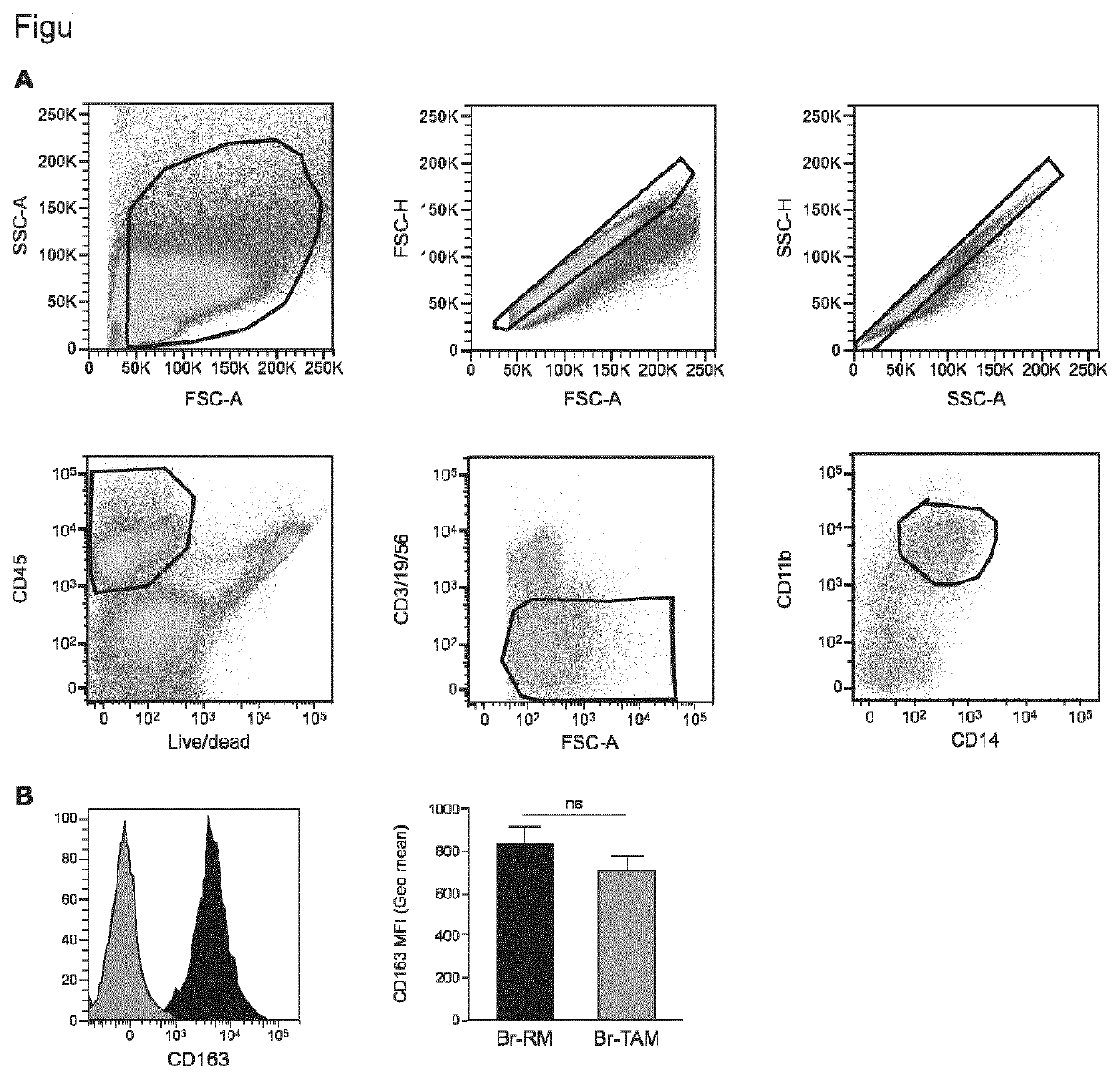
  • Figure 1
    Figure 1
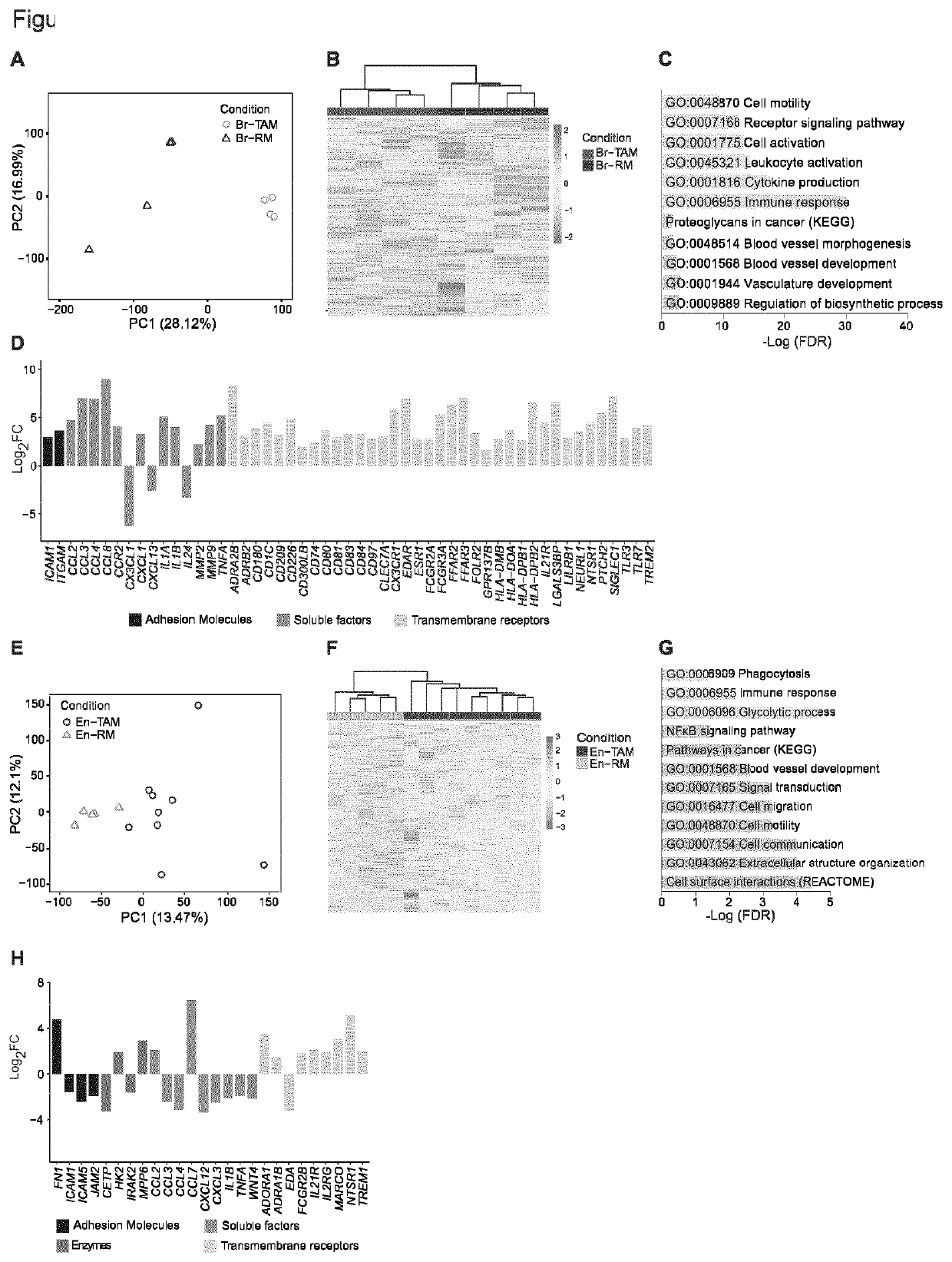
  • Figure 2
    Figure 2
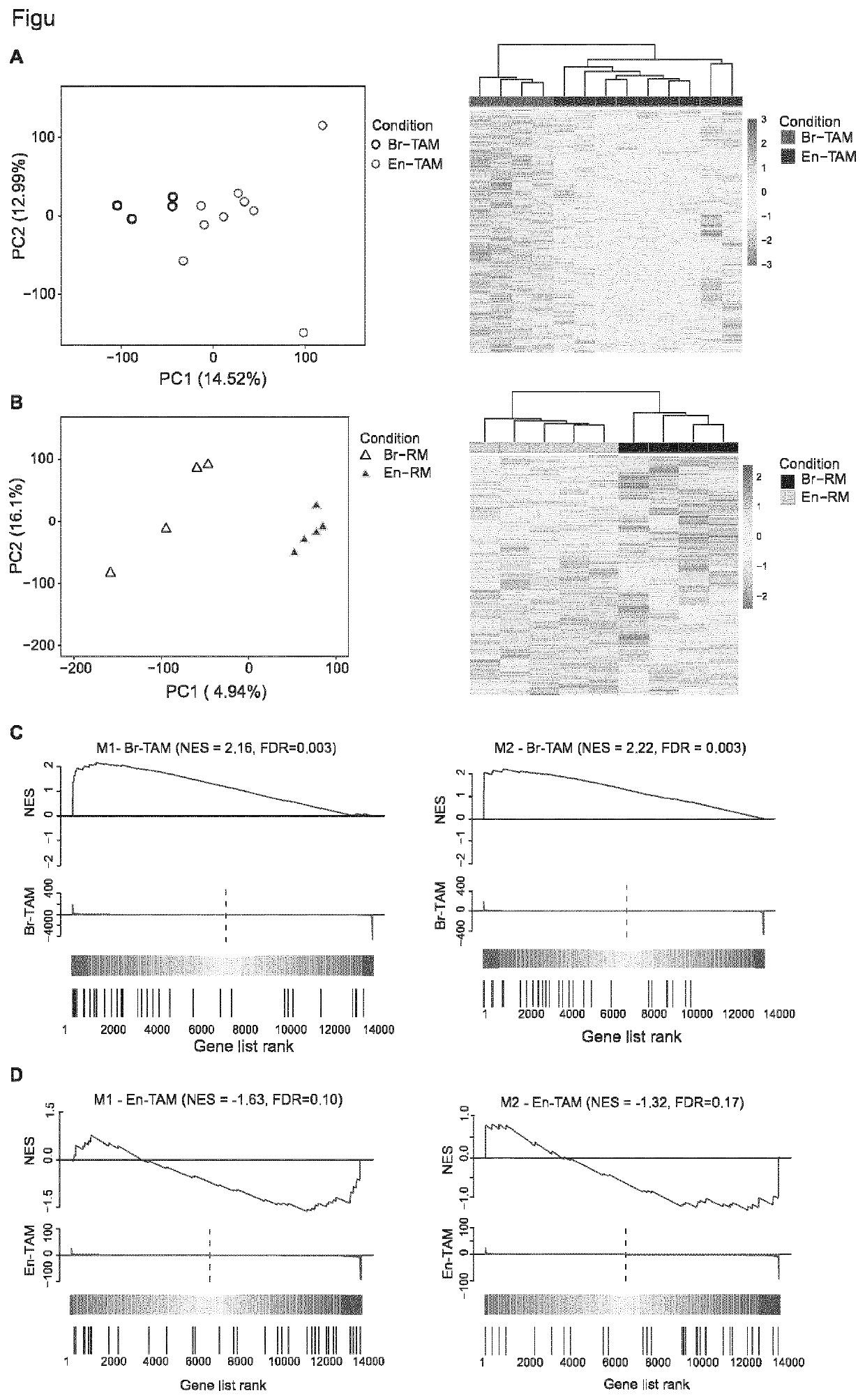
  • Figure 3
    Figure 3
Patent Text Reader

Abstract

The present invention relates to the diagnosis, prognosis, prediction and / or treatment of cancer, for example breast cancer, lung cancer or colon cancer. The present invention provides methods of diagnosing and / or prognosing cancer, predicting efficacy of treatment for cancer, assessing outcome of treatment for cancer, assessing likelihood of metastasis and / or assessing recurrence of cancer, the methods comprising a) analyzing a biological sample obtained from a subject to determine the presence of one or more target molecules representative of expression of SIGLEC1 and / or CCL8; and b) comparing the expression level of SIGLEC1 and / or CCL8 determined in (a) with one or more reference values, wherein whether there is a difference in the expression of SIGLEC1 and / or CCL8 in the sample from the subject or not compared to the one or more reference values is indicative of a clinical indication. The invention further provides related methods for treatment of cancer, kits and assay devices for use in the methods, and methods for identifying molecules for use in treating cancer.
Need to check novelty before this filing date? Find Prior Art

Description

FIELD OF THE INVENTION

[0001] The present invention relates to methods for the diagnosis, prognosis, prediction and / or treatment of cancer, for example breast cancer, lung cancer or colon cancer. The invention also concerns kits and assay devices for use in the methods of the invention. Further, the invention concerns methods of finding new therapeutic molecules for treating cancer.BACKGROUND TO THE INVENTION

[0002] The tumor microenvironment is a dominant player in the regulation of tumor progression and growth. Tumors not only comprise of malignant cells but also a complex stroma in which immune cells are highly represented; cancer cells acquire the ability to “distract and educate” the immune system so that their abnormal proliferation is not detected, but rather promoted.

[0003] In mouse models of cancer, tumor associated macrophages (TAMs) promote progression to malignancy. Experimental models have indicated that Tumor Associated Macrophages (TAMs), whose density correlates with poor...

Examples

Embodiment Construction

[0016]The methods of the present invention provide simple tests that may be used in the methods of diagnosing and / or prognosing cancer, predicting efficacy of treatment for cancer, assessing outcome of treatment for cancer, assessing likelihood of metastasis, assessing recurrence of cancer and / or treating cancer. The kits and devices of the invention are useful for conducting the methods of the invention. Methods are also provided for identifying new therapeutic molecules for treating cancer. Cancers to which the invention may be applied include, but are not limited to, breast, lung, brain and colon cancer, particularly breast cancer.

[0017]The invention is based on the inventors' significant and surprising finding that the expression of certain biomarkers, namely SIGLEC1, CCL8, CD163, and CD68, in tissue, specifically macrophages, is associated with cancer and in particular cancer that is more likely to spread to other parts of the body (metastasize) and more likely to recur followi...