
Image processing apparatus
a technology of image processing and apparatus, applied in the field of digital image processing apparatus, can solve the problems of red eye effect of eyes of people, long processing time, serious problems in photographing, etc., and achieve the effect of effective red eye correction processing and ensuring productivity
- Summary
- Abstract
- Description
- Claims
- Application Information
AI Technical Summary
Benefits of technology
Problems solved by technology
Method used
Image

Examples
Embodiment Construction
[0035]The image processing apparatus of the invention will be now described in detail with reference to the preferred embodiment shown in the accompanying drawings.
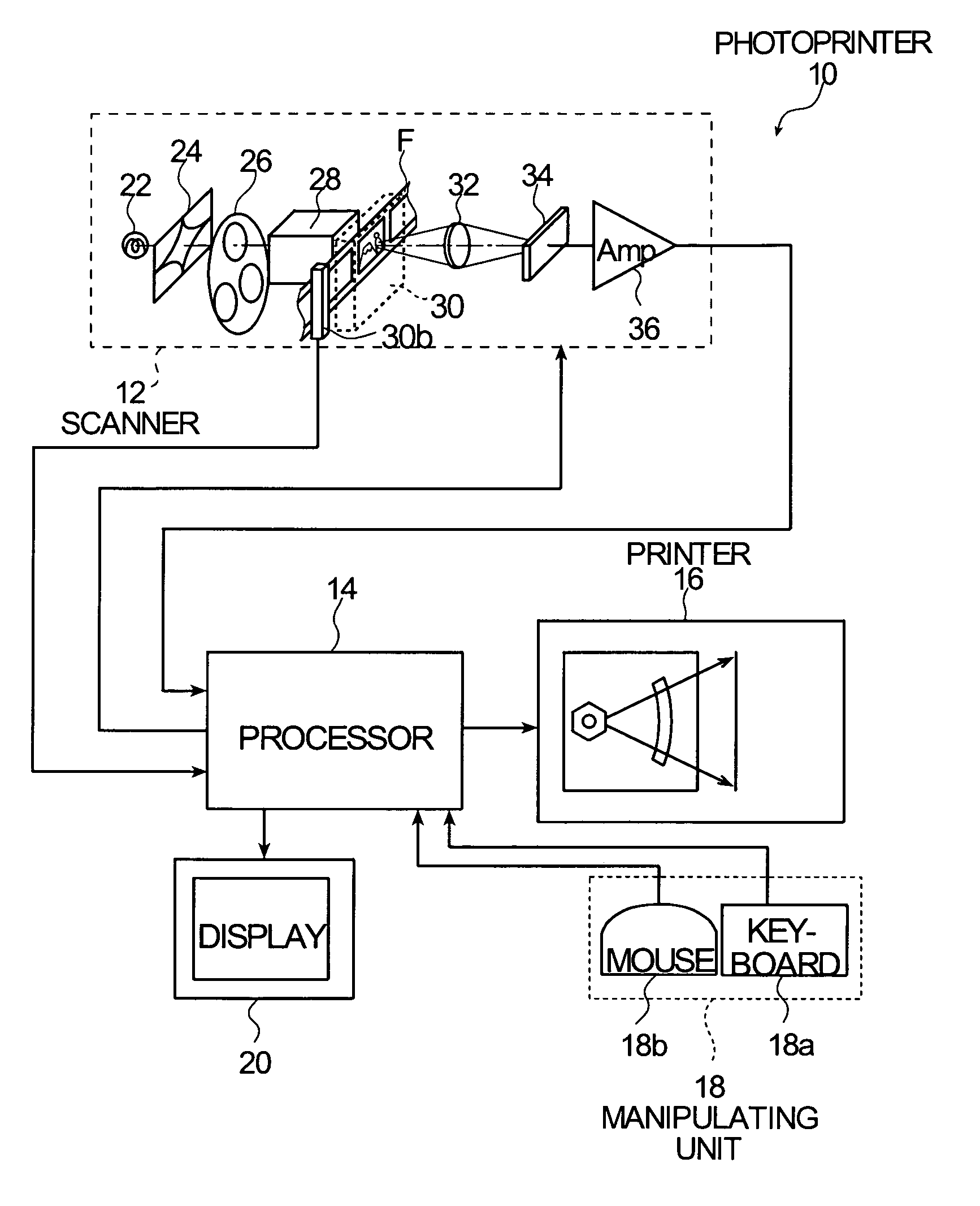
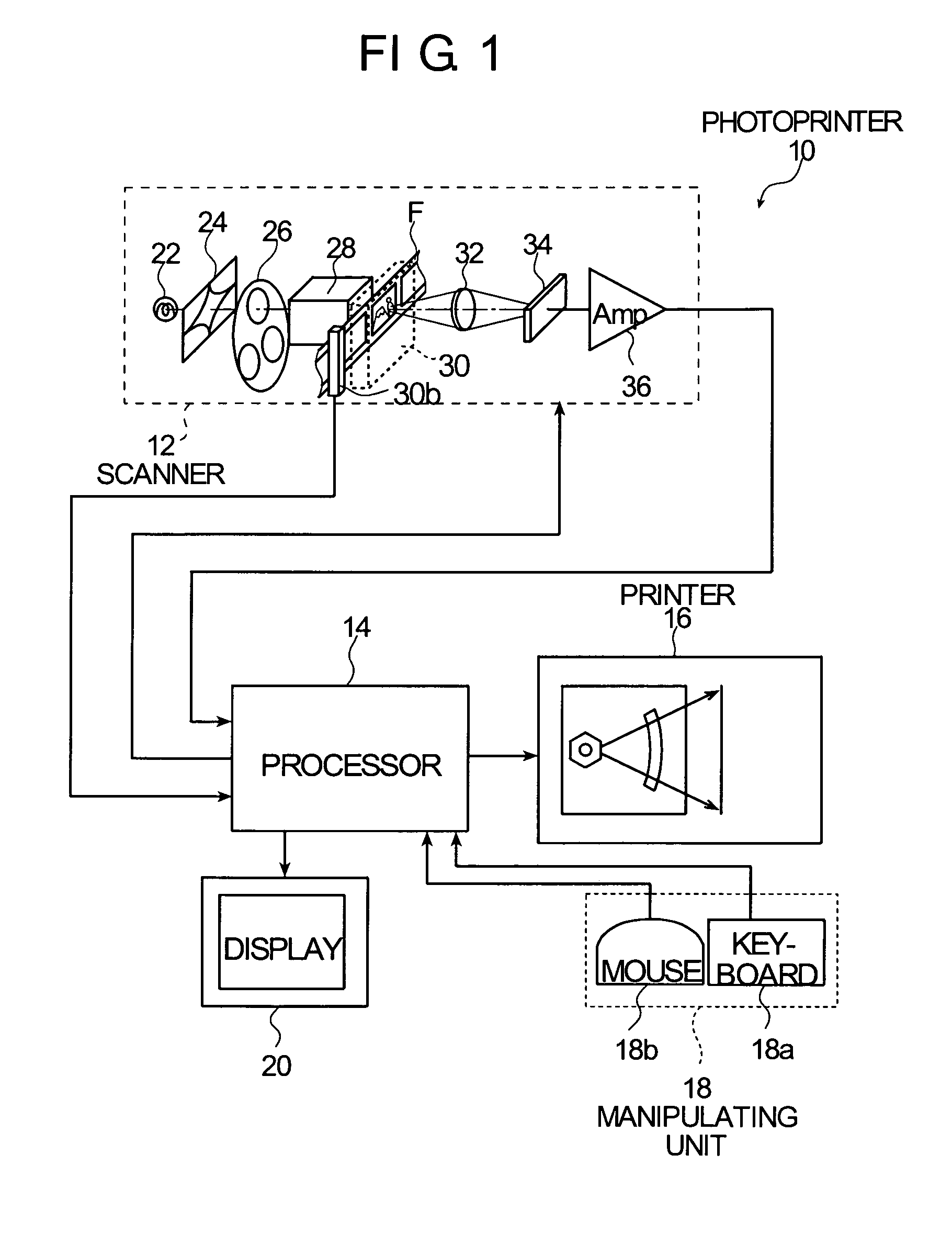
[0036]FIG. 1 is a block diagram for an exemplary digital photoprinter using the image processing apparatus of the invention. The digital photoprinter generally indicated by 10 in FIG. 1 and which is hereinafter referred to simply as the “photoprinter” basically comprises: a scanner (image reading apparatus) 12 that reads the image on a film F photoelectrically; an image processing apparatus 14 that performs image processing of the thus read image data (image information), that selects, sets and changes the image processing conditions, and that allows for manipulation, control and otherwise of the photoprinter 10 in its entirety; and a printer (image recording apparatus) 16 that exposes a light-sensitive material A imagewise with optical beams modulated in accordance with the image data processed in the image processing ap...
PUM
 Login to View More
 Abstract
Description
Claims
Application Information
 Login to View More