Ad-hoc network for routing extension to support Internet protocol version 6 (IPv6) and method thereof

a routing extension and network technology, applied in the field of ad-hoc networks, can solve the problems of routing instability and inability to complete address configuration

US7263075B2Active Publication Date: 2007-08-28SAMSUNG ELECTRONICS CO LTD
6 Cites 29 Cited by

Patent Information

Authority / Receiving Office
US · United States
Patent Type
Patents(United States)
Current Assignee / Owner
Publication Date
2007-08-28

Smart Images

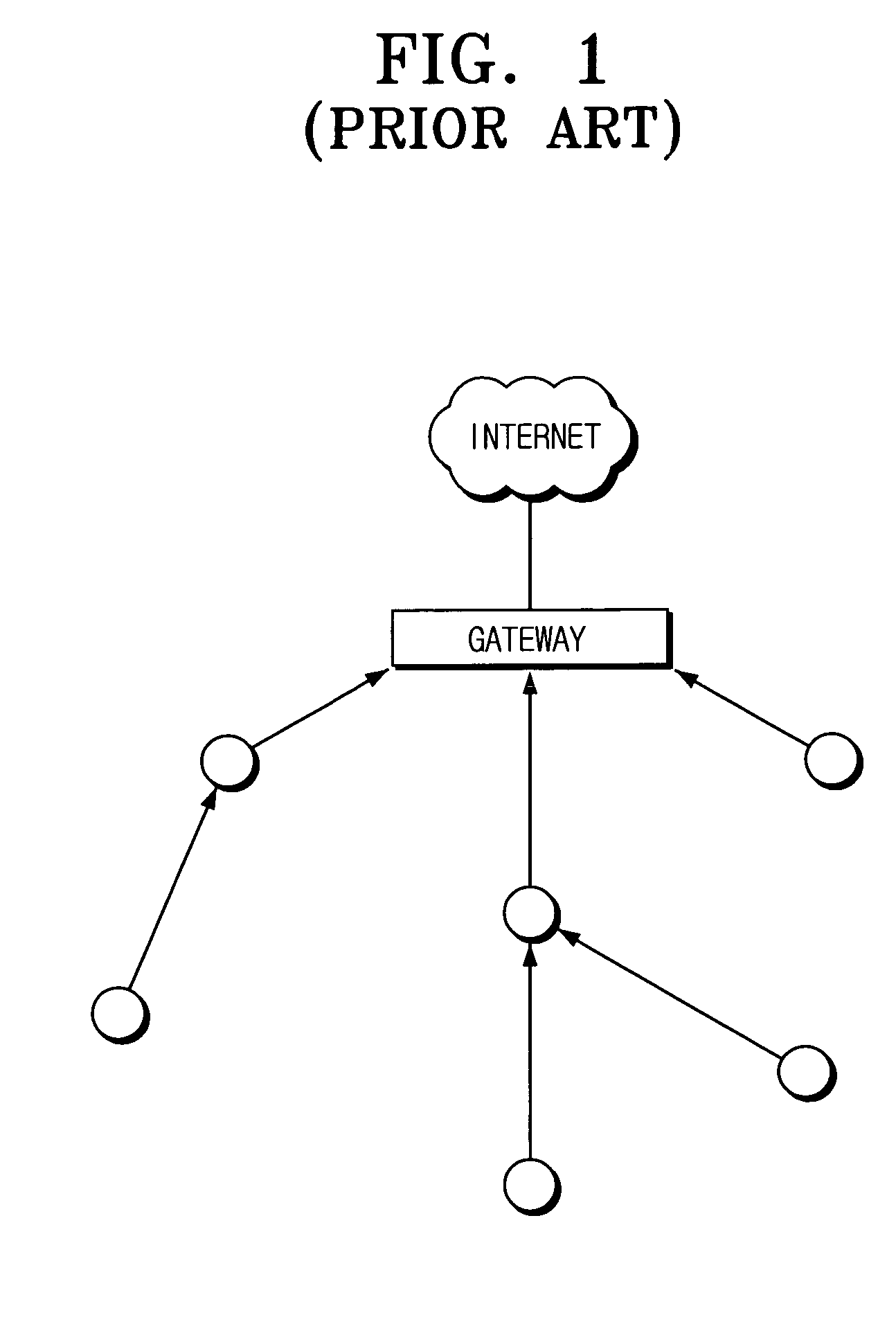
  • Figure 1
    Figure 1
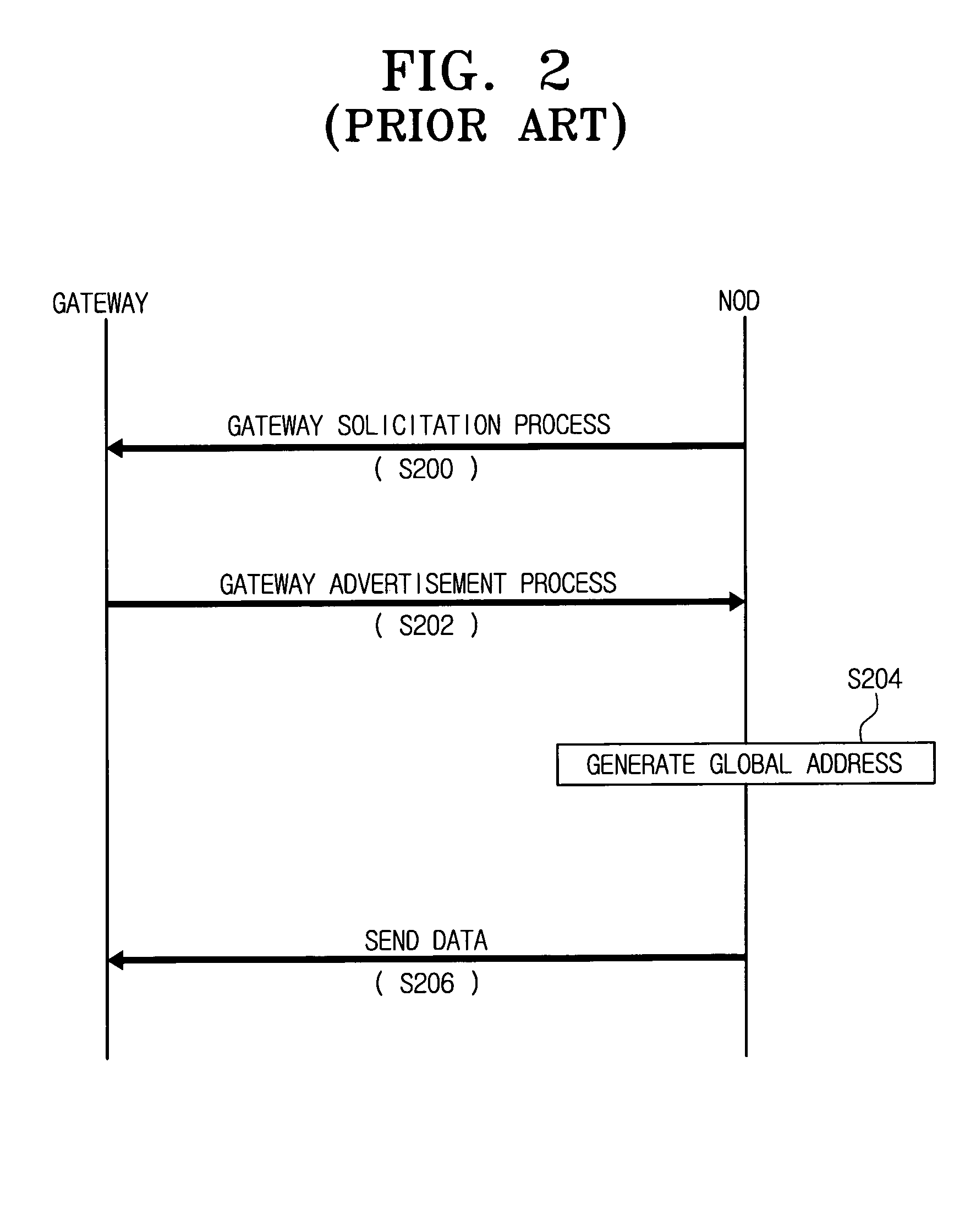
  • Figure 2
    Figure 2
  • Figure 3
    Figure 3
Patent Text Reader

Abstract

An ad-hoc network for routing extension by supporting the IPv6 protocol and a method for routing extension. The ad-hoc network comprises a gateway for appending an address configuration message to an ad-hoc Routing REPly (RREP) message and transmitting an extended ad-hoc RREP message; and a node for separating the address configuration message from the received extended ad-hoc RREP message, establishing a packet transmission path using the ad-hoc RREP message, and configuring a global address using the separated address configuration message. Accordingly, the present invention provides efficiency and improves the network scalability by utilizing the existing IPv6 protocol without amendments and reducing the size of the packet transmitted.
Need to check novelty before this filing date? Find Prior Art

Description

CROSS-REFERENCE TO RELATED APPLICATIONS

[0001] This application claims priority under 35 U.S.C. § 119 (a) from Korean Patent Application No. 2004-113490 filed on Dec. 28, 2004 in the Korean Intellectual Property Office, the entire disclosure of which is incorporated herein by reference.BACKGROUND OF THE INVENTION

[0002] 1. Field of the Invention

[0003] The present invention relates generally to an ad-hoc network and a method for routing extension. More particularly, the present invention relates to an ad-hoc network for routing data to Internet via a gateway and a method for routing extension.

[0004] 2. Description of the Related Art

[0005] Typically, a mobile communication system delivers data between a mobile element and a base station. The mobile element directly transmits to and receives from the base station data without passing through any other mobile elements or nodes. Meanwhile, when data originated from a certain node are transmitted to a gateway over an ad-hoc network, other nodes ...

Examples

Embodiment Construction

[0047]Certain exemplary embodiments of the present invention will now be described in greater detail with reference to the accompanying drawings.

[0048]In the following description, same drawing reference numerals are used for the same elements even in different drawings. The matters defined in the description, such as detailed construction and element descriptions, are provided to assist in a comprehensive understanding of the invention. Also, well-known functions or constructions are not described in detail since they would obscure the invention in unnecessary detail.

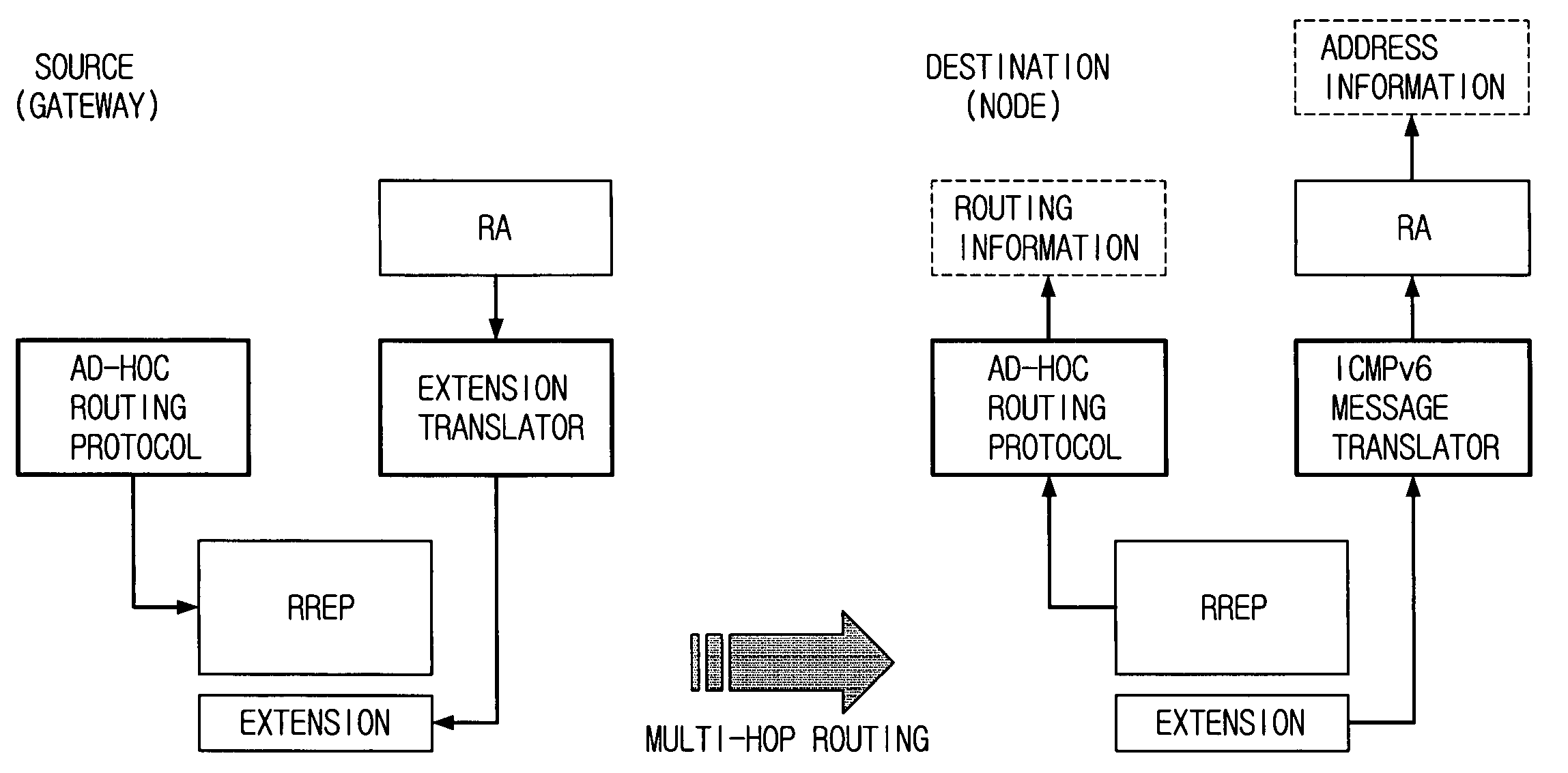
[0049]FIG. 4A schematically illustrates a routing extension method according to an embodiment of the present invention.

[0050]Referring to FIG. 4A, the source is a gateway, and the destination is a node that requests routing to the gateway. The gateway, receiving a routing request from the node, sends an extended ad-hoc Routing REPly (RREP) message. The node establishes a packet transmission path to the gateway using th...