
Branching memory-bus module with multiple downlink ports to standard fully-buffered memory modules
a memory-bus module and memory-bus link technology, applied in computing, instruments, climate sustainability, etc., can solve the problems of increasing the delay or latencies of data data processing memory modules, and affecting the performance of memory modules
- Summary
- Abstract
- Description
- Claims
- Application Information
AI Technical Summary
Problems solved by technology
Method used
Image

Examples
Embodiment Construction
[0034]The present invention relates to an improvement in memory buses for memory modules. The following description is presented to enable one of ordinary skill in the art to make and use the invention as provided in the context of a particular application and its requirements. Various modifications to the preferred embodiment will be apparent to those with skill in the art, and the general principles defined herein may be applied to other embodiments. Therefore, the present invention is not intended to be limited to the particular embodiments shown and described, but is to be accorded the widest scope consistent with the principles and novel features herein disclosed.
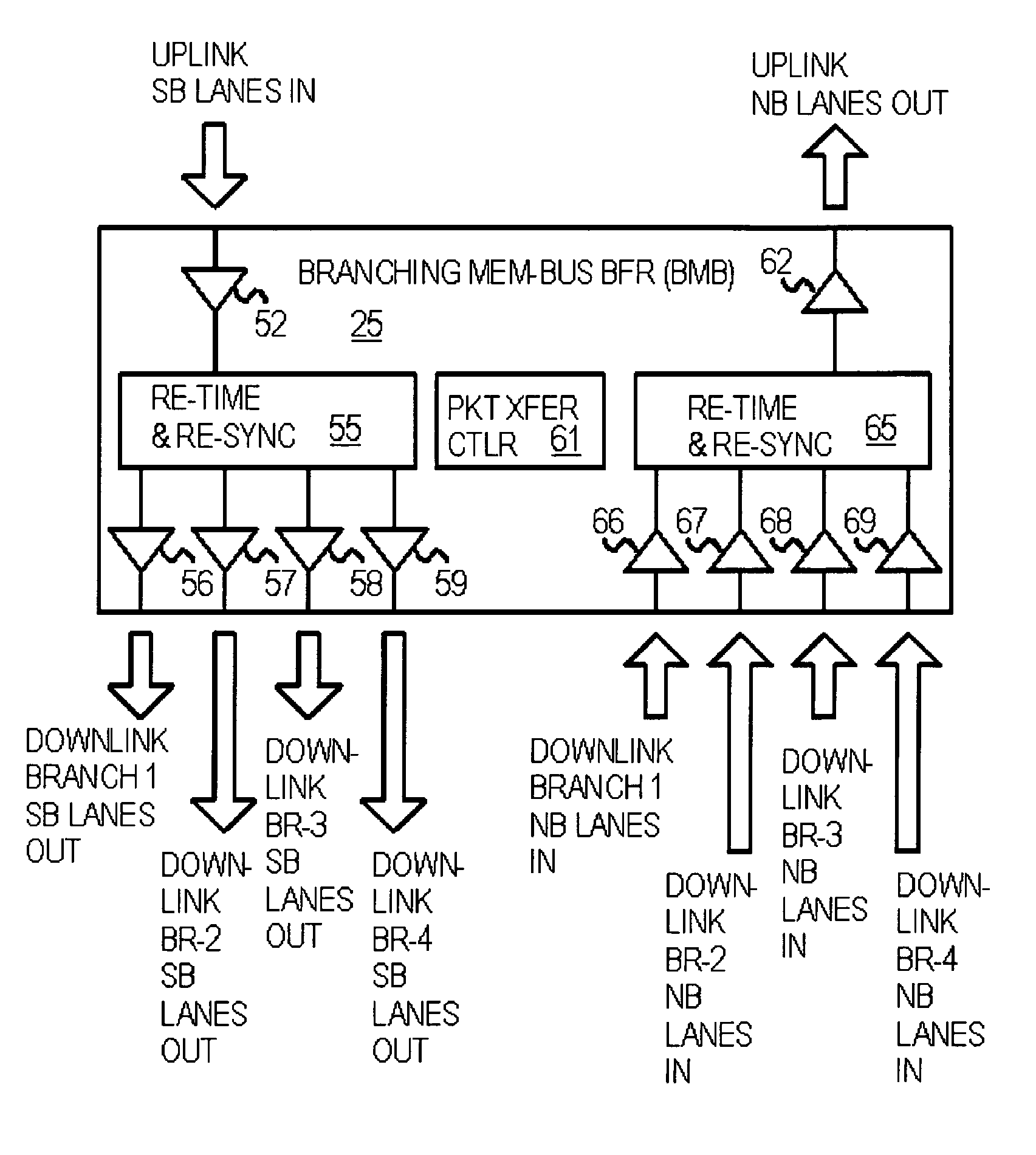
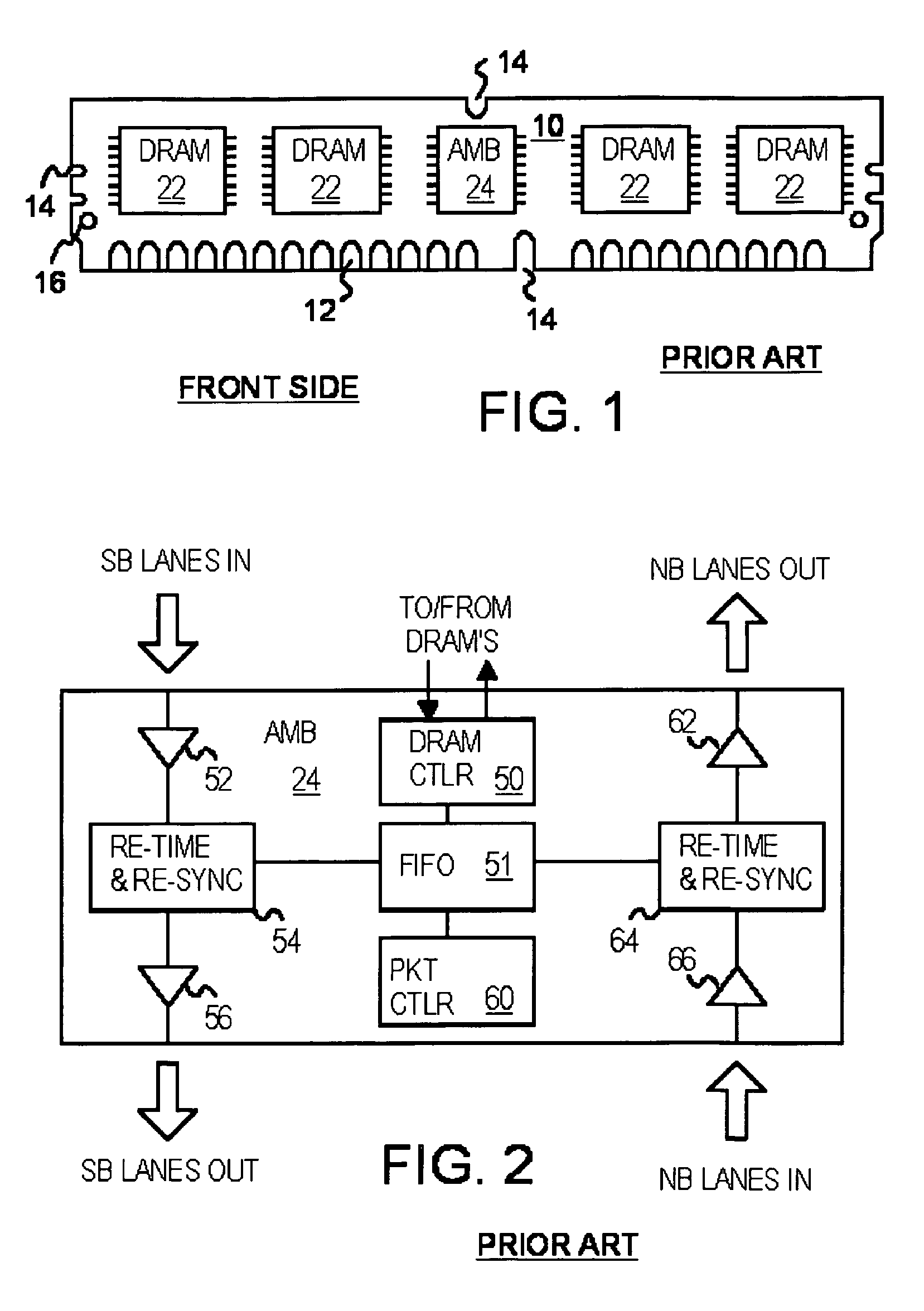
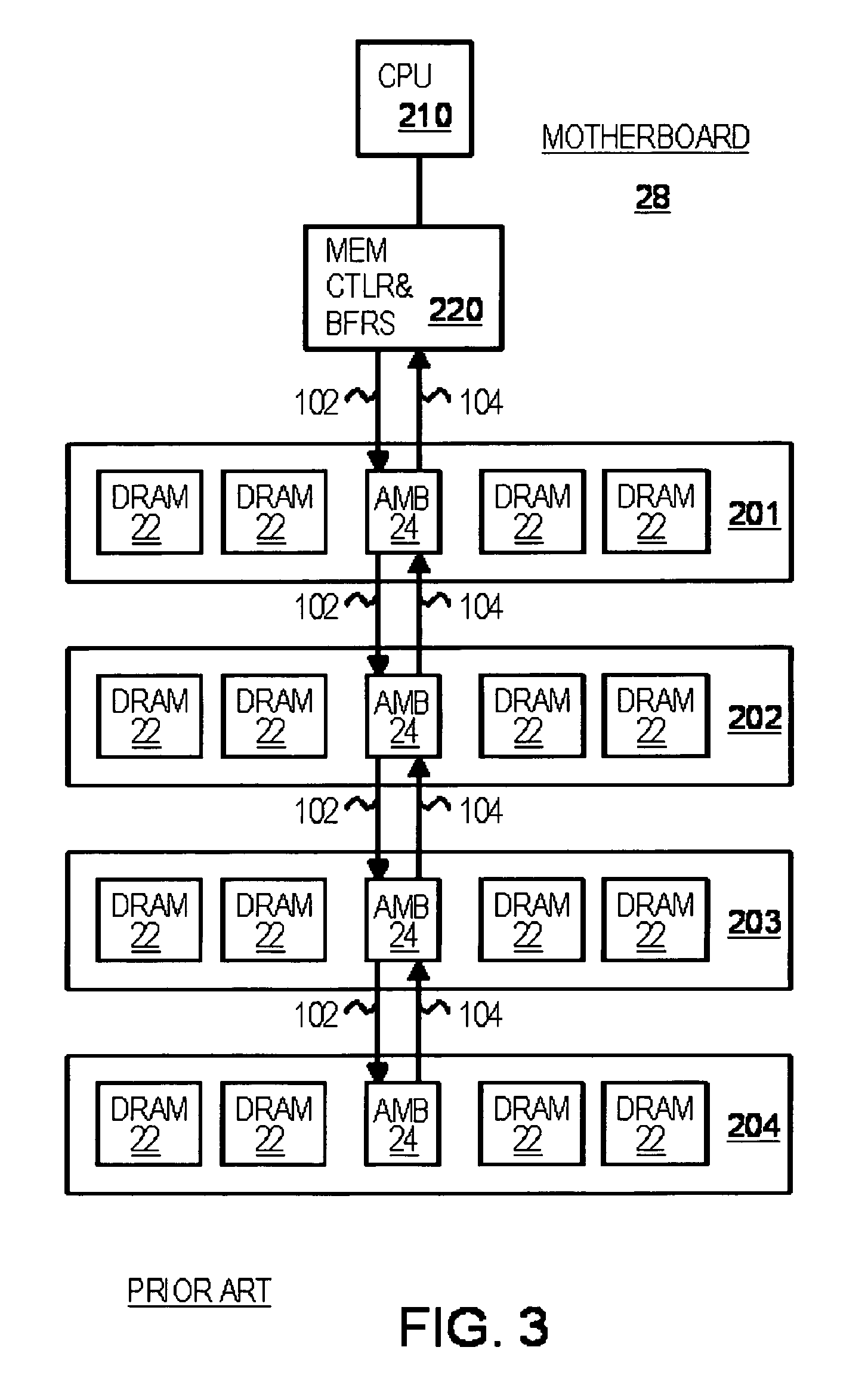
[0035]The inventor has realized that the serial chain topology used by fully-buffered memory modules is undesirable for larger memory systems. Current AMB's have only one uplink port and one downlink port, resulting in a serial daisy chain topology. The inventor realizes that branches in the bus topology may be introdu...
PUM
 Login to View More
 Abstract
Description
Claims
Application Information
 Login to View More