
System and method for budgeted zone heating and cooling
a budgeted zone and heating and cooling technology, applied in the field of system and method for budgeted zone heating and cooling, can solve the problems of not being able to completely accommodate the seasonal variation of non-zoned systems, the cost of equipment currently used in a zoned system is relatively high, and the installation of a zoned hvac system, or the retrofitting of an existing system, is far beyond the capability of most homeowners, and achieves the effect of hardening and hardening the temperatur
- Summary
- Abstract
- Description
- Claims
- Application Information
AI Technical Summary
Benefits of technology
Problems solved by technology
Method used
Image

Examples
Embodiment Construction
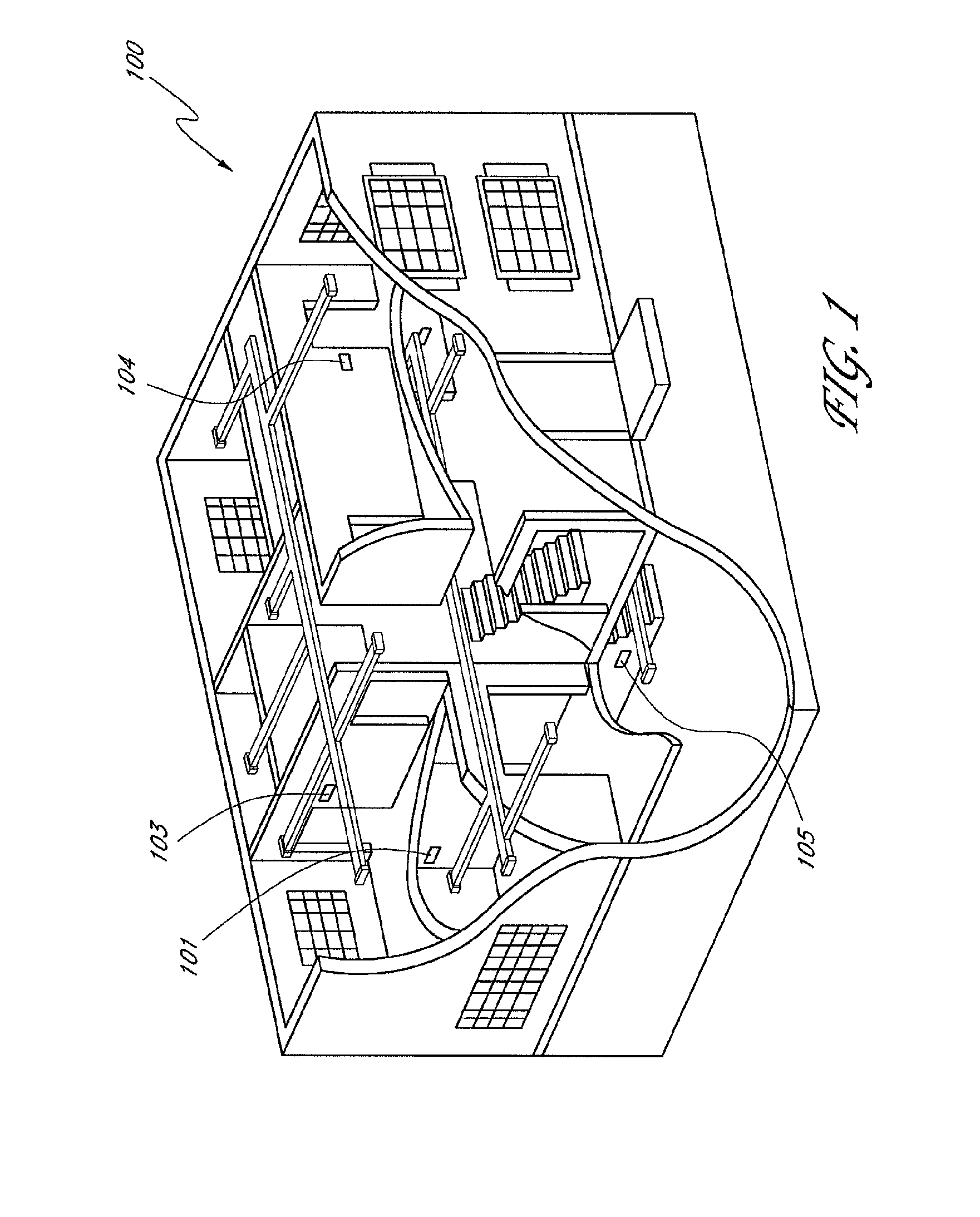
[0043]FIG. 1 shows a home 100 with zoned heating and cooling. In the home 100, an HVAC system provides heating and cooling air to a system of ducts. Sensors 101-105 monitor the temperature in various areas (zones) of the house. A zone can be a room, a floor, a group of rooms, etc. The sensors 101-105 detect where and when heating or cooling air is needed. Information from the sensors 101-105 is used to control actuators that adjust the flow of air to the various zones. The zoned system adapts to changing conditions in one area without affecting other areas. For example, many two-story houses are zoned by floor. Because heat rises, the second floor usually requires more cooling in the summer and less heating in the winter than the first floor. A non-zoned system cannot completely accommodate this seasonal variation. Zoning, however, can reduce the wide variations in temperature between floors by supplying heating or cooling only to the space that needs it.
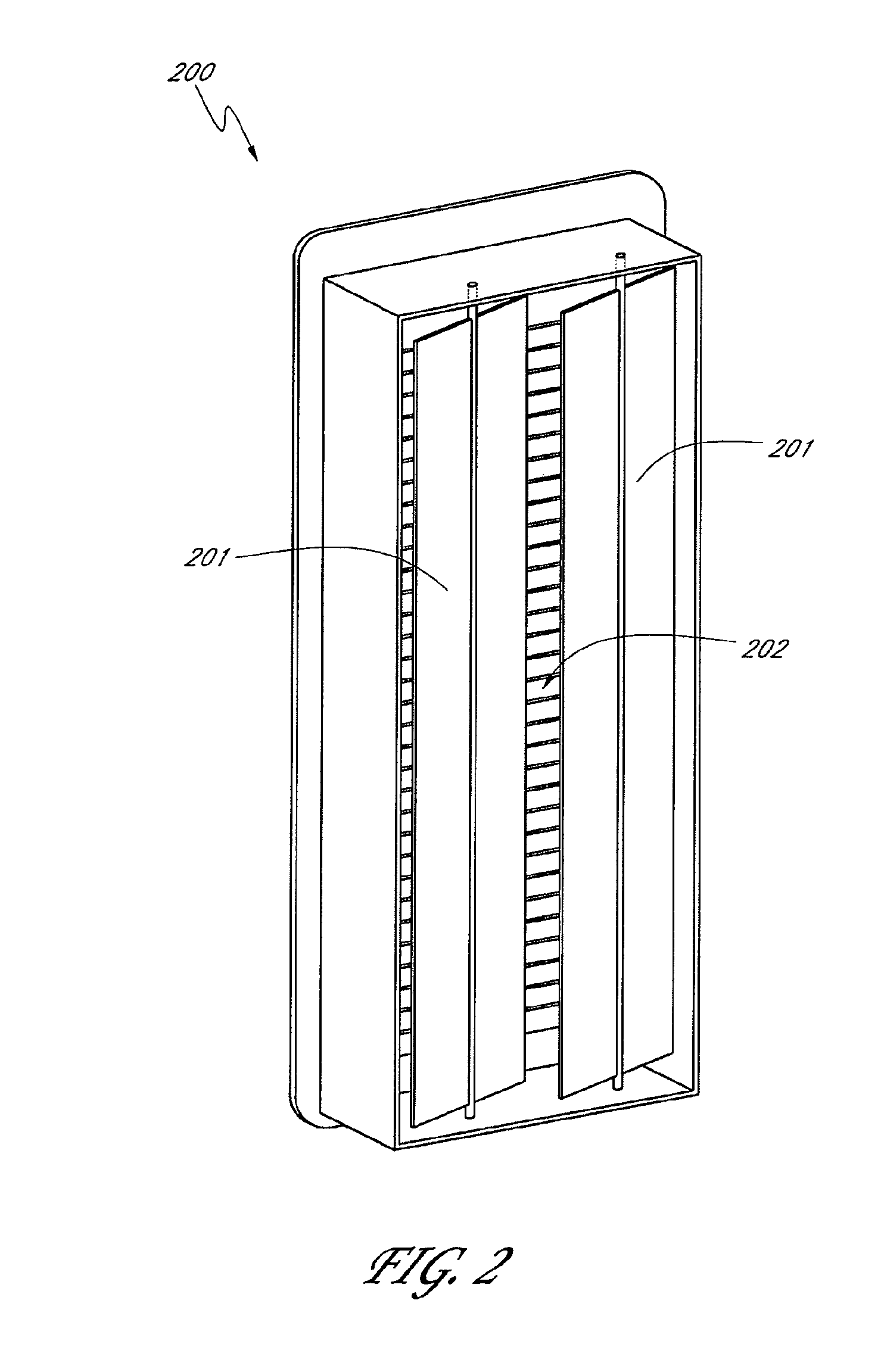
[0044]FIG. 2 shows one examp...
PUM
 Login to View More
 Abstract
Description
Claims
Application Information
 Login to View More