
Acousto-magnetic anti-theft alarming unit with magnetic detacher
a magnetic detachable and acoustomagnetic technology, applied in the direction of burglar alarm mechanical actuation, magnetism bodies, instruments, etc., can solve the problem of strong clamping, achieve the effect of reducing storage costs, reducing manufacturing costs, and being easy to detach
- Summary
- Abstract
- Description
- Claims
- Application Information
AI Technical Summary
Benefits of technology
Problems solved by technology
Method used
Image

Examples
Embodiment Construction
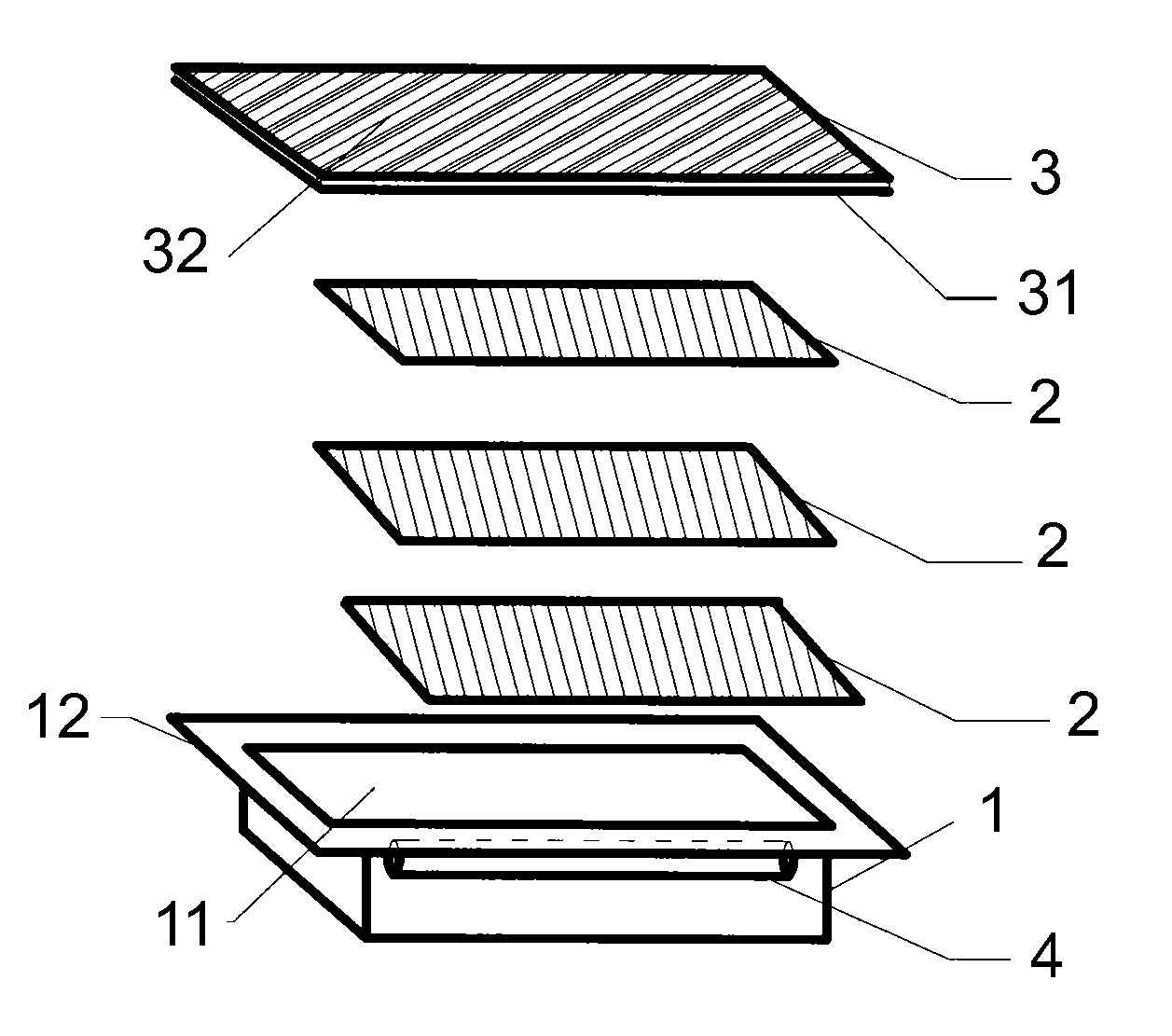
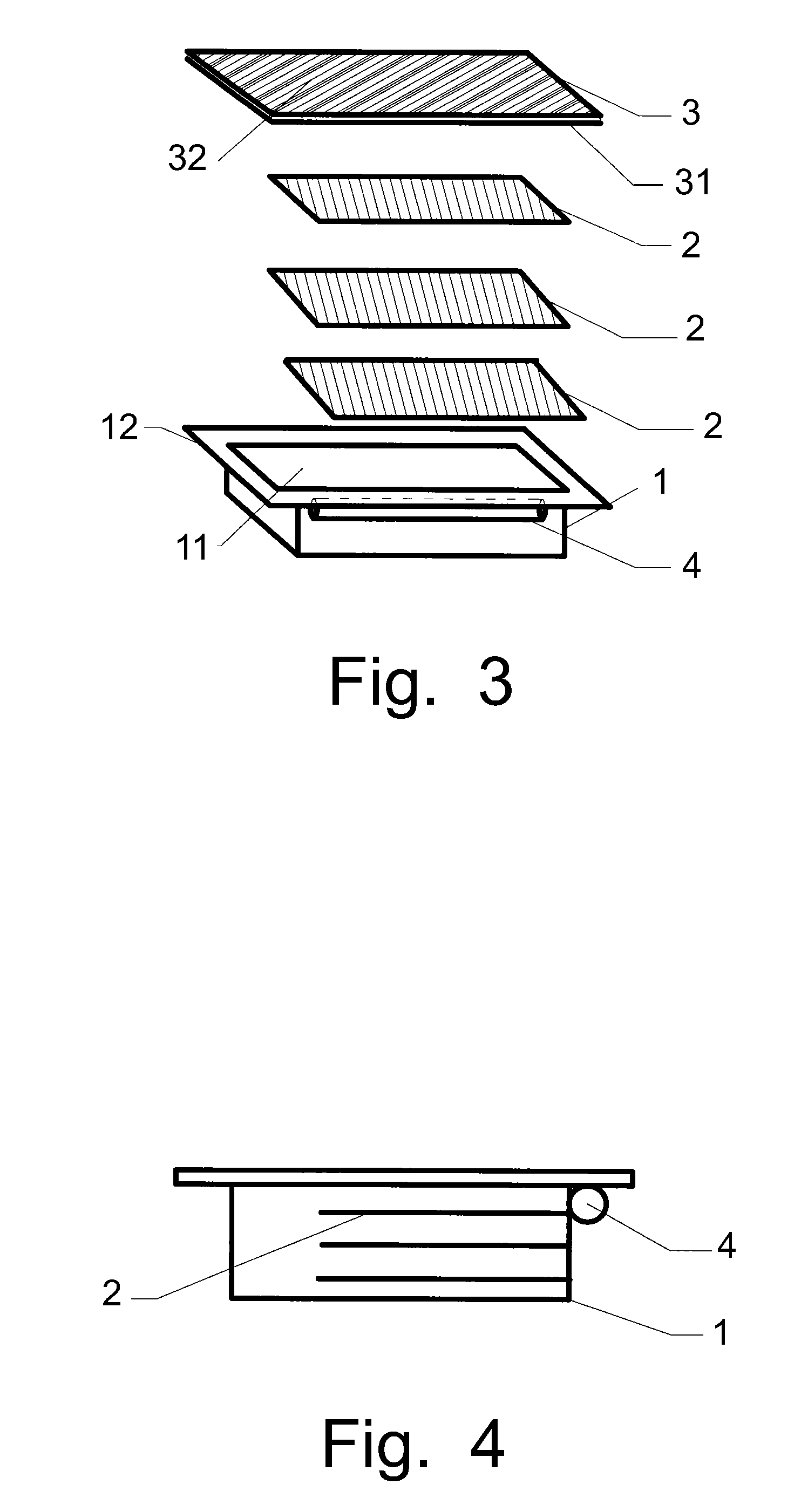
[0029]Referring now to FIGS. 3 and 4, a first embodiment of the acouto-magnetic anti-theft alarming unit incorporating the principles of the instant invention can best be seen. The alarming unit depicted in FIGS. 3 and 4 can be placed inside an AM clamp that can use a magnetic detacher to take the pin out, includes a housing (1) preferably made of a plastic material formed in a rectangular shape. A cavity (11) is defined in the housing (1) where three essentially identical resonators (2) are flatly laid inside. The resonators (2) are smaller than the cavity (11) in size, and are preferably rectangular shape, with the length dimension being substantially the same as the length dimension of the housing (1).
[0030]A flange (12) is formed around the perimeter border of the resonator housing (1) with the cover (3) being sized to mate with the flange (12) around the housing (1). The cover (3) includes a cover film (32) and double glue tape (31), which is placed on the lower surface edge of...
PUM
| Property | Measurement | Unit |
|---|---|---|
| coercivity | aaaaa | aaaaa |
| current coercivity | aaaaa | aaaaa |
| current coercivity | aaaaa | aaaaa |
Abstract
Description
Claims
Application Information
 Login to View More