
Door breach training system
a training system and door technology, applied in the field of training devices for public safety and military personnel, can solve the problems of high destructive type of action, and achieve the effect of effective defea
- Summary
- Abstract
- Description
- Claims
- Application Information
AI Technical Summary
Benefits of technology
Problems solved by technology
Method used
Image

Examples
Embodiment Construction
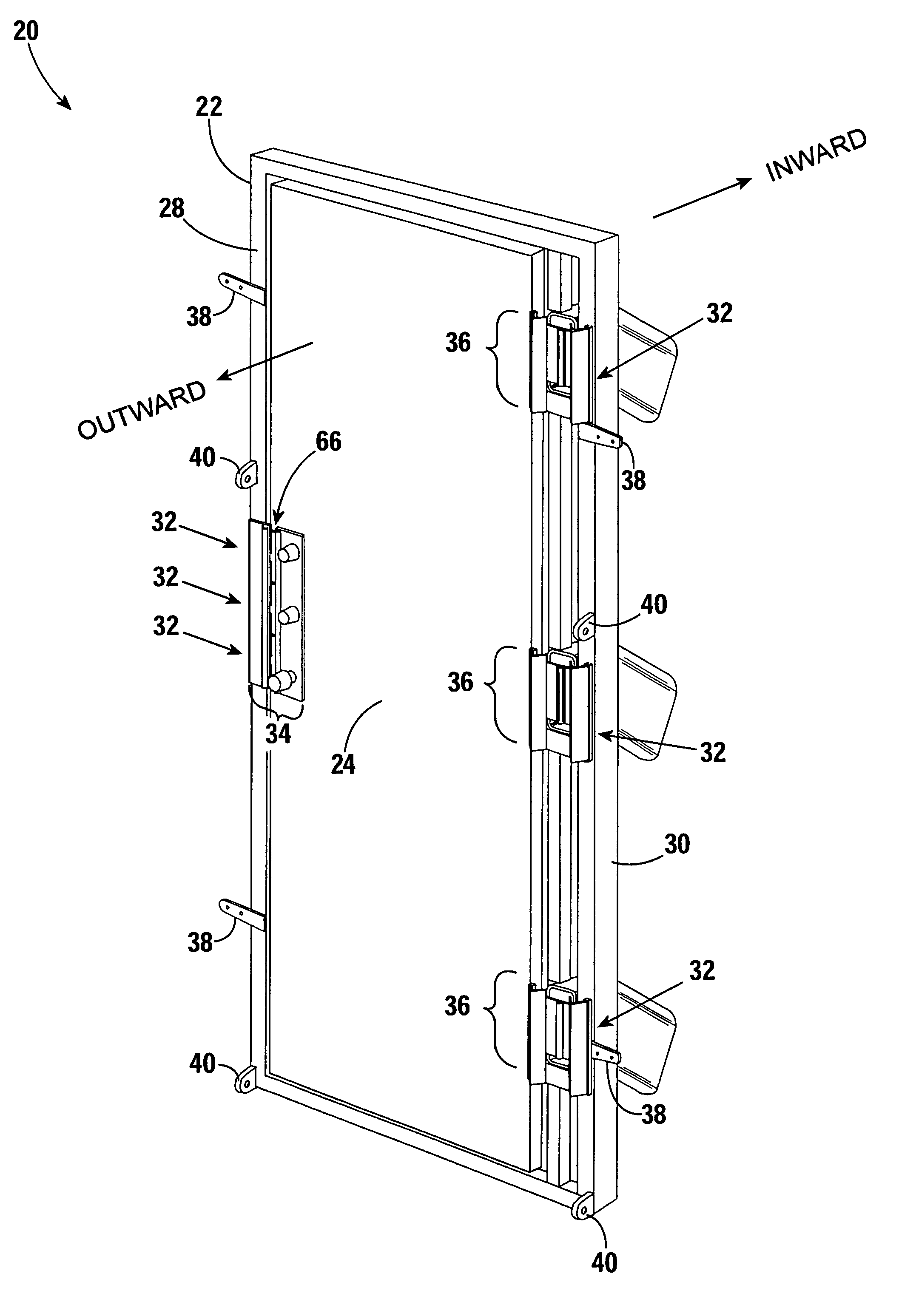
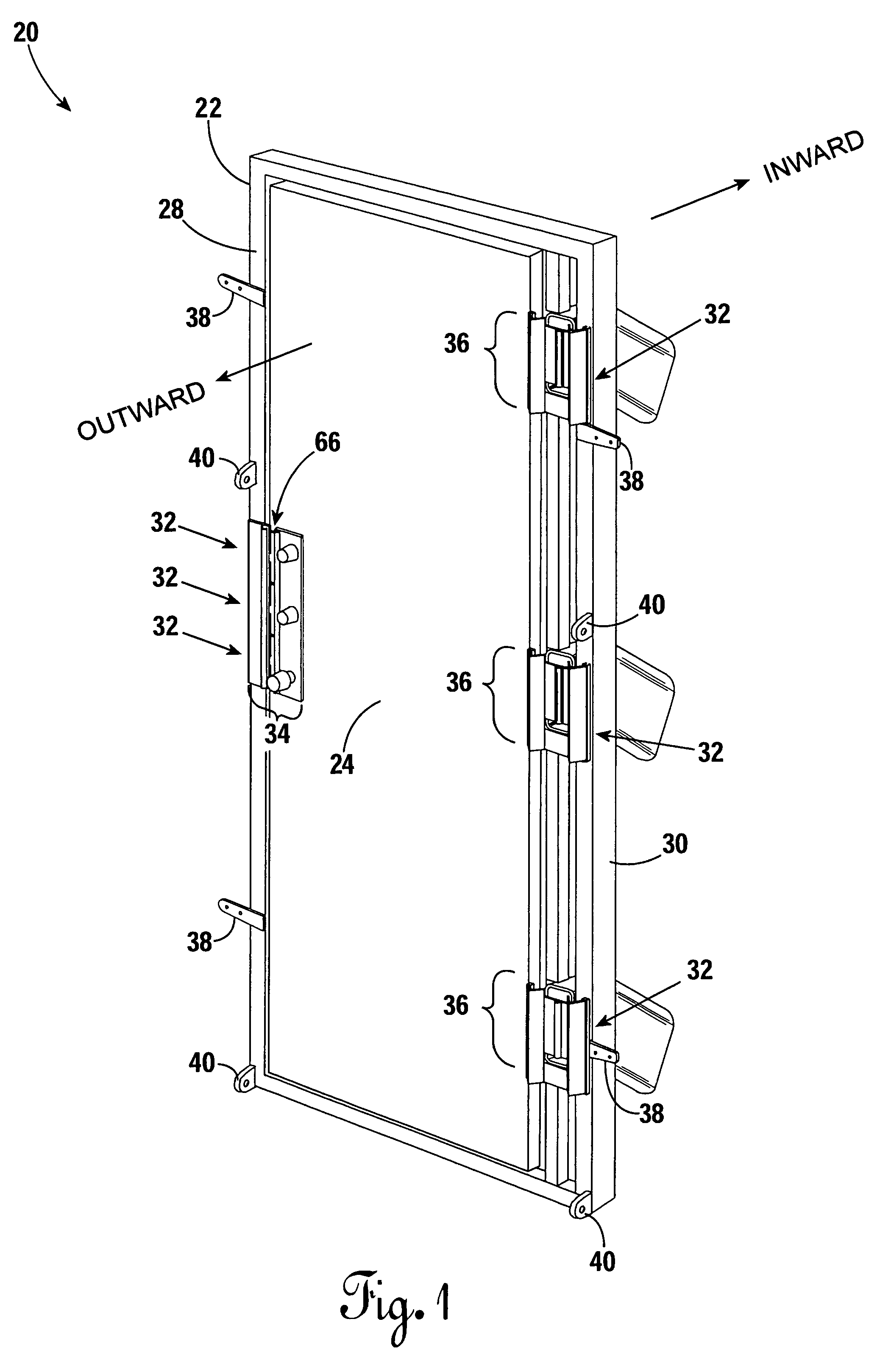
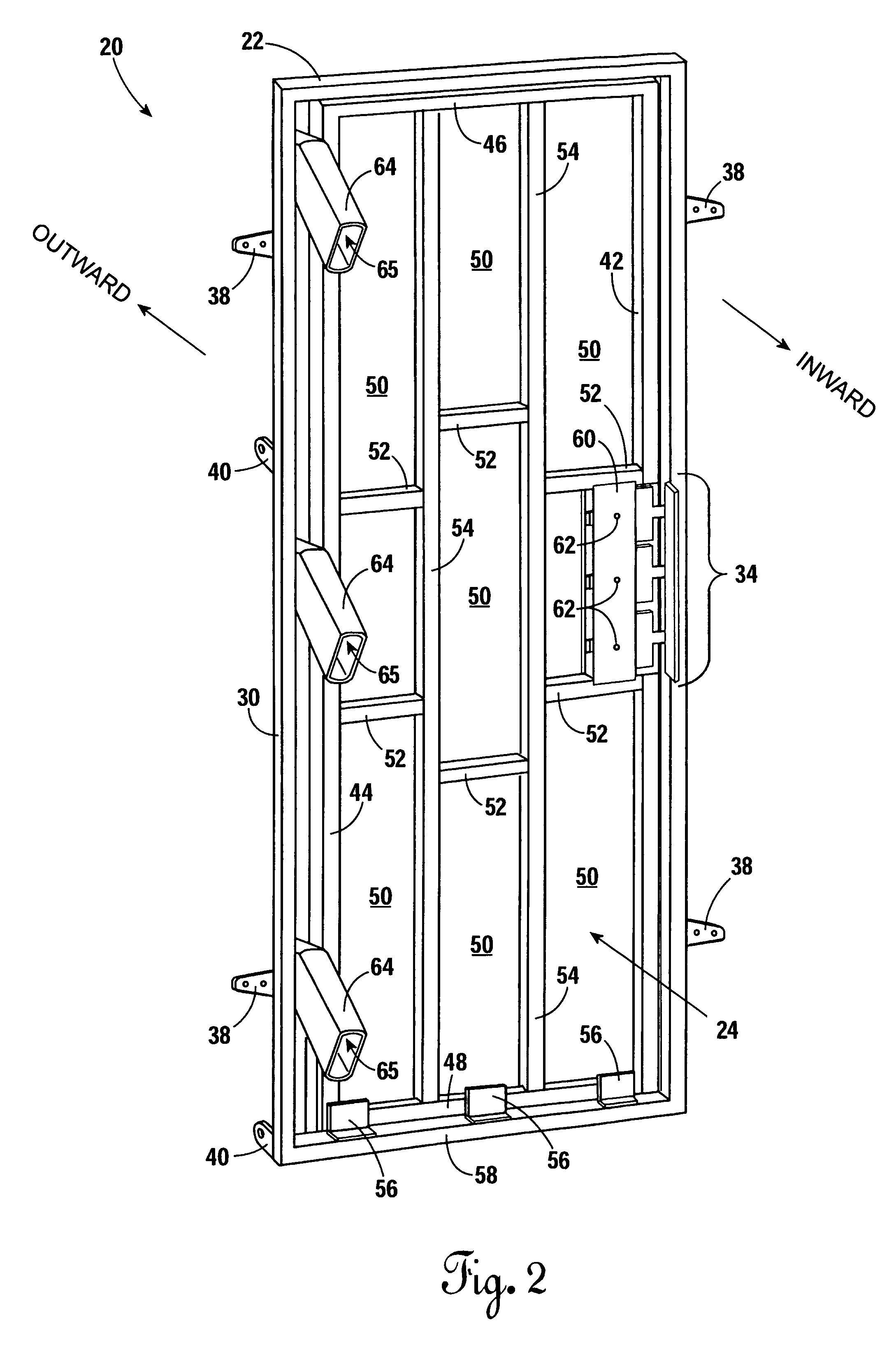
[0023]The present invention is a door breach training system that replicates the scenarios encountered when performing an actual ballistic door breach. The system addresses the two major problems associated with breach training: first, the expense involved in supplying realistic doors that are destroyed after each breach, and second, forcing a trainee to properly place shots to effectively defeat the lock mechanisms and / or hinge mechanisms that attach the door to the frame. As used herein, “inward side” and “inward direction” refer to the side of the system and direction into which the door would open were it functional as an actual door. Similarly, “outward side” and “outward direction” refer to the side of the system and direction toward which the simulated breach is being conducted by the trainee.
[0024]FIG. 1 is a front isometric view of the preferred embodiment of the door breach training system 20. The system 20 comprises a frame 22 adapted to support a door 24. The door 24 is ...
PUM
 Login to View More
 Abstract
Description
Claims
Application Information
 Login to View More