
Shutter panel having louvers aligned along a single plane
a technology of louvers and shutters, applied in the field of shutter panels, can solve the problem of relatively ungainly appearance of shutters, and achieve the effect of attractive design and encouraging movemen
- Summary
- Abstract
- Description
- Claims
- Application Information
AI Technical Summary
Benefits of technology
Problems solved by technology
Method used
Image

Examples
Embodiment Construction
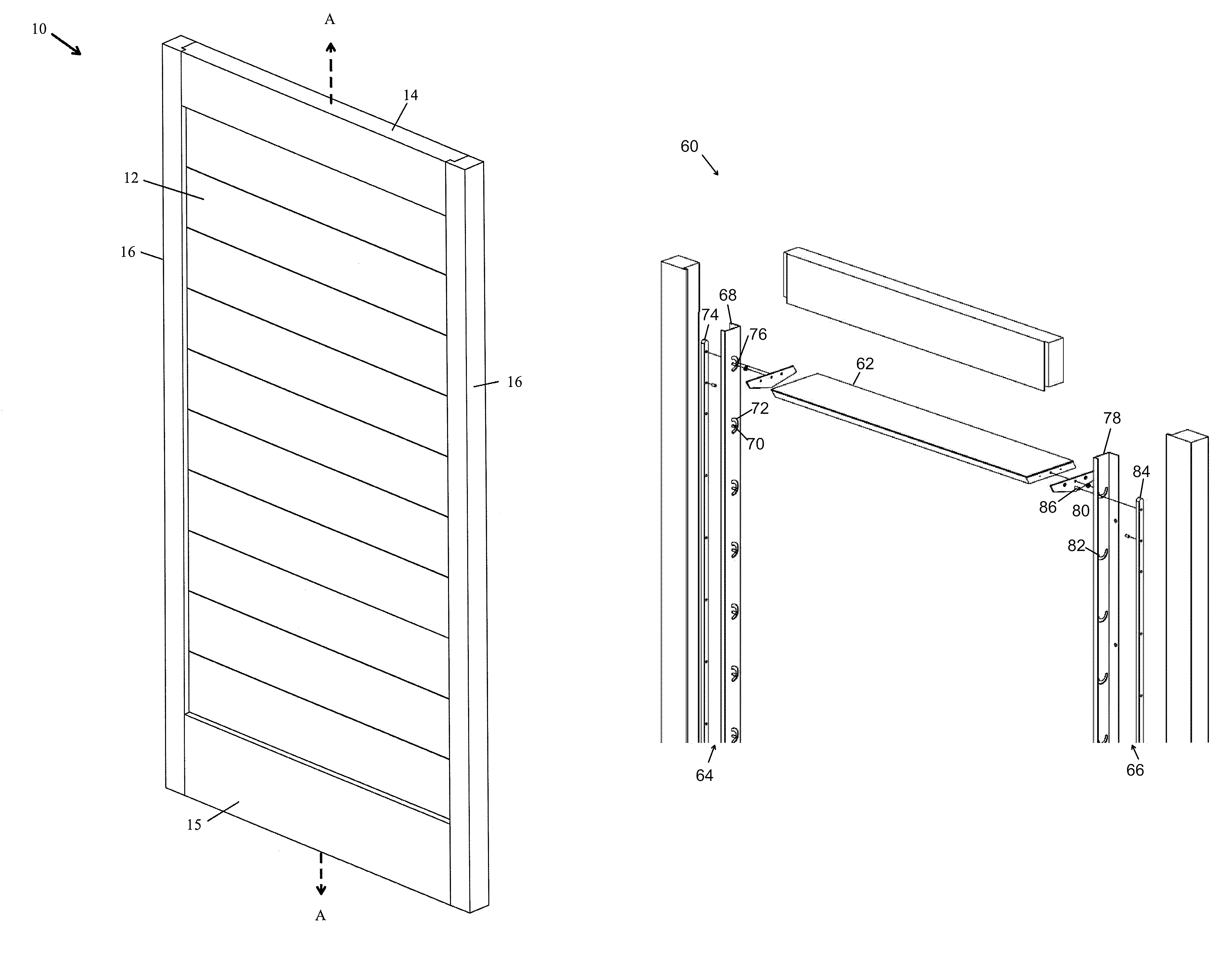
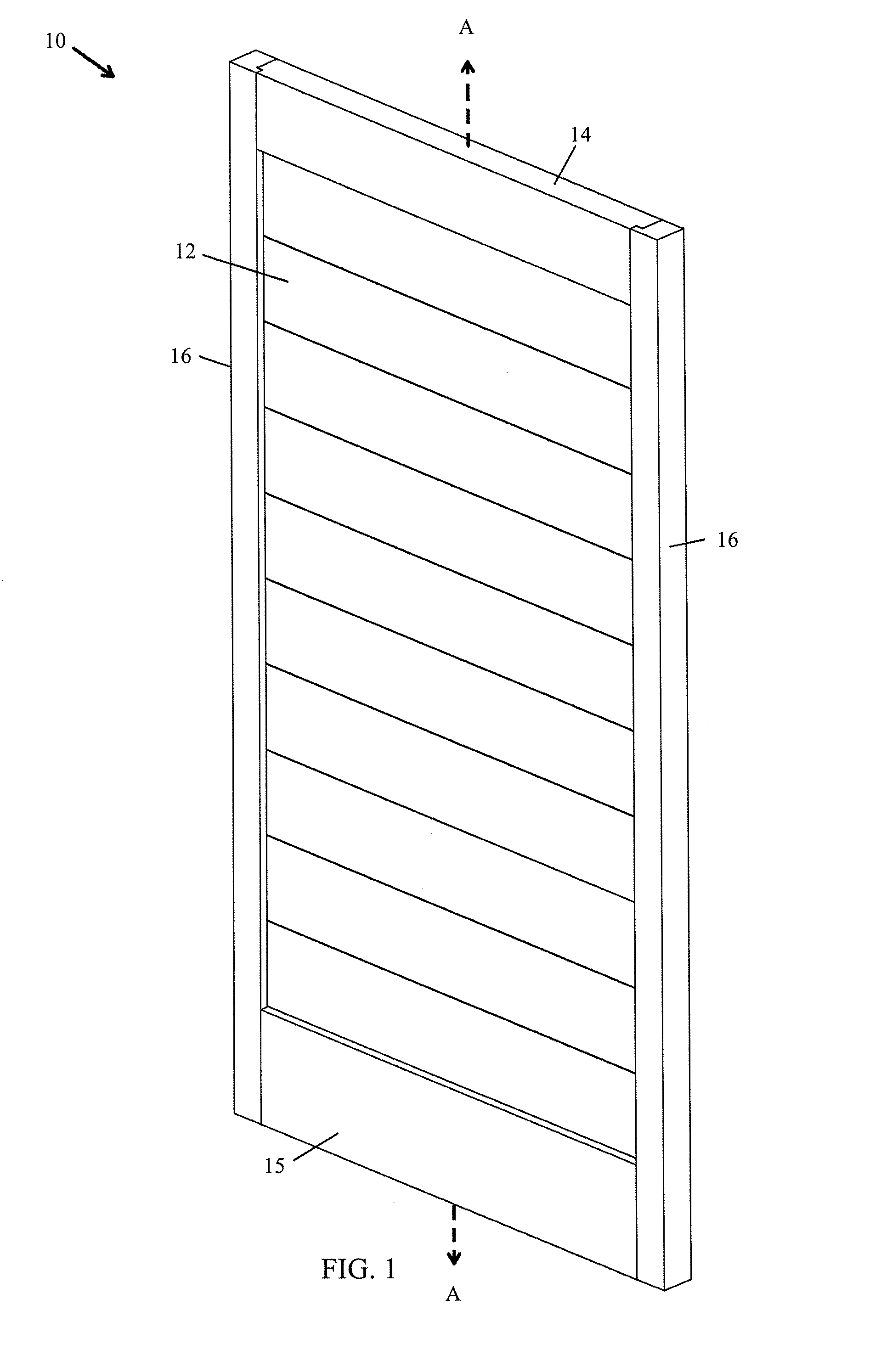
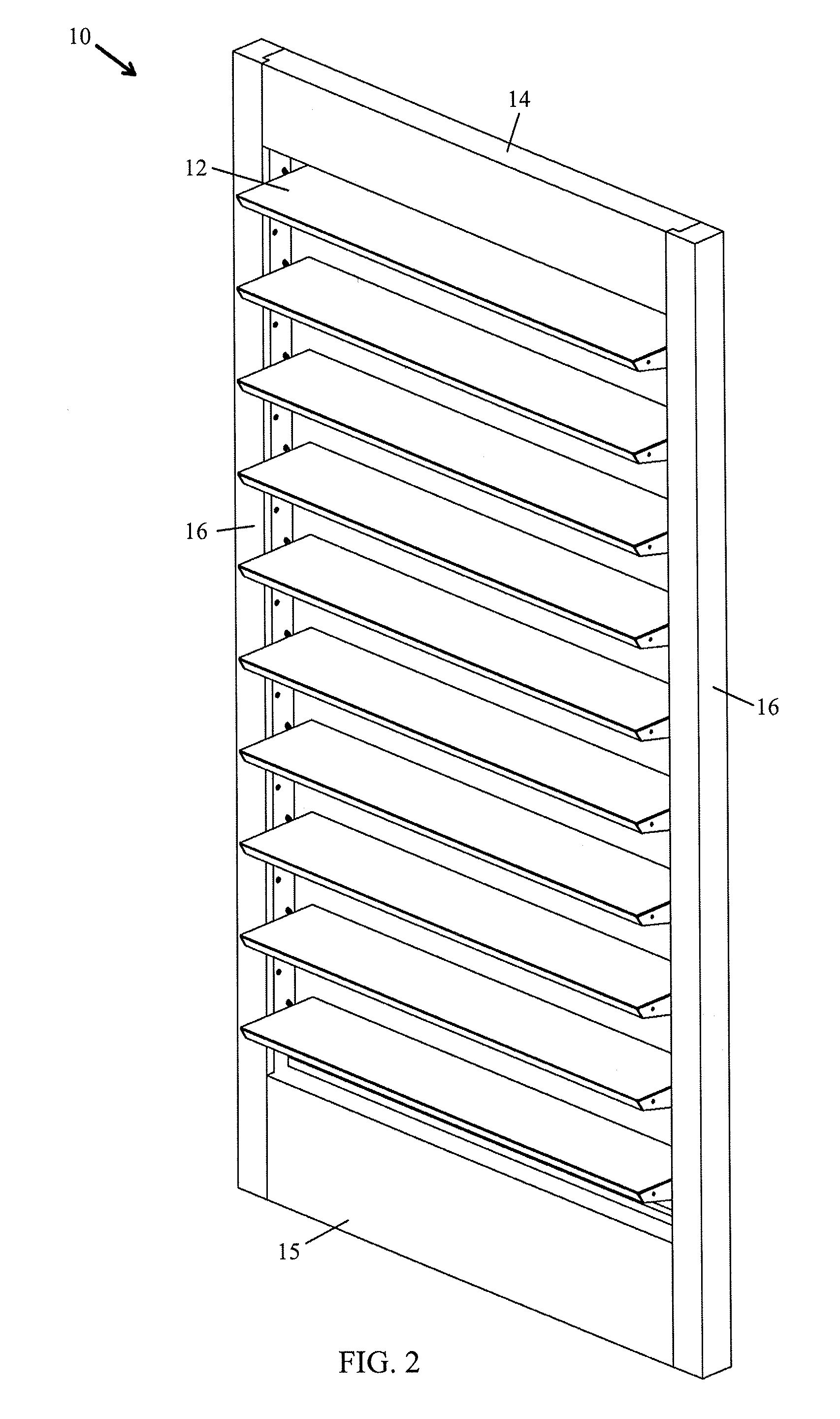
[0024]Referring now to the drawings, wherein like reference numerals refer to like parts throughout, there is seen in FIG. 1 a shutter 10 comprising a series of louvers 12 according to the present invention. Shutter 10 is in the closed position, where each louver 12 extends along a common plane A-A and presents a substantially flat surface without any overlapping of adjacent louvers 12 as with conventional designs. Shutter 10 further comprises a top rail 14 and a bottom rail 15, both of which extend horizontally between two, spaced apart vertical stiles 16. Similarly, louvers 12 also extend horizontally between stiles 16 and are attached thereto for pivotal movement, as will be described in detail herein. As seen in FIG. 2, louvers 12 may be pivoted to open shutter 10 to allow light to pass through. Noticeably absent from shutter 10 is any external rod for movement of the louvers 12, or any overlapping of adjacent louvers 12, as a result of the positioning one or two driving mechani...
PUM
 Login to View More
 Abstract
Description
Claims
Application Information
 Login to View More