
Coating Composition of insulating heat for glass, and preparation method
A technology of thermal insulation coating and composition, applied in polyester coatings, epoxy resin coatings, reflective/signal coatings, etc., can solve the problems of low coating hardness, inability to take into account thermal insulation and transparency of coatings at the same time, etc. Curtain reduction, significant thermal insulation effect, and reduced power consumption
Patent Information
- Authority / Receiving Office
- CN · China
- Patent Type
- Patents(China)
- Current Assignee / Owner
- Publication Date
- 2012-12-05
- Estimated Expiration
- Not applicable · inactive patent
Smart Images
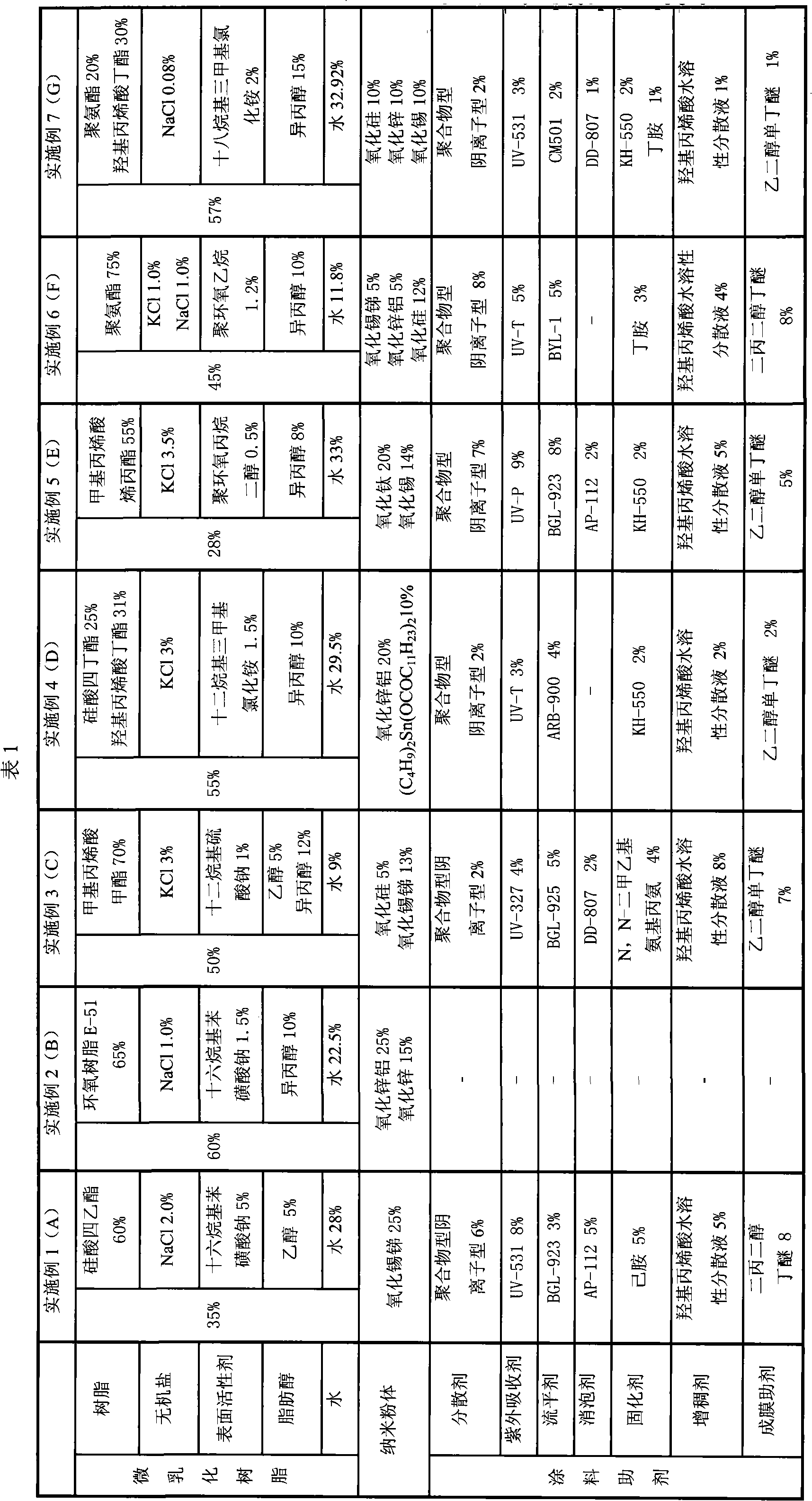
Figure 1
Abstract
Description
technical field
[0001] The invention relates to a thermal insulation coating composition for glass and a preparation method thereof. Background technique
[0002] The main source of heat for Earth's biosphere is the sun. The energy transfer is mainly based on sunlight, and through radiation, convection and conduction, the earth's environment absorbs heat and needs to release heat to achieve a suitable living and working temperature. At the same time, most buildings use glass as a window for lighting and viewing; however, glass will strengthen the ability to receive sunlight and be affected by the environment. According to analysis, the energy consumption of buildings accounts for 27% of the energy consumption of the whole society, and the doors and windows in buildings account for 40% of the energy consumption of buildings; In order to maintain a suitable temperature in the room, energy must be consumed. More than 40% of indoor energy consumption in metropolitan cities is...
Examples
Embodiment 1~7
[0037] Under the condition of 20°C, the required amount of resin, inorganic salt, surfactant, alcohol and water are mixed to prepare microemulsion resin. Then mix the required amount of nanometer powder, coating additives and the prepared microemulsion resin, and stir to prepare the thermal insulation coating compositions A to G for glass.
[0038] The components and weight percentages of each coating composition are shown in Table 1.
[0039]
[0040] in:
[0041] UV-531: 2-hydroxy-4-n-octyloxybenzophenone;
[0042] UV-P: 2-(2'-hydroxy-5'-methylphenyl)benzotriazole;
[0043] BGL-923: Acrylic Copolymer
[0044] UV-327: 2-(2'-Hydroxy-3',5'-di-tert-butylphenyl)-5-chlorobenzotriazole;
[0045] UV-T: 2-Phenylbenzimidazole-5-sulfonic acid
[0046] BYL-1: Acrylic acid copolymer
[0047] BGL-925: Acrylic Copolymer
[0048] CM501: Butyl Acrylate Homopolymer
[0049] AP-112: Modified polyorganosiloxane
[0050] ARB-900: Polyether modified polydimethylsiloxane copolymer
[...
Embodiment 8
[0055] The coating compositions A to G prepared in Examples 1 to 7 were coated on 6 mm float glass, and the performance comparison with uncoated glass is shown in Table 2.
[0056] Table 2
[0057] coating composition
Embodiment 9
[0059] The performance of coating composition A coated on 3 mm float glass compared with uncoated glass and 3 mm float amber glass is shown in Table 3.
[0060] table 3
[0061]