
Fungus capable of degrading multiple types of dyes under non-sterilization condition and application thereof
A kind of fungus and type of technology, which is applied in the direction of fungi, microorganism-based methods, textile industry wastewater treatment, etc., can solve the problems of widely varying application costs, achieve wide pH adaptability, reduce treatment costs, and require low nutrients Effect
Patent Information
- Authority / Receiving Office
- CN · China
- Patent Type
- Applications(China)
- Current Assignee / Owner
- Publication Date
- 2011-01-19
- Estimated Expiration
- Not applicable · inactive patent
Smart Images
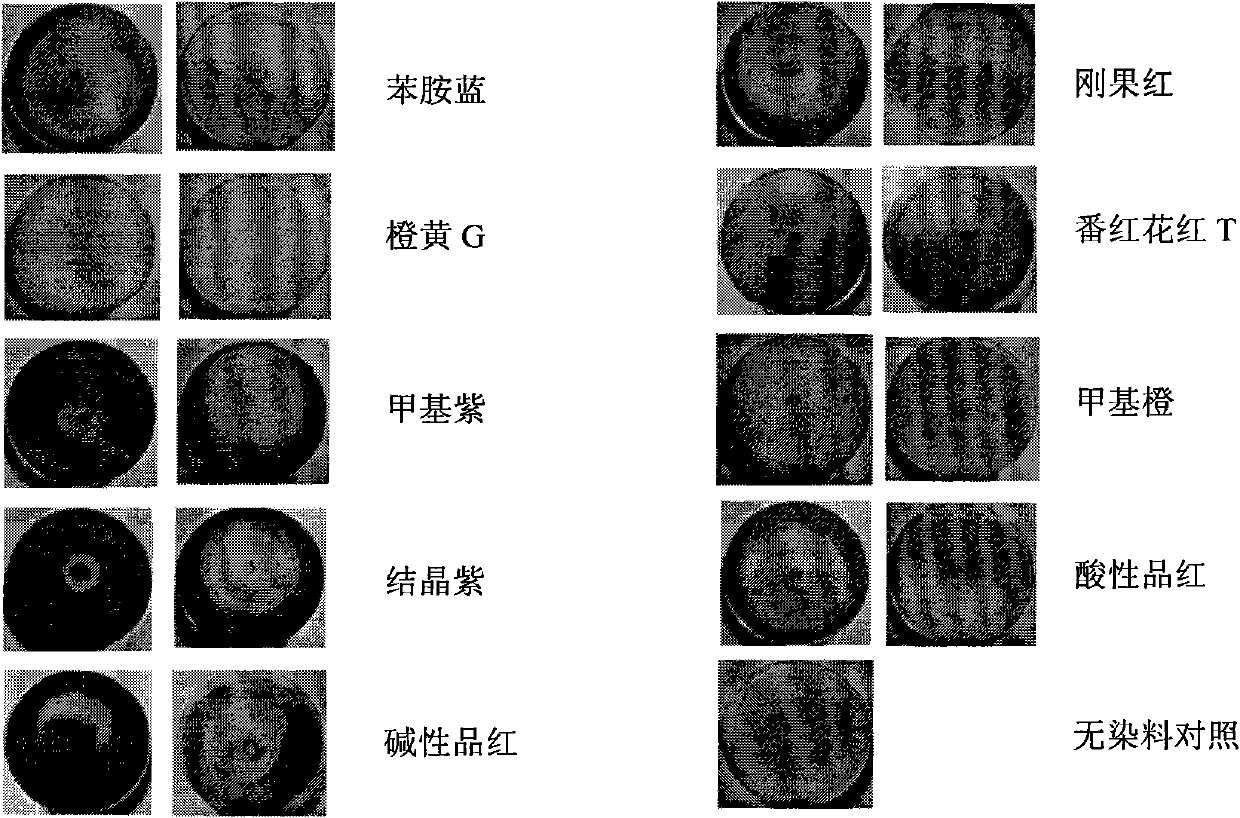
Figure 1 
Figure 2 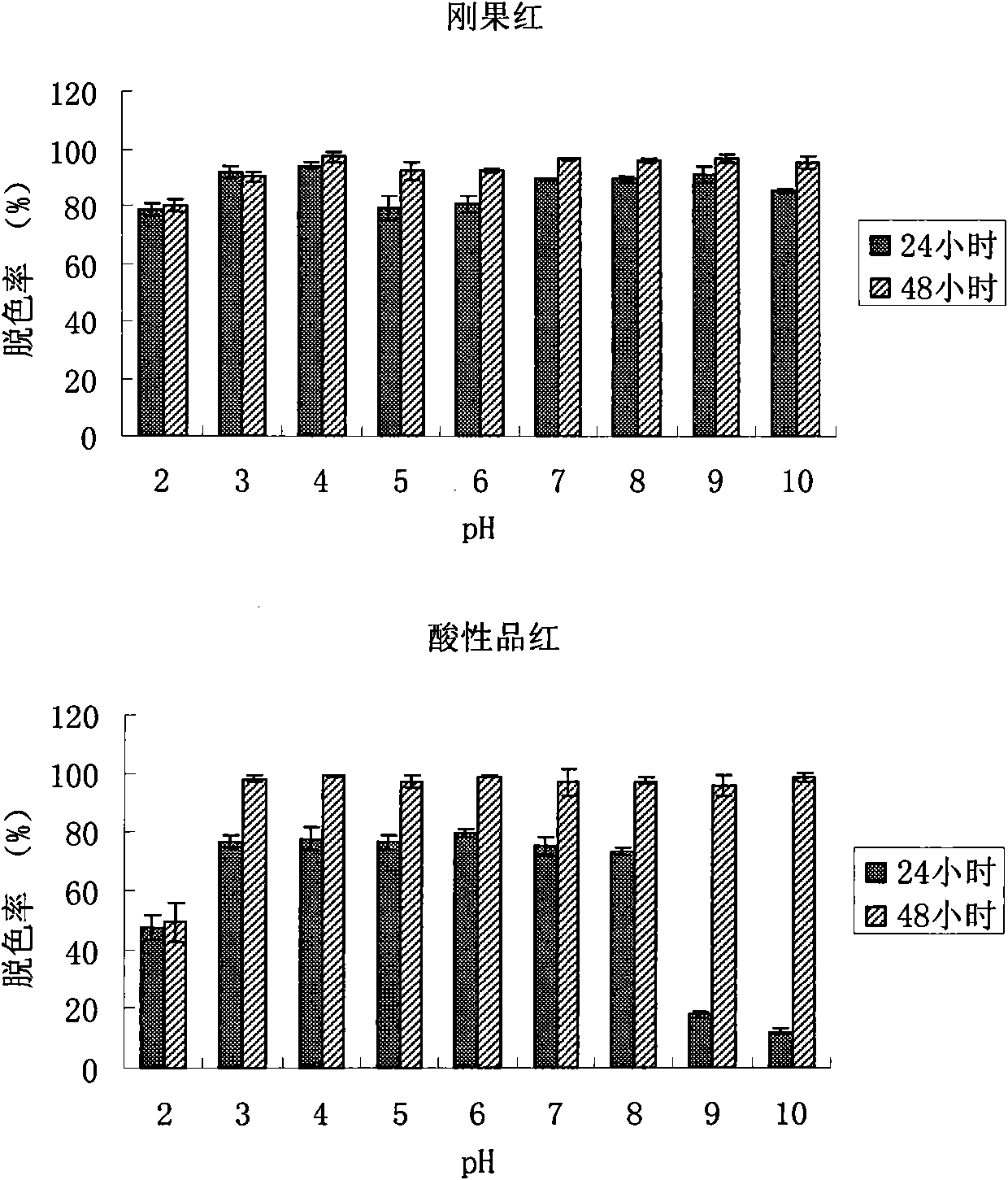
Figure 3
Abstract
Description
1. Technical field
[0001] The invention belongs to the technical field of industrial microbes, and in particular relates to a fungus capable of degrading various types of dyes under the conditions of non-sterilization and low-cost and simple nutrient medium. 2. Background technology
[0002] Synthetic dyes are widely used in textile, food, medicine, leather, cosmetics and other industries. It is estimated that the total production of dyestuffs per year is about 7×10 5 Tons, my country's annual output has reached 150,000 tons, of which about 10% to 15% of dyes will be directly discharged into the environment along with wastewater. There are many dyes used in industry, such as azo, triphenylmethane, anthraquinone and so on. Many dyes and their decomposition products are toxic and can cause cancer and distortion. If printing and dyeing wastewater is discharged directly into rivers without treatment, it will inevitably cause serious environmental pollution.
[0003] Syntheti...
Examples
Embodiment Construction
[0019] 1. Isolation and identification of strain Trichaptum abietinum 1302BG
[0020] The soil comes from the thunder bamboo forest in Lin'an, Hangzhou. Weigh 1 g of the soil, put it into a sterilized Erlenmeyer flask, add 9 mL of sterile water, and shake it for 10 minutes. Then, the bacterial suspension was diluted to 10 -1 , 10 -2 , 10 -3 , 10 -4 , four gradients. take 10 -2 , 10 -3 , 10 -4 200 μL of suspensions of three concentrations were inoculated on a plate of tiger bengal solid medium, and cultured at 28°C for 2 to 7 days. According to the colony morphology and anatomical observation under a microscope, they were preliminarily classified and preserved, and a total of 96 strains of fungi were obtained. The above-mentioned 96 strains of fungi were inoculated into PDA+aniline blue (100mgL -1 ) plate, cultured at 28°C for 7 days, observed and recorded the decolorization effect of each fungus, and obtained 15 strains of fungi with decolorization ability. Among them...