
Gradient coil design method in nuclear magnetic resonance system
A gradient coil and nuclear magnetic resonance technology is applied in the field of superconductivity to achieve the effects of easy engineering processing, good linearity and high coil efficiency
Patent Information
- Authority / Receiving Office
- CN · China
- Patent Type
- Applications(China)
- Current Assignee / Owner
- Publication Date
- 2011-06-15
- Estimated Expiration
- Not applicable · inactive patent
Smart Images
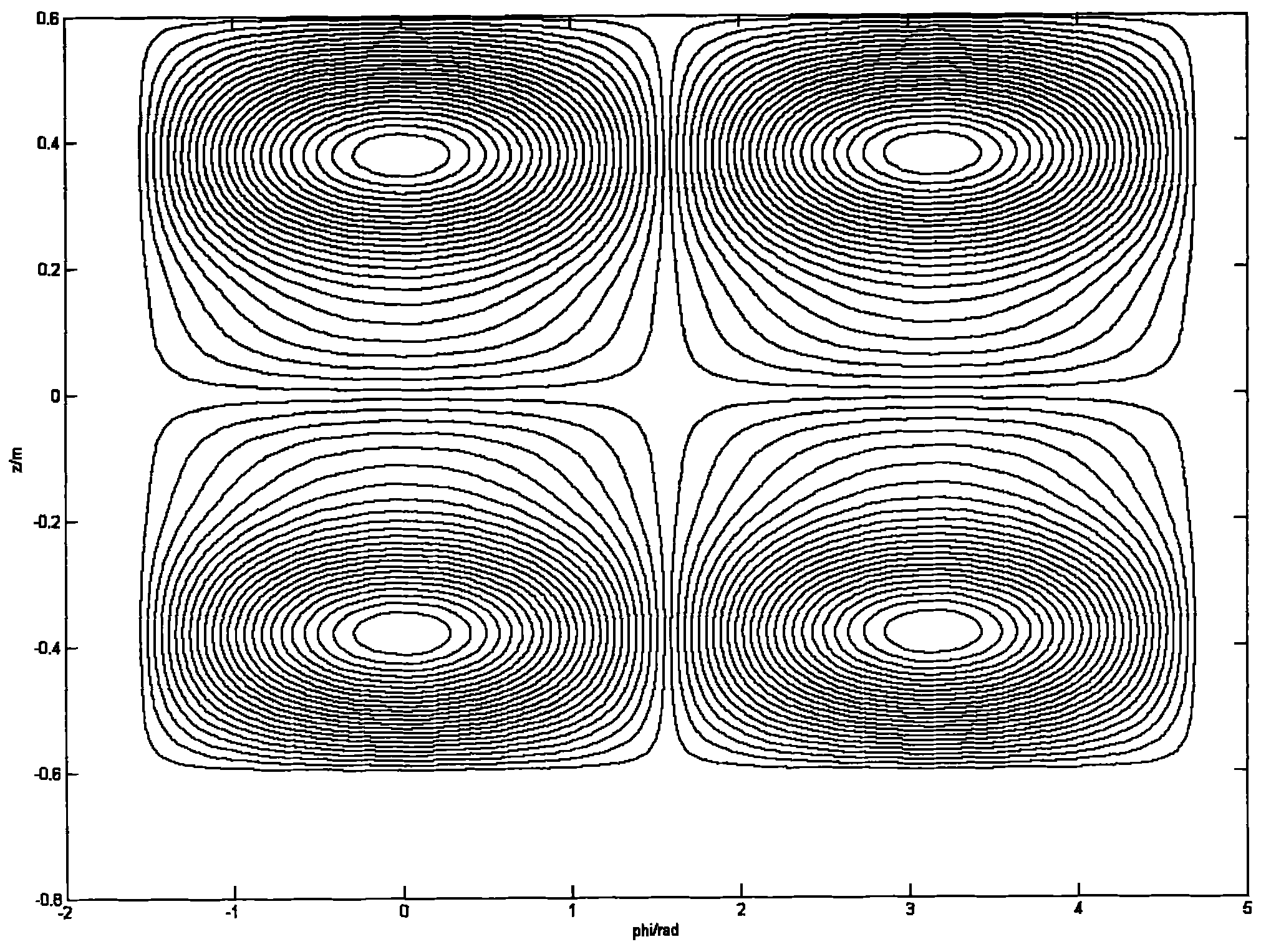
Figure 1 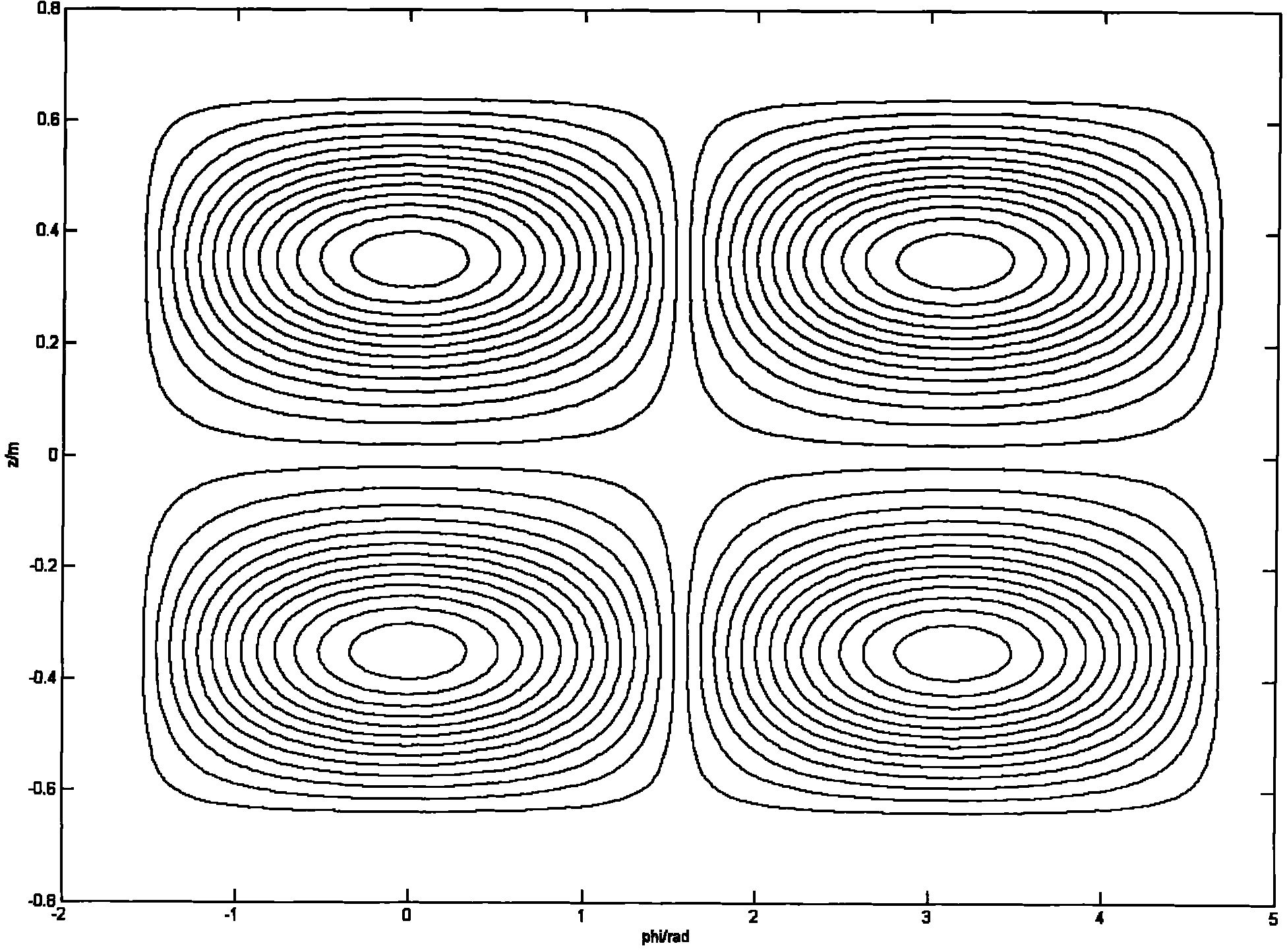
Figure 2 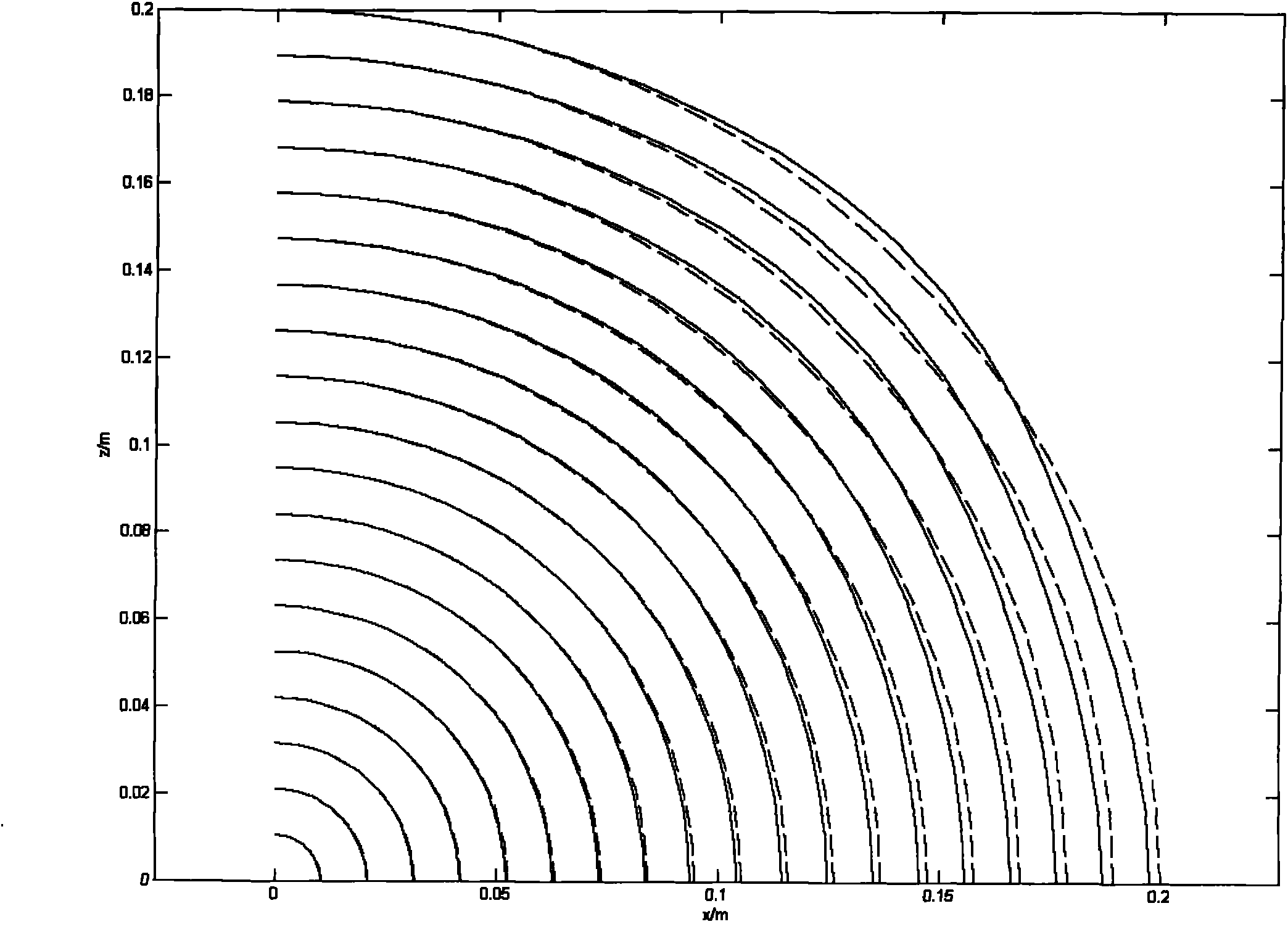
Figure 3
Abstract
Description
technical field
[0001] The invention relates to the technical field of superconductivity, in particular to a gradient coil design method in a nuclear magnetic resonance system. Background technique
[0002] In an MRI system, the main magnet and a series of shim coils together generate a main magnetic field B that is highly uniform along the z direction 0 . In order to provide spatial information of MR images, it is necessary to add a gradient coil to generate a pulsed linear gradient field superimposed on the main magnetic field, so that the z component of the magnetic field in the imaging space (DSV) changes linearly in the x, y, and z directions, respectively. The strength of the gradient field can be described by the following formula:
[0003] G x = ∂ B z ∂ x , G y ...
Examples
Embodiment Construction
[0049]Step (1), input the preset conditions to the computer, including the radius of the main coil and the shielding coil, the wiring length, the expansion order of the current density, the expansion order of the target field and the shielding field, the disturbance range of the target field and the gradient field, and the shielding field test Dot radius, minimum wiring spacing, target gradient strength, gradient linear region diameter.
[0050] Step (2), calculating the target field coefficient matrix D inside the gradient coil, the method is as follows:
[0051] In the spherical coordinate system, define the field point Source The radius of the coil is a and the length is L. The current is distributed on a cylindrical surface with radius a, expressed as
[0052] According to Pizza's theorem:
[0053] dB = μ 0 4 π ▿ 1 | ...