
Nanometer magnetic particle chemiluminescent assay kit for cancer antigen CA15-3, and preparation method and detection method thereof
A nano-magnetic particle, chemiluminescence technology, applied in chemiluminescence/bioluminescence, analysis by chemical reaction of materials, measurement devices, etc., can solve problems such as poor process stability, cumbersome preparation process, limited detection effect, etc. , to achieve the effect of simple operation, time saving, high sensitivity and high precision
Patent Information
- Authority / Receiving Office
- CN · China
- Patent Type
- Applications(China)
- Current Assignee / Owner
- Publication Date
- 2013-04-17
- Estimated Expiration
- Not applicable · inactive patent
Smart Images
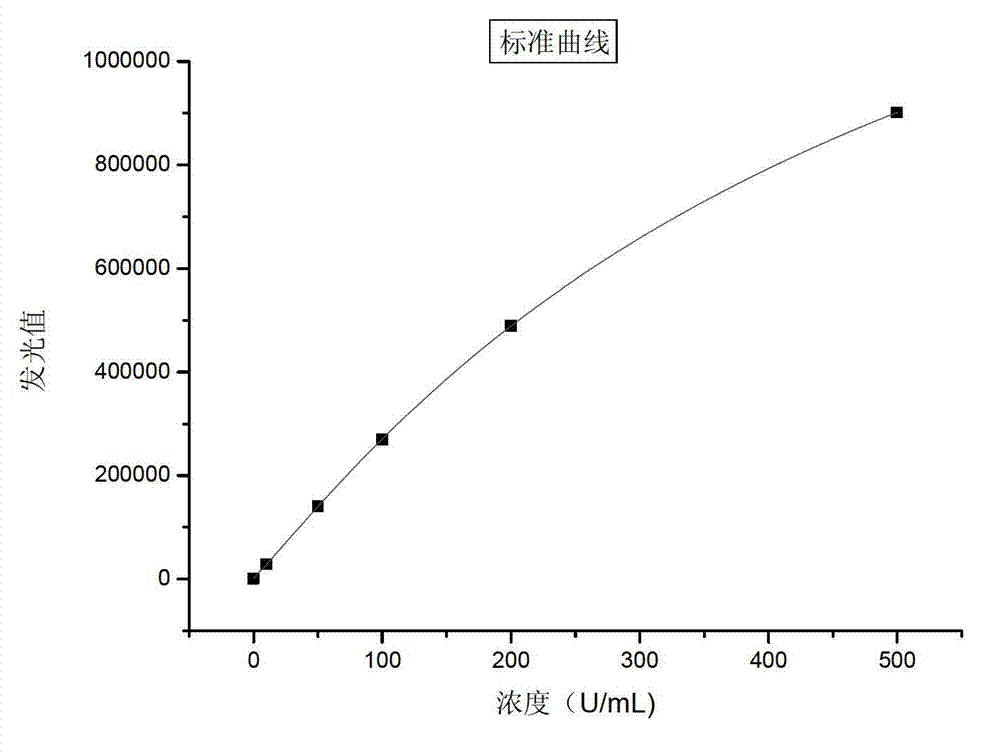
Figure 1 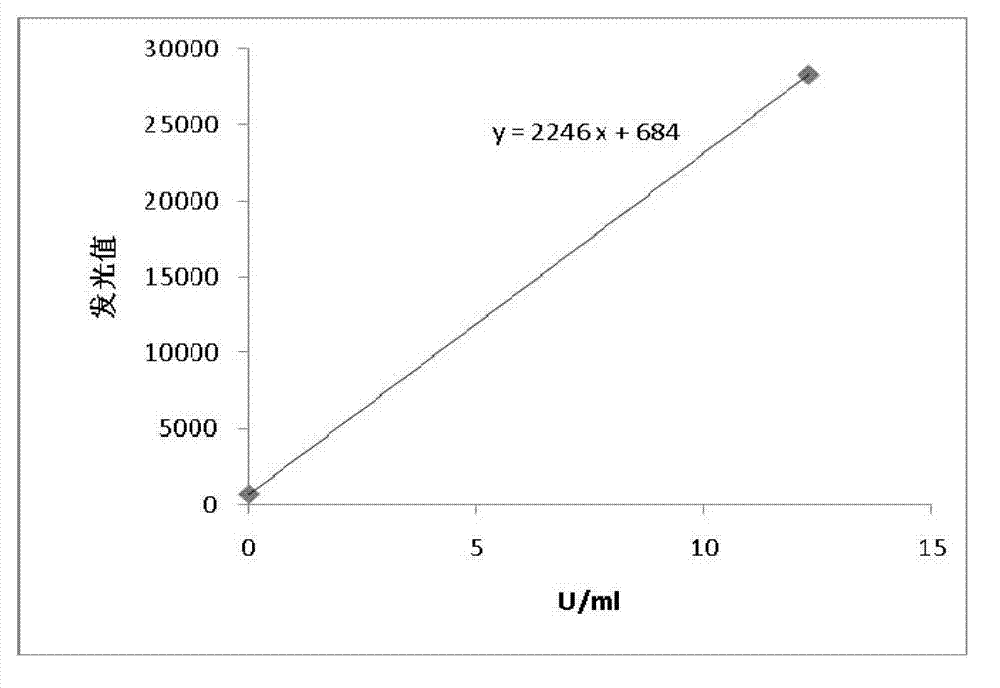
Figure 2 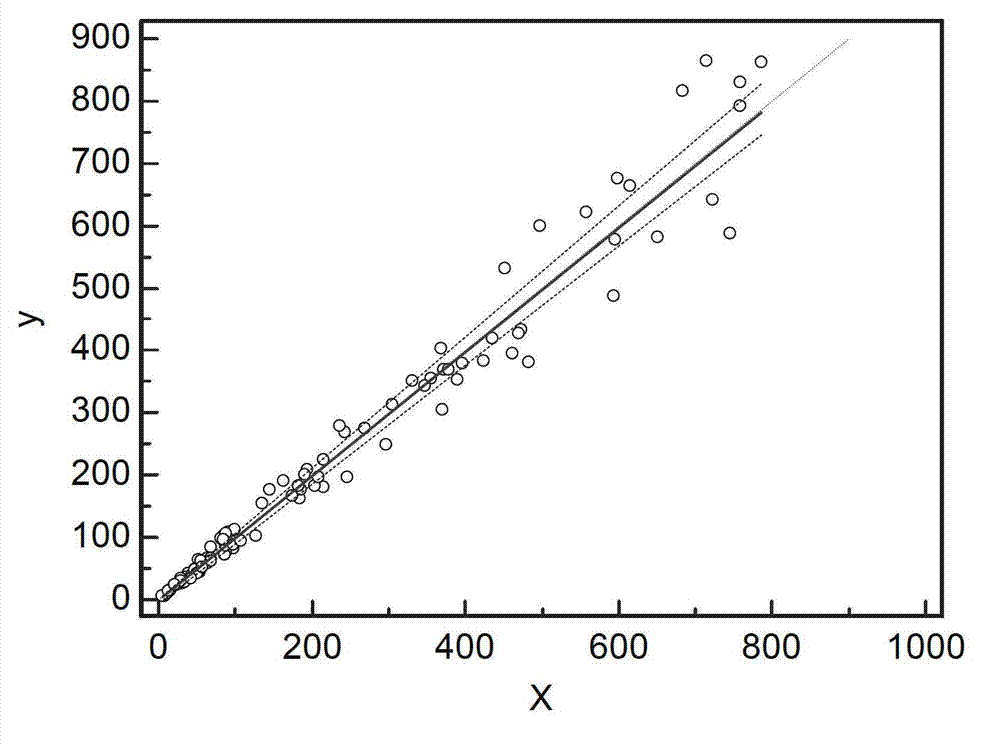
Figure 3
Abstract
Description
technical field
[0001] The invention belongs to the field of biotechnology, and specifically relates to a nano-magnetic particle chemiluminescence assay kit for cancer antigen CA15-3 combined with immunomagnetic particle separation technology and chemiluminescence immunoassay technology, and a preparation method and detection method thereof. Background technique
[0002] Cancer antigen CA15-3 (Carbohydrate Antigen 15-3, CA15-3) is a polymorphic epithelial glycoprotein with a molecular weight of about 400kD, and its molecular structure is not yet fully understood. CA15-3 is a monoclonal antibody (115-DB) made by Hilkens et al. from the glycoprotein MAM-6 on the human milk fat globule membrane in 1984. At the same time, Kufu et al. made a monoclonal antibody from the liver metastatic breast cancer cell membrane ( DF-3), the combination of the two is named CA15-3.
[0003] CA15-3 is mainly used for monitoring and screening of breast cancer, and as an indicator for evaluating t...
Examples
Embodiment 1
[0044] Embodiment 1 The preparation of the first reagent
[0045] (1) Materials and instruments: cancer antigen CA15-3 (CA15-3) monoclonal antibody preserved in phosphate buffered saline (purity over 95wt%, concentration 2mg / mL); fluorescein isothiocyanate (FITC), Reagents such as sodium carbonate should be chemically pure; G-25 gel purification column was purchased from GE.
[0046] (2) Preparation steps:
[0047] ① Prepare 0.5 mg / mL FITC solution with 0.1-0.2 mol / L carbonate buffer solution with pH 9.0-10.0;
[0048] ② Add the FITC solution prepared in step ① to the antibody solution according to the ratio of CA15-3 antibody to FITC molecular ratio of 1:20, mix well, and let it stand at room temperature for 12 hours to react to generate CA15-3 antibody-FITC conjugate;
[0049] ③Separate the reaction liquid after step ② through a G-25 gel column to remove unreacted FITC to obtain a solution containing the CA15-3 antibody-FITC conjugate (ie FITC-labeled CA15-3 antibody);
...
Embodiment 2
[0051] Embodiment 2 Preparation of the second reagent
[0052] (1) Materials and instruments: CA15-3 monoclonal antibody preserved in phosphate buffer (purity over 95wt%, concentration 2 mg / mL); alkaline phosphatase preserved in phosphate buffer (ALP solution, ALP purity is About 99%, the specific activity is about 1500U / mg, the concentration is 10mg / mL); the cross-linking agent SMCC, 2-IT are purchased from THERMO company, TRIS and other chemical reagents should be chemically pure; G-25 gel purification column is GE company's product.
[0053] (2) Preparation steps:
[0054] ① Take 1 mg of CA15-3 antibody, add 2-4 μL of 10 mg / mL coupling agent 2-IT solution, let stand at room temperature for 20 minutes, add 10 μL of 0.1mol / L glycine solution, stand at room temperature for 5 minutes, and gel with G-25 Desalt the column, collect the activated CA15-3 antibody, and store it at 2-8°C for later use;
[0055] ② Take 1.5 mg of ALP solution, add 10-20 μL of 5 mg / mL SMCC solution, l...
Embodiment 3
[0058] The preparation of embodiment 3 magnetic separation reagents
[0059] (1) Materials and instruments:
[0060] Suspension of magnetic particles: the content of magnetic particles is 5wt%, and the magnetic particles contain carboxyl (COOH) active groups. The carboxyl group content per gram (g) of magnetic particles (dry weight) is not less than 0.4 millimoles (mmol), with superparamagnetism, The diameter is between 0.5-2μm.
[0061] Anti-FITC antibody: It can be a polyclonal antibody or a monoclonal antibody, with a purity of more than 90% by weight and a dilution titer of more than 1:1 million;
[0062] 2-Morpholinoethanesulfonic acid (MES), carbodiimide (EDC), TRI S, and other reagents should be of chemical purity.
[0063] (2) Preparation steps:
[0064] ①Take 100mg of magnetic particle suspension, magnetically separate to remove the supernatant, and resuspend in 10mL of 0.05mol / L, pH 4.5~5 MES buffer;
[0065] ②Add 2~4mg of anti-FITC antibody and suspend at room t...