
Novel isopentenyl naphthoquinone obtained in active fraction for promoting blood circulation to remove blood stasis in clinopodium chinense (Benth.) O. Kuntze. and preparation method thereof
A technology of isopentenyl naphthoquinone, promoting blood circulation and removing blood stasis, which is applied to medical preparations containing active ingredients, organic chemistry, pharmaceutical formulas, etc., and can solve problems such as no patents or literature reports
Patent Information
- Authority / Receiving Office
- CN · China
- Current Assignee / Owner
- Publication Date
- 2014-03-26
- Estimated Expiration
- Not applicable · inactive patent
Smart Images
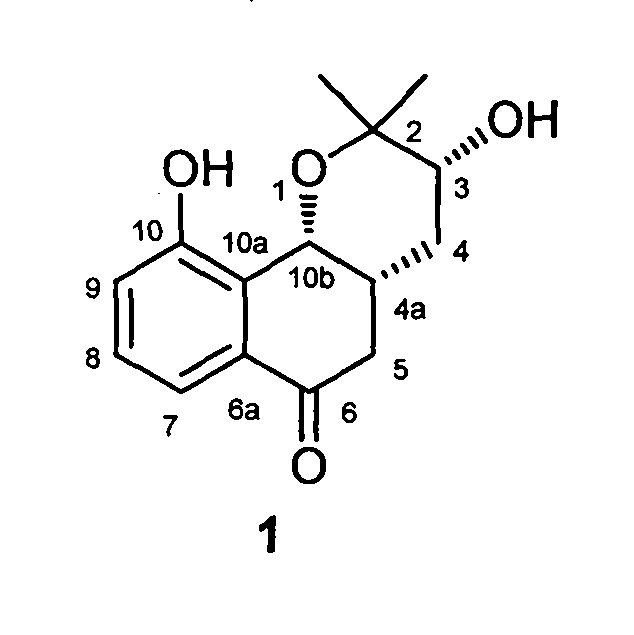
Figure 1 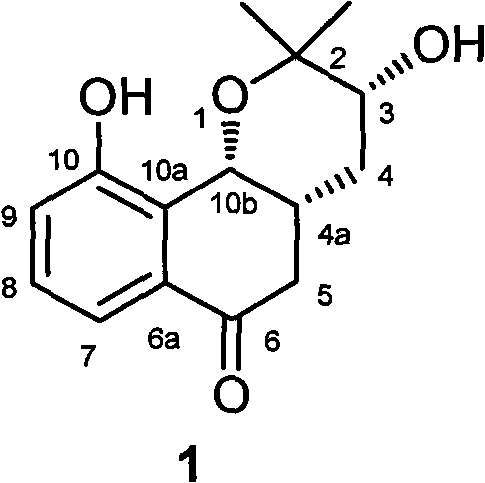
Figure 2 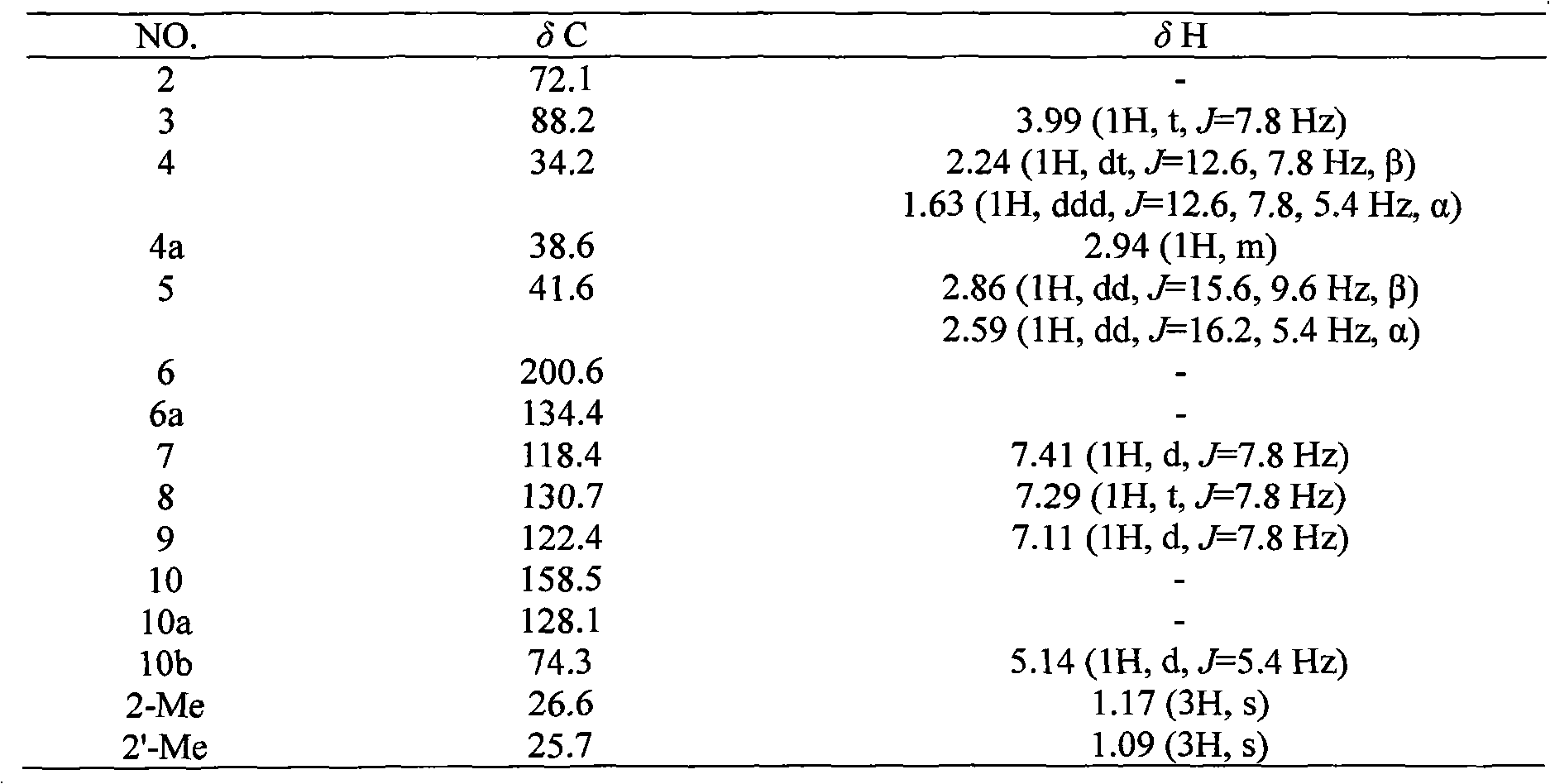
Figure 3
Abstract
Description
technical field
[0001] The present invention relates to a new prenyl naphthoquinone obtained by separating the active parts of Clinopodium chinense (Benth.) O. Kuntze., a plant of the genus Clinopodium chinense (Benth.) O. Kuntze., by means of phytochemical extraction and separation. , apply for patent protection on the active parts of the blood circulation and blood stasis-removing activity, the structure of the new compound, the preparation method and its application in the preparation of cardiovascular therapeutic drugs. Background technique:
[0002] Clinopodium chinense (Benth.) O. Kuntze. is a plant of the genus Clinopodium chinense (Benth.) of the Lamiaceae. There are more than 20 species of this genus in the world, mainly distributed in Europe, Central Asia and eastern Asia. In my country, there are 11 species, 5 varieties and 1 variant. Campanula in my country is mainly distributed in Shandong, Zhejiang, Jiangsu, Anhui, Fujian, Taiwan, Hunan, Hubei, Guangdong, Guan...
Examples
Embodiment
[0018] Example: Compound Preparation.
[0019] Take the dry aboveground part of the spinach, cleanly select, cut into sections, and extract with water. The extract obtained after concentrating and drying the extract is subjected to macroporous resin chromatography with ethanol-water (0%-95%) as the eluent to obtain 50-95% eluate, which is enriched by alkali extraction and acid precipitation. Collected and refined to obtain the total flavonoids of Campanula chinensis. The total flavonoids of Campanula chinensis were roughly separated by silica gel column chromatography, and gradient elution was carried out with a mixed solvent of chloroform-methanol in different proportions, wherein chloroform:methanol (97:3) eluted fractions 12-48 were subjected to reverse-phase ODS column chromatography Separation, eluting with methanol-water gradient, where methanol: water (40:60) eluted part was separated by Sephadex LH-20 gel column, eluted with methanol, and fraction 3 was collected and ...