
Symtriazine-type flame retardant, preparation method and application of symtriazine-type flame retardant
A technology of s-triazine and flame retardant, which is applied in the field of flame retardant and its synthesis and preparation, can solve problems such as difficult adhesion, and achieve the effects of less smoke generation, long-lasting flame retardant performance, and high char formation rate
Patent Information
- Authority / Receiving Office
- CN · China
- Patent Type
- Applications(China)
- Current Assignee / Owner
- Publication Date
- 2014-06-25
Smart Images
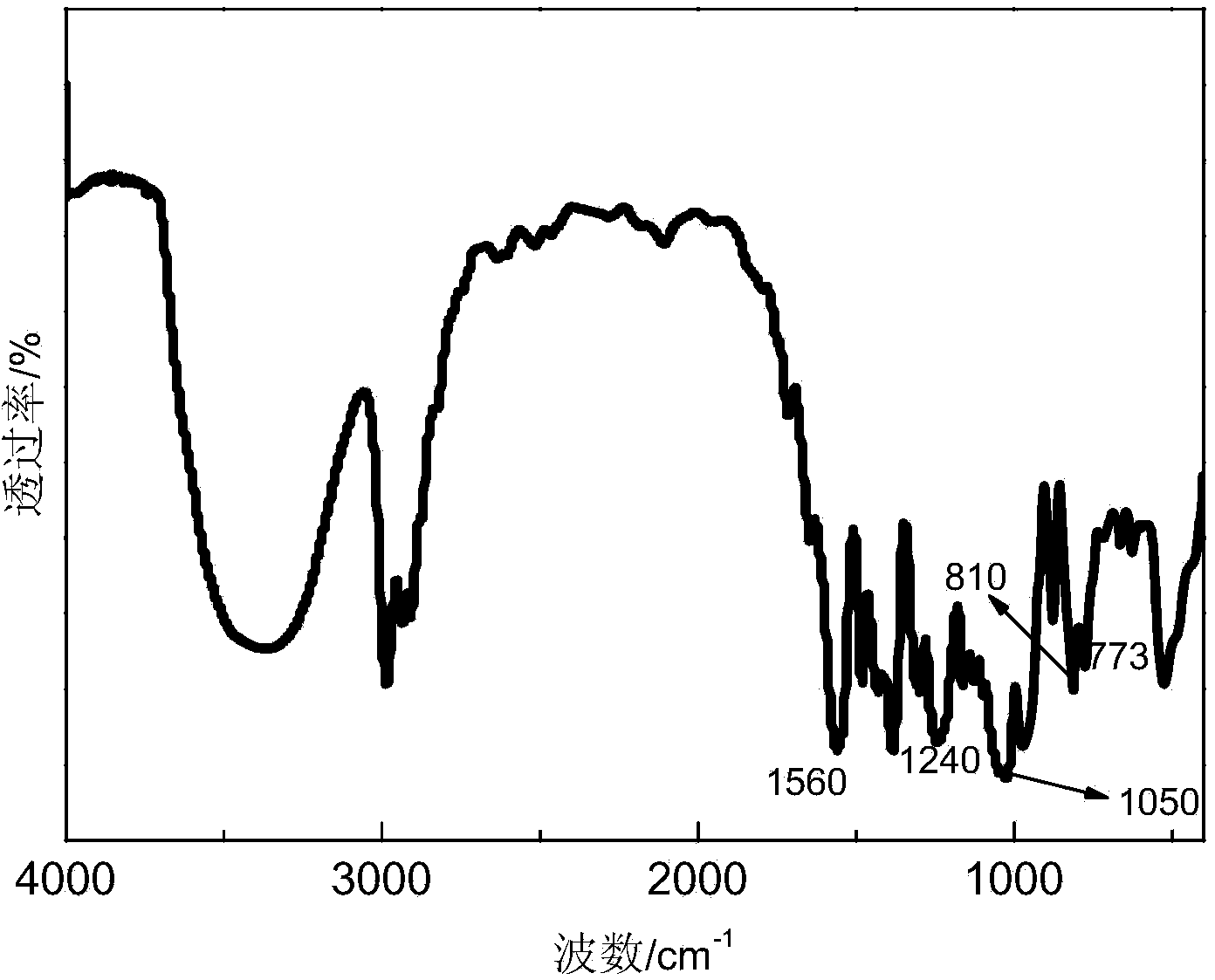
Figure 1 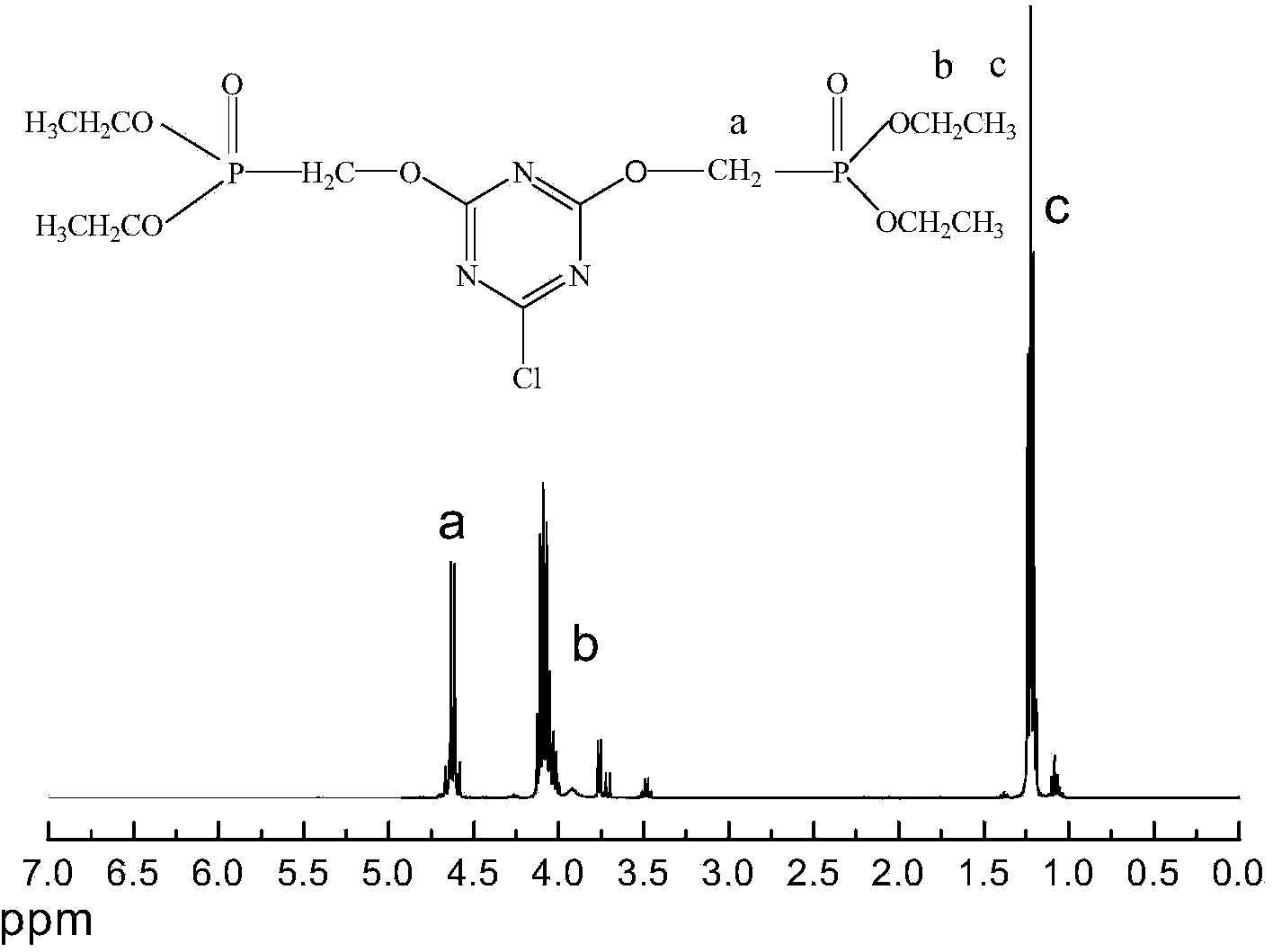
Figure 2 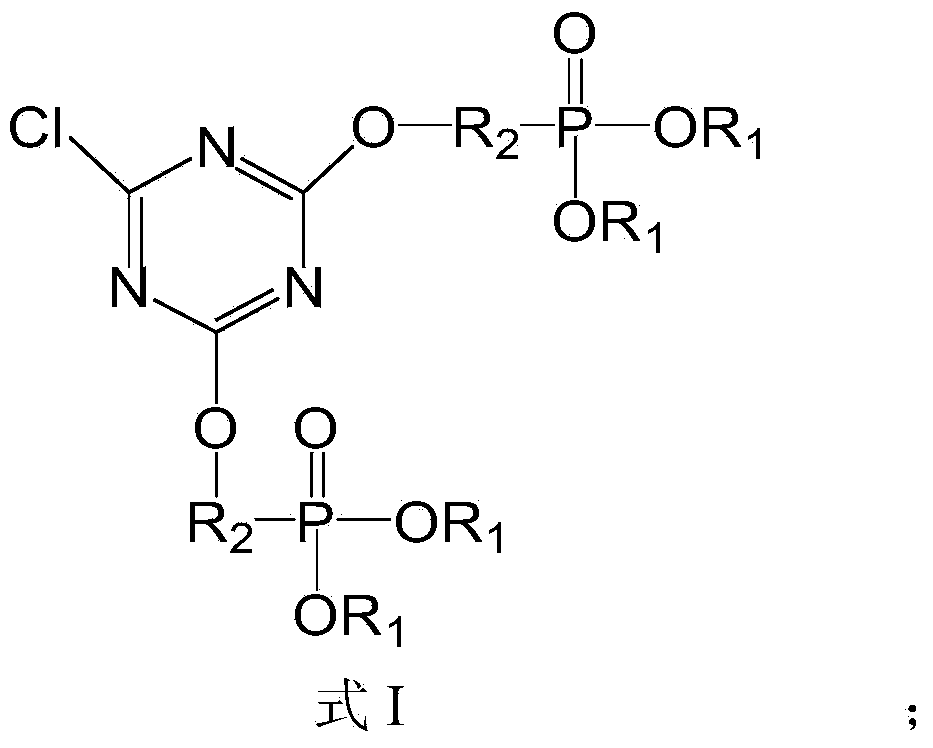
Figure 3
Abstract
Description
technical field
[0001] The invention relates to the field of flame retardant and its synthesis and preparation, in particular to a s-triazine type flame retardant, its preparation method and its application in the preparation of natural fibers. Background technique
[0002] In today's society, the global fire situation is very serious. In recent years, fires have occurred frequently in China, which poses a serious threat to the safety of human life and property. In order to prevent the occurrence of fire, in addition to taking fire prevention measures, textiles with flame retardant properties can also be used. However, many flame retardants currently face problems such as poor flame retardant effect, low mechanical strength, and poor washing limit oxygen index (LOI). The application of flame retardants is limited.
[0003] At present, my country's flame-retardant finishing of textiles is still in the initial stage of exploration. Halogen-based and boron-based flame retarda...
Examples
Embodiment 1
[0043] Step 1: Full dissolution of cyanuric chloride
[0044] In a 500ml four-necked flask equipped with a stirrer and a thermometer, add 8g (0.043mol) of cyanuric chloride and 250ml (196.13g) of acetone to fully dissolve to obtain a base liquid.
[0045] Step 2: Preparation of s-triazine flame retardant
[0046] Move the above base liquid to a temperature of 0°C, and continuously add 15.90 g (0.0946 mol) of diethyl hydroxymethyl phosphate to the base liquid, and the addition is completed in 1 hour; Potassium aqueous solution adjusts pH=5. At different stages of the reaction, draw a small amount of reaction solution, and use thin-layer chromatographic analysis to determine whether the reaction of cyanuric chloride is complete. After the diethyl hydroxymethyl phosphate has been added dropwise, move to room temperature at 25°C for 35 minutes until cyanuric chloride disappears.
[0047] The concrete reaction formula of this step is as follows:
[0048]
[0049] Step 3: Pur...
Embodiment 2
[0057] Step 1: Full dissolution of cyanuric chloride
[0058] In a 500ml four-neck flask equipped with a stirrer and a thermometer, add 8g (0.043mol) of cyanuric chloride and 200ml (156.9g) of acetone to fully dissolve to obtain a base solution.
[0059] Step 2: Preparation of s-triazine flame retardant
[0060] Move the above base liquid to a temperature of -5°C, and continuously add 15.13g (0.090mol) of diethyl hydroxymethyl phosphate to the base liquid dropwise, and the dropwise addition is completed in 1 hour; during this period, 5% by mass of Potassium carbonate aqueous solution adjusts pH=6. At different stages of the reaction, draw a small amount of reaction solution, and use thin-layer chromatographic analysis to determine whether the reaction of cyanuric chloride is complete. After the diethyl hydroxymethyl phosphate has been added dropwise, move to room temperature at 25°C for 30 minutes until cyanuric chloride disappears.
[0061] The concrete reaction formula of...
Embodiment 3
[0067] Step 1: Full dissolution of cyanuric chloride
[0068] In a 500ml four-necked flask equipped with a stirrer and a thermometer, add 8g (0.043mol) of cyanuric chloride and 300ml (235.35g) of acetone to fully dissolve to obtain a base liquid.
[0069] Step 2: Preparation of s-triazine flame retardant
[0070] Move the above base liquid to a temperature of 5°C, and continuously add 14.46g (0.086mol) of diethyl hydroxymethyl phosphate to the base liquid dropwise, and the dropwise addition is completed in 1 hour; Potassium aqueous solution adjusts pH=7. At different stages of the reaction, draw a small amount of reaction solution, and use thin-layer chromatographic analysis to determine whether the reaction of cyanuric chloride is complete. After the diethyl hydroxymethyl phosphate has been added dropwise, move to room temperature at 25°C for 40 minutes until cyanuric chloride disappears.
[0071] The concrete reaction formula of this step is as follows:
[0072]
[00...